Asteroid 7 Iris in Sextans: A Stargazing Treat in 2026
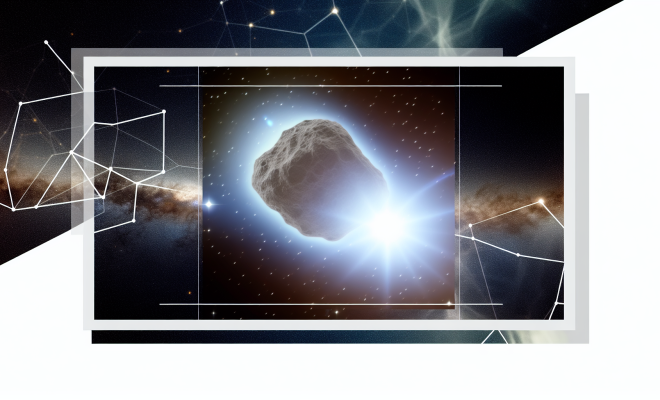
On Sunday, March 22, 2026, stargazers and astronomy enthusiasts are in for a treat as Asteroid 7 Iris makes its way through the constellation Sextans. This celestial event offers a unique opportunity for observers to witness the slow drift of Iris against the backdrop of distant stars, making it a highlight in the sky for anyone equipped with the right optical aids.
The Dance of Asteroid 7 Iris
Asteroid 7 Iris, with a current magnitude of 9.4, is positioned approximately 2.6° north of Alpha Sextantis and about ¼° southwest of a captivating double star system. This positioning allows for an intriguing observation as Iris passes close to two stars, one at 7th magnitude and the other at 8th magnitude, which act as anchors for those tracking the asteroid’s movement across the night sky.
A Celestial Guide
For amateur astronomers and curious onlookers, identifying and tracking Iris can be simplified by using the nearby stars as reference points. Alpha Sextantis, the brightest star in the constellation, serves as a reliable marker. Observers can easily locate this double star system, which is visible early in the evening southeast of the constellation Leo, providing a stunning contrast to the drifting asteroid.
Observing Conditions
The celestial event takes place during a time of favorable observing conditions. With local sunrise occurring at 7:00 A.M. and sunset at 7:14 P.M., enthusiasts will have the opportunity to catch a glimpse of Iris during the evening hours when the sky is dark enough for optimal viewing. Additionally, the Moon will be in a 21% waxing crescent phase, which means that its light will not overpower the visibility of the asteroid, making this a prime time for observation.
What to Expect
Observers equipped with telescopes or binoculars will be able to track the slow movement of Asteroid 7 Iris over a span of three hours. This gradual drift can create a mesmerizing experience as the asteroid glides through the sky, seemingly weaving between the stars. For those who have never observed an asteroid before, this presents a fantastic opportunity to witness a small body of the solar system in motion.
The Significance of Asteroid 7 Iris
Discovered in 1847 by the astronomer John Russell Hind, Asteroid 7 Iris is one of the largest asteroids in the asteroid belt, measuring about 200 kilometers in diameter. Iris is classified as an S-type asteroid, which means it is composed mainly of silicate materials and nickel-iron. Its surface reflects sunlight effectively, contributing to its visibility from Earth.
Why Study Asteroids?
- Understanding the Solar System: Asteroids like Iris are remnants from the early solar system. Studying them can provide insights into the conditions present during the formation of planets.
- Potential Resources: As interest in space exploration grows, asteroids are viewed as potential sources of minerals and other resources that could be utilized in future missions.
- Impact Risk Assessment: Monitoring asteroids helps astronomers assess the risks they pose to Earth, which is vital for planetary defense strategies.
Conclusion
The passage of Asteroid 7 Iris through the constellation Sextans on March 22, 2026, presents a unique opportunity for both seasoned astronomers and newcomers to the hobby. With the right equipment, stargazers can enjoy the beauty of celestial mechanics while learning more about the nature of asteroids and their role in our solar system. So, gather your telescopes, head out under the stars, and take part in this astronomical event that connects us with the vast universe beyond our planet.