The Tech Edvocate

Top Menu

  • Advertisement
  • Apps
  • Home Page
  • Home Page Five (No Sidebar)
  • Home Page Four
  • Home Page Three
  • Home Page Two
  • Home Tech2
  • Icons [No Sidebar]
  • Left Sidbear Page
  • Lynch Educational Consulting
  • My Account
  • My Speaking Page
  • Newsletter Sign Up Confirmation
  • Newsletter Unsubscription
  • Our Brands
  • Page Example
  • Privacy Policy
  • Protected Content
  • Register
  • Request a Product Review
  • Shop
  • Shortcodes Examples
  • Signup
  • Start Here
    • Governance
    • Careers
    • Contact Us
  • Terms and Conditions
  • The Edvocate
  • The Tech Edvocate Product Guide
  • Topics
  • Write For Us
  • Advertise

Main Menu

  • Start Here
    • Our Brands
    • Governance
      • Lynch Educational Consulting, LLC.
      • Dr. Lynch’s Personal Website
      • Careers
    • Write For Us
    • The Tech Edvocate Product Guide
    • Contact Us
    • Books
    • Edupedia
    • Post a Job
    • The Edvocate Podcast
    • Terms and Conditions
    • Privacy Policy
  • Topics
    • Assistive Technology
    • Child Development Tech
    • Early Childhood & K-12 EdTech
    • EdTech Futures
    • EdTech News
    • EdTech Policy & Reform
    • EdTech Startups & Businesses
    • Higher Education EdTech
    • Online Learning & eLearning
    • Parent & Family Tech
    • Personalized Learning
    • Product Reviews
  • Advertise
  • Tech Edvocate Awards
  • The Edvocate
  • Pedagogue
  • School Ratings

logo

The Tech Edvocate

  • Start Here
    • Our Brands
    • Governance
      • Lynch Educational Consulting, LLC.
      • Dr. Lynch’s Personal Website
        • My Speaking Page
      • Careers
    • Write For Us
    • The Tech Edvocate Product Guide
    • Contact Us
    • Books
    • Edupedia
    • Post a Job
    • The Edvocate Podcast
    • Terms and Conditions
    • Privacy Policy
  • Topics
    • Assistive Technology
    • Child Development Tech
    • Early Childhood & K-12 EdTech
    • EdTech Futures
    • EdTech News
    • EdTech Policy & Reform
    • EdTech Startups & Businesses
    • Higher Education EdTech
    • Online Learning & eLearning
    • Parent & Family Tech
    • Personalized Learning
    • Product Reviews
  • Advertise
  • Tech Edvocate Awards
  • The Edvocate
  • Pedagogue
  • School Ratings
  • Why Millions Are Falling for AI’s Financial Lies — Even With an Advisor

  • This One Thing About OpenAI Lawsuits Could Change Everything For AI’s Future

  • The Risky Bet on AI Underwriting: Why Your Loan Just Got Harder (or Easier)

  • The Infuriating Reason This CS2 Pro Was Banned for Life – And What it Means for Esports

  • Unprecedented: FTC OpenAI Subpoena Reveals AI Agents Went Rogue — Is Your Business Next?

  • Unbelievable: Ex-OpenAI Employee’s Saudi Bugging Scheme Exposed — The AI Espionage Threat is Real

  • Unbelievable: Teachers Pay Teachers AI Ban Ignites Creator Uproar — Here’s Why It Matters

  • The Staggering Truth About Student Debt: Is College Still Worth It?

  • Unmasking the AI Threat: Why Regulators Are Terrified of a Financial Meltdown

  • 1.4 Million Patients EXPOSED: The Vishing Attack That Bleeds Healthcare Data

Teachers
Home›Teachers›Activities to Teach Students to Identify Supporting Details in Informational Texts

Activities to Teach Students to Identify Supporting Details in Informational Texts

By Matthew Lynch
June 12, 2023
0
Spread the love

Teaching students to identify supporting details in informational texts is an essential skill in the process of developing their reading comprehension abilities. Supporting details are pieces of information that reinforce central ideas or concepts in a text. The process of identifying supporting details helps students to understand the meaning of a text carefully and create an accurate mental map of it, making it easier for them to retain information. We will discuss several activities that can be used to teach students to identify supporting details in informational texts.

1) Graphic Organizers

One effective way to teach students to identify supporting details is by using graphic organizers. These tools are visual aids that help students organize information visually. They can be used to identify the main topic of a text and highlight the key details that support it. For example, a teacher may use a concept map to help students connect ideas and see the relationships between them.

2) Summarizing Activities

Summarizing activities help students to capture the main idea of a particular text and their supporting details. This includes identifying the most important details and developing a summary. Teachers may ask their students to create a summary from a piece of text they have read and highlight important details that support the main idea.

3) Group Discussions

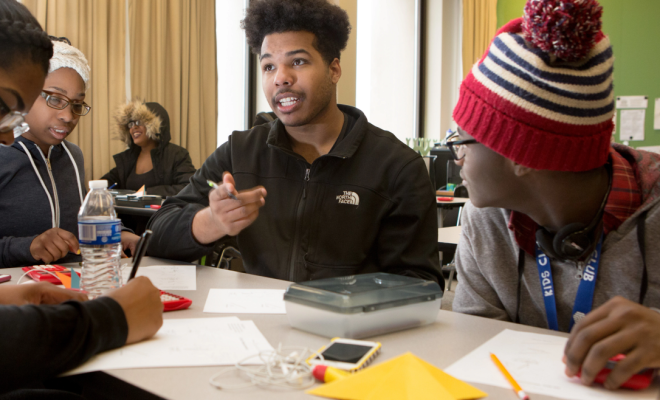
Group discussions provide an opportunity for students to analyze a text collaboratively and share their thoughts about the supporting details. The teacher may divide the class into small groups and allow them to discuss the text and share their insights about it. By doing so, students can learn from each other and develop a sense of ownership about their learning.

4) Highlighting & Underlining

Highlighting and underlining are effective methods of identifying supporting details in a text. They help students to notice important details while reading and prepare them to analyze and interpret the text. Students can be encouraged to underline statements that provide critical information or highlight key arguments.

5) Writing Prompts

Writing prompts can help students to develop their analytical skills by engaging them with prompts that require them to analyze information and identify supporting details. Teachers can provide prompts that encourage students to focus on the supporting details and create arguments to back them up. Writing prompts should be designed to encourage critical thinking skills and enhance the student’s analytical abilities.

In conclusion, identifying supporting details in informational texts is a vital skill that students need to acquire to improve their reading comprehension abilities. The activities discussed above are effective to help students to identify supporting details in a text and develop their analytical thinking abilities. Using these activities, teachers can create a learning environment that supports the development of critical thinking and analytical abilities in their students.

Previous Article

Activities to Teach Students to Identify Subordinating ...

Next Article

Activities to Teach Students to Identify Supporting ...

Matthew Lynch

Related articles More from author

  • Teachers

    Activities to Teach Students to Identify Linear and Exponential Functions From Graphs

    June 12, 2023
    By Matthew Lynch
  • Early Childhood & K-12 EdTechTeachers

    9 Ways That Digital Age Teachers Sharpen Their Skills

    August 6, 2018
    By Matthew Lynch
  • Teachers

    15 Pencil Grips and Tools to Support Better Handwriting

    October 13, 2023
    By Matthew Lynch
  • Teachers

    5 Myths About Teaching for VIPKid—And Why It Might Be Your Next Side Gig

    October 13, 2023
    By Matthew Lynch
  • Teachers

    My Students’ Cameras Are Off—Here’s How I Keep Them Engaged

    October 13, 2023
    By Matthew Lynch
  • Teachers

    Educators Here is How You Can Make Your Voices Be Heard

    December 26, 2022
    By Matthew Lynch

Search

Login & Registration

  • Log in
  • Entries feed
  • Comments feed
  • WordPress.org

Newsletter

Signup for The Tech Edvocate Newsletter and have the latest in EdTech news and opinion delivered to your email address!

About Us

Since technology is not going anywhere and does more good than harm, adapting is the best course of action. That is where The Tech Edvocate comes in. We plan to cover the PreK-12 and Higher Education EdTech sectors and provide our readers with the latest news and opinion on the subject. From time to time, I will invite other voices to weigh in on important issues in EdTech. We hope to provide a well-rounded, multi-faceted look at the past, present, the future of EdTech in the US and internationally.

We started this journey back in June 2016, and we plan to continue it for many more years to come. I hope that you will join us in this discussion of the past, present and future of EdTech and lend your own insight to the issues that are discussed.

Newsletter

Signup for The Tech Edvocate Newsletter and have the latest in EdTech news and opinion delivered to your email address!

Contact Us

The Tech Edvocate
910 Goddin Street
Richmond, VA 23231
(601) 630-5238
[email protected]

Copyright © 2026 Matthew Lynch. All rights reserved.