The Tech Edvocate

Top Menu

  • Advertisement
  • Apps
  • Home Page
  • Home Page Five (No Sidebar)
  • Home Page Four
  • Home Page Three
  • Home Page Two
  • Home Tech2
  • Icons [No Sidebar]
  • Left Sidbear Page
  • Lynch Educational Consulting
  • My Account
  • My Speaking Page
  • Newsletter Sign Up Confirmation
  • Newsletter Unsubscription
  • Our Brands
  • Page Example
  • Privacy Policy
  • Protected Content
  • Register
  • Request a Product Review
  • Shop
  • Shortcodes Examples
  • Signup
  • Start Here
    • Governance
    • Careers
    • Contact Us
  • Terms and Conditions
  • The Edvocate
  • The Tech Edvocate Product Guide
  • Topics
  • Write For Us
  • Advertise

Main Menu

  • Start Here
    • Our Brands
    • Governance
      • Lynch Educational Consulting, LLC.
      • Dr. Lynch’s Personal Website
      • Careers
    • Write For Us
    • The Tech Edvocate Product Guide
    • Contact Us
    • Books
    • Edupedia
    • Post a Job
    • The Edvocate Podcast
    • Terms and Conditions
    • Privacy Policy
  • Topics
    • Assistive Technology
    • Child Development Tech
    • Early Childhood & K-12 EdTech
    • EdTech Futures
    • EdTech News
    • EdTech Policy & Reform
    • EdTech Startups & Businesses
    • Higher Education EdTech
    • Online Learning & eLearning
    • Parent & Family Tech
    • Personalized Learning
    • Product Reviews
  • Advertise
  • Tech Edvocate Awards
  • The Edvocate
  • Pedagogue
  • School Ratings

logo

The Tech Edvocate

  • Start Here
    • Our Brands
    • Governance
      • Lynch Educational Consulting, LLC.
      • Dr. Lynch’s Personal Website
        • My Speaking Page
      • Careers
    • Write For Us
    • The Tech Edvocate Product Guide
    • Contact Us
    • Books
    • Edupedia
    • Post a Job
    • The Edvocate Podcast
    • Terms and Conditions
    • Privacy Policy
  • Topics
    • Assistive Technology
    • Child Development Tech
    • Early Childhood & K-12 EdTech
    • EdTech Futures
    • EdTech News
    • EdTech Policy & Reform
    • EdTech Startups & Businesses
    • Higher Education EdTech
    • Online Learning & eLearning
    • Parent & Family Tech
    • Personalized Learning
    • Product Reviews
  • Advertise
  • Tech Edvocate Awards
  • The Edvocate
  • Pedagogue
  • School Ratings
  • Unbelievable: This One Ad Sparked Mass Fury — And It’s Not What You Think

  • Urgent: 25,000 Dressers Recalled on Amazon, Wayfair – A Fatal Flaw You Need to Know

  • This Wild AI Startup Feud Is Exposing the Dark Side of Viral Marketing

  • Unbelievable: Judges Just Upheld the Trump Blacklisting of a Major AI Startup

  • The Scandalous PapaSmithy Apology: Why Fans Are Still Furious About FlyQuest’s Controversial Video

  • Macau Gaming Dispute Escalates to Classroom Knife Attack: A Troubling Warning

  • School Surveys & Student Privacy: A Parent Guide for 2026

  • The Billion-Dollar Blunder: Why AI Detection Software Is Failing Our Students

  • China’s 5-Minute EV Charge: The Staggering Truth America Ignores

  • This Astonishing Nikon AI Controversy Exposes Science’s New Frontier

Digital & Mobile Technology
Home›Digital & Mobile Technology›Understanding USB Cable Types and Which One to Use

Understanding USB Cable Types and Which One to Use
By Matthew Lynch
June 22, 2023
0
Spread the love

In today’s tech-oriented world, USB cables are almost as common as electricity. We use them to charge our devices, transfer data between devices, and even connect accessories like keyboards and mice to our computers. With all the different types of USB cables out there, it’s no surprise that many people find it difficult to understand them all. In this article, we’ll take a closer look at the different types of USB cables and which ones you should use for different purposes.

USB 1.0 and 1.1

The first iteration of USB cables and ports appeared in the late ’90s, with the USB 1.0 standard. This early version offered transfer speeds of up to 12 megabits per second (Mbps) and was followed by the USB 1.1 standard, which added a few new features but kept the same transfer speeds.

As time went on, USB 1.0 and 1.1 were slowly phased out in favor of faster versions. You’re unlikely to encounter many devices that require these types of cables today.

USB 2.0

USB 2.0 is still in use today and can be found on many older devices. This standard offers a transfer speed of up to 480Mbps, making it a significant improvement over USB 1.0 and 1.1.

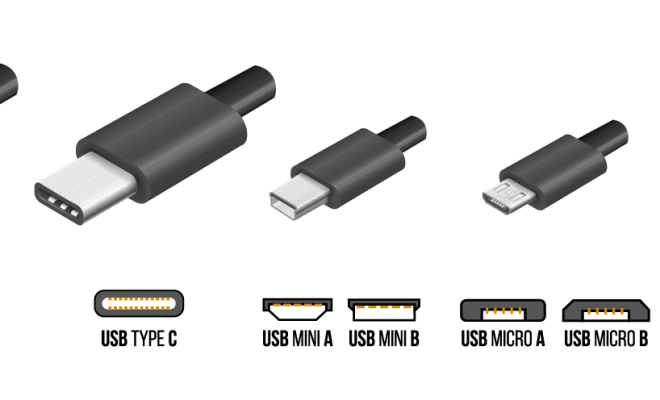
USB 2.0 cables have a Type-A connector on one end (the one that plugs into your computer or charger) and a Type-B connector on the other. Type-B connectors are typically found on devices like printers and scanners.

USB 3.0

With USB 3.0, transfer speeds took a big leap forward. This standard offers a maximum transfer rate of 5 gigabits per second (Gbps), which is almost 10 times faster than USB 2.0.

USB 3.0 cables typically have a Type-A connector on one end and a Type-B connector on the other, just like USB 2.0 cables. However, there is also a new Type-A connector that was introduced with USB 3.0. This connector has extra pins to support the higher transfer speed and is sometimes referred to as a “SuperSpeed” connector.

USB 3.1

USB 3.1 is the latest version of the USB standard and offers even faster transfer speeds than USB 3.0. There are two versions of USB 3.1: Gen 1 and Gen 2. Gen 1 offers a maximum transfer rate of 5 Gbps, the same as USB 3.0, while Gen 2 doubles that speed to 10 Gbps.

USB 3.1 cables have a Type-C connector on one end, which is a new connector that was introduced with this standard. The Type-C connector is smaller and more versatile than previous USB connectors, allowing it to be used for charging, data transfer, and even video output.

Which Cable Should You Use?

To determine which USB cable you should use, first, consider the type of device you’re connecting. Many newer devices, such as smartphones and tablets, use USB-C connectors, so you’ll need a USB-C cable to connect them to your computer or charger.

For older devices, you may need a USB 2.0 or 3.0 cable with a Type-B connector. Keep in mind that USB 3.0 cables are backward compatible with USB 2.0 ports, so you can use a USB 3.0 cable with an older device, but you won’t get the faster transfer speeds.

Previous Article

Cheapest 120Hz TVs for Gaming

Next Article

How to Use the Color Picker and ...

Matthew Lynch

Related articles More from author

  • Digital & Mobile Technology

    How to Generate 2FA Codes on Windows 10 With Google Authenticator

    June 12, 2023
    By Matthew Lynch
  • Digital & Mobile Technology

    What Is User Authentication and How Does It Work?

    June 6, 2023
    By Matthew Lynch
  • Digital & Mobile Technology

    Android Tablets vs. iPads: How Good Are Android Tablets?

    April 10, 2023
    By Matthew Lynch
  • Digital & Mobile Technology

    How to Trace Text Messages With Metro PCS

    May 29, 2023
    By Matthew Lynch
  • Digital & Mobile Technology

    Free and Cheap VoIP Services for iPhone

    July 31, 2023
    By Matthew Lynch
  • Digital & Mobile Technology

    How to Connect Your Phone to Your TV With USB

    June 1, 2023
    By Matthew Lynch

Search

Login & Registration

  • Log in
  • Entries feed
  • Comments feed
  • WordPress.org

Newsletter

Signup for The Tech Edvocate Newsletter and have the latest in EdTech news and opinion delivered to your email address!

About Us

Since technology is not going anywhere and does more good than harm, adapting is the best course of action. That is where The Tech Edvocate comes in. We plan to cover the PreK-12 and Higher Education EdTech sectors and provide our readers with the latest news and opinion on the subject. From time to time, I will invite other voices to weigh in on important issues in EdTech. We hope to provide a well-rounded, multi-faceted look at the past, present, the future of EdTech in the US and internationally.

We started this journey back in June 2016, and we plan to continue it for many more years to come. I hope that you will join us in this discussion of the past, present and future of EdTech and lend your own insight to the issues that are discussed.

Newsletter

Signup for The Tech Edvocate Newsletter and have the latest in EdTech news and opinion delivered to your email address!

Contact Us

The Tech Edvocate
910 Goddin Street
Richmond, VA 23231
(601) 630-5238
[email protected]

Copyright © 2026 Matthew Lynch. All rights reserved.