The Tech Edvocate

Top Menu

  • Advertisement
  • Apps
  • Home Page
  • Home Page Five (No Sidebar)
  • Home Page Four
  • Home Page Three
  • Home Page Two
  • Home Tech2
  • Icons [No Sidebar]
  • Left Sidbear Page
  • Lynch Educational Consulting
  • My Account
  • My Speaking Page
  • Newsletter Sign Up Confirmation
  • Newsletter Unsubscription
  • Our Brands
  • Page Example
  • Privacy Policy
  • Protected Content
  • Register
  • Request a Product Review
  • Shop
  • Shortcodes Examples
  • Signup
  • Start Here
    • Governance
    • Careers
    • Contact Us
  • Terms and Conditions
  • The Edvocate
  • The Tech Edvocate Product Guide
  • Topics
  • Write For Us
  • Advertise

Main Menu

  • Start Here
    • Our Brands
    • Governance
      • Lynch Educational Consulting, LLC.
      • Dr. Lynch’s Personal Website
      • Careers
    • Write For Us
    • The Tech Edvocate Product Guide
    • Contact Us
    • Books
    • Edupedia
    • Post a Job
    • The Edvocate Podcast
    • Terms and Conditions
    • Privacy Policy
  • Topics
    • Assistive Technology
    • Child Development Tech
    • Early Childhood & K-12 EdTech
    • EdTech Futures
    • EdTech News
    • EdTech Policy & Reform
    • EdTech Startups & Businesses
    • Higher Education EdTech
    • Online Learning & eLearning
    • Parent & Family Tech
    • Personalized Learning
    • Product Reviews
  • Advertise
  • Tech Edvocate Awards
  • The Edvocate
  • Pedagogue
  • School Ratings

logo

The Tech Edvocate

  • Start Here
    • Our Brands
    • Governance
      • Lynch Educational Consulting, LLC.
      • Dr. Lynch’s Personal Website
        • My Speaking Page
      • Careers
    • Write For Us
    • The Tech Edvocate Product Guide
    • Contact Us
    • Books
    • Edupedia
    • Post a Job
    • The Edvocate Podcast
    • Terms and Conditions
    • Privacy Policy
  • Topics
    • Assistive Technology
    • Child Development Tech
    • Early Childhood & K-12 EdTech
    • EdTech Futures
    • EdTech News
    • EdTech Policy & Reform
    • EdTech Startups & Businesses
    • Higher Education EdTech
    • Online Learning & eLearning
    • Parent & Family Tech
    • Personalized Learning
    • Product Reviews
  • Advertise
  • Tech Edvocate Awards
  • The Edvocate
  • Pedagogue
  • School Ratings
  • 100 Best Apps for Data Backup

  • 100 Best Apps for Data Migration

  • 100 Best Apps for Data Transformation

  • 100 Best Apps for Data Cleaning

  • 100 Best Apps for Data Entry

  • 100 Best Apps for Business Process Automation

  • 100 Best Apps for Operational Efficiency

  • 100 Best Apps for Improving Processes

  • 100 Best Apps for Scaling Operations

  • 100 Best Apps for Community-Led Growth

Digital & Mobile Technology
Home›Digital & Mobile Technology›APIPA: Automatic Private IP Addressing

APIPA: Automatic Private IP Addressing
By Matthew Lynch
June 12, 2023
0
Spread the love

In today’s world, computers are an essential aspect of our daily lives. They are used for entertainment purposes like watching movies, playing games, and browsing the internet. They are also used for work, research, and communication purposes. However, computers require an IP address to communicate with other devices over a network.

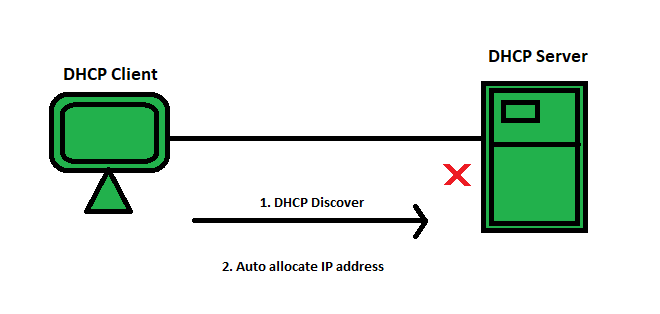
The internet protocol (IP) address is a unique numeric identifier assigned to each device connected to a network. It helps to identify the device, locate it, and communicate with it over the network. However, not all devices have designed IP addresses assigned to them. Automatic Private IP Addressing (APIPA) is a feature of Windows operating systems that enables devices to assign themselves IP addresses when there is no DHCP server available.

APIPA assigns a private IP address to a device in the absence of an available DHCP server. It does so by using a range of IP addresses reserved specifically for this purpose. The range of IP addresses reserved for APIPA is 169.254.0.1 to 169.254.255.254, and APIPA-enabled devices assign themselves a unique IP address within this range.

When a device is unable to obtain a valid IP address from a DHCP server, it will automatically assign itself an IP address within the APIPA range. The device will then attempt to communicate with other devices on the network that have APIPA-enabled addresses. If none are available, communication over the network will not occur.

APIPA is a useful feature that enables devices to communicate over a network even when a DHCP server is not available. It is especially useful for small networks where it is not always feasible to have a dedicated DHCP server. In this case, computers can use APIPA-enabled addresses to communicate with each other on the network.

In conclusion, APIPA is an important feature that ensures devices can communicate over a network even when there is no DHCP server available. It is a useful feature for small networks and ensures that devices can still communicate with each other even in the absence of a dedicated DHCP server. With APIPA, it is possible for devices to automatically assign themselves IP addresses and communicate over a network without any additional configuration needed.


Previous Article

How to Fix a VPN That’s Not ...

Next Article

How to See Who Saved Your Instagram ...

Matthew Lynch

Related articles More from author

  • Digital & Mobile Technology

    DTS Virtual:X Surround Sound: Overhead Sound Without Speakers

    June 10, 2023
    By Matthew Lynch
  • Digital & Mobile Technology

    How to Use FaceTime on Your Laptop

    May 30, 2023
    By Matthew Lynch
  • Digital & Mobile Technology

    5 Steps To Ensure Inclusive Technology For All Learners

    May 31, 2021
    By Matthew Lynch
  • Digital & Mobile Technology

    What Is a Virtual Assistant? How Do You Become One?

    June 10, 2023
    By Matthew Lynch
  • Digital & Mobile Technology

    Best Record Players With Speakers

    August 3, 2023
    By Matthew Lynch
  • Digital & Mobile Technology

    Is IPTV Legal? Here’s What You Need to Know

    June 15, 2023
    By Matthew Lynch

Search

Login & Registration

  • Log in
  • Entries feed
  • Comments feed
  • WordPress.org

Newsletter

Signup for The Tech Edvocate Newsletter and have the latest in EdTech news and opinion delivered to your email address!

About Us

Since technology is not going anywhere and does more good than harm, adapting is the best course of action. That is where The Tech Edvocate comes in. We plan to cover the PreK-12 and Higher Education EdTech sectors and provide our readers with the latest news and opinion on the subject. From time to time, I will invite other voices to weigh in on important issues in EdTech. We hope to provide a well-rounded, multi-faceted look at the past, present, the future of EdTech in the US and internationally.

We started this journey back in June 2016, and we plan to continue it for many more years to come. I hope that you will join us in this discussion of the past, present and future of EdTech and lend your own insight to the issues that are discussed.

Newsletter

Signup for The Tech Edvocate Newsletter and have the latest in EdTech news and opinion delivered to your email address!

Contact Us

The Tech Edvocate
910 Goddin Street
Richmond, VA 23231
(601) 630-5238
[email protected]

Copyright © 2026 Matthew Lynch. All rights reserved.