The Tech Edvocate

Top Menu

  • Advertisement
  • Apps
  • Home Page
  • Home Page Five (No Sidebar)
  • Home Page Four
  • Home Page Three
  • Home Page Two
  • Home Tech2
  • Icons [No Sidebar]
  • Left Sidbear Page
  • Lynch Educational Consulting
  • My Account
  • My Speaking Page
  • Newsletter Sign Up Confirmation
  • Newsletter Unsubscription
  • Our Brands
  • Page Example
  • Privacy Policy
  • Protected Content
  • Register
  • Request a Product Review
  • Shop
  • Shortcodes Examples
  • Signup
  • Start Here
    • Governance
    • Careers
    • Contact Us
  • Terms and Conditions
  • The Edvocate
  • The Tech Edvocate Product Guide
  • Topics
  • Write For Us
  • Advertise

Main Menu

  • Start Here
    • Our Brands
    • Governance
      • Lynch Educational Consulting, LLC.
      • Dr. Lynch’s Personal Website
      • Careers
    • Write For Us
    • The Tech Edvocate Product Guide
    • Contact Us
    • Books
    • Edupedia
    • Post a Job
    • The Edvocate Podcast
    • Terms and Conditions
    • Privacy Policy
  • Topics
    • Assistive Technology
    • Child Development Tech
    • Early Childhood & K-12 EdTech
    • EdTech Futures
    • EdTech News
    • EdTech Policy & Reform
    • EdTech Startups & Businesses
    • Higher Education EdTech
    • Online Learning & eLearning
    • Parent & Family Tech
    • Personalized Learning
    • Product Reviews
  • Advertise
  • Tech Edvocate Awards
  • The Edvocate
  • Pedagogue
  • School Ratings

logo

The Tech Edvocate

  • Start Here
    • Our Brands
    • Governance
      • Lynch Educational Consulting, LLC.
      • Dr. Lynch’s Personal Website
        • My Speaking Page
      • Careers
    • Write For Us
    • The Tech Edvocate Product Guide
    • Contact Us
    • Books
    • Edupedia
    • Post a Job
    • The Edvocate Podcast
    • Terms and Conditions
    • Privacy Policy
  • Topics
    • Assistive Technology
    • Child Development Tech
    • Early Childhood & K-12 EdTech
    • EdTech Futures
    • EdTech News
    • EdTech Policy & Reform
    • EdTech Startups & Businesses
    • Higher Education EdTech
    • Online Learning & eLearning
    • Parent & Family Tech
    • Personalized Learning
    • Product Reviews
  • Advertise
  • Tech Edvocate Awards
  • The Edvocate
  • Pedagogue
  • School Ratings
  • The Astonishing Truth About Student Loan Refinance Rates: What You Need to Know Now

  • Devastating: AI Agents Just Found a Zero-Day in Medical Software in 11 Minutes

  • The AI Education Revolution: 10 Urgent Questions Universities Must Answer Now

  • Explosive Zero-Day Vulnerability: 15 Million Websites Under Siege – Is Yours Next?

  • The Ultimate Kuru Footwear Trio: A Comfort Revolution for Every Adventure

  • Why Your Mortgage Could Be Denied by Biased AI – And What the Fed Is Doing About It

  • Unprecedented: Lawsuit Demands Total AI Shutdown Amid Rising Global Panic

  • The Astonishing Truth: Microcredentials Now Trump MBAs for Data Science Jobs

  • The Astonishing Twist: AI Cuts Your Job, Then Helps You Sue Your Boss

  • The Staggering Truth About Palo Alto’s $4.5 Billion AI Bet

Digital & Mobile Technology
Home›Digital & Mobile Technology›Nits, Lumens, and Brightness on TVs and Projectors

Nits, Lumens, and Brightness on TVs and Projectors
By Matthew Lynch
June 9, 2023
0
Spread the love

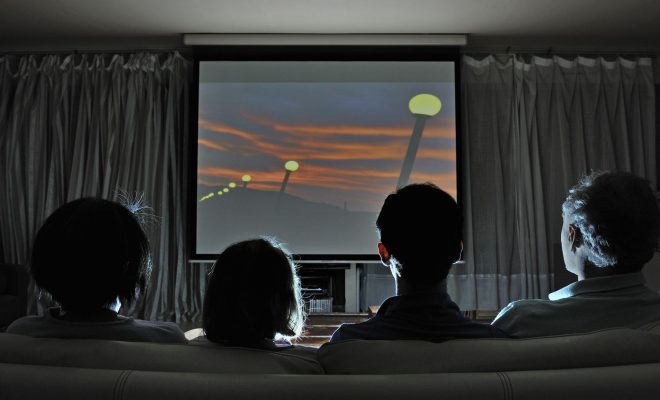
When it comes to TVs and projectors, three key terms come up that relate to the image quality: nits, lumens, and brightness. These terms all relate to the amount of light emitted by the display device, but they each have specific meanings and applications. Understanding these terms can help you make an informed decision when choosing a TV or projector.

Nits is a term used to describe a unit of measurement for brightness. Specifically, it measures the amount of light emitted per square meter of screen. The higher the number of nits, the brighter the screen will appear. For example, a TV with 500 nits of brightness will display a brighter image than one with 300 nits.

Lumens, on the other hand, is a unit of measurement for the amount of light emitted from a source. It’s most commonly used in relation to projectors, where the lamp produces the light. The higher the number of lumens, the brighter the projected image will be. A projector with 2,000 lumens will produce a brighter image than one with 1,500 lumens.

Brightness is a more generic term that can refer to either nits or lumens (or both). It describes the overall level of light emitted by the display device or projector. A bright TV or projector will produce an image that is easier to see in a well-lit room, while a dimmer display may be harder to see.

So what’s the ideal level of brightness for a TV or projector? It depends on a few factors. For TVs, the level of brightness needed will depend on the ambient light in the room. In a bright room, you’ll need a TV with a higher level of brightness (measured in nits) to combat the glare. In a dimly lit room, a TV with a lower level of brightness will work just fine. For projectors, it’s a little more complicated. The ideal level of brightness will depend on how far away the projector is from the screen, the size of the screen, and the ambient light in the room. Generally speaking, projectors with higher lumens ratings will work better in brighter rooms or for larger screens.

When comparing TVs or projectors, it’s important to look beyond just the nits or lumens ratings. Display technology, color accuracy, and other factors will all affect image quality. However, understanding the role that brightness plays in image quality can help you make a more informed decision when choosing a TV or projector.

Previous Article

How to Launch Applications on a Mac

Next Article

What to Include in a Remote Work ...

Matthew Lynch

Related articles More from author

  • Digital & Mobile Technology

    How to Reset Your MacBook or MacBook Pro

    July 6, 2023
    By Matthew Lynch
  • Digital & Mobile Technology

    How to Connect Alexa to Wi-Fi With or Without the App

    July 31, 2023
    By Matthew Lynch
  • Digital & Mobile Technology

    How to Cancel an iPhone Update

    September 7, 2023
    By Matthew Lynch
  • Digital & Mobile Technology

    What is a Central Office (CO)?

    April 16, 2023
    By Matthew Lynch
  • Digital & Mobile Technology

    Spotify vs. Apple Music: Which Is the Best Music Streaming Service?

    June 8, 2023
    By Matthew Lynch
  • Digital & Mobile Technology

    Wise Care 365 v6.5.3

    June 9, 2023
    By Matthew Lynch

Search

Login & Registration

  • Log in
  • Entries feed
  • Comments feed
  • WordPress.org

Newsletter

Signup for The Tech Edvocate Newsletter and have the latest in EdTech news and opinion delivered to your email address!

About Us

Since technology is not going anywhere and does more good than harm, adapting is the best course of action. That is where The Tech Edvocate comes in. We plan to cover the PreK-12 and Higher Education EdTech sectors and provide our readers with the latest news and opinion on the subject. From time to time, I will invite other voices to weigh in on important issues in EdTech. We hope to provide a well-rounded, multi-faceted look at the past, present, the future of EdTech in the US and internationally.

We started this journey back in June 2016, and we plan to continue it for many more years to come. I hope that you will join us in this discussion of the past, present and future of EdTech and lend your own insight to the issues that are discussed.

Newsletter

Signup for The Tech Edvocate Newsletter and have the latest in EdTech news and opinion delivered to your email address!

Contact Us

The Tech Edvocate
910 Goddin Street
Richmond, VA 23231
(601) 630-5238
[email protected]

Copyright © 2026 Matthew Lynch. All rights reserved.