The Tech Edvocate

Top Menu

  • Advertisement
  • Apps
  • Home Page
  • Home Page Five (No Sidebar)
  • Home Page Four
  • Home Page Three
  • Home Page Two
  • Home Tech2
  • Icons [No Sidebar]
  • Left Sidbear Page
  • Lynch Educational Consulting
  • My Account
  • My Speaking Page
  • Newsletter Sign Up Confirmation
  • Newsletter Unsubscription
  • Our Brands
  • Page Example
  • Privacy Policy
  • Protected Content
  • Register
  • Request a Product Review
  • Shop
  • Shortcodes Examples
  • Signup
  • Start Here
    • Governance
    • Careers
    • Contact Us
  • Terms and Conditions
  • The Edvocate
  • The Tech Edvocate Product Guide
  • Topics
  • Write For Us
  • Advertise

Main Menu

  • Start Here
    • Our Brands
    • Governance
      • Lynch Educational Consulting, LLC.
      • Dr. Lynch’s Personal Website
      • Careers
    • Write For Us
    • The Tech Edvocate Product Guide
    • Contact Us
    • Books
    • Edupedia
    • Post a Job
    • The Edvocate Podcast
    • Terms and Conditions
    • Privacy Policy
  • Topics
    • Assistive Technology
    • Child Development Tech
    • Early Childhood & K-12 EdTech
    • EdTech Futures
    • EdTech News
    • EdTech Policy & Reform
    • EdTech Startups & Businesses
    • Higher Education EdTech
    • Online Learning & eLearning
    • Parent & Family Tech
    • Personalized Learning
    • Product Reviews
  • Advertise
  • Tech Edvocate Awards
  • The Edvocate
  • Pedagogue
  • School Ratings

logo

The Tech Edvocate

  • Start Here
    • Our Brands
    • Governance
      • Lynch Educational Consulting, LLC.
      • Dr. Lynch’s Personal Website
        • My Speaking Page
      • Careers
    • Write For Us
    • The Tech Edvocate Product Guide
    • Contact Us
    • Books
    • Edupedia
    • Post a Job
    • The Edvocate Podcast
    • Terms and Conditions
    • Privacy Policy
  • Topics
    • Assistive Technology
    • Child Development Tech
    • Early Childhood & K-12 EdTech
    • EdTech Futures
    • EdTech News
    • EdTech Policy & Reform
    • EdTech Startups & Businesses
    • Higher Education EdTech
    • Online Learning & eLearning
    • Parent & Family Tech
    • Personalized Learning
    • Product Reviews
  • Advertise
  • Tech Edvocate Awards
  • The Edvocate
  • Pedagogue
  • School Ratings
  • 9 Critical Reasons Why Athexio Might Be The Investment You Need (Or Should Avoid)

  • A Single Breakthrough Could Finally Kill Range Anxiety for Millions of EV Owners

  • Your Money, Their AI: The Secret Agents Invading Bank Accounts

  • US Battery as a Service Market Shifts Toward Fleet-Based Energy

  • The Startling Truth: Why Americans Distrust AI with Their Health

  • This Crucial Deadline for Banks Is Closer Than You Think

  • Baffling: CrowdStrike’s $500 Million AI Bet Reshapes Cybersecurity

  • This Crucial Autonomous Driving Rule Could Cost You Everything

  • Baffling: Microsoft AI CEO Demands Halt to Conscious AI Development

  • O seară în ritmul tău: atmosfera divertismentului de cazinou pe internet

Digital & Mobile Technology
Home›Digital & Mobile Technology›How to Manage Users from the Command Line in Linux

How to Manage Users from the Command Line in Linux
By Matthew Lynch
April 30, 2023
0
Spread the love

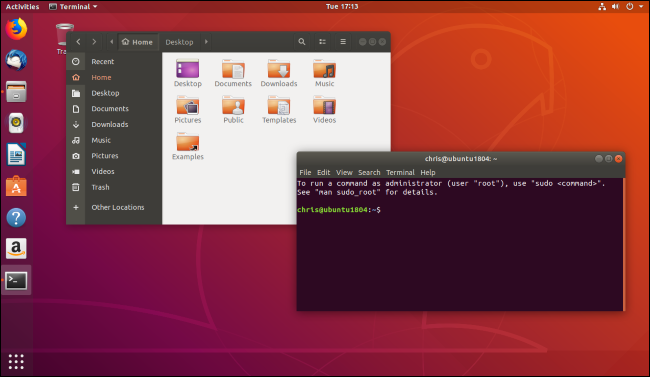
In this article, we’ll show you how to manage users from the command line in Linux.

Create a New User

To create a new user from the command line, use the ‘adduser’ command followed by the desired username. For example, to create a user named ‘johndoe’, run the following command:

“` sudo adduser johndoe“`

This command will prompt you to enter a password for the new user and set various information, such as their full name and contact information. You can also skip this interactive process by adding additional options to the ‘adduser’ command, such as ‘-gecos “John Doe”‘ to set the user’s full name directly.

Delete a User

To delete a user from the system, use the ‘deluser’ command followed by the username. For example, to delete the user ‘johndoe’, run the following command:

“` sudo deluser johndoe“`

This command will remove the user’s home directory and any files or directories owned by the user. It will also remove the user from any group memberships.

Modify User Properties

To modify a user’s properties, such as their password, shell, or group membership, use the ‘usermod’ command followed by the desired options. For example, to change the shell of ‘johndoe’ to ‘/bin/bash’, run the following command:

“` sudo usermod -s /bin/bash johndoe“`

This command updates the user’s login shell to ‘/bin/bash’, which is the default shell for most Linux distributions. You can also use the ‘passwd’ command to change a user’s password directly, like this:

“` sudo passwd johndoe“`

This command prompts you to enter the user’s new password twice for confirmation.

View User Information

To view information about a user, such as their group memberships or home directory, use the ‘id’ or ‘finger’ command followed by the username. For example, to view the groups that ‘johndoe’ is a member of, run the following command:

“` id johndoe“`

This command displays the user’s UID, primary group ID, and a list of supplementary group IDs.

Alternatively, you can use the ‘finger’ command to view additional information about the user, such as their real name and contact information, like this:

“` finger johndoe“`

This command displays the user’s login name, real name, home directory, and login shell.

Conclusion

Managing users from the command line in Linux can be a quick and efficient way to perform various tasks, such as creating new users, modifying user properties, and viewing user information. By using the commands we’ve discussed in this article, you can accomplish these tasks easily and quickly.


Previous Article

Colleges Seek New Revenue Streams, as Students ...

Next Article

How to Manage Users in Ubuntu

Matthew Lynch

Related articles More from author

  • Digital & Mobile Technology

    How to Install a Nostr Relay in Linux

    February 20, 2024
    By Matthew Lynch
  • Digital & Mobile Technology

    How to Send Anonymous Emails: 5 Stealthy Methods

    June 22, 2023
    By Matthew Lynch
  • Digital & Mobile Technology

    Best Keyboard Wrist Rests of 2023

    June 2, 2023
    By Matthew Lynch
  • Digital & Mobile Technology

    How to Remove Wild Tangent Malware

    May 4, 2023
    By Matthew Lynch
  • Digital & Mobile Technology

    How to Unsilence Calls on an iPhone

    June 2, 2023
    By Matthew Lynch
  • Digital & Mobile Technology

    How to Blur Your FaceTime Background on Your Mac

    July 31, 2023
    By Matthew Lynch

Search

Login & Registration

  • Log in
  • Entries feed
  • Comments feed
  • WordPress.org

Newsletter

Signup for The Tech Edvocate Newsletter and have the latest in EdTech news and opinion delivered to your email address!

About Us

Since technology is not going anywhere and does more good than harm, adapting is the best course of action. That is where The Tech Edvocate comes in. We plan to cover the PreK-12 and Higher Education EdTech sectors and provide our readers with the latest news and opinion on the subject. From time to time, I will invite other voices to weigh in on important issues in EdTech. We hope to provide a well-rounded, multi-faceted look at the past, present, the future of EdTech in the US and internationally.

We started this journey back in June 2016, and we plan to continue it for many more years to come. I hope that you will join us in this discussion of the past, present and future of EdTech and lend your own insight to the issues that are discussed.

Newsletter

Signup for The Tech Edvocate Newsletter and have the latest in EdTech news and opinion delivered to your email address!

Contact Us

The Tech Edvocate
910 Goddin Street
Richmond, VA 23231
(601) 630-5238
[email protected]

Copyright © 2026 Matthew Lynch. All rights reserved.