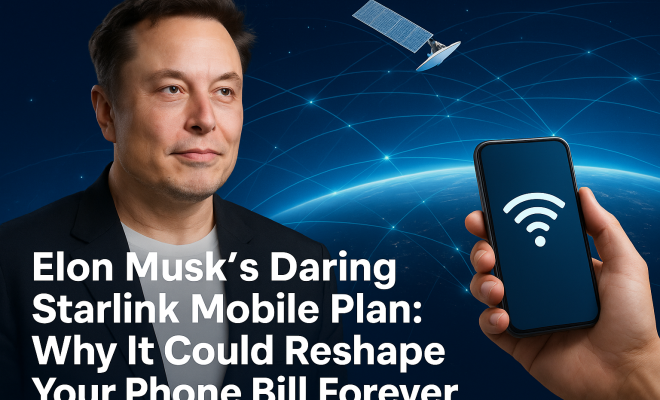
Elon Musk’s Daring Starlink Mobile Plan: Why It Could Reshape Your Phone Bill Forever
When Elon Musk, never one for understatement, declared that Starlink Mobile could rake in ‘hundreds of billions of dollars,’ the telecom world sat up and took notice. This isn’t just about faster internet for your rural cabin anymore; it’s about a fundamental shift in how we might connect our mobile devices, challenging the very titans of traditional cellular service. We’re not talking about some far-off sci-fi fantasy, either. The Federal Communications Commission (FCC) has already given SpaceX the green light to snag more radio spectrum, paving the way for Starlink to become a legitimate mobile service provider in the U.S. This isn’t just a new player entering the field; it’s a whole new game, and the Starlink Mobile vs traditional carriers comparison is about to get very interesting.
Musk’s vision hinges on a hybrid approach, blending conventional cell towers and localized femtocells with a massive constellation of 15,000 next-generation Mobile V2 satellites, set to start launching in 2027. This ambitious setup promises widespread connectivity, especially in areas where traditional carriers have struggled to reach. So, what does this mean for you, the everyday mobile user, looking for the best value in 2026 and beyond? Let’s break down the coming battle for your mobile data.
1. The Grand Vision: A Hybrid Network Approach
Traditional mobile networks, like those from AT&T, Verizon, and T-Mobile, rely heavily on a dense grid of ground-based cell towers. This infrastructure has served us well, providing reliable, high-speed connections in urban and suburban areas. However, this model faces inherent limitations: cost and logistics. Building and maintaining towers in remote, sparsely populated regions often isn’t economically viable, leading to vast ‘dead zones’ where cellular service is spotty or nonexistent. Enter Starlink Mobile, aiming to flip this script.
Starlink’s strategy is to combine the best of both worlds. While those 15,000 Mobile V2 satellites will form the backbone, providing ubiquitous coverage from the sky, they won’t be working alone. SpaceX also plans to leverage ground-based infrastructure, including cell towers and smaller, localized femtocells. Think of femtocells as mini cell towers, often used to boost signals indoors or in specific, limited outdoor areas. This hybrid model suggests a pragmatic approach: use satellites where ground infrastructure is impractical, and supplement with ground-based solutions where they make sense. It’s a compelling proposition for bridging the digital divide, making the Starlink Mobile vs traditional carriers comparison a critical discussion for anyone living or working outside major metropolitan areas.
2. Coverage: Reaching the Unreachable
This is arguably Starlink Mobile’s strongest hand. Traditional carriers, despite their vast investments, simply cannot offer truly global or even nationwide coverage without significant gaps. Drive through many rural stretches of America, hike in national parks, or sail offshore, and you’ll quickly discover the limits of your cellular service. These coverage gaps are precisely where Starlink Mobile aims to shine. With a constellation of thousands of satellites orbiting Earth, the promise is clear: connectivity almost anywhere on the planet, regardless of how remote your location. This is a game-changer for industries like maritime, aviation, and even agriculture, where consistent connectivity has been a distant dream.
For the average consumer, this means the end of those frustrating moments when your map app loses signal on a road trip, or you can’t make an emergency call from a remote campsite. While traditional carriers are continually expanding, their expansion is slow and costly, often prioritizing densely populated areas for maximum ROI. Starlink’s satellite-first approach fundamentally alters this equation, offering a truly global reach that traditional ground-based networks can only dream of matching. The sheer scale of the planned V2 satellite launches suggests a rapid expansion of this ubiquitous coverage, putting immense pressure on traditional providers to innovate or risk losing a significant portion of the market, particularly in underserved regions.
3. Speed and Latency: The Satellite Challenge
Historically, satellite internet has been synonymous with high latency – the delay between sending and receiving data – which makes real-time applications like video calls and online gaming frustrating. This was largely due to geostationary satellites orbiting at 36,000 kilometers (22,000 miles) above Earth. Starlink, however, operates with a Low Earth Orbit (LEO) constellation, with satellites at altitudes of around 550 kilometers (340 miles). This much shorter distance significantly reduces latency, making it competitive with, and in some cases even better than, traditional fixed-line internet services.
For mobile connectivity, the story is a bit more nuanced. While LEO satellites offer vastly improved latency compared to older satellite tech, they still contend with the physics of signal travel and handoffs between satellites. Traditional 5G networks, especially in urban areas, can offer incredibly low latency, sometimes in the single-digit milliseconds. The Starlink Mobile vs traditional carriers comparison here depends heavily on location. In dense urban areas with robust 5G infrastructure, traditional carriers will likely maintain an edge in sheer speed and ultra-low latency. However, in rural areas or regions with poor traditional infrastructure, Starlink Mobile could easily outperform, offering speeds and latency that are more than adequate for most mobile activities, including streaming and video conferencing.
4. Pricing Structures: A New Paradigm?
This is where the rubber meets the road for many consumers. Traditional mobile carriers typically offer a variety of plans, from budget-friendly options with limited data to premium unlimited plans, often bundled with other services like streaming subscriptions. The pricing is complex, often involving family plans, promotional discounts, and various tiers of data speeds. Starlink, on the other hand, has historically offered a more straightforward, albeit premium, pricing model for its fixed-location internet service. Will Starlink Mobile follow suit? (See: Federal Communications Commission (FCC).)
Given Musk’s ‘hundreds of billions’ projection, it’s safe to assume Starlink Mobile will aim for mass adoption, which implies competitive pricing. It’s unlikely they’ll undercut traditional carriers significantly in core urban markets where infrastructure is already established. Instead, their value proposition will likely be tied to their unparalleled coverage. We might see tiered pricing based on data usage, speed, or perhaps even location-specific plans. The real question is whether Starlink can offer a truly unlimited data plan at a price point that makes sense, especially considering the immense bandwidth requirements of a satellite network serving mobile devices. Expect Starlink to position itself as a premium service for those who prioritize ubiquitous connectivity, even if it means a slightly higher monthly fee than the cheapest traditional plans.
5. The FCC’s Role and Market Disruption
The FCC’s approval for SpaceX to acquire additional radio spectrum is a colossal endorsement and a clear signal that regulatory bodies are taking Starlink Mobile seriously as a potential market disruptor. Spectrum is the lifeblood of wireless communication, and owning more of it gives SpaceX the necessary airwaves to transmit and receive mobile signals effectively. Without this, even the best satellite constellation wouldn’t be able to offer competitive mobile services. This regulatory green light significantly de-risks Starlink’s mobile ambitions and paves the way for a more direct challenge to established players. For more context, see changing the game in technology.
For traditional carriers, this is a wake-up call. They’ve long enjoyed a relatively stable market, with competition primarily among themselves. Starlink Mobile introduces an entirely new technological paradigm and a formidable competitor with deep pockets and a reputation for rapid innovation. This could spur traditional carriers to accelerate their own 5G deployments, expand rural coverage more aggressively, and perhaps even rethink their pricing strategies to retain customers. The Starlink Mobile vs traditional carriers comparison is no longer just about incremental improvements; it’s about a fundamental shift in the competitive landscape, potentially forcing incumbents to adapt or lose market share.
6. Device Compatibility and User Experience
One of the intriguing aspects of Starlink Mobile will be how it integrates with existing mobile devices. Will you need a special Starlink-enabled phone, or will standard smartphones be able to connect? SpaceX’s existing ‘Direct to Cell’ technology, which enables standard smartphones to connect directly to Starlink satellites, suggests a future where your current phone could seamlessly switch between terrestrial and satellite networks. This would be a huge advantage, removing a significant barrier to adoption.
However, the user experience isn’t just about connectivity; it’s also about reliability and consistency. While Starlink promises broad coverage, factors like signal strength in dense urban canyons, battery consumption on satellite-connected devices, and the seamless handoff between different network components (satellite, cell tower, femtocell) will be critical. Traditional carriers have spent decades refining these aspects of the user experience. Starlink Mobile will need to prove its reliability in real-world scenarios, ensuring that calls don’t drop, and data streams remain consistent, even as you move through varying environments. The initial rollout will likely be closely scrutinized for these very details.
7. Security and Privacy Considerations
As with any major technological shift, especially one involving global satellite networks, security and privacy are paramount. Satellite-based communication presents unique challenges and opportunities for cybersecurity. On one hand, a globally distributed satellite network could be more resilient to localized attacks or outages compared to a ground-based network. On the other hand, the vast attack surface and the complexity of managing thousands of interconnected satellites introduce new potential vulnerabilities. Securing satellite-based mobile networks will be a critical task for Starlink.
For consumers, understanding how their data is protected when traversing a satellite network will be important. Traditional carriers have established protocols and regulatory frameworks for data privacy. Starlink Mobile will need to clearly articulate its security measures, encryption standards, and data handling policies to build trust with users. The ‘cybersecurity’ aspect mentioned in the source material highlights this critical dimension. As Starlink expands, ensuring the integrity and confidentiality of mobile communications will be as crucial as providing fast, reliable service, playing a pivotal role in the Starlink Mobile vs traditional carriers comparison.
8. The ‘Hundreds of Billions’ Projection: Is it Realistic?
Elon Musk’s projections are often audacious, and ‘hundreds of billions of dollars’ for Starlink Mobile by 2026 is certainly no exception. To put this in perspective, major global telecom players like AT&T and Verizon generate revenues in the hundreds of billions, but that’s across a mature, diversified portfolio of services, not just mobile. Achieving that kind of revenue in a relatively short timeframe for a new mobile entrant would require truly massive market penetration and aggressive monetization strategies.
However, if Starlink can indeed deliver on its promise of truly ubiquitous, reliable, and reasonably priced mobile connectivity, especially in underserved markets globally, the potential market is enormous. Consider the billions of people worldwide who lack consistent mobile access, or the countless businesses that could benefit from global IoT solutions. If Starlink Mobile can capture even a fraction of these untapped markets, alongside disrupting established ones, Musk’s vision, while ambitious, might not be entirely out of reach. The key will be execution, scalability, and overcoming the inevitable technical and regulatory hurdles that come with such a groundbreaking venture. The Starlink Mobile vs traditional carriers comparison hinges on whether this grand vision can translate into concrete, competitive services.
9. Future Implications: Beyond Just Your Phone
The impact of Starlink Mobile extends far beyond simply getting better reception on your smartphone. This technology has profound implications for a multitude of sectors. In the realm of remote work, it could truly democratize access, allowing professionals to live and work anywhere without compromising connectivity. For the Internet of Things (IoT), a globally consistent mobile network could unlock a new generation of connected devices, from smart agriculture sensors in vast fields to remote monitoring equipment in inaccessible locations. This would create entirely new business models and revenue streams for companies leveraging these capabilities. (See: New York Times coverage on Starlink.)
Furthermore, consider emergency services and disaster relief. When ground-based infrastructure is destroyed by natural disasters, satellite-based mobile communication could provide a critical lifeline. For B2B SaaS companies, the ability to deploy IoT solutions or provide remote support without worrying about cellular coverage gaps is a massive boon. The Starlink Mobile vs traditional carriers comparison isn’t just a battle for your phone bill; it’s a battle for the future of global connectivity, and the ripples will be felt across industries for decades to come. It’s a bold new chapter in telecommunications, and we’re all about to witness how it unfolds.
10. The Environmental Footprint: A Growing Concern
While the technological advancements of Starlink are undeniable, the environmental implications of launching and maintaining thousands of satellites in low Earth orbit are a growing area of discussion. Each satellite launch contributes to carbon emissions, and the sheer volume of planned launches raises questions about the cumulative impact. There’s also the issue of space debris. As more satellites are launched, the risk of collisions increases, which can create even more debris, threatening operational satellites and future space missions. SpaceX has stated its commitment to de-orbiting old satellites responsibly, but the long-term effects of such a large constellation are still being studied. For more context, see AI governance careers challenging traditional roles.
Traditional carriers, while having their own environmental footprint from tower construction, energy consumption, and electronic waste, operate in a more regulated and understood terrestrial environment. The Starlink Mobile vs traditional carriers comparison needs to consider these broader ecological costs. As consumers become more environmentally conscious, the sustainability practices of telecom providers, whether terrestrial or satellite-based, will likely become a factor in purchasing decisions. Starlink will need to be transparent about its environmental strategies and demonstrate a strong commitment to sustainable space operations to alleviate these concerns.
11. Navigating the Regulatory Labyrinth: Global Expansion Challenges
The FCC’s approval in the U.S. is a significant step, but Starlink’s global ambition means navigating a complex patchwork of international regulations. Each country has its own telecommunications laws, spectrum allocation rules, and national security concerns that must be addressed. Gaining operating licenses in dozens, if not hundreds, of countries is a monumental task that requires significant diplomatic effort and legal expertise. Some nations may view a foreign-owned satellite network as a potential national security risk, or may prioritize supporting their own domestic telecom industries.
This regulatory landscape can slow down deployment, increase costs, and even restrict services in certain regions. Traditional carriers, while also dealing with national regulations, primarily operate within specific geographical boundaries, simplifying their regulatory burden compared to a global satellite network. The ability of Starlink Mobile to scale globally at the pace Musk envisions will depend heavily on its success in navigating these diverse and often protectionist regulatory environments. The Starlink Mobile vs traditional carriers comparison, from a regulatory perspective, shows Starlink facing a much more intricate and challenging path to universal service.
12. Expert Perspectives: What Analysts Are Saying
Telecom analysts are largely in agreement that Starlink Mobile represents a significant, disruptive force, but they also highlight the formidable challenges ahead. Many see it as a powerful solution for rural and remote connectivity, an area where traditional carriers have historically struggled. Analysts at firms like McKinsey and Deloitte have pointed out that the hybrid approach is shrewd, leveraging the strengths of both satellite and ground infrastructure. They forecast that Starlink could capture a substantial share of the global mobile market, particularly in developing nations and niche enterprise segments like logistics and maritime.
However, skepticism remains regarding Starlink’s ability to truly compete head-to-head with traditional carriers in dense urban centers on price and performance for the average consumer. Experts emphasize that the capital expenditure required for 15,000 V2 satellites is astronomical, and recouping that investment will necessitate a robust, profitable business model. There’s also the question of network capacity – how many simultaneous mobile users can a single satellite effectively serve without degradation in performance? These are the technical and economic realities that will shape the Starlink Mobile vs traditional carriers comparison over the next decade.
13. The Battery Life Conundrum for Mobile Devices
Connecting directly to a satellite from a standard smartphone is technologically impressive, but it comes with a significant practical challenge: power consumption. Transmitting a signal hundreds of kilometers into space requires considerably more power than connecting to a nearby cell tower. This could have a noticeable impact on a smartphone’s battery life. While advancements in chip design and satellite technology aim to minimize this, it’s a factor that will directly affect the user experience.
Traditional mobile devices are optimized for terrestrial cell tower communication, balancing performance with battery efficiency. If Starlink Mobile requires phones to work significantly harder, users might find their devices draining much faster when relying on satellite connectivity. This could be a critical differentiator in the Starlink Mobile vs traditional carriers comparison, especially for users who depend on their phone’s battery for extended periods without charging access. SpaceX will need to address this through innovative hardware solutions or by prioritizing satellite connectivity only when terrestrial networks are unavailable, effectively managing the power draw. For more context, see skills needed to thrive in a changing tech landscape. (See: Research on satellite communication technologies.)
Frequently Asked Questions (FAQ)
Q1: Will my existing smartphone work with Starlink Mobile?
A: SpaceX’s ‘Direct to Cell’ technology is designed to work with existing, standard smartphones, meaning you likely won’t need a special Starlink-enabled device. Your phone should be able to seamlessly switch between terrestrial and satellite networks, though the exact rollout and compatibility details will become clearer closer to the 2027 launch of the Mobile V2 satellites.
Q2: How will Starlink Mobile’s speed and latency compare to 5G?
A: In dense urban areas with robust 5G infrastructure, traditional carriers will likely maintain an edge in ultra-low latency and peak speeds. However, in rural or underserved areas, Starlink Mobile, leveraging its Low Earth Orbit (LEO) satellites, is expected to offer significantly better speeds and latency than existing options, often outperforming traditional 4G/LTE and even some slower 5G deployments. It aims to be more than adequate for most mobile activities like streaming and video calls.
Q3: Will Starlink Mobile be cheaper than traditional mobile carriers?
A: Pricing models are still evolving, but it’s unlikely Starlink Mobile will significantly undercut traditional carriers in core urban markets where infrastructure is already established. Its primary value proposition will be unparalleled coverage. We might see premium pricing for ubiquitous connectivity, or tiered plans based on data usage, speed, or location. Expect it to be competitive, but perhaps not the absolute cheapest option for basic mobile service.
Q4: What are the main benefits of Starlink Mobile over traditional carriers?
A: The biggest benefit is truly ubiquitous global coverage, reaching areas where traditional cellular service is nonexistent or unreliable (e.g., rural areas, national parks, oceans). It offers a critical lifeline for emergency services and a boost for IoT solutions in remote locations. For consumers, it means fewer dead zones and more consistent connectivity on the go.
Q5: What are the potential drawbacks or challenges for Starlink Mobile?
A: Key challenges include: potentially higher power consumption for mobile devices (impacting battery life), navigating complex international regulations for global expansion, managing the environmental impact of satellite launches and space debris, and proving consistent reliability and performance in diverse real-world scenarios. Also, competitive pricing in urban markets against established 5G networks will be tough.
Q6: How will Starlink Mobile impact the future of IoT and remote work?
A: Starlink Mobile could revolutionize both. For IoT, a consistent global mobile network unlocks new generations of connected devices in agriculture, logistics, and environmental monitoring, allowing deployment anywhere. For remote work, it democratizes access, enabling professionals to live and work in previously unconnected areas without sacrificing high-speed internet, truly decoupling location from connectivity.
Trending Now
Frequently Asked Questions
What is Elon Musk's Starlink Mobile plan?
Elon Musk's Starlink Mobile plan aims to revolutionize mobile connectivity by combining traditional cell towers with a constellation of 15,000 next-generation Mobile V2 satellites. This hybrid approach seeks to provide widespread connectivity, especially in areas where traditional carriers struggle, potentially reshaping mobile service as we know it.
How will Starlink Mobile affect my phone bill?
Starlink Mobile could significantly impact phone bills by offering competitive pricing and improved service in underserved areas. With the potential to challenge traditional carriers, users may benefit from better value, especially as the market adapts to this new entrant in mobile services.
When will Starlink Mobile be available?
Starlink Mobile is set to launch its service in 2027, following the deployment of its 15,000 Mobile V2 satellites. This timeline indicates a significant shift in mobile connectivity, promising to enhance service and coverage for users across various regions.
What advantages does Starlink Mobile have over traditional carriers?
Starlink Mobile's primary advantage lies in its hybrid network approach, which combines satellite technology with existing cell infrastructure. This could eliminate dead zones and improve connectivity in remote areas, offering users a more reliable service where traditional carriers often fall short.
What is the FCC's role in Starlink Mobile's launch?
The Federal Communications Commission (FCC) has approved SpaceX's request to acquire more radio spectrum, facilitating Starlink Mobile's entry into the market. This regulatory approval is crucial for enabling Starlink to operate as a legitimate mobile service provider in the U.S.
What's your take on this? Share your thoughts in the comments below — we read every one.