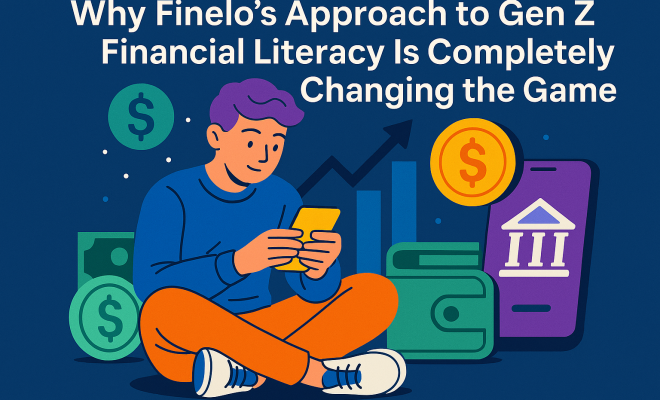
Why Finelo’s Approach to Gen Z Financial Literacy Is Completely Changing the Game
Let’s be blunt: the state of financial literacy in the U.S. is, frankly, pretty grim. We’re talking about a situation where, in 2026, American adults could only correctly answer 47% of basic personal finance questions. That’s a ten-year low, and it paints a clear picture of a widespread knowledge gap. Now, if you zoom in on Gen Z, the picture gets even more concerning: their average score plummets to a mere 38%. Ouch. This isn’t just about failing a pop quiz; it’s about real-world implications, from racking up student debt to struggling with basic budgeting. It’s why platforms like Finelo are becoming not just popular, but absolutely essential.
The good news is that the alarm bells are ringing. Thirty-seven states now mandate financial literacy courses for high school graduation, a clear sign that educators and policymakers are finally taking this seriously. But a traditional classroom setting, while important, often falls short in engaging a generation that grew up with smartphones in their hands. This is where Edtech steps in, offering innovative, interactive, and often gamified solutions. Among these, Finelo has emerged as a standout, even being named a Top 5 Education & Learning Platform by Newsweek’s America’s Best Online Platforms 2026. This Finelo review for Gen Z financial literacy will dive deep into what makes it tick, how it stacks up against the competition, and whether it truly is the best choice for young learners looking to master their money.
1. The Dire Need for Financial Savvy Among Gen Z: It’s Not Just About Money, It’s About Futures
When we talk about Gen Z and financial literacy, we’re not just discussing abstract concepts; we’re talking about their fundamental ability to navigate adult life successfully. This generation faces unique economic challenges: soaring tuition costs, a competitive job market, and an increasingly complex financial landscape. Without a solid understanding of personal finance, they’re ill-equipped to make informed decisions about student loans, managing credit, saving for big goals, or even just budgeting for daily expenses.
The low scores on financial literacy tests aren’t just statistics; they represent potential pitfalls. Imagine graduating college with a mountain of student debt, no clear understanding of interest rates, and no habit of saving. That’s a recipe for stress, missed opportunities, and a delayed start to financial independence. This generation needs more than just information; they need practical skills and the confidence to apply them. That’s the void Finelo aims to fill, transforming a typically dry subject into something approachable and even fun.
2. Gamification: Turning Chores into Challenges: The Core of the Finelo Experience
One of Finelo’s most compelling features, and frankly, a major reason for its success, is its heavy reliance on gamification. Let’s be honest, few teenagers or young adults are going to willingly sit down with a textbook on compound interest. But give them a game, complete with points, levels, badges, and leaderboards, and suddenly, learning about money becomes an engaging pursuit. This isn’t just about slapping a few game elements onto traditional content; it’s about fundamentally redesigning the learning experience.
Think about popular mobile games: they keep you hooked with instant feedback, clear objectives, and a sense of progression. Finelo applies these same psychological principles to financial education. Users earn rewards for completing modules, making smart financial choices in simulated scenarios, and consistently engaging with the platform. This approach fosters a daily habit of thinking about money, which is arguably more valuable than cramming for a single test. It’s about making money management feel less like a chore and more like a personal quest, which is precisely what Gen Z responds to.
3. Real-World Skills, Not Just Theory: What Finelo Actually Teaches
What good is financial literacy if it doesn’t translate into real-world application? This is another area where Finelo shines. The platform isn’t just teaching definitions; it’s focused on equipping users with practical skills they can immediately use. We’re talking about budgeting, for instance. Instead of just explaining what a budget is, Finelo provides interactive tools and simulations where users can create and manage their own virtual budgets, seeing the immediate impact of their spending choices.
Beyond budgeting, Finelo delves into crucial topics like investing, debt management, and understanding credit scores. For investing, users might engage in simulated stock market challenges, learning about risk, diversification, and long-term growth without putting actual money on the line. For debt, particularly student loans, the platform offers scenarios that illustrate the consequences of different repayment strategies. This hands-on, experiential learning is far more effective than passive consumption of information, especially for a generation that learns best by doing.
4. Finelo Review for Gen Z Financial Literacy: Addressing the Student Debt Crisis: A Critical Component
The student debt crisis is a colossal shadow hanging over Gen Z, with over $1.7 trillion owed nationwide. It’s a problem that traditional financial education often overlooks or simplifies. Finelo, however, tackles it head-on. The platform recognizes that understanding student loans isn’t just about knowing the interest rate; it’s about grasping the long-term implications, exploring repayment options, and making informed decisions *before* accumulating debt.
This includes educating users about alternative financing models like Income Share Agreements (ISAs), which tie repayment to a percentage of future earnings rather than a fixed sum, and loans that don’t require a cosigner. By presenting these options and explaining their pros and cons in an accessible way, Finelo empowers Gen Z to navigate the complex world of higher education financing with greater confidence. It’s a proactive approach to a pressing issue, aiming to prevent future debt crises rather than just reacting to them. (See: CDC Youth Risk Behavior Survey.)
5. Accessibility and Engagement: Designed for the Digital Native
For any Edtech platform targeting Gen Z, accessibility and engagement aren’t just desirable features; they’re non-negotiable. This generation grew up with seamless digital experiences, and anything less feels clunky and unappealing. Finelo understands this, offering a platform that’s likely mobile-first, intuitive, and visually appealing. The user interface (UI) and user experience (UX) are crucial here, ensuring that navigation is straightforward and the content is presented in bite-sized, digestible formats.
Engagement also means leveraging the power of community and social learning, where appropriate. While the source doesn’t explicitly detail social features, a platform designed for Gen Z would logically incorporate elements that allow users to share achievements, compete with friends, or discuss financial concepts in a moderated environment. This not only enhances the learning experience but also aligns with how this generation naturally interacts with digital platforms. For more context, see student loan debt relief.
6. Comparison with Other Platforms: Where Does Finelo Stand Out?
The Edtech landscape is crowded, and financial literacy platforms are no exception. You’ve got everything from traditional online courses offered by universities to free resources like Khan Academy, and even other gamified apps. So, how does Finelo distinguish itself? While the source briefly mentions ‘Cool Math Games’ as an example of gamified learning, Finelo’s specialization in *financial* literacy for Gen Z is its key differentiator.
Many general personal finance apps are designed for adults already in the workforce, focusing on advanced investing or retirement planning. Finelo, by contrast, tailors its content and approach specifically to the developmental stage and immediate needs of Gen Z, starting with foundational concepts and building upwards. Its recognition by Newsweek as a top platform suggests a superior blend of engaging design, comprehensive content, and effective pedagogical strategies compared to many competitors.
7. The Monetization Angle: A Win-Win for Learners and Providers
It’s worth briefly touching on the business model behind Finelo and similar platforms, as it often aligns with the user’s benefit. The critical need for financial literacy creates significant monetization opportunities for Edtech companies. This isn’t just about selling subscriptions; it extends to affiliate partnerships. Imagine Finelo recommending a reputable investment app for young adults after a user completes an investing module, or partnering with platforms offering student loan refinancing or alternative financing options.
These partnerships exist within high-CPC (Cost Per Click) niches like personal finance, investing, and loans, meaning there’s strong incentive for platforms to guide users towards beneficial financial products and services. When done ethically and transparently, this creates a win-win: users get actionable next steps and access to tools, and the platform generates revenue, allowing it to continue developing and improving its educational offerings. It makes the Finelo review for Gen Z financial literacy even more important, as the platform acts as a bridge to real-world financial tools.
8. The Future of Financial Education: Why Finelo Represents a New Paradigm
Finelo isn’t just another app; it represents a significant shift in how we approach financial education. For too long, financial literacy has been treated as a dry, academic subject, often relegated to an afterthought in school curricula. The traditional methods clearly aren’t working, given the abysmal national scores. Finelo, and platforms like it, are proving that financial education can be dynamic, engaging, and genuinely effective.
By leveraging technology, understanding Gen Z’s learning preferences, and focusing on practical, real-world skills, Finelo is setting a new standard. It’s about empowering a generation to take control of their financial destinies, rather than being overwhelmed by them. As more states mandate financial literacy, and as the economic landscape continues to evolve, these innovative Edtech solutions will become increasingly vital in equipping young people with the knowledge and confidence they need to thrive.
Ultimately, a Finelo review for Gen Z financial literacy suggests that this platform is more than just a passing trend; it’s a crucial tool in the fight against financial illiteracy. It offers a compelling blend of education and entertainment, making the daunting world of personal finance accessible and even enjoyable. For Gen Z, who are hungry for practical skills and digital experiences, Finelo appears to be hitting all the right notes, offering a genuine path to financial empowerment.
9. Beyond the Basics: Finelo’s Deeper Dives into Economic Concepts
While foundational skills like budgeting and debt management are crucial, true financial literacy also requires understanding broader economic principles. Finelo doesn’t shy away from these more complex topics, but it presents them in a way that’s digestible and relevant to Gen Z’s world. For example, instead of a dry lecture on inflation, Finelo might use a scenario where a user has to budget for a concert ticket or a new tech gadget, and then show how its price has changed over time due to inflation, making the abstract concept concrete.
The platform could also introduce microeconomic concepts through real-world examples. Imagine a module where users manage a small virtual business, making decisions about pricing, supply, and demand. This hands-on approach helps Gen Z grasp how larger economic forces impact their personal finances and career choices. Understanding things like interest rates, economic cycles, and global markets isn’t just for Wall Street professionals; it’s essential for making smart decisions about savings, investments, and even understanding job market trends. Finelo’s ability to simplify these intricate ideas without dumbing them down is a testament to its thoughtful curriculum design.
10. The Role of Behavioral Economics: Nudging Gen Z Towards Better Habits
Financial decisions aren’t always rational; they’re often driven by emotions, biases, and habits. This is where behavioral economics comes into play, and Finelo appears to subtly integrate its principles. By using gamification, the platform isn’t just teaching facts; it’s actively trying to shape positive financial behaviors. For instance, the reward system (points, badges) acts as a positive reinforcement for making smart choices, creating a feedback loop that encourages repetition. (See: Associated Press News on Financial Literacy.)
Think about concepts like “loss aversion” – people tend to feel the pain of a loss more strongly than the pleasure of an equivalent gain. Finelo might design simulations where poor financial choices lead to immediate, albeit virtual, consequences, making the “loss” tangible and thus encouraging users to avoid similar real-world mistakes. Similarly, the platform could use “default options” in its simulations, subtly guiding users towards healthier financial choices, like automatically allocating a portion of virtual income to savings, mimicking real-world auto-savings features. This psychological approach helps embed good habits rather than just imparting knowledge.
11. Customization and Personalized Learning Paths: Tailoring Education to the Individual
One size rarely fits all, especially when it comes to education. Gen Z is a diverse group with varying levels of prior knowledge and different learning styles. A truly effective Edtech platform recognizes this and offers a degree of personalization. While the original text doesn’t explicitly state customization features, it’s a logical extension for a top-tier platform like Finelo. For more context, see AI cheating in schools.
This could involve initial assessments that gauge a user’s existing financial knowledge, then recommending a tailored learning path. For someone with basic budgeting skills but no investing knowledge, Finelo could prioritize investment modules. For another user struggling with debt concepts, the platform might offer more detailed scenarios and resources in that area. Personalized dashboards, progress tracking, and even adaptive quizzes that adjust difficulty based on performance would further enhance the learning experience, ensuring that each Gen Z learner gets the most relevant and challenging content without feeling overwhelmed or bored.
12. Ethical AI and Data Privacy: Building Trust with a Savvy Generation
Gen Z is highly aware of data privacy and the ethical implications of technology. For any platform collecting user data, transparency and robust privacy policies are paramount. While Finelo leverages technology, likely including some form of AI for personalization or content delivery, it’s crucial that it does so ethically. This means clear communication about what data is collected, how it’s used to enhance the learning experience, and how it’s protected.
An ethical AI approach would also mean ensuring that the algorithms powering personalized recommendations or gamified challenges are fair and unbiased. For example, ensuring that financial advice isn’t inadvertently biased towards certain products or demographics. Building trust with Gen Z by demonstrating a strong commitment to data privacy and ethical AI practices will be a significant factor in Finelo’s long-term success and user adoption. It’s not just about what the platform teaches, but how it operates.
13. Partnerships and Broader Impact: Finelo in the Ecosystem
Finelo’s impact can extend beyond individual users. Imagine partnerships with high schools and universities, where Finelo is integrated into mandated financial literacy curricula. This could provide a standardized, engaging tool for educators, ensuring consistency and quality of instruction across different institutions. Furthermore, collaboration with non-profit organizations focused on youth empowerment or financial inclusion could amplify Finelo’s reach, making it accessible to underserved communities.
Beyond education, strategic partnerships with financial institutions could offer Gen Z users a seamless transition from learning to doing. For example, after completing a module on savings accounts, Finelo could provide vetted recommendations for youth-friendly banking options. Or, after learning about credit, it could point users to resources for establishing a healthy credit score. These ecosystem partnerships strengthen Finelo’s position as a holistic financial literacy solution, bridging the gap between theoretical knowledge and practical application in the real world.
Frequently Asked Questions (FAQ) about Finelo and Gen Z Financial Literacy
Q1: Why is financial literacy so low among Gen Z?
Several factors contribute to low financial literacy scores among Gen Z. Many schools historically haven’t offered comprehensive personal finance education, leaving young people to learn through trial and error or from parents who may also lack strong financial knowledge. Additionally, the financial landscape has become more complex, with new digital currencies, online trading platforms, and diverse debt options, which can be overwhelming without proper guidance. Finelo addresses this by offering structured, engaging education designed for their digital-native learning style.
Q2: How does Finelo make learning about money “fun” for Gen Z?
Finelo uses a heavily gamified approach. Instead of traditional lectures or textbooks, it turns financial concepts into interactive challenges, quizzes, and simulations. Users earn points, unlock badges, level up, and can often see their progress on leaderboards. This taps into the psychological drivers of engagement found in popular video games, making the learning process feel like a personal quest rather than a chore. Immediate feedback and a clear sense of accomplishment keep users motivated.
Q3: What specific financial skills does Finelo teach?
Finelo focuses on practical, real-world skills. This includes core concepts like budgeting (creating and managing virtual budgets), saving (understanding different saving goals and strategies), and debt management (especially student loans, credit card debt, and understanding interest rates). It also covers investing fundamentals (simulated stock market challenges, diversification), understanding credit scores, and even navigating taxes and insurance in an accessible way. The goal is to provide actionable knowledge. For more context, see financial literacy courses for high school graduation. (See: New York Times on Gen Z Financial Literacy.)
Q4: Is Finelo suitable for someone with absolutely no prior financial knowledge?
Yes, absolutely. Finelo is designed to start with foundational concepts and gradually build up to more complex topics. It assumes users may have little to no prior financial knowledge. Its bite-sized content, interactive format, and personalized learning paths (where available) ensure that beginners can easily grasp the basics without feeling overwhelmed. It’s a great starting point for anyone looking to build a strong financial foundation.
Q5: How does Finelo help with the student debt crisis?
Finelo tackles the student debt crisis proactively. It educates users on the various types of student loans, understanding interest rates, and the long-term impact of debt. Crucially, it explores different repayment strategies and alternative financing options like Income Share Agreements (ISAs), empowering Gen Z to make informed decisions *before* taking on significant debt. By simulating scenarios, users can see the consequences of different choices without real-world risk.
Q6: Is Finelo a free platform or does it require a subscription?
While the specific monetization model for Finelo isn’t detailed, many successful Edtech platforms offer a freemium model (basic features for free, premium content/features via subscription) or a subscription-based model. Given its recognition and comprehensive nature, it’s likely to involve some form of paid access, perhaps with a free trial or introductory modules. The value it provides often justifies a reasonable fee, especially considering the long-term financial benefits users gain.
Q7: How does Finelo compare to other financial literacy apps or resources?
Finelo stands out primarily due to its specialized focus on Gen Z and its highly gamified, interactive approach. While many general personal finance apps cater to adults with existing financial knowledge, Finelo tailors its content and user experience specifically for young learners, making complex topics engaging and accessible. It prioritizes practical skills over abstract theory and often receives accolades for its effective pedagogical strategies compared to more traditional or broadly targeted platforms.
Q8: Can parents or educators use Finelo to teach financial literacy?
Yes, Finelo can be a valuable tool for both parents and educators. For parents, it offers a structured and engaging way to supplement discussions about money at home. For educators, especially in states with mandated financial literacy courses, Finelo could serve as an excellent interactive resource, either as a primary teaching tool or as supplementary material. Its engaging format can help keep students interested in a subject that might otherwise seem dry in a traditional classroom setting.
Q9: What kind of technology does Finelo use to deliver its content?
Finelo likely uses a blend of modern Edtech technologies. This includes a robust mobile-first platform, interactive multimedia content (videos, animations, infographics), gamification engines, and potentially AI for personalized learning paths and adaptive assessments. A strong, intuitive user interface (UI) and user experience (UX) are central to its design, ensuring seamless navigation and engaging content delivery on various devices.
Q10: How does Finelo stay up-to-date with changing financial trends?
A reputable financial education platform like Finelo would need to have a system in place for content updates. This typically involves a team of financial experts and educators who monitor economic trends, changes in financial regulations, and new financial products or services. Regular content reviews and updates ensure that the information provided is accurate, relevant, and reflects the current financial landscape, preparing Gen Z for the real world they’ll encounter.
Trending Now
Frequently Asked Questions
Why is financial literacy important for Gen Z?
Financial literacy is crucial for Gen Z as it equips them with the skills to make informed financial decisions, navigate student debt, and manage budgeting effectively. With unique economic challenges, understanding personal finance is essential for their future success and stability.
What is Finelo and how does it help with financial literacy?
Finelo is an innovative Edtech platform designed to enhance financial literacy among Gen Z. It offers interactive and gamified learning experiences, making complex financial concepts more engaging and accessible, thus helping young learners master their money management skills.
What are the current statistics on financial literacy in the U.S.?
As of 2026, American adults could only correctly answer 47% of basic personal finance questions, with Gen Z scoring even lower at 38%. This highlights a significant knowledge gap in financial literacy that needs to be addressed for future economic stability.
How are schools addressing financial literacy for students?
In response to the financial literacy crisis, 37 states now require financial literacy courses for high school graduation. This reflects a growing recognition of the importance of equipping students with essential financial knowledge before they enter adulthood.
What makes Finelo stand out among other financial literacy platforms?
Finelo stands out due to its engaging, interactive approach to learning, combining gamification with essential financial education. It has been recognized as a Top 5 Education & Learning Platform by Newsweek, underscoring its effectiveness in reaching and educating Gen Z learners.
What did we miss? Let us know in the comments and join the conversation.