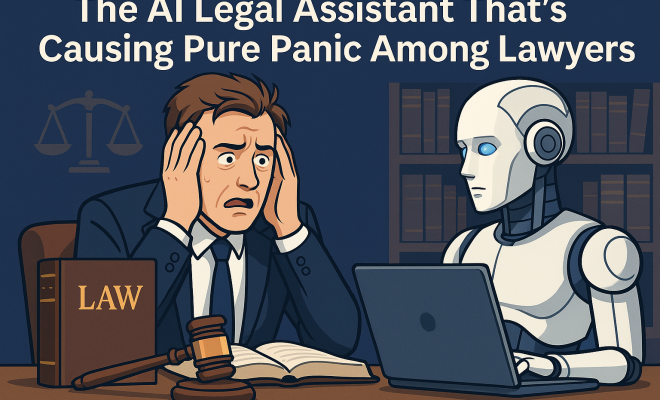
The AI Legal Assistant That’s Causing Pure Panic Among Lawyers
“`html
When LegalTech Solutions Inc. unveiled JurisMind, its new AI-powered legal research and document drafting assistant, the company probably expected a certain buzz. What they got instead was a full-blown inferno of controversy. This isn’t just another shiny piece of software; it’s a direct challenge to the very foundation of the legal profession, promising to automate a staggering 70% of routine legal tasks. Naturally, that kind of claim, especially when tied to the phrase ‘AI legal assistant,’ sends shivers down the spine of anyone earning a living in a courthouse or law office. The backlash has been swift and severe, igniting a fierce debate that’s far from settled, and frankly, it’s not hard to see why.
For years, we’ve heard the whispers about AI coming for blue-collar jobs, then white-collar jobs. But law? The legal field has always felt somewhat insulated, a bastion of human intellect, nuanced judgment, and the kind of intricate problem-solving that surely only a human mind could master. JurisMind, however, throws that assumption into disarray. It’s forcing a reckoning, not just about efficiency and innovation, but about the deeply personal and societal implications of machines stepping into roles we consider inherently human. And as this story goes viral, it’s clear we’re only at the beginning of understanding what this truly means for the future of law.
JurisMind’s Bold Promise: Automation on an Unprecedented Scale
Let’s get straight to the numbers that are causing so much anxiety. LegalTech Solutions isn’t shy about JurisMind’s capabilities, touting its ability to automate up to 70% of routine legal tasks. Think about that for a moment. This isn’t just about speeding up a few processes; it’s about fundamentally reshaping the daily workload of paralegals, junior associates, and even seasoned attorneys. Tasks like sifting through mountains of case law, identifying relevant statutes, drafting initial versions of contracts, or summarizing deposition transcripts – these are the bread and butter of entry-level legal work and often consume a significant portion of a lawyer’s time, regardless of their experience level. If an AI legal assistant can handle the bulk of this, where does that leave the human workforce?
The potential for efficiency gains is, without a doubt, immense. Law firms operate on billable hours, and time is literally money. If JurisMind can drastically reduce the hours spent on grunt work, it could theoretically lower legal costs for clients, increase profit margins for firms, and free up human lawyers to focus on higher-level strategic thinking, client interaction, and complex problem-solving. It sounds like a win-win, right? Less drudgery for lawyers, more affordable services for clients. But as with all technological disruptions, the reality is far more complicated than the utopian vision painted by its creators. The promise of automation, while alluring, often comes with a hefty price tag for those whose livelihoods are directly impacted.
The Looming Specter of Job Displacement
This is where the rubber meets the road, and where the most visceral reactions to JurisMind emerge. The fear of widespread job losses isn’t just hypothetical; it’s a palpable concern for many within the legal profession. When an AI legal assistant can perform tasks that traditionally require years of education and experience, the question naturally arises: how many lawyers and legal support staff will truly be needed? Junior lawyers, paralegals, and legal researchers are particularly vulnerable. Their roles often involve extensive document review, legal research, and the drafting of standard legal documents – precisely the areas where JurisMind claims to excel. Google update insights for lawyers offers useful background here.
Consider the career pipeline in law firms. Entry-level positions are crucial for new graduates to gain experience, learn the ropes, and eventually ascend to more senior roles. If these foundational tasks are largely automated, what does that do to the career trajectory for aspiring lawyers? Will there be fewer entry points into the profession? Will the skills required for new lawyers shift dramatically, demanding more expertise in AI oversight and less in traditional research? These aren’t minor adjustments; they represent a fundamental restructuring of the legal labor market, forcing institutions from law schools to bar associations to grapple with a future that looks radically different from the past.
Questioning Nuance: Can an AI Legal Assistant Truly Judge?
Beyond the economic anxieties, serious ethical dilemmas have emerged, particularly concerning AI’s capacity for nuanced legal judgment. Law isn’t just about applying rules; it’s about interpretation, context, empathy, and understanding the human element behind every case. A legal dispute isn’t a math problem with a single correct answer. It involves complex social dynamics, human motivations, and often, highly subjective interpretations of facts and precedents. Can an algorithm truly grasp the subtle implications of a witness’s demeanor, the unstated motivations of parties in a negotiation, or the broader societal impact of a particular legal ruling?
Critics argue that while an AI legal assistant might be excellent at pattern recognition and data retrieval, it lacks the ‘common sense,’ emotional intelligence, and ethical reasoning that are indispensable to sound legal advice. What happens when an AI encounters a truly novel legal situation, one that doesn’t fit neatly into its training data? Will it provide a safe, albeit uninspired, answer, or could it potentially misinterpret and lead clients down a path with severe consequences? The legal system prides itself on justice, and many believe that justice requires a human touch – a capacity for moral reasoning and an understanding of fairness that no current AI possesses. This isn’t just about speed; it’s about the very quality and integrity of legal outcomes.
The Ethics of AI Interpretation and Sensitive Legal Advice
This brings us to the core ethical tightrope JurisMind and similar technologies are walking. The accuracy of AI interpretations is paramount, especially when sensitive legal advice is on the line. Imagine a client’s future, their financial well-being, or even their freedom depending on an AI’s assessment. If JurisMind makes a mistake – a misinterpretation of a statute, an oversight in a contract, or a biased analysis of case law – who is accountable? Is it the AI developer, the law firm that deployed it, or the individual lawyer who relied on its output? (See: AI's impact on the legal profession.)
Furthermore, how do we ensure that AI models, trained on vast datasets of past legal documents and rulings, don’t perpetuate existing biases? Legal history, like all human history, is rife with systemic inequalities. If an AI learns from data that reflects historical biases related to race, gender, or socioeconomic status, it could inadvertently reinforce those biases in its recommendations, leading to unjust outcomes. This isn’t a theoretical concern; it’s a well-documented problem in many AI applications. Ensuring fairness, transparency, and accountability in AI-driven legal advice isn’t just a technical challenge; it’s a fundamental ethical imperative that demands rigorous oversight and constant vigilance. For more context, see The AI Apocalypse That Almost Happened.
Real-World Examples of AI in Legal Practice (Beyond JurisMind)
While JurisMind is making waves, it’s important to remember that AI isn’t entirely new to the legal sector. Many firms have already quietly adopted specialized AI tools to streamline specific operations. For instance, e-discovery platforms like Relativity and DISCO use AI to analyze vast amounts of electronic data, identifying relevant documents and patterns far quicker than human teams ever could. This dramatically reduces the time and cost associated with litigation preparation. Similarly, contract analysis software from companies like Kira Systems employs machine learning to review and extract key clauses from thousands of contracts in minutes, a task that would take human lawyers weeks. These tools aren’t replacing lawyers wholesale; they’re acting as force multipliers, allowing legal professionals to focus on the strategic implications of the data rather than the tedious process of finding it.
Another area seeing significant AI integration is predictive analytics. Some AI legal assistants are being developed to analyze historical case data, judicial rulings, and even juror behavior to predict the likely outcome of a case. This doesn’t mean a machine is deciding guilt or innocence, but it offers attorneys powerful insights to strategize settlements, prepare arguments, and advise clients on their chances. These aren’t science fiction scenarios; they’re happening in law firms today, subtly shifting how legal work is performed and demonstrating both the promise and the practical challenges of integrating advanced technology into a human-centric profession.
The Broader Fear of AI-Driven Job Displacement in High-Skill Professions
The JurisMind controversy isn’t happening in a vacuum. It taps into a pervasive, global fear of AI-driven job displacement, particularly in what were once considered ‘safe’ high-skill professions. For years, experts reassured us that creativity, critical thinking, and complex problem-solving would remain uniquely human domains, protecting professions like law, medicine, and finance from automation. JurisMind challenges that narrative head-on.
If an AI can draft legal documents with high proficiency, what about medical diagnoses? What about financial analysis? The legal sector, with its reliance on vast textual data and rule-based systems, presents an almost ideal proving ground for advanced AI. The success, or even the perceived success, of an AI legal assistant like JurisMind sends a clear signal to other knowledge-based industries: no profession is immune. This creates a ripple effect, sparking critical discussions not just in law, but across the entire professional landscape, from consultancies to creative agencies. It forces us all to reconsider what human value truly means in an increasingly automated world.
The Commercial Implications: A Bonanza for Legal Tech and Education
Despite the anxieties, or perhaps because of them, the JurisMind controversy is creating a commercial boom in related sectors. This story is resonating deeply within high-CPC niches like legal services, business/B2B SaaS, and online education. For legal tech solutions, it’s a validation of their vision, even if JurisMind itself is facing headwinds. Companies offering AI-powered e-discovery, contract management, or regulatory compliance tools are suddenly finding themselves in the spotlight. The debate highlights the undeniable need for firms to innovate and adopt technology, pushing decision-makers to explore what’s available to stay competitive. Related reading: AI automation in marketing.
Online education, too, is experiencing a surge. Professional development courses for lawyers focusing on AI integration, legal tech literacy, and future-proofing skills are becoming essential. Lawyers who once scoffed at technology are now scrambling to understand it. Similarly, online MBA programs focusing on AI integration, digital transformation, and the ethical implications of emerging technologies are seeing increased interest. This isn’t just about learning how to use an AI legal assistant; it’s about understanding the strategic implications, managing change, and leading organizations through an era of profound technological disruption. The fear of being left behind is a powerful motivator for both individuals and institutions to invest in new knowledge and skills.
Navigating the Future: Adaptation and Redefinition
So, where do we go from here? The launch of JurisMind makes it abundantly clear that the legal profession cannot simply ignore AI. Adaptation is no longer optional; it’s a matter of survival. This means a fundamental redefinition of roles and skill sets within law firms. Instead of seeing AI as a direct replacement, perhaps we need to view it as a powerful co-pilot, augmenting human capabilities rather than supplanting them entirely. Lawyers might spend less time on rote tasks and more time on client counseling, strategic litigation, complex negotiations, and addressing the unique human stories behind every legal issue.
This shift will require significant investment in training and upskilling. Law schools will need to integrate AI literacy into their curricula, preparing future lawyers not just to practice law, but to practice law with AI. Existing legal professionals will need access to continuous education that helps them leverage these tools effectively and ethically. The focus will move from ‘doing’ certain tasks to ‘managing’ and ‘overseeing’ AI, ensuring its output is accurate, unbiased, and aligned with human values. It’s a move up the value chain, demanding different, arguably more complex, skills from legal professionals.
Regulation and Standards: A Critical Next Step
As AI legal assistants become more sophisticated and pervasive, the call for robust regulation and industry standards will only grow louder. The legal profession, traditionally cautious and self-regulating, will need to move quickly to establish guidelines around the ethical use of AI. This includes defining accountability frameworks for errors, ensuring data privacy and security, and developing standards for transparency in AI decision-making. Clients have a right to know when AI is being used in their cases, and lawyers have a professional obligation to ensure that such tools are used responsibly and competently. (See: debate over AI in the workforce.)
Bar associations and regulatory bodies will play a crucial role in shaping this future. They’ll need to develop clear ethical codes, provide guidance on best practices, and potentially even certify AI legal tools to ensure they meet certain performance and ethical benchmarks. Without clear rules, there’s a risk of a wild west scenario where inconsistent application and unforeseen consequences undermine public trust in both technology and the legal system itself. This isn’t about stifling innovation; it’s about ensuring innovation serves justice, not just efficiency. For more context, see AI's ALS Breakthrough.
The Human Element: Why Lawyers Aren’t Obsolete Yet
Despite the alarm bells, it’s crucial to remember that the human element in law remains irreplaceable for many critical functions. While an AI legal assistant can process data, it cannot empathize with a distraught client, negotiate with the nuanced understanding of human psychology, or stand before a jury and connect on a deeply human level. The art of advocacy, the subtle dance of cross-examination, the moral conviction required to argue for justice – these are profoundly human endeavors.
Lawyers bring intuition, creativity, and the ability to think outside the box when no precedent applies. They understand the messy complexities of human relationships and the often-unpredictable nature of human behavior, factors that algorithms simply cannot fully grasp. So, while JurisMind and its successors will undoubtedly transform the legal landscape, they won’t render human lawyers obsolete. Instead, they will likely redefine the lawyer’s role, elevating the importance of those uniquely human skills that AI cannot replicate. The future of law isn’t about humans vs. machines; it’s about humans intelligently leveraging machines to deliver better, more accessible, and more just legal outcomes.
Expert Perspectives: A Spectrum of Views on AI in Law
The debate around AI legal assistants isn’t monolithic; it’s a vibrant discussion with a wide range of expert opinions. On one end, you have technologists and futurists who see AI as an inevitable and overwhelmingly positive force, capable of democratizing legal services and making justice more accessible. They argue that the efficiency gains will free up human lawyers to innovate and tackle truly complex, high-value work. Some even predict a “golden age” for legal professionals who embrace these tools, allowing them to achieve more with less effort. See also Boosting AI citations effectively.
Then there are the cautious optimists, often legal scholars and forward-thinking practitioners. They acknowledge AI’s potential but stress the importance of robust ethical frameworks, regulatory oversight, and continuous human supervision. Their perspective is that AI should be a tool, not a replacement, enhancing human judgment rather than supplanting it. They advocate for a hybrid model where the best of human intellect and machine efficiency work in tandem. On the other end of the spectrum, you find the skeptics, often seasoned lawyers who’ve seen many tech fads come and go. They emphasize the irreplaceable nature of human intuition, empathy, and the unique ability to navigate the messy, unpredictable world of human conflict. They worry about the “black box” problem of AI, where decisions are made without clear, human-understandable reasoning, and the potential for a loss of professional integrity if firms over-rely on automated systems. This diversity of views underscores the complexity of the issue and the need for ongoing dialogue.
Comparing Jurisdictions: Global Approaches to AI in Law
It’s fascinating to see how different countries and legal systems are grappling with the rise of AI legal assistants. In some jurisdictions, like the UK and parts of the EU, there’s a strong emphasis on data protection and ethical AI principles, often leading to more cautious adoption and a greater focus on transparency and accountability. Their General Data Protection Regulation (GDPR) already sets a high bar for data handling, which naturally extends to AI applications that process sensitive legal information. This often means a slower, more deliberate integration of AI, prioritizing safeguards over speed.
Conversely, countries with more innovation-driven economies, such as the United States and parts of Asia, might see quicker adoption rates, driven by a desire for competitive advantage and technological leadership. While ethical concerns are present, the emphasis might lean more towards developing and deploying cutting-edge tools rapidly. This global divergence creates a patchwork of legal and ethical landscapes, potentially leading to challenges in cross-border legal work and the need for international harmonization of standards as AI legal assistants become more prevalent globally. The way each jurisdiction balances innovation, ethics, and economic impact will shape the future of legal practice within their borders.
Future-Proofing Your Legal Career: Skills for the AI Era
For individuals in the legal field, the emergence of advanced AI legal assistants isn’t a signal to despair, but rather a call to adapt and acquire new skills. The future-proof lawyer won’t necessarily be an AI expert, but they will be AI-literate. This means understanding how these tools work, their limitations, and how to effectively leverage them to enhance their own practice. Key skills will include:
- Prompt Engineering: Learning how to ask AI the right questions to get the most relevant and accurate information.
- Data Interpretation & Critical Analysis: AI can provide vast amounts of data, but human lawyers will need to critically evaluate its output, identify biases, and apply judgment.
- Ethical AI Oversight: Understanding the ethical implications of AI use and ensuring compliance with professional standards and regulations.
- Client Relationship Management: As routine tasks are automated, the value of human connection, empathy, and strategic client counseling will only increase.
- Interdisciplinary Collaboration: Working with data scientists, AI developers, and other tech professionals to customize and integrate AI solutions effectively.
Lawyers who embrace these new competencies will position themselves not just as legal experts, but as strategic advisors capable of navigating a technologically advanced legal landscape, moving beyond mere task execution to higher-level problem-solving and innovation. For more context, see The Quiet AI Revolution. (See: automation in legal tasks.)
Frequently Asked Questions About AI Legal Assistants
Q1: What exactly is an AI legal assistant?
An AI legal assistant is a software tool that uses artificial intelligence, like machine learning and natural language processing, to perform various legal tasks. This can include legal research, document review, contract analysis, predictive analytics for case outcomes, and even drafting initial legal documents. It’s designed to augment human lawyers and legal professionals, making their work more efficient.
Q2: Will AI legal assistants replace lawyers entirely?
Most experts agree that AI legal assistants are unlikely to replace lawyers entirely, at least not in the foreseeable future. While they can automate routine, data-intensive tasks, they lack the human judgment, emotional intelligence, empathy, and creative problem-solving skills essential for complex legal strategy, client interaction, courtroom advocacy, and ethical decision-making. The role of lawyers will likely evolve, focusing more on high-level strategic thinking and client relationships. For more on this, see Discovery strategies for law firms.
Q3: How accurate are AI legal assistants?
The accuracy of an AI legal assistant depends heavily on its training data, the quality of its algorithms, and the specific task it’s performing. For structured tasks like document review or identifying specific clauses, AI can be highly accurate and often surpass human speed. However, for tasks requiring nuanced interpretation, creative solutions, or ethical judgment, AI’s accuracy can be less reliable. Human oversight is always critical to verify AI output.
Q4: What are the main benefits of using an AI legal assistant?
The primary benefits include increased efficiency (speeding up research and document review), cost reduction for firms and potentially clients, improved accuracy in certain tasks (like finding specific facts in vast datasets), and freeing up human legal professionals to focus on more complex, strategic, and client-facing work. They can also help democratize access to basic legal information.
Q5: What are the main risks or ethical concerns surrounding AI legal assistants?
Key concerns include the potential for job displacement, perpetuation of biases present in training data, lack of true ethical reasoning or common sense, accountability for errors, data privacy and security issues, and the “black box” problem where AI decisions aren’t easily explainable. There are also concerns about maintaining the human element and trust in the legal system if AI becomes too pervasive without proper oversight.
Q6: How can legal professionals prepare for the rise of AI in law?
Legal professionals can prepare by becoming AI-literate, understanding the capabilities and limitations of these tools, and developing skills in areas that AI cannot replicate. This includes focusing on critical thinking, ethical reasoning, client relationship management, strategic problem-solving, and interdisciplinary collaboration. Continuous learning and adaptation to new technologies will be crucial.
“`
Trending Now
Frequently Asked Questions
What is JurisMind and how does it impact lawyers?
JurisMind is an AI-powered legal research and document drafting assistant developed by LegalTech Solutions Inc. It promises to automate up to 70% of routine legal tasks, raising concerns among lawyers about job security and the future of the legal profession.
Why are lawyers concerned about AI legal assistants?
Lawyers are worried that AI legal assistants like JurisMind threaten their job security by automating tasks traditionally performed by humans. This raises questions about efficiency, the role of human judgment in law, and the societal implications of machines taking over human roles.
What tasks can JurisMind automate?
JurisMind can automate a variety of routine legal tasks, including sifting through case law, identifying relevant statutes, drafting initial versions of contracts, and summarizing depositions, significantly reshaping the workload of legal professionals.
How does JurisMind challenge traditional legal practices?
JurisMind challenges traditional legal practices by automating tasks that were previously thought to require human intellect and nuanced judgment. This challenge prompts a reevaluation of the legal profession's reliance on human lawyers in routine operations.
What are the broader implications of AI in the legal field?
The introduction of AI tools like JurisMind raises important questions about the future of law, including the potential for increased efficiency, the need for new regulations, and the ethical considerations of replacing human roles with machines in a profession that values human judgment.
What's your take on this? Share your thoughts in the comments below — we read every one.