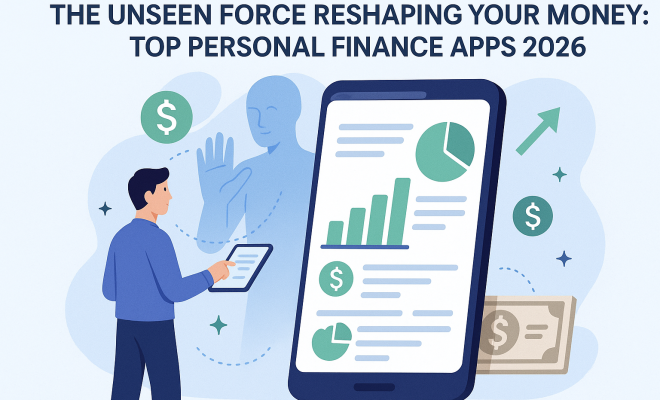
The Unseen Force Reshaping Your Money: Top Personal Finance Apps 2026
“`html
Let’s face it: managing your money isn’t getting any easier. Between student loan debt, the relentless march of inflation, and the ever-present pressure of simply making ends meet, it often feels like you need a financial wizard just to stay afloat. This is especially true for younger generations like Gen Z and Alpha, who are navigating an economic landscape that looks vastly different from what their parents experienced. The good news? Technology is stepping up in a big way, offering a suite of powerful tools designed to demystify personal finance and put you back in control.
As we look ahead to 2026, the personal finance app market isn’t just thriving; it’s evolving at a dizzying pace. We’re moving beyond simple budgeting spreadsheets and into an era of sophisticated AI advisors, hyper-personalized financial education, and seamless integration with every aspect of your financial life. The demand for these tools is immense, and for good reason. People are actively seeking solutions to manage debt, invest wisely, and build genuine wealth. This article will shine a light on the best personal finance apps 2026 has to offer, exploring how they’re transforming the way we think about and interact with our money.
Whether you’re a seasoned investor looking for an edge or a young adult just starting to get a handle on your finances, there’s an app out there ready to become your trusted co-pilot. We’ll dive deep into the platforms making the biggest impact, from all-in-one solutions that feel like having a financial advisor in your pocket to specialized tools designed to tackle specific challenges like debt management or micro-investing. Get ready to discover the innovations that are making financial literacy more accessible and actionable than ever before.
1. Origin Financial: The AI Advisor That Does It All
Imagine having a personal financial advisor who’s available 24/7, understands your unique situation inside and out, and offers tailored advice without the hefty fees. That’s essentially what Origin Financial is bringing to the table, positioning itself as a top all-in-one platform for 2026. This isn’t just another budgeting app; it’s a comprehensive financial ecosystem powered by advanced AI, designed to guide you through every financial decision.
Origin Financial doesn’t just track your spending; it analyzes your financial behavior, identifies patterns, and proactively suggests ways to optimize your budget, accelerate debt repayment, and grow your investments. It’s particularly adept at understanding complex financial situations, offering strategies for everything from managing student loans to planning for retirement. For those seeking a holistic view and proactive guidance, Origin Financial stands out as a genuine game-changer among the best personal finance apps 2026 has to offer.
2. Finelo: Bite-Sized Financial Education for the Modern Age
Let’s be honest, traditional financial education can be… well, a bit dry. And often, it comes too late. This is where Finelo steps in, recognized by Newsweek as a top education and learning platform. It addresses a critical need: making financial literacy engaging, accessible, and practical, especially for younger demographics who are hungry for real-world money skills but often lack formal instruction.
Finelo specializes in delivering bite-sized financial education. Think short, engaging modules, interactive quizzes, and actionable tips that you can immediately apply to your life. It covers everything from understanding credit scores and managing debt to basic investing principles and saving strategies. For anyone feeling overwhelmed by financial jargon or simply looking to build a stronger foundation, Finelo offers a refreshing and effective approach, proving that learning about money doesn’t have to be a chore.
3. Mint: The OG Budgeting Powerhouse Still Going Strong
When you talk about personal finance apps, Mint is often one of the first names that comes to mind, and for good reason. It’s been a stalwart in the industry for years, and even in 2026, its core functionality remains incredibly valuable. Mint excels at giving you a crystal-clear picture of your financial life by linking all your bank accounts, credit cards, investments, and loans in one place.
Its strength lies in its intuitive budgeting tools, which automatically categorize your transactions and help you set spending limits. You can track your net worth, monitor your credit score, and even get alerts for unusual spending or upcoming bills. While newer apps might offer more advanced AI, Mint’s reliability and user-friendly interface make it a fantastic choice for anyone looking for a solid, no-frills budgeting and spending tracker. It’s a foundational tool that many continue to rely on.
4. You Need A Budget (YNAB): Zero-Based Budgeting for Serious Savers
YNAB isn’t just an app; it’s a philosophy. Its core principle is ‘zero-based budgeting,’ meaning every dollar you earn is assigned a job – whether it’s for bills, savings, debt repayment, or discretionary spending. The idea is to be incredibly intentional with your money, preventing it from slipping through your fingers unnoticed. This approach fosters a deep awareness of where your money is going and empowers you to make conscious decisions.
While YNAB has a steeper learning curve than some other apps, its dedicated user base swears by its effectiveness. It helps you break the paycheck-to-paycheck cycle, build up an emergency fund, and achieve significant financial goals. For those committed to a disciplined approach to money management and ready to truly master their cash flow, YNAB remains one of the best personal finance apps 2026 has to offer, despite its subscription fee.
5. Fidelity Full View: Comprehensive Wealth Management for Investors
For individuals with a more complex financial picture, especially those with multiple investment accounts, Fidelity Full View offers an impressive solution. While Fidelity is primarily known as an investment brokerage, its Full View feature aggregates all your external accounts—from other banks and brokerages to credit cards and mortgages—into one dashboard. This gives you a truly comprehensive look at your entire financial landscape.
Full View allows you to track your net worth, analyze your asset allocation across all accounts, and monitor your progress towards various financial goals, whether it’s retirement, a child’s education, or buying a home. It’s a powerful tool for serious investors and anyone managing significant assets, offering a level of detail and integration that goes beyond basic budgeting apps. If you’re a Fidelity customer, or considering becoming one, this feature adds immense value. (See: CDC on financial health and wellness.)
6. Personal Capital (now Empower): Free Investment Tracking and Net Worth Analysis
Personal Capital, recently rebranded as Empower, has long been a favorite for those seeking a robust, free tool for investment tracking and net worth aggregation. It connects to all your financial accounts, giving you a real-time view of your net worth, investment performance, and cash flow. Its strength lies in its sophisticated analytics, which can break down your portfolio by asset class, industry, and risk exposure, even across multiple brokerages.
Beyond the free tools, Empower also offers paid financial advisory services, which is how they monetize. However, the free dashboard alone is incredibly powerful for anyone wanting a detailed look at their investments and overall financial health. For those who want to understand their investment fees, asset allocation, and retirement readiness without paying a dime, Empower’s free offering is hard to beat and definitely earns its spot among the best personal finance apps 2026.
7. PocketGuard: The ‘How Much Can I Spend?’ App
Sometimes, all you really want to know is, ‘how much money do I actually have left to spend without messing up my budget?’ PocketGuard answers that question with remarkable simplicity. It links all your accounts and then, after accounting for upcoming bills, savings goals, and necessary expenses, tells you exactly how much ‘safe to spend’ money you have until your next payday. For more context, see student loan interest rates.
This app is fantastic for people who find traditional budgeting overwhelming or simply want a quick, clear answer to their daily spending limits. It helps prevent overspending by providing a clear, real-time snapshot of your disposable income. While it offers more advanced features through its premium version, its core ‘in my pocket’ functionality is what truly sets it apart and makes it an excellent choice for straightforward money management.
8. Digit: Automated Savings with a Smart Twist
Saving money can feel like a chore, and many struggle with consistency. Digit tackles this head-on by automating the process in a surprisingly smart way. It analyzes your income and spending habits, and then, based on what it determines you can afford, it automatically transfers small, irregular amounts from your checking account into a dedicated savings account. You barely notice the transfers, but they add up significantly over time.
Digit’s AI is designed to be cautious, ensuring it never over-saves to the point of causing an overdraft. It can also help you save for specific goals, like a vacation or a down payment, and even helps pay down credit card debt. For anyone who struggles to consistently save, Digit is a powerful, passive solution that makes building a financial cushion remarkably easy, making it a compelling option in the realm of best personal finance apps 2026.
9. Zeta Joint Cards: Simplifying Finances for Couples
Managing money as a couple can be a minefield, blending finances without losing individual autonomy is a common challenge. Zeta Joint Cards (and their associated app) offers a specialized solution for couples to manage their shared expenses, budget, and financial goals together. It provides joint accounts and debit cards that allow both partners to see and track spending in real-time, eliminating the need for constant reconciliations or awkward conversations.
Zeta is built specifically to address the unique financial dynamics of relationships, whether you’re married, engaged, or simply cohabiting. It helps couples set shared budgets, track joint spending, and even manage individual accounts alongside shared ones. For couples looking to streamline their shared financial life and achieve goals together, Zeta offers a level of integration and transparency that other general finance apps can’t match.
10. Rocket Money (formerly Truebill): The Subscription Slayer
How many subscriptions do you actually have? If you’re like most people, you probably have no idea, and you’re likely paying for services you don’t even use anymore. Rocket Money (formerly Truebill) is designed to be your personal financial advocate, meticulously scanning your bank statements to identify recurring subscriptions and bills.
But it doesn’t stop there. Rocket Money can also help you cancel unwanted subscriptions with a few taps, negotiate lower bills for services like internet or cable, and even get refunds for outages. It also offers budgeting tools and spending insights, but its true superpower lies in its ability to uncover and eliminate financial waste. For anyone tired of subscription creep and looking to trim unnecessary expenses, Rocket Money is an indispensable tool.
The Future is Personalized and Proactive
What we’re seeing across the board with the best personal finance apps 2026 has to offer is a clear trend toward personalization and proactivity. The days of generic advice are waning, replaced by AI-driven insights that understand your unique financial fingerprint. These apps aren’t just reporting on what happened; they’re helping you plan for what’s next, offering tailored recommendations that feel genuinely useful.
This shift is particularly vital for young adults. Gen Z and Alpha are entering adulthood facing unprecedented financial hurdles, from the burden of student loan debt to the soaring cost of living. Tools like Finelo, with its focus on accessible financial literacy, are crucial for equipping these generations with the practical skills they need to navigate a complex economic landscape. The demand for these personalized, educational tools is only going to grow.
Beyond the App: A Mindset Shift
While these apps provide incredible technology, it’s important to remember they are tools, not magic wands. The real power comes from combining their capabilities with a willingness to engage with your finances. They can show you where your money is going, suggest better ways to invest, or even automate your savings, but ultimately, it’s your commitment to financial health that drives success.
The market for personal finance solutions is robust, and it’s clear why. Individuals are actively seeking ways to manage their money, invest wisely, and secure their financial future. The best personal finance apps 2026 are not just about tracking numbers; they’re about empowering you with knowledge, automation, and confidence. So, take the leap, explore these options, and start building the financial future you deserve.
Emerging Trends Shaping Personal Finance Apps in 2026
The landscape of personal finance apps isn’t static; it’s a dynamic ecosystem constantly reacting to technological advancements and user needs. Looking ahead to 2026, several key trends are really pushing the boundaries of what these tools can do, making them even more powerful and integrated into our daily lives.
Hyper-Personalization with Behavioral Economics
We’re moving beyond simple customization. The best personal finance apps 2026 are integrating principles of behavioral economics to understand your financial psychology. They’re not just tracking your spending; they’re analyzing your habits, identifying cognitive biases that might lead to poor financial decisions, and then gently nudging you toward better choices. For example, an app might recognize you tend to overspend on dining out during stressful weeks and suggest a pre-loaded “stress meal” budget or offer healthier, cheaper alternatives. This level of understanding makes the advice feel less like a generic recommendation and more like a helpful insight from a trusted friend. (See: New York Times on personal finance apps.)
Embedded Finance and Seamless Integration
The lines between banking, investing, and personal finance management are blurring. We’re seeing more “embedded finance” where financial services are integrated directly into non-financial platforms. Imagine ordering groceries and your personal finance app automatically categorizes the expense, updates your food budget, and even suggests a cheaper alternative for an item you frequently buy, all without you opening a separate app. This seamless integration makes managing money less of a chore and more of an invisible, supportive layer in your daily life. It’s about reducing friction and making financial decisions almost effortless.
Gamification and Community Building
Especially for younger demographics, engagement is key. Apps are increasingly using gamification elements – think streaks, badges, leaderboards, and challenges – to make financial goal setting fun and rewarding. Saving for a down payment might become a “quest” with milestones and virtual rewards. Beyond individual engagement, there’s a growing emphasis on community features. Users can share tips, participate in challenges with friends, or even get accountability partners within the app. This social aspect can provide motivation and a sense of shared progress, making the journey to financial wellness less isolating. For more context, see October rate hike implications.
AI-Driven Predictive Analytics and Scenario Planning
The AI in personal finance apps is getting incredibly sophisticated. It’s moving from simply reporting on past spending to offering predictive analytics. An app might analyze your income and spending patterns and accurately forecast your cash flow for the next six months, flagging potential shortages before they happen. Even cooler, some apps are offering advanced scenario planning. Want to see how buying a new car impacts your retirement timeline? Or how taking on a side hustle could accelerate debt repayment? These apps can run simulations, providing clear, data-backed answers to complex “what if” questions, giving you a powerful tool for strategic financial planning.
Key Considerations When Choosing Your Best Personal Finance App for 2026
With so many fantastic options available, picking the right personal finance app can feel a bit overwhelming. It’s not about finding the “best” app in a universal sense, but rather the best app for your specific needs. Here are some critical factors to weigh as you make your decision:
1. Your Primary Financial Goal
- Budgeting & Spending Tracking: If you’re struggling to know where your money goes, apps like Mint, YNAB, or PocketGuard are excellent.
- Saving & Debt Repayment: Digit is fantastic for automated savings, while YNAB can be a debt-slaying machine if you commit to its method.
- Investing & Wealth Management: Empower (Personal Capital) and Fidelity Full View shine here, offering deep dives into your portfolio.
- Financial Education: Finelo is tailor-made for building foundational knowledge.
- Subscription Management: Rocket Money is your go-to for cutting unnecessary recurring expenses.
2. Ease of Use and Learning Curve
Some apps, like Mint and PocketGuard, are designed for immediate, intuitive use. Others, like YNAB, have a steeper learning curve because they promote a specific financial methodology. Consider how much time and effort you’re willing to invest in learning a new system. If you prefer a hands-off approach, an app with strong automation like Digit might be better. If you want to be deeply involved, YNAB could be perfect.
3. Security and Privacy
You’re entrusting these apps with sensitive financial data. Always check their security protocols. Look for features like bank-level encryption (256-bit AES), multi-factor authentication (MFA), and robust privacy policies. Reputable apps won’t store your bank login credentials directly; they use secure third-party aggregators. Be wary of any app that doesn’t clearly outline its security measures.
4. Cost and Monetization Model
Many apps offer free versions with premium features available via subscription. Understand what you get for free and what you’d pay for. Some apps, like Empower, offer free tools but also paid financial advisory services as their primary monetization. Others, like YNAB, are purely subscription-based. Weigh the cost against the value and features you’ll actually use.
5. Integration with Existing Accounts
Does the app easily connect to all your banks, credit cards, investment platforms, and loan providers? A key benefit of these apps is a consolidated view, so seamless integration is crucial. Test it out with a few accounts if possible during a free trial.
6. Customer Support
When something goes wrong or you have a question, how easy is it to get help? Look for apps with responsive customer support, whether that’s through chat, email, or phone. Check user reviews for insights into their support quality.
7. Specific Features You Need
Do you need joint accounts for couples (Zeta)? Do you want help negotiating bills (Rocket Money)? Are detailed investment analytics a must (Empower/Fidelity)? Make a list of your non-negotiable features and prioritize apps that offer them.
Expert Perspectives: What Financial Advisors Say About Apps
It’s interesting to hear what traditional financial advisors think about these personal finance apps. Many see them not as replacements, but as powerful complements to professional guidance. “These apps are fantastic for the tactical stuff,” says Sarah Chen, a Certified Financial Planner based in Austin. “They excel at tracking, budgeting, and giving you an overview. They empower clients to take ownership of their daily finances, which makes our strategic planning sessions much more productive.”
Others highlight the educational aspect. “Platforms like Finelo are closing a huge gap in financial literacy,” notes David Miller, a financial coach specializing in Gen Z clients. “My clients who use these apps come in with a better understanding of basic concepts, allowing us to hit the ground running on more complex topics like tax-efficient investing or estate planning. It’s like they’ve done their homework before the meeting.” For more context, see AI's impact on education. (See: Associated Press on financial technology.)
The consensus seems to be that for most people, especially those just starting out or managing relatively straightforward finances, these apps can provide immense value independently. For those with significant assets, complex tax situations, or nearing retirement, an app can serve as an excellent data aggregator and behavioral coach, making their relationship with a human advisor even more efficient and fruitful.
Conclusion: Your Financial Future in Your Hand
What we’re seeing across the board with the best personal finance apps 2026 has to offer is a clear trend toward personalization and proactivity. The days of generic advice are waning, replaced by AI-driven insights that understand your unique financial fingerprint. These apps aren’t just reporting on what happened; they’re helping you plan for what’s next, offering tailored recommendations that feel genuinely useful.
This shift is particularly vital for young adults. Gen Z and Alpha are entering adulthood facing unprecedented financial hurdles, from the burden of student loan debt to the soaring cost of living. Tools like Finelo, with its focus on accessible financial literacy, are crucial for equipping these generations with the practical skills they need to navigate a complex economic landscape. The demand for these personalized, educational tools is only going to grow.
While these apps provide incredible technology, it’s important to remember they are tools, not magic wands. The real power comes from combining their capabilities with a willingness to engage with your finances. They can show you where your money is going, suggest better ways to invest, or even automate your savings, but ultimately, it’s your commitment to financial health that drives success.
The market for personal finance solutions is robust, and it’s clear why. Individuals are actively seeking ways to manage their money, invest wisely, and secure their financial future. The best personal finance apps 2026 are not just about tracking numbers; they’re about empowering you with knowledge, automation, and confidence. So, take the leap, explore these options, and start building the financial future you deserve.
Frequently Asked Questions About Personal Finance Apps
Q1: Are personal finance apps really secure?
A: Reputable personal finance apps use bank-level security measures, including 256-bit encryption, multi-factor authentication, and robust data privacy protocols. They typically use secure third-party aggregators (like Plaid or Finicity) to connect to your bank accounts, meaning they don’t store your actual bank login credentials on their servers. Always check an app’s security policy before connecting your accounts, but generally, the top apps are very secure.
Q2: Can a personal finance app replace a human financial advisor?
A: For many people, especially those just starting their financial journey or with simpler finances, these apps can provide significant value and might even be sufficient. However, for complex situations like extensive investment portfolios, intricate tax planning, estate planning, or navigating major life events (marriage, divorce, business sale), a human financial advisor offers personalized, nuanced advice that apps can’t replicate. Think of apps as excellent tools for daily money management and insights, complementing, rather than replacing, professional advice for complex needs.
Q3: What’s the difference between a free and a paid personal finance app?
A: Free apps often provide core budgeting, spending tracking, and account aggregation features. Paid or premium versions typically unlock more advanced functionalities. This might include deeper analytics, customized reports, ad-free experiences, personalized financial advice, debt payoff strategies, direct bill negotiation services, or premium customer support. The choice depends on your specific needs and how much value you derive from the extra features.
Q4: How do these apps make money if some of them are free?
A: Free apps usually monetize in a few ways. Some offer premium subscription tiers (freemium model). Others might generate revenue through affiliate partnerships, recommending financial products (like specific credit cards or savings accounts) to users based on their financial profile, earning a commission if a user signs up. Some, like Empower (formerly Personal Capital), use the free tools as a lead generator for their paid financial advisory services. Advertising is another common, though often less prominent, revenue stream.
Q5: How often should I check my personal finance app?
A: It depends on your goals and personality. For active budgeters using apps like YNAB, daily or every few days might be ideal to categorize transactions and assign dollars. For those focusing on automated savings or long-term investment tracking, a weekly or bi-weekly check-in could suffice. The key is consistency. Make it a habit that fits your lifestyle, ensuring you’re regularly engaging with your finances without feeling overwhelmed.
“`
Trending Now
Frequently Asked Questions
What are the best personal finance apps for 2026?
The best personal finance apps for 2026 include innovative platforms like Origin Financial, which offers AI-driven advice, and other specialized tools for budgeting, debt management, and investing. These apps are designed to simplify financial management and enhance your financial literacy.
How are personal finance apps changing the way we manage money?
Personal finance apps are revolutionizing money management by integrating advanced AI features, providing personalized financial education, and allowing seamless interaction with various financial aspects. This evolution helps users tackle debt, invest wisely, and build wealth more effectively.
What features should I look for in a personal finance app?
When choosing a personal finance app, look for features like AI-driven financial advice, budgeting tools, debt management capabilities, investment tracking, and user-friendly interfaces. These features can help you manage your finances more efficiently and make informed decisions.
Are personal finance apps suitable for beginners?
Yes, personal finance apps are ideal for beginners. Many of these platforms offer user-friendly interfaces and educational resources that simplify complex financial concepts, making it easier for new users to understand and manage their finances effectively.
How can personal finance apps help with debt management?
Personal finance apps assist with debt management by providing tools to track your debts, create repayment plans, and offer personalized advice on reducing expenses and increasing savings. This guidance can help you manage and pay off debts more efficiently.
What's your take on this? Share your thoughts in the comments below — we read every one.