RFK Jr.’s Bold AI Claim: Is Your Doctor’s Expertise Obsolete?
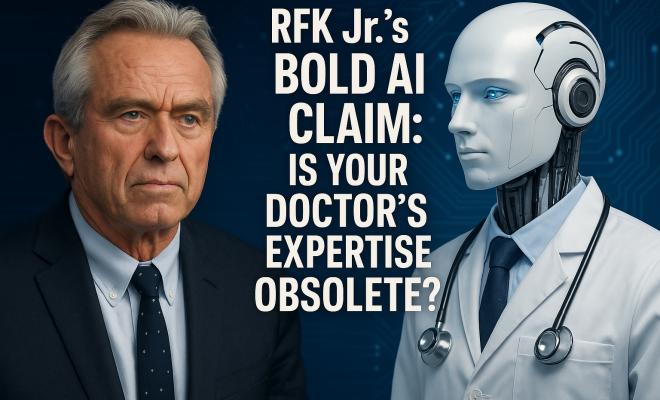
When Robert F. Kennedy Jr. steps onto a stage, you can almost guarantee a stir. But his recent pronouncement at a ‘Make America Healthy Again’ summit has sent ripples far beyond the usual political echo chambers, igniting a fervent debate that touches on everything from patient trust to the very definition of medical expertise. RFK Jr. declared, quite controversially, that artificial intelligence can deliver a better medical second opinion than any human doctor in the country. That’s a bold statement, isn’t it? It’s the kind of claim that makes you sit up and take notice, especially when it comes from a high-profile figure who’s deeply involved in discussions about public health.
He wasn’t just pulling this idea out of thin air, either. RFK Jr. reportedly cited none other than OpenAI’s CEO, Sam Altman, who apparently suggested it would be ‘malpractice’ for doctors not to consult AI. Think about that for a moment: the implication isn’t just that AI is good, but that ignoring it is professionally negligent. This isn’t just about a doctor having a helpful tool; it’s about a fundamental shift in where we place our trust and how we define best practices in medicine. The idea of an AI second opinion as a standard, even mandatory, part of healthcare is a truly fascinating, and for many, unsettling, prospect.
The Spark: RFK Jr.’s Provocative Stance on AI in Medicine
RFK Jr.’s comments weren’t just a casual aside; they were a direct challenge to the established order of medical practice. His assertion that an AI second opinion could surpass human diagnosticians immediately puts traditional medical wisdom on the defensive. It’s an emotionally charged topic because it deals with health, a deeply personal and vulnerable area of our lives. When someone suggests a machine could be better than the highly trained professionals we rely on in our most critical moments, it naturally triggers strong reactions.
The core of his argument, as reported, hinges on the belief that AI’s ability to process vast amounts of data, identify patterns, and cross-reference information far exceeds human cognitive capacity. In theory, an AI could review every single medical journal, every clinical trial, every patient record, and every diagnostic image ever produced, synthesizing it all into an incredibly informed assessment. A human doctor, no matter how brilliant or experienced, simply can’t do that. They’re constrained by their own memory, their personal experiences, and the finite number of hours they have to dedicate to continuous learning. So, the appeal of an all-knowing AI second opinion is, on the surface, quite compelling.
Sam Altman’s ‘Malpractice’ Claim: A Deeper Look
The reported involvement of Sam Altman in this narrative is crucial. As the head of OpenAI, Altman is at the forefront of AI development. His alleged assertion that it would be ‘malpractice’ for doctors to forgo an AI second opinion isn’t just a casual observation; it’s a declaration from a key architect of this technology. This isn’t just a politician speculating; it’s a tech titan setting a new bar for professional responsibility.
Now, let’s unpack that word: ‘malpractice.’ It carries significant weight in medicine. It implies a deviation from accepted standards of care, leading to patient harm. If consulting an AI becomes an accepted standard, then not doing so could, theoretically, be considered negligent. This isn’t just about efficiency or accuracy; it’s about legal and ethical liability. It pushes the conversation from ‘AI as a helpful tool’ to ‘AI as an indispensable component of responsible medical practice.’ This shift in framing is what truly makes the debate so intense and so important. It compels us to consider not just the capabilities of AI, but its moral and legal implications for every doctor and patient.
The Medical Community’s Pushback: Nuance vs. Simplification
Predictably, the medical establishment hasn’t exactly embraced RFK Jr.’s claims with open arms. Experts like Professor Robert Wachter, a prominent figure in digital health and chair of the Department of Medicine at the University of California, San Francisco, have been quick to criticize these comments as ‘massively simplified and un-nuanced.’ And honestly, he has a point. Medicine is rarely black and white; it’s a field brimming with shades of grey, complex interactions, and human factors that AI, for all its processing power, currently struggles to grasp.
Think about a patient’s medical history. It’s not just a collection of data points; it includes their lifestyle, their fears, their cultural background, their adherence to previous treatments, their economic situation, and their ability to access care. These are all critical elements that influence diagnosis, prognosis, and treatment plans. A doctor doesn’t just treat a disease; they treat a person. An AI second opinion, while potentially adept at crunching numbers, might miss the subtle cues, the unspoken anxieties, or the non-linear progression of symptoms that a seasoned clinician picks up on during a detailed patient interaction. The art of medicine, many would argue, lies precisely in navigating these complexities, not just in applying algorithms.
Beyond the Data: The Human Element in Diagnosis
This brings us to the core of the debate: the irreplaceable human element. While AI excels at pattern recognition and data synthesis, can it truly replicate the empathy, intuition, and contextual understanding that a human doctor brings to the table? When you receive a difficult diagnosis, you’re not just looking for a factual statement; you’re looking for reassurance, for clear communication, for someone who understands the emotional weight of what you’re facing. You want a doctor who can explain complex medical concepts in an understandable way, who can answer your specific questions, and who can help you make deeply personal decisions about your health and your future.
Consider the nuances of communication. A doctor might pick up on a subtle change in a patient’s tone of voice, a hesitation, or a non-verbal cue that suggests underlying anxiety or a misunderstanding of their condition. These are critical signals that can alter the course of treatment or even prompt further investigation. An AI second opinion, however sophisticated, operates primarily on inputted data. It doesn’t perceive these subtle human interactions. It doesn’t hold your hand, make eye contact, or offer a comforting word. For many, that human connection is not merely a nicety; it’s an integral part of the healing process and essential for building the trust that underpins effective medical care. (See: AI in healthcare and medical expertise.)
The Peril of Political Weaponization: Distorting the AI Discussion
One of the most concerning aspects of RFK Jr.’s comments, as highlighted by Professor Wachter, is the potential for the political weaponization of AI discussions in medicine. When a nuanced technological debate gets dragged into the political arena, it often loses its complexity and becomes a simplified talking point. This can be incredibly dangerous when dealing with something as critical as healthcare.
Political narratives often thrive on clear-cut heroes and villains, on absolute statements and dramatic claims. The reality of AI in medicine, however, is far more complex. It’s a tool with immense potential, but also with significant limitations and ethical challenges. Reducing it to a soundbite—’AI is better than doctors’—oversimplifies the challenges of data bias, algorithmic transparency, regulatory oversight, and the integration of AI into existing healthcare systems. When political figures make such sweeping statements, it can polarize public opinion, erode trust in both technology and traditional medicine, and hinder the thoughtful, collaborative development of AI solutions that genuinely benefit patients. For more context, see Japanese AI Startup and its impact on medical records.
Ethical AI in Medicine: Beyond Just Data Processing
The discussion around an AI second opinion absolutely must include a robust consideration of ethics. It’s not enough for AI to be accurate; it must also be fair, transparent, and accountable. What happens when an AI makes a diagnostic error? Who is responsible? Is it the developer, the hospital, the doctor who consulted it, or the AI itself? These aren’t just philosophical questions; they have real-world implications for patient safety and legal liability.
Consider issues of bias. AI models are trained on historical data. If that data reflects existing biases in healthcare—for example, if certain populations have historically been underdiagnosed or misdiagnosed—then the AI could perpetuate and even amplify those biases. An AI second opinion could, inadvertently, exacerbate health disparities rather than alleviate them. Furthermore, there’s the ‘black box’ problem: many advanced AI models are so complex that even their creators struggle to fully understand how they arrive at a particular conclusion. For medicine, where transparency and explainability are paramount, this is a significant hurdle. Patients and doctors need to understand the reasoning behind a diagnosis or a recommended treatment, especially when making life-altering decisions.
Patient Trust and the Future of the Doctor-Patient Relationship
At the heart of all medical care is trust. Patients trust their doctors to act in their best interests, to be competent, and to communicate openly. The introduction of an AI second opinion into this dynamic fundamentally alters the relationship. If patients come to believe that an AI is inherently superior, how does that affect their confidence in their human physician? Will it create a two-tiered system where those with access to advanced AI feel they have superior care?
Moreover, the concept of ‘informed consent’ becomes even more intricate. How do you obtain informed consent for an AI-assisted diagnosis if the AI’s internal workings are opaque? How do you explain the probabilistic nature of AI outputs to a patient who is already anxious and overwhelmed? The doctor-patient relationship is built on dialogue, empathy, and shared decision-making. While an AI can provide data, it can’t engage in that human-to-human interaction. The challenge isn’t just about integrating AI into clinical workflows, but about integrating it in a way that preserves and strengthens, rather than erodes, the foundational trust between patient and provider.
Practical Applications and the Road Ahead for AI in Diagnostics
Despite the controversies, it would be disingenuous to dismiss the profound potential of AI in diagnostics. While an AI second opinion may not replace a doctor entirely, it can certainly augment a doctor’s capabilities in powerful ways. Imagine AI as an incredibly intelligent, tireless research assistant for every physician. It can sift through millions of research papers in seconds, identify obscure conditions based on subtle symptom combinations, or highlight potential drug interactions that a human might miss.
For example, in radiology, AI is already proving adept at identifying anomalies in scans that might be missed by the human eye, particularly in high-volume settings where fatigue can set in. In pathology, AI can assist in analyzing tissue samples, helping to classify cells and detect cancerous growths with remarkable accuracy. These are not instances of AI replacing the doctor, but rather of AI empowering the doctor to be even more effective, more accurate, and more efficient. The future likely involves a symbiotic relationship, where the doctor leverages AI’s computational power to enhance their own judgment, rather than being supplanted by it. It’s about ‘AI-augmented intelligence,’ not ‘artificial general intelligence’ taking over the clinic.
Navigating the Regulatory and Educational Landscape
For AI to truly integrate safely and effectively into medicine, there are enormous regulatory and educational hurdles to overcome. Regulators like the FDA are grappling with how to approve and monitor AI algorithms, especially those that learn and adapt over time. Unlike a static drug or device, an AI model can evolve, raising questions about ongoing validation and safety. How do we ensure that an AI second opinion remains reliable as it processes new data and potentially updates its own algorithms?
On the educational front, medical schools and residency programs will need to adapt their curricula. Future doctors won’t just need to understand anatomy and pharmacology; they’ll need to understand how to interact with AI tools, how to interpret their outputs critically, and how to explain AI-derived information to patients. This isn’t about teaching doctors to code, but about fostering ‘AI literacy’ within the medical profession. It’s about equipping them with the skills to leverage these powerful tools responsibly and ethically, ensuring they remain the ultimate decision-makers in patient care.
Economic Realities and Access to AI-Powered Healthcare
Beyond the ethical and practical considerations, we also need to talk about the economics. Integrating advanced AI into healthcare isn’t cheap. The development, deployment, and ongoing maintenance of these sophisticated systems represent significant investments. Who bears this cost? Will AI-powered diagnostics and an AI second opinion become a premium service, further widening the gap between those who can afford cutting-edge care and those who cannot? (See: Artificial intelligence in health care.)
If the goal is to improve healthcare for everyone, then equitable access to these technologies is paramount. We need strategies to ensure that AI doesn’t just benefit well-funded urban hospitals, but also reaches rural clinics, underserved communities, and developing nations. This means exploring innovative funding models, public-private partnerships, and perhaps even open-source AI initiatives tailored for global health challenges. The promise of AI is to democratize knowledge and improve outcomes, but that promise can only be realized if we proactively address the potential for technological disparities.
The Role of Data Security and Privacy in AI Diagnostics
When we talk about AI processing vast amounts of medical data, the immediate concern for many is data security and patient privacy. Medical records contain some of the most sensitive personal information imaginable. How do we ensure that this data, when fed into AI systems for diagnostic purposes or for an AI second opinion, remains protected from breaches, misuse, or unauthorized access? For more context, see AI and the philosophical debate on its capabilities.
Robust cybersecurity measures, strict data anonymization protocols, and transparent data governance frameworks are non-negotiable. Patients need to feel confident that their health information is safe. This also brings up the question of data ownership: who owns the insights generated by an AI when it processes a patient’s data? These are complex legal and ethical questions that need clear answers before widespread adoption of AI in diagnostics can truly take hold. Without trust in data security, patient reluctance to share information could become a significant barrier to AI’s utility.
Case Studies: Where AI is Already Making an Impact
It’s helpful to look at concrete examples of AI’s current impact to contextualize the debate around an AI second opinion. While general purpose diagnostic AI is still maturing, specialized AI applications are already making waves:
- Diabetic Retinopathy Detection: AI systems have been trained to analyze retinal scans and detect signs of diabetic retinopathy, a leading cause of blindness. In some studies, these AI tools have matched or even surpassed human ophthalmologists in accuracy, allowing for earlier detection and intervention, especially in areas with limited access to specialists.
- Drug Discovery: AI is dramatically speeding up the early stages of drug discovery by identifying potential drug candidates and predicting their efficacy and side effects much faster than traditional laboratory methods. This could lead to breakthroughs in treating previously intractable diseases.
- Personalized Medicine: AI can analyze a patient’s genetic profile, lifestyle data, and medical history to recommend highly personalized treatment plans. This moves beyond a one-size-fits-all approach to medicine, optimizing therapies for individual patients.
- Predictive Analytics in Hospitals: AI is being used to predict patient deterioration, identify individuals at high risk for hospital readmission, or even forecast outbreaks of infectious diseases, allowing hospitals to allocate resources more effectively and intervene proactively.
These examples illustrate that AI isn’t just theoretical; it’s already a powerful force for good in specific medical niches. The challenge is scaling these successes and integrating them responsibly into broader diagnostic workflows, including the concept of a comprehensive AI second opinion.
Expert Perspectives: Balancing Hype with Reality
Many leading medical researchers and AI ethicists echo Professor Wachter’s call for nuance. Dr. Eric Topol, a renowned cardiologist and author of “Deep Medicine: How AI Can Make Healthcare Human Again,” often speaks about AI as a tool for “unburdening” physicians, allowing them to spend more time with patients. He envisions AI handling the data processing, pattern recognition, and administrative tasks, freeing up doctors to focus on empathy, communication, and complex decision-making.
Similarly, institutions like the Mayo Clinic are actively exploring AI integration, not as a replacement for their highly skilled physicians, but as an enhancement. Their focus is on developing AI tools that can improve diagnostic accuracy, streamline workflows, and personalize patient care, always with human oversight. These perspectives highlight a shared vision where AI serves as a powerful assistant, augmenting human intelligence and compassion, rather than overshadowing it.
FAQ: Understanding the AI Second Opinion Debate
Q1: What exactly is an ‘AI second opinion’?
An ‘AI second opinion’ refers to an assessment or diagnosis generated by an artificial intelligence system, based on a patient’s medical data (symptoms, lab results, imaging, medical history). The idea is that this AI assessment would be used to either confirm or challenge a human doctor’s initial diagnosis or treatment plan, offering an additional layer of review.
Q2: Why do proponents like RFK Jr. believe AI can be ‘better’ than human doctors?
Proponents argue that AI’s superiority comes from its ability to rapidly process and analyze massive amounts of data – far more than any human brain ever could. This includes every medical journal, clinical trial, and patient record. They believe AI can spot subtle patterns and correlations that human doctors might miss, leading to more accurate and comprehensive diagnoses.
Q3: What are the main concerns or criticisms from the medical community?
The medical community’s primary concerns center on the lack of the human element (empathy, intuition, contextual understanding), the ‘black box’ problem of AI transparency, potential biases in training data leading to health disparities, and the complex ethical and legal questions of accountability when AI makes an error. They also emphasize that medicine is an art as much as a science, requiring human judgment. (See: The impact of AI on medical practices.)
Q4: Can AI truly understand the ‘human element’ of patient care?
Currently, no. While AI can process data about a patient’s condition, it cannot replicate human empathy, compassion, or the ability to interpret non-verbal cues and emotional states. These are crucial for building trust, providing reassurance, and engaging in shared decision-making, which are integral to effective medical care.
Q5: What are some current, real-world applications of AI in diagnostics?
AI is already being used successfully in specific areas like identifying anomalies in radiology scans (e.g., detecting tumors in X-rays or MRIs), analyzing pathology slides for cancer cells, predicting patient risk factors, and assisting in drug discovery. These are typically specialized tools that assist, rather than replace, human experts.
Q6: How will AI in medicine be regulated?
Regulatory bodies like the FDA are developing frameworks for AI in medicine, but it’s a rapidly evolving area. Challenges include the adaptive nature of some AI algorithms (which can change over time), ensuring ongoing safety and efficacy, and establishing clear lines of accountability for AI-generated recommendations. This will likely involve a combination of pre-market approval and post-market surveillance.
Q7: Will doctors need special training to work with AI?
Yes, medical professionals will increasingly need ‘AI literacy.’ This means understanding how AI tools work, how to interpret their outputs critically, recognizing their limitations, and effectively communicating AI-derived information to patients. It’s about learning to leverage AI as a powerful assistant, not just passively accepting its conclusions.
Q8: What about data privacy and security with AI medical systems?
Data privacy and security are paramount. Robust cybersecurity, strict data anonymization, and transparent data governance are essential to protect sensitive patient information used by AI systems. There are ongoing efforts to develop secure, ethical ways to utilize medical data for AI training and application, ensuring patient trust is maintained.
The Verdict: An AI Second Opinion as a Partner, Not a Replacement
So, where does this leave us with RFK Jr.’s provocative claim? While his statement about AI providing a better second opinion than any doctor might grab headlines, it misses the crucial nuances of what constitutes ‘better’ in the complex world of healthcare. Is it purely about diagnostic accuracy? Or does ‘better’ also encompass empathy, contextual understanding, ethical considerations, and the irreplaceable human connection?
The reality is that AI is poised to revolutionize medicine, but likely not in the way some sensationalist claims suggest. It’s far more probable that AI will become an invaluable partner to physicians, a sophisticated tool that enhances their capabilities, reduces errors, and helps them manage the ever-increasing volume of medical knowledge. An AI second opinion, when developed ethically and integrated thoughtfully, has the potential to elevate the standard of care, but it will do so by working alongside human expertise, not by rendering it obsolete. The challenge, and the opportunity, lies in harnessing AI’s power while preserving the art and humanity of medicine.
Trending Now
Frequently Asked Questions
Can AI provide better medical advice than doctors?
Robert F. Kennedy Jr. claims that AI can deliver better medical second opinions than human doctors, citing the necessity for physicians to consult AI to avoid malpractice. This provocative assertion raises questions about the evolving role of technology in healthcare and the potential for AI to enhance diagnostic accuracy.
What did RFK Jr. say about AI in medicine?
At a recent summit, RFK Jr. controversially stated that AI could offer superior medical second opinions compared to human doctors. He referenced OpenAI's CEO, Sam Altman, suggesting that not using AI in medical consultations could be considered malpractice, igniting a debate about trust and expertise in healthcare.
Is it malpractice for doctors not to use AI?
RFK Jr. highlighted that Sam Altman of OpenAI suggested it could be 'malpractice' for doctors to ignore AI in their practice. This statement has sparked discussions about the ethical implications of integrating artificial intelligence into healthcare and the responsibilities of medical professionals.
How does AI impact patient trust in doctors?
The idea that AI could surpass human doctors in providing medical advice challenges traditional notions of trust in healthcare. RFK Jr.'s comments suggest a potential shift in how patients perceive medical expertise, raising concerns about reliance on technology over human judgment in critical health decisions.
What are the implications of using AI in healthcare?
RFK Jr.'s assertion about AI in medicine suggests profound implications for healthcare practices, including the potential for improved diagnostic accuracy and the need for doctors to adapt to technological advancements. This raises questions about the future of medical training and the evolving definition of best practices.
What did we miss? Let us know in the comments and join the conversation.