The Unseen War: Why Data Center Jobs Are Sparking a Political Firestorm
“`html
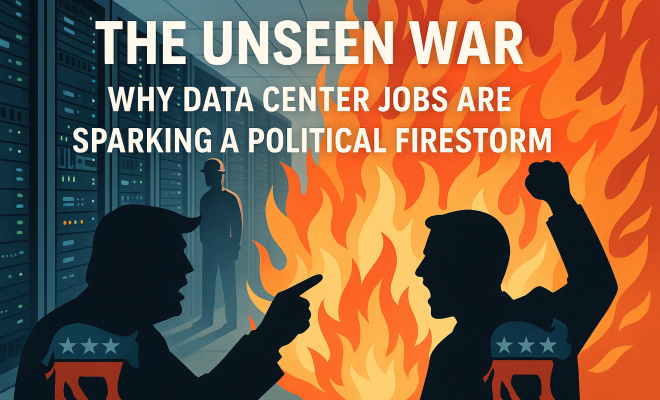
You might think of data centers as those anonymous, windowless buildings humming away in industrial parks, quietly powering our digital lives. But behind those bland facades, a fierce battle is brewing across the United States. Communities are pushing back hard against their construction, citing everything from exorbitant electricity consumption to noise pollution and the sheer volume of water these facilities guzzle. Yet, on the other side of the fence, powerful construction unions are fighting just as vigorously to defend the thousands of high-paying data center jobs these projects generate. It’s a classic clash: local concerns versus economic opportunity, and it’s becoming increasingly volatile.
This isn’t just a regional squabble; it’s a microcosm of a much larger, more complex narrative unfolding in the tech world. For decades, the tech industry has been famously, almost defiantly, anti-union. But that’s changing. From the engineers at Google DeepMind to the developers at Meta, a new wave of tech workers is organizing, driven by anxieties over AI, surveillance, and even the ethical implications of their own creations. The push for unionization in tech, particularly concerning AI deployment and its impact on the workforce, is a surprising, even shocking, development. It’s a sign that the ground beneath the tech giants is shifting, and the repercussions could be profound.
The Rising Tide of Local Opposition to Data Centers
Let’s start with the immediate flashpoint: local communities. Imagine living in a quiet suburban area, only to find plans for a massive data center complex in your backyard. What are the first things that come to mind? For many, it’s the sheer scale. These aren’t small offices; they’re often sprawling campuses, sometimes larger than several football fields, packed with servers that run 24/7. And those servers need power – an incredible amount of it. Communities are rightly concerned about the strain on local electrical grids, leading to potential brownouts or, perhaps more commonly, increased electricity costs for residents and businesses.
Then there’s the water. Cooling these vast server farms requires sophisticated systems, and often, that means significant water consumption. In an era where climate change makes droughts more frequent and water conservation a critical issue, this becomes a major sticking point. Residents in places like Loudoun County, Virginia – often dubbed ‘Data Center Alley’ due to its high concentration of facilities – have voiced concerns about the environmental footprint. It’s not just about the volume; it’s about the perception of a vital resource being diverted to serve machines rather than people, especially in areas facing water scarcity.
And let’s not forget the noise. The constant hum of thousands of servers, cooling fans, and backup generators can be a persistent irritant, particularly for homes located nearby. While facilities are often designed with noise mitigation in mind, the sheer scale sometimes makes it impossible to eliminate entirely. These aren’t trivial complaints; they’re legitimate quality-of-life issues that make residents feel unheard and their concerns dismissed in the rush for technological expansion. The emotional intensity of these local battles can’t be overstated; people are fighting for their peace, their wallets, and their environment.
The Union Counter-Punch: Protecting Data Center Jobs
Now, let’s pivot to the other side of this contentious debate: the construction unions. For them, data centers are a godsend. These aren’t small construction projects; they are multi-million, often multi-billion-dollar endeavors that require legions of skilled tradespeople. We’re talking about electricians, pipefitters, ironworkers, carpenters, and operating engineers, all working for extended periods, earning good wages and benefits. The International Brotherhood of Electrical Workers (IBEW), for instance, sees these projects as vital for their members’ livelihoods and for sustaining the middle class.
When a community pushes back against a data center, it’s not just blocking a tech company; it’s potentially blocking thousands of man-hours for union members. For unions, this isn’t abstract; it’s about putting food on tables, securing pensions, and ensuring a stable future for their families. They argue that the economic benefits, the sheer number of good-paying data center jobs created during construction and then for ongoing maintenance and operation, far outweigh the localized environmental or nuisance concerns. They see themselves as advocates for working people, ensuring that economic development translates into real opportunities.
It’s a powerful counter-argument, especially in regions that have seen traditional manufacturing jobs disappear. Data center construction offers a new avenue for high-skill, well-compensated labor. The unions aren’t just passively observing; they’re actively lobbying, engaging with local governments, and making their case that these projects are essential for regional economic health. This isn’t just about building; it’s about building futures, and that’s a narrative that resonates deeply with many politicians and policymakers.
Beyond Construction: The Broader Tech Unionization Movement
While construction unions are fighting for building jobs, a parallel and perhaps even more significant movement is gaining traction within the tech industry itself. For decades, the stereotypical tech worker was an independent-minded, often highly compensated individual who saw little need for collective bargaining. The culture was one of meritocracy, stock options, and individual achievement. But that’s changing, rapidly.
We’re seeing unionization efforts at companies like Google DeepMind and Meta, two of the titans of the AI world. This isn’t about wages in the traditional sense, though fair compensation is always a factor. These tech workers are organizing around far more complex and emotionally charged issues: the ethical deployment of AI, concerns about increased workloads, algorithmic management, and even the use of their creations for military applications or surveillance. It’s a profound shift, signaling that even in the most cutting-edge sectors, workers are demanding a say in how their labor and innovations are used.
This internal unionization push is particularly striking because it challenges the very ethos of the tech industry. It’s no longer just about perks and high salaries; it’s about power, ethics, and control over their professional lives. The anxiety over AI-induced job losses, a fear that ironically stems from the very technology many of these workers are building, is a powerful motivator. If AI can automate vast swathes of human tasks, what does that mean for their own roles down the line? Unions offer a potential bulwark against arbitrary corporate decisions and a voice in shaping the future of work.
AI’s Double-Edged Sword: Job Creation vs. Job Displacement
The rise of AI presents a fascinating paradox for the labor market, especially concerning data center jobs and the broader tech sector. On one hand, AI absolutely fuels the demand for more data centers. Training complex AI models, running sophisticated algorithms, and storing the vast datasets required for machine learning all demand immense computational power and storage. This directly translates to more construction projects, more hardware installations, and more ongoing maintenance and operational roles within these facilities. (See: impact of data centers on communities.)
Think about the specialized roles emerging: AI infrastructure engineers, data center automation specialists, power and cooling technicians with AI-specific optimization skills. These are new, highly technical roles that didn’t exist a decade ago. So, in one sense, AI is a job creator, particularly for those involved in building and maintaining the foundational infrastructure that supports it. This is a narrative that companies and unions are keen to highlight when advocating for new data center projects.
However, the other edge of this sword is sharp and unsettling: AI’s potential for job displacement. Tech workers, the very people developing these systems, are acutely aware that AI’s ultimate goal is often automation. While it might create some highly specialized roles, it also has the potential to streamline, optimize, and even eliminate many existing white-collar and blue-collar jobs. The fear isn’t just about factory workers; it’s about coders, customer service representatives, data analysts, and even creative professionals. This anxiety is a significant driver behind the push for unionization within tech companies themselves, as workers seek collective protection against a future where their own creations might render them redundant or significantly alter their work. For more context, see industries facing catastrophe.
Ethical Quandaries and Corporate Accountability in Tech
The unionization wave among tech workers isn’t solely about job security or wages; it’s deeply intertwined with ethical concerns. For years, individual tech employees have raised flags about their companies’ practices – whether it’s the development of surveillance technologies, contracts with military or law enforcement agencies, or the potential for AI to perpetuate bias and misinformation. Historically, these individual voices were often dismissed or marginalized.
Unionization offers a collective platform for these ethical concerns. When workers organize, they gain leverage to demand more transparency, influence product development, and advocate for responsible AI principles. We’ve seen instances where employees at major tech firms have successfully pushed back against certain contracts or product features they deemed unethical. This is a significant development, as it shifts the conversation from purely profit-driven innovation to one that includes social responsibility and moral accountability.
The implications are huge. Imagine a future where workers have a formalized say in how AI is deployed, requiring companies to consider the societal impact before launching new products or securing lucrative government contracts. This could force tech giants to adopt stricter ethical guidelines, invest more in bias mitigation, and engage in more robust public dialogue about the implications of their technologies. It transforms employees from cogs in a machine into active stakeholders with a moral compass, potentially reshaping the very nature of tech development.
The Economic Footprint of Data Centers: More Than Just Jobs
When we talk about the economic impact of data centers, it’s easy to focus just on the direct data center jobs they create. But the ripple effect is far wider, and this is a key argument made by proponents of their construction. Think about the massive capital investment involved: land acquisition, construction materials, highly specialized equipment, and the vast power infrastructure required. These investments stimulate local economies in numerous ways.
For one, property taxes. A large data center can generate substantial property tax revenue for a county or municipality, which can then be used to fund schools, roads, and other public services. While some argue that data centers don’t generate many *local* operational jobs compared to, say, a manufacturing plant, the tax base they provide can be a significant and stable source of income for local governments. Additionally, the demand for ancillary services – everything from security firms and catering to landscaping and cleaning services – provides further economic stimulus.
Furthermore, the presence of major tech infrastructure can attract other businesses. Companies looking to establish a presence often prioritize locations with robust, reliable data center access, as it’s crucial for their own operations. This can lead to a tech cluster effect, drawing in more investment, more businesses, and ultimately, more diverse job opportunities beyond the immediate data center roles. So, while the immediate visible jobs might be fewer than some industries, the indirect economic benefits and foundational infrastructure support can be profound.
Navigating the Political Minefield: Community, Corporations, and Labor
The friction surrounding data center construction has created a complex political minefield. On one side, you have community groups and environmental activists, often local residents, advocating for their quality of life, environmental protection, and a voice in local development decisions. They vote, they organize, and they can be a powerful force against projects they perceive as detrimental.
On the other side are the tech corporations, often global behemoths with significant resources, keen to expand their infrastructure to meet the insatiable demand for digital services and AI processing. They come armed with economic impact studies, promises of investment, and sometimes, considerable lobbying power. They view pushback as an impediment to progress and efficiency.
And then there are the unions, particularly construction unions, acting as a crucial third party. They align with the corporations in advocating for project approval, not out of ideological loyalty, but out of a pragmatic need to secure work for their members. This creates some interesting political bedfellows and forces local politicians into difficult positions. Do they prioritize the immediate concerns of their constituents or the long-term economic benefits and job creation championed by powerful labor groups? The answer is rarely simple, often involving compromises, tax incentives, and sometimes, outright battles that play out in public hearings and local elections.
The Future of Work: A New Tech-Labor Paradigm?
What we’re witnessing isn’t just a series of isolated incidents; it’s the potential emergence of a new paradigm in the relationship between tech, labor, and society. The traditional view of tech as an un-unionized, frontier industry driven solely by innovation and individual genius is being challenged from within and without. The push for unionization by tech workers themselves, coupled with the established power of construction unions, signals a maturing of the industry.
This could lead to a more balanced approach to technological development. Imagine a future where companies are not just accountable to shareholders, but also to their employees and the communities they operate in, with formalized mechanisms for worker input on ethical AI, job security, and environmental impact. This isn’t about stifling innovation; it’s about making innovation more responsible and sustainable. (See: environmental concerns of data centers.)
For individuals eyeing a career in tech or related fields, understanding this evolving landscape is crucial. Whether you’re considering one of the many data center jobs in construction or operations, or aiming for a role in AI development, the conversation around worker rights, ethical tech, and community impact will only intensify. Being aware of these dynamics, and even actively engaging with them, will be an increasingly vital part of navigating a successful career in the digital age.
Monetizing the Moment: Opportunities in a Contested Landscape
Whenever there’s significant friction and rapid change, there are always opportunities. This contentious landscape surrounding data centers and tech unionization is no exception, creating fertile ground for new services and products. Consider the legal sector: the surge in tech unionization means a growing demand for labor law specialists who understand the nuances of organizing in a historically anti-union industry. Furthermore, the ethical debates around AI deployment will undoubtedly lead to new regulations, creating a need for legal consulting firms specializing in AI governance and compliance.
Then there’s the educational sphere. As concerns about AI ethics and responsible development grow, so too will the demand for online courses and certifications in these areas. Universities and private educational platforms can offer programs that equip professionals with the knowledge to navigate these complex issues, from AI ethics committees to responsible data practices. This isn’t just about technical skills; it’s about developing a moral and practical framework for deploying powerful technologies. For more context, see Oracle's billion-dollar AI bet.
Finally, B2B SaaS companies have a massive opportunity. The need for AI governance and compliance platforms will become paramount. Companies will require sophisticated software to track AI model lineage, ensure algorithmic fairness, manage data privacy, and demonstrate adherence to evolving ethical standards. Tools that can help organizations transparently manage their AI deployments, mitigating risks and demonstrating accountability, will be in high demand. This isn’t just about avoiding lawsuits; it’s about building trust in an era of unprecedented technological power. The controversies we’re seeing now are, in many ways, laying the groundwork for the next generation of essential services and tech solutions.
Perspectives from Experts: Economists and Environmentalists Weigh In
To truly grasp the complexities of the data center debate, it’s helpful to consider the viewpoints of different experts. Economists often emphasize the multiplier effect of data center investments. For every direct operational job, they’ll point to several indirect jobs created in supporting sectors, from cybersecurity to logistics. A 2022 study by the Data Center Coalition, for example, estimated that the data center industry contributed over $280 billion to the U.S. economy and supported more than 1.5 million jobs, both directly and indirectly. These figures are compelling arguments for local governments seeking economic growth, especially in post-industrial areas.
Environmentalists, however, paint a different picture, focusing on the long-term ecological impact. They highlight the escalating energy demands, pointing out that data centers globally already account for roughly 1% of the world’s electricity consumption, a number projected to rise significantly with the AI boom. They often advocate for stricter regulations on water usage and demand that data centers commit to 100% renewable energy sources, not just offsetting their carbon footprint but actively reducing it. Groups like the Sierra Club frequently challenge the notion that economic benefits should always trump environmental sustainability, pushing for green construction practices and innovative cooling technologies that minimize resource depletion.
These contrasting expert opinions underscore the tightrope walk policymakers face. It’s not simply a matter of choosing one side but finding solutions that balance the undeniable economic benefits of data centers and the data center jobs they create, with the urgent need for environmental responsibility and community well-being. This often means negotiating specific agreements for green energy procurement or water recycling, rather than outright bans or carte blanche approvals.
The Global Context: Data Center Wars Beyond the US
While the focus here is on the United States, it’s crucial to understand that the “data center wars” are a global phenomenon. Countries across Europe, Asia, and Latin America are grappling with similar challenges. Ireland, for instance, has seen significant debate over the energy demands of its burgeoning data center sector, leading to moratoriums and stricter planning guidelines in some areas. Singapore, a major hub, has implemented a temporary pause on new data center developments to assess their environmental impact and ensure sustainable growth. Even in regions with abundant renewable energy, like the Nordics, concerns about land use and local infrastructure strain are emerging.
This global context suggests that the U.S. experience isn’t unique, but rather a leading indicator of a broader trend. As digital transformation accelerates worldwide, and as AI becomes more pervasive, the demand for physical data infrastructure will only intensify. The solutions and compromises forged in places like Loudoun County, Virginia, or in discussions with tech unions in Silicon Valley, could very well serve as blueprints for other nations trying to balance technological progress with local concerns and environmental stewardship. The lessons learned here have implications far beyond American borders.
FAQ: Understanding Data Center Jobs and Their Impact
Q: What types of data center jobs are there?
A: Data center jobs span a wide range of roles. During construction, you’ll find skilled trades like electricians, plumbers, HVAC technicians, ironworkers, and general laborers. For ongoing operations, there are roles such as data center technicians, network engineers, security specialists, facilities managers, power and cooling engineers, automation specialists, and IT support staff. With the rise of AI, new specialized roles like AI infrastructure engineers and machine learning operations (MLOps) engineers are also emerging to manage the complex hardware and software.
Q: Are data center jobs well-paying? For more context, see Facebook privacy lawsuit implications. (See: worker health and safety in tech.)
A: Generally, yes. Many data center jobs, particularly those requiring specialized technical skills or union membership, offer competitive wages and benefits. Construction roles often come with union-negotiated salaries, while operational roles in IT and engineering within data centers are typically compensated well due to the critical nature of the infrastructure and the expertise required.
Q: What are the main environmental concerns associated with data centers?
A: The primary environmental concerns are high electricity consumption, which often relies on fossil fuels contributing to carbon emissions, and significant water usage for cooling systems. Noise pollution from cooling fans and backup generators can also be an issue for nearby residents. Environmental groups advocate for data centers to use 100% renewable energy, implement advanced water recycling technologies, and adopt energy-efficient designs.
Q: Why are tech workers unionizing now, when they didn’t historically?
A: Several factors contribute to this shift. Growing anxieties over AI-driven job displacement and algorithmic management are key. Tech workers are also increasingly concerned about the ethical implications of the products they build, such as surveillance technologies or AI bias, and seek a collective voice to influence corporate decisions. The industry has also matured, leading to larger, more hierarchical companies where individual leverage is diminished, making collective bargaining more appealing.
Q: How do data centers benefit local economies beyond direct jobs?
A: Data centers bring substantial capital investment, generating significant property tax revenue for local governments, which can fund public services. They also create demand for ancillary services like security, catering, and landscaping. The presence of robust digital infrastructure can attract other tech-dependent businesses, fostering a local tech cluster and diversifying the regional economy.
The battles over data centers and the quiet revolution of tech unionization are far more than isolated stories. They are threads in a larger tapestry, weaving together concerns about economic opportunity, environmental stewardship, and the ethical implications of our increasingly digital world. How we collectively navigate these tensions will ultimately shape not just the future of specific industries, but the very fabric of our society.
“`
Trending Now
Frequently Asked Questions
Why are communities opposed to data centers?
Communities oppose data centers due to concerns over excessive electricity consumption, noise pollution, and significant water usage. The construction of these large facilities can strain local resources and disrupt the quality of life for residents.
What impact do data centers have on local economies?
Data centers can provide thousands of high-paying jobs, significantly boosting local economies. However, this economic opportunity is often weighed against environmental and community concerns, leading to a contentious debate.
How is the tech industry responding to unionization efforts?
The tech industry, traditionally anti-union, is witnessing a shift as workers at companies like Google and Meta are organizing for better conditions. This change is driven by concerns over AI, surveillance, and ethical implications of technology.
What are the environmental concerns related to data centers?
Environmental concerns surrounding data centers include their high energy consumption, which can strain local electrical grids, and their substantial water usage, which can impact local water supplies and ecosystems.
What role do construction unions play in the data center debate?
Construction unions are actively defending data center projects, emphasizing the job opportunities they create. They argue that these facilities are vital for economic growth, even as local communities express significant opposition.
Have you experienced this yourself? We'd love to hear your story in the comments.