Viral Videos Expose 10 Disturbing Delivery Robot Issues
Autonomous delivery robots, those wheeled or legged contraptions ferrying everything from takeout meals to groceries, are no longer a futuristic concept. They’re a reality, navigating our sidewalks and streets in growing numbers. While the promise of efficiency and convenience is certainly appealing, recent incidents and a flurry of viral social media content are exposing some truly troubling delivery robots issues that demand our attention. From public safety hazards to the creeping specter of job displacement, these mechanical couriers are sparking intense debate, and frankly, a good deal of frustration. Let’s delve into the ten most pressing concerns.
It’s easy to dismiss a robot bumping into something as a minor inconvenience, but when that ‘something’ is a person, the stakes change dramatically. The technology is advancing at a rapid clip, yet our infrastructure and societal norms are struggling to keep pace. What happens when these machines, designed to be autonomous, encounter the messy, unpredictable reality of human-dense environments? The answers, as we’re seeing, aren’t always pretty, and they raise profound questions about how we integrate such technology safely and equitably into our daily lives.
1. Physical Collisions and Injuries: A Real and Present Danger
Perhaps the most alarming of all delivery robots issues is the very real potential for physical harm. We’re not talking about a minor fender-bender with a shopping cart; we’re talking about collisions that can lead to serious injuries. A particularly stark example emerged from New Jersey, where a cyclist reportedly suffered a broken shoulder and a head injury after being struck by one of these autonomous delivery units. This isn’t just an isolated incident; it’s a stark reminder that these machines, despite their programmed caution, can still be involved in accidents with significant consequences for human beings.
Think about it: these robots, often weighing a fair bit and moving with some momentum, are navigating spaces shared by vulnerable pedestrians, cyclists, and even children. While their sensors are designed to detect obstacles, they aren’t infallible. Human behavior is inherently unpredictable, and the algorithms guiding these robots might not always anticipate a sudden swerve, a child darting out, or a cyclist making an unexpected turn. When a robot’s programming meets the chaotic reality of an urban street, the human often bears the brunt of the collision.
Beyond the immediate physical impact, there’s also the psychological toll. Imagine walking down a street and constantly needing to be on guard for a silent, autonomous vehicle. This can erode the sense of freedom and safety that people expect in public spaces. The current design of many delivery robots, often low to the ground, can also make them difficult to spot, especially for individuals with visual impairments or those who aren’t actively looking for them. This creates a hidden hazard that traditional traffic awareness might not account for, adding a layer of subtle danger to our daily routines.
2. Sidewalk Obstruction and Accessibility Issues: Blocking the Way
Another major point of contention, and a significant delivery robots issue, revolves around these machines hogging public spaces. Sidewalks are designed for pedestrian traffic, and in many urban environments, they’re already crowded. Introducing a fleet of autonomous robots, often moving at a slow but steady pace, can exacerbate this problem, turning a routine walk into an obstacle course. Critics frequently point out that these robots don’t always yield to pedestrians, forcing people to step into the street or navigate around them, especially in tight spots.
This isn’t just an annoyance; it’s a critical accessibility concern. For individuals using wheelchairs, walkers, or strollers, a robot blocking a significant portion of the sidewalk can be a major impediment, or even render a path impassable. Imagine trying to navigate a city street with limited mobility, only to find your route repeatedly obstructed by a machine designed for convenience, not compassion. This oversight in design and deployment raises serious questions about equitable access to public infrastructure.
The problem is compounded in areas with narrow sidewalks or high pedestrian traffic, like many historic city centers or bustling commercial districts. Here, even a single robot can create a bottleneck, forcing people to queue up or divert into potentially unsafe areas. This isn’t just about personal inconvenience; it can also impact businesses whose storefronts become less accessible, or emergency services trying to navigate through congested pedestrian zones. The cumulative effect of many robots operating in a confined space can transform a minor obstruction into a systemic urban planning challenge.
3. Failure to Yield to Pedestrians: Whose Right of Way?
Building on the issue of obstruction, a recurring complaint is the robots’ apparent inability or unwillingness to consistently yield to pedestrians. In many jurisdictions, pedestrians have the right of way on sidewalks and at crosswalks. However, numerous accounts and viral videos depict delivery robots maintaining their path, often forcing humans to stop, wait, or actively move out of their way. This flips the traditional hierarchy of right-of-way on its head, creating confusion and frustration.
While the robots are programmed to avoid collisions, their programming might prioritize their own path efficiency over human convenience or established social norms. This creates a power dynamic where humans are expected to adapt to the machines, rather than the other way around. It’s a small but significant shift that erodes the sense of safety and predictability in public spaces, contributing to a feeling that these machines are intrusive and inconsiderate, adding to the growing list of delivery robots issues.
This “robot entitlement” can be particularly frustrating for parents with young children or individuals with service animals, who need predictable and safe pathways. When a robot doesn’t yield, it forces a split-second decision from a human, often under pressure, which can lead to unsafe situations. It highlights a fundamental mismatch between the rigid logic of a machine and the nuanced, unwritten rules of human social interaction in shared spaces. Addressing this requires more than just collision avoidance; it demands programming that understands and respects human social cues and established right-of-way etiquette.
4. Job Displacement for Human Delivery Drivers: The Automation Threat
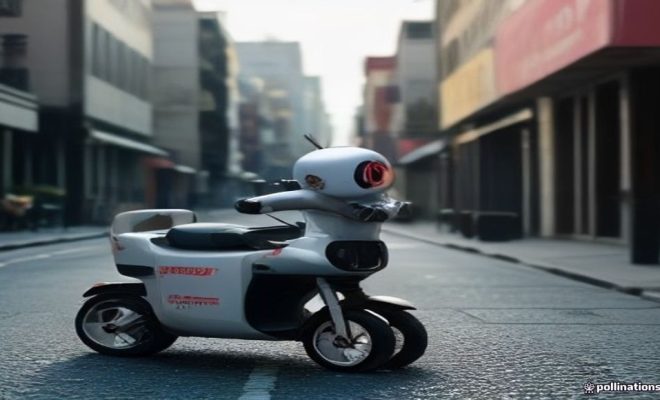
Perhaps the most emotionally charged aspect of the rise of delivery robots is the very real threat of job displacement. Viral videos, particularly those showing humanoid robots on scooters navigating the bustling streets of New York City, have ignited widespread discussion about what this means for the countless human delivery drivers who currently make their living ferrying goods across urban landscapes. It’s a classic automation dilemma: increased efficiency for consumers, but at what cost to human employment? (See: CDC on robotics safety issues.)
The gig economy, heavily reliant on human labor for last-mile delivery, could see significant upheaval. Companies tout the cost-saving benefits of robots – no wages, no benefits, no sick days. But for the individuals whose livelihoods depend on these jobs, the prospect of being replaced by a machine is terrifying. This isn’t just an economic issue; it’s a social one, impacting communities and potentially widening the gap between those who benefit from automation and those who are displaced by it.
Economists and labor advocates are increasingly voicing concerns about the broader societal implications. Studies suggest that a significant percentage of current delivery jobs could be automated in the coming decade, affecting not just couriers but also restaurant staff whose roles might shift. The argument for “upskilling” or transitioning displaced workers into new roles often sounds good on paper, but the reality for many low-wage workers is a lack of access to relevant training and a competitive job market. This isn’t just about individual jobs; it’s about the erosion of a crucial entry point into the workforce for many, and the potential for increased economic inequality within cities.
5. Vandalism and Theft Vulnerability: Easy Targets
It might seem counterintuitive, given their robust appearance, but delivery robots are proving to be surprisingly vulnerable to vandalism and theft. There have been numerous reports and videos showcasing robots being tipped over, kicked, or having their contents stolen. Sometimes it’s mischief, sometimes it’s outright criminal intent, but either way, these incidents highlight a significant operational delivery robots issue for companies deploying them.
Unlike human delivery drivers who can react to threats or secure their cargo, a robot is largely defenseless. While some are equipped with cameras and alarms, these aren’t always deterrents. The cost of repairing damaged robots, replacing stolen goods, and the potential for public safety incidents arising from vandalized units adds another layer of complexity and expense to their widespread adoption. It also raises questions about who is responsible when a robot is damaged or its contents are stolen.
This vulnerability isn’t just about financial loss for companies; it also impacts consumer trust. If customers know their orders are at risk of being stolen from a robot, they might be less likely to opt for robotic delivery. Furthermore, a vandalized robot, especially one that’s been tipped over or left exposed, can become an eyesore or even a hazard itself, blocking pathways or creating a tripping risk. This highlights a need for more robust physical security measures, potentially even human monitoring in high-risk areas, which ironically, cuts into the cost-saving benefits touted by proponents.
6. Navigational Challenges and ‘Stuck Robot’ Scenarios: The Digital Dilemma
While often portrayed as highly intelligent, delivery robots are far from infallible when it comes to navigation, especially in complex, unpredictable urban environments. Potholes, construction zones, unexpected street furniture, or even a sudden downpour can all pose significant challenges. This often leads to what’s humorously (or frustratingly) referred to as ‘stuck robot’ scenarios, where a unit grinds to a halt, unable to proceed.
These incidents aren’t just an inconvenience for the customer whose delivery is delayed; they can also create new delivery robots issues for human passersby. A stuck robot can become an obstruction, a spectacle that draws crowds, or even a hazard if it’s blocking a critical pathway. While remote human intervention can often resolve these issues, it underscores the fact that true, hands-off autonomy in all conditions is still a distant goal, and current systems require a surprising amount of human oversight.
The “digital dilemma” extends beyond physical obstacles. GPS inaccuracies in urban canyons, interference from other signals, or simply an unexpected change in traffic patterns can confuse a robot’s navigation system. These machines rely heavily on pre-mapped data and real-time sensor input, but the urban environment is constantly changing. A sudden street closure, a temporary market stall, or even a large gathering of people can throw off their carefully planned routes. This necessitates a robust system for rapid human intervention, adding an unexpected layer of operational complexity and cost that isn’t always factored into initial projections.
7. Public Perception and Acceptance: The Creep Factor
Beyond the tangible problems, there’s a significant psychological and social delivery robots issue: public perception and acceptance. For many, these robots are still a novelty, even a bit unsettling. The sight of an autonomous machine silently gliding down a sidewalk can evoke a range of reactions, from curiosity to outright discomfort or even hostility. The viral videos often tap into this ‘creep factor,’ highlighting the uncanny valley effect or the sense that technology is encroaching on human spaces in an unwelcome way.
This isn’t a minor point. For widespread adoption to succeed, the public needs to not only tolerate these robots but genuinely accept them as part of the urban fabric. If people feel these machines are a nuisance, a threat, or simply unsettling, it creates an uphill battle for deployment. Companies need to invest not just in technological advancements but also in strategies to build trust and familiarity with the public, addressing concerns head-on rather than simply deploying and hoping for the best.
The “creep factor” is often amplified by the lack of clear communication from companies about their robots’ purpose, capabilities, and safety protocols. Without this transparency, people tend to fill in the blanks with their own anxieties and fears about automation. Imagine a robot stopping and “staring” at a child with its cameras – even if it’s just processing its environment, it can feel invasive and threatening. Building trust requires active engagement with communities, visible safety measures, and perhaps even a more human-friendly design aesthetic that mitigates the current sense of cold, impersonal technology invading personal space.
8. Regulatory and Liability Loopholes: Who’s Accountable?
One of the most complex delivery robots issues currently facing municipalities and tech companies alike is the tangled web of regulation and liability. Who is responsible when a robot causes an accident? Is it the manufacturer, the deploying company, the remote operator, or perhaps even the local government that allowed its operation? Existing laws and ordinances were largely written before autonomous robots were a widespread reality, leaving significant legal loopholes.
The lack of clear guidelines creates uncertainty for everyone involved. Without defined regulations, the process of deploying and operating these robots can be inconsistent, leading to a patchwork of rules across different cities or states. Furthermore, the absence of clear liability frameworks means that victims of robot-related incidents may face an arduous legal battle to seek compensation, complicating an already distressing situation. This regulatory vacuum is a critical hurdle that needs urgent attention. (See: New York Times on delivery robot safety.)
The challenge of liability is compounded by the distributed nature of robot design and operation. A robot might have components from various manufacturers, software from another, and be operated by a third-party service provider. Pinpointing culpability in an accident becomes a forensic nightmare, potentially delaying justice for victims and creating significant financial risk for all parties involved. This legal ambiguity can also stifle innovation, as companies might be hesitant to deploy new technologies without clear legal protections. Governments need to proactive in developing comprehensive legal frameworks that address these complexities head-on, perhaps drawing parallels from existing autonomous vehicle legislation while adapting for sidewalk-specific challenges.
9. Data Privacy and Surveillance Concerns: Always Watching?
Most, if not all, delivery robots are equipped with an array of sensors, cameras, and microphones to navigate their environment and communicate with operators. While essential for their function, this also raises significant data privacy and surveillance concerns. Are these robots constantly recording their surroundings? What kind of data are they collecting about pedestrians, private property, and public spaces? And perhaps more importantly, who has access to this data, and how is it being used or secured?
For many, the idea of an autonomous machine, operated by a private company, constantly recording public interactions is deeply unsettling. It evokes fears of pervasive surveillance and the erosion of personal privacy in public areas. Companies need to be transparent about their data collection practices, implement robust security measures, and adhere to strict privacy policies to build public trust. Without it, these robots could be perceived not just as delivery vehicles, but as mobile surveillance units, adding another layer to the complex delivery robots issues.
The potential for data misuse is vast. Imagine a robot’s cameras inadvertently capturing sensitive private information, or its microphones picking up private conversations. This data, if not properly anonymized, encrypted, and governed by strict access controls, could be vulnerable to breaches, commercial exploitation, or even government requests. The ethical implications are enormous. Companies must not only comply with existing privacy laws like GDPR or CCPA but also proactively develop robust internal policies that prioritize individual privacy over data collection for optimization. Clear signage indicating recording capabilities, opt-out mechanisms where feasible, and regular audits of data handling practices are essential to mitigate these profound concerns.
10. Environmental and Infrastructure Impact: Beyond the Immediate
Finally, we need to consider the broader environmental and infrastructure impact of widespread delivery robot deployment. While individual robots might seem benign, a fleet of thousands operating simultaneously could have unforeseen consequences. What is the energy consumption of these robots, and how are they powered? What is their carbon footprint, from manufacturing to disposal? And what about the wear and tear on existing infrastructure, like sidewalks and curbs, that weren’t designed for constant robotic traffic?
Furthermore, if these robots become ubiquitous, will cities need to invest in new infrastructure specifically for them, such as dedicated lanes or charging stations? This could divert resources from other critical public services. While the immediate focus is often on the convenience and efficiency, a holistic view requires examining the long-term, systemic impacts on our environment and urban planning. Ignoring these broader implications would be short-sighted and could lead to a whole new set of delivery robots issues down the line.
The environmental footprint extends beyond just energy consumption. The manufacturing process of these robots, often relying on rare earth minerals and complex electronics, carries its own ecological cost. What happens when these robots reach their end-of-life? Are there robust recycling programs in place to handle the sheer volume of electronic waste? And the wear and tear on public infrastructure is a silent, but significant, issue. Sidewalks, ramps, and curb cuts are designed for pedestrian weight and occasional maintenance vehicles, not continuous traffic from potentially hundreds of robots. Over time, this could necessitate costly repairs and upgrades, impacting municipal budgets and potentially delaying other infrastructure improvements.
11. Ethical Dilemmas in Decision-Making: The Robot’s Moral Compass
As delivery robots become more autonomous, they’ll inevitably face situations that require nuanced, ethical decisions – and this is a significant delivery robots issue we’re barely beginning to grapple with. What if a robot’s path is blocked by a child, but swerving would mean damaging property or endangering another pedestrian? How does its programming prioritize? These aren’t simple “avoid collision” scenarios; they involve complex trade-offs where no perfect solution exists.
Unlike humans, who can draw on empathy, intuition, and a lifetime of moral learning, robots operate on algorithms. Who decides the ethical framework for these algorithms? Is it the engineers who write the code, the company that deploys them, or society at large? The “trolley problem” for autonomous vehicles is well-known, but for sidewalk robots, the dilemmas might be less dramatic but equally complex. Choosing to prioritize delivery speed over yielding to an elderly person might seem minor, but it reflects an embedded value system that could have widespread social implications. Ensuring these robots are programmed with a clear, socially acceptable moral compass is a monumental challenge.
12. Impact on Emergency Services and Public Safety Operations: Unintended Consequences
The presence of numerous delivery robots can also have unforeseen negative impacts on emergency services and public safety operations. Imagine a fleet of robots blocking a sidewalk, delaying paramedics trying to reach an accident victim, or firefighters attempting to access a building. While individual robots might move out of the way, a coordinated swarm or a stalled unit could become a critical obstruction in a time-sensitive situation.
Beyond physical obstruction, there’s also the potential for confusion. In an emergency, first responders rely on clear pathways and predictable human behavior. Introducing autonomous machines that might react differently or not respond to human commands could complicate their efforts. There’s a need for clear protocols and perhaps even dedicated communication channels that allow emergency services to override robot operations or clear pathways instantly. Without this foresight, the convenience of delivery robots could inadvertently jeopardize critical public safety functions, adding a grave layer to the existing delivery robots issues.
Frequently Asked Questions About Delivery Robots Issues
Q1: Are delivery robots truly autonomous, or are humans still involved?
While often marketed as fully autonomous, most delivery robots currently deployed operate with some level of human oversight. This can range from remote monitoring, where operators step in if a robot gets stuck or encounters an unexpected situation, to human “safety drivers” who walk alongside the robots in pilot programs. True, unsupervised autonomy in all conditions is still a developmental goal, not a widespread reality, especially in complex urban environments. (See: ScienceDirect on autonomous robots.)
Q2: How do delivery robots navigate around people and obstacles?
Delivery robots use a combination of sensors, including cameras, lidar (light detection and ranging), radar, and ultrasonic sensors, to create a real-time map of their surroundings. This data is fed into their AI algorithms, which then predict the movement of pedestrians and other obstacles, allowing the robot to plan its path, slow down, or stop to avoid collisions. GPS and pre-mapped data help them understand their overall location and route.
Q3: What are companies doing to address public safety concerns?
Companies are investing in more sophisticated sensor suites, advanced AI algorithms for better prediction of human behavior, and improved braking systems. Many also implement speed restrictions, especially in pedestrian-heavy areas. Some are exploring clearer visual or auditory cues (like gentle chimes) to alert pedestrians to their presence. However, public safety remains a complex challenge that requires ongoing technological refinement and collaboration with urban planners and regulators.
Q4: Can I interact with a delivery robot if I have a problem or question?
Most delivery robots are equipped with two-way communication systems, often a speaker and microphone, allowing a remote operator to communicate with passersby or customers. Some also have touchscreens for basic interactions. However, these interactions are typically routed through a human support team, so direct, real-time responses from the robot itself are limited to pre-programmed phrases or warnings.
Q5: How will job displacement for delivery drivers be managed?
This is one of the most contentious delivery robots issues. Solutions proposed include retraining programs for displaced workers, universal basic income (UBI) to provide a safety net, or a “robot tax” to fund social programs. However, no single, widely accepted solution currently exists. Governments, labor unions, and tech companies are still debating the best approach to mitigate the socio-economic impact of automation on the workforce.
Q6: Are delivery robots environmentally friendly?
The environmental impact is mixed. On one hand, electric delivery robots produce zero tailpipe emissions during operation, which is better than gasoline-powered vehicles. On the other hand, their manufacturing processes, battery production, and eventual disposal contribute to their carbon footprint. The energy source for charging also matters – if they’re charged with electricity from fossil fuels, the overall environmental benefit is reduced. A true lifecycle assessment is needed for a comprehensive answer.
Q7: What happens if a delivery robot breaks down or gets stuck?
When a robot breaks down or gets stuck, it typically sends an alert to a remote operations center. Human operators can then attempt to remotely guide the robot, troubleshoot the issue, or dispatch a human technician to the location for assistance or retrieval. In some cases, the robot might simply stop and wait until the obstruction clears or an operator intervenes.
Q8: How do cities regulate delivery robots?
Regulation is still evolving and varies widely. Some cities have implemented pilot programs with specific rules on operating hours, speed limits, weight restrictions, and areas of operation. Others have banned them outright or are waiting for state or federal guidelines. The lack of uniform regulation is a significant challenge for companies looking to scale their services and for municipalities trying to manage their public spaces safely.
The rise of delivery robots presents a fascinating, yet challenging, glimpse into our automated future. While the promise of efficiency is tantalizing, the current reality is fraught with significant hurdles, from the tangible risks of physical harm and job displacement to the more subtle concerns of public acceptance and privacy. Addressing these delivery robots issues isn’t just about tweaking algorithms; it’s about a fundamental re-evaluation of how we integrate powerful, autonomous technologies into the very fabric of our shared human spaces. If we don’t proceed with caution, foresight, and a genuine commitment to public good, we might find ourselves living in a future that’s more problematic than convenient.
Trending Now
Frequently Asked Questions
What are the dangers of delivery robots?
Delivery robots pose several dangers, including the risk of physical collisions that can lead to serious injuries. Incidents have been reported where pedestrians and cyclists have been harmed by these machines, highlighting the need for better integration of autonomous technology into public spaces.
How do delivery robots affect public safety?
As delivery robots navigate sidewalks and streets, they can create public safety hazards. Their presence raises concerns about accidents involving pedestrians and cyclists, as well as the overall impact on traffic dynamics in urban environments, necessitating careful regulation and oversight.
Are delivery robots a threat to jobs?
Yes, the rise of delivery robots raises concerns about job displacement. As these machines become more prevalent in delivering goods, traditional delivery jobs may be at risk, leading to debates about the future of employment in the logistics and service sectors.
What issues have been reported with delivery robots?
Recent viral videos have exposed various issues with delivery robots, including physical collisions, malfunctioning navigation systems, and challenges in interacting with pedestrians. These problems highlight the need for improved safety measures and technology advancements.
How are delivery robots regulated?
Regulation of delivery robots varies by location, with some cities implementing specific laws and guidelines to ensure public safety. As the technology evolves, ongoing discussions about effective regulation and integration into existing infrastructure are crucial to address potential hazards.
What's your take on this? Share your thoughts in the comments below — we read every one.