Ferrari’s Electric Gamble: Why the Luce’s Arrival Is Infuriating Purists
“`html
The automotive landscape is undergoing a transformation unlike any we’ve seen in a century. It’s a seismic shift, driven by technology, environmental urgency, and increasingly, by political will. But like any revolution, it’s not without its fierce debates, its passionate defenders, and its staunch traditionalists. Right now, three major storylines are converging to create a perfect storm of controversy in the electric vehicle (EV) world: the arrival of Ferrari’s first all-electric model, the ‘Luce,’ in Australia; alarming battery safety concerns emerging from China; and a renewed political push in the United States to dismantle EV mandates. Each of these, in its own way, challenges our assumptions about what cars should be, how safe they are, and who gets to decide their future.
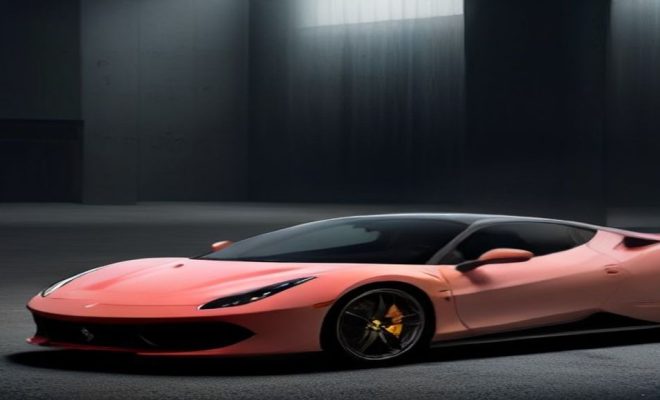
Let’s start with the Prancing Horse. The notion of a Ferrari electric car has been a subject of intense speculation and, frankly, dread for many enthusiasts. For decades, Ferrari has been synonymous with the visceral thrill of a high-revving combustion engine, the intoxicating symphony of its exhaust note, and the raw, mechanical connection between driver and machine. To many, an electric Ferrari felt like a contradiction in terms, an assault on the very soul of the brand. Yet, here we are. The Ferrari Luce has touched down in Australia, and its reception has been, predictably, polarizing.
This isn’t just about a new model; it’s about a fundamental redefinition of an icon. Can an electric powertrain truly deliver the ‘Ferrari experience’? Can it evoke the same passion, the same sense of occasion, the same adrenaline rush as its V8, V10, or V12 predecessors? These are the questions buzzing on social media, in forums, and among car collectors worldwide. The Luce isn’t just a car; it’s a litmus test for the future of ultra-luxury performance vehicles in an electrified era.
The Prancing Horse Goes Electric: The Ferrari Luce’s Polarizing Debut
The moment Ferrari announced its intention to produce an all-electric vehicle, the automotive world collectively held its breath. For a brand so deeply rooted in the emotion and engineering prowess of internal combustion, the move felt almost sacrilegious to some. Yet, here it is: the Ferrari Luce, and its initial arrival in Australia has ignited a firestorm of discussion. On one side, you have the progressives, those who see this as an inevitable and necessary evolution, a bold step into the future that preserves Ferrari’s relevance in a rapidly changing market. They argue that technological advancement has always been part of Ferrari’s DNA, from its early racing innovations to its groundbreaking road cars.
On the other side are the purists, often the most vocal critics, who view the Luce as a betrayal of everything Ferrari stands for. For them, the soul of a Ferrari isn’t just its speed or its handling; it’s the roar of the engine, the smell of petrol, the mechanical symphony that only a finely tuned combustion engine can provide. An electric motor, no matter how powerful or sophisticated, simply cannot replicate that sensory experience. This isn’t merely a technological debate; it’s an emotional one, touching on heritage, identity, and what constitutes true automotive passion. The Luce, therefore, isn’t just an automobile; it’s a symbol of this ongoing battle between tradition and progress.
Defining ‘Ferrari Experience’ in an Electric Era
What exactly defines the ‘Ferrari experience’? Is it solely the sound of a V12 at full throttle, or is it something more ephemeral? For many, it’s a blend of breathtaking performance, exquisite design, unparalleled craftsmanship, and a certain exclusivity. It’s the feeling you get when you sit behind the wheel, the way the car responds to your every input, the sheer exhilaration of driving something truly special. Can a Ferrari electric car deliver on these promises without the traditional soundtrack?
Ferrari’s engineers certainly believe so. They’re not just swapping an engine for a battery and electric motors; they’re reimagining the entire vehicle architecture, focusing on new ways to create engagement. Think about instant torque delivery, advanced torque vectoring systems, and innovative sound design that might not mimic an engine but creates its own unique, thrilling auditory signature. The challenge for Ferrari is to capture that intangible ‘soul’ in a new form, to ensure that the Luce, despite its silent powertrain, still feels undeniably like a Ferrari. It’s a high-wire act, balancing reverence for the past with a clear vision for the future, and the world is watching to see if they pull it off.
The Engineering Behind the Electric Prancing Horse
Building an electric Ferrari isn’t just about raw power, which EVs can deliver in spades. It’s about maintaining the delicate balance of handling, weight distribution, and driver feedback that defines a Ferrari. Engineers are working with entirely new parameters. The heavy battery pack, for instance, can be placed low in the chassis, often between the axles, to create an incredibly low center of gravity. This might even improve handling dynamics in some ways, offering a stability that traditional combustion cars struggle to match.
Then there’s the torque vectoring. With individual electric motors often powering each wheel, or at least each axle, the level of precision in directing power is unprecedented. This allows for incredibly sophisticated traction control and handling characteristics, making the car feel glued to the road and incredibly agile. Ferrari will undoubtedly incorporate its F1-derived technological prowess into these systems, translating racing innovation into road car performance. The challenge isn’t just to make it fast; it’s to make it feel like a Ferrari, offering that unique blend of immediate response and predictable control.
And what about sound? While some purists bemoan the loss of engine noise, Ferrari has likely invested heavily in creating an artificial, yet compelling, auditory experience. This isn’t just noise for noise’s sake; it’s about providing crucial feedback to the driver, enhancing the sense of speed and engagement. Think about a carefully curated sound profile that changes with acceleration and cornering, adding another layer to the sensory experience. It’s a brave new world for automotive acoustics, and Ferrari is poised to lead the way in making electric performance sound as good as it feels.
China’s EV Boom: Speed vs. Safety – The ‘Banana Battery’ Problem
Shifting gears entirely, we turn our attention to China, a market that has embraced electric vehicles with an astonishing fervor and pace. While the sheer volume and rapid development are impressive, there’s a growing undercurrent of concern regarding battery safety. Reports from CATL, one of the world’s largest battery manufacturers, have highlighted potential issues that could undermine consumer confidence. Specifically, there’s talk of battery failures and a phenomenon dubbed the ‘banana battery’ problem, where battery packs swell due to internal stress or thermal runaway, resembling the curved fruit. (See: the future of electric vehicles.)
This isn’t a minor cosmetic defect; battery swelling can compromise the structural integrity of the pack, lead to reduced performance, and, most critically, increase the risk of thermal runaway and fire. Vehicles from major Chinese manufacturers like GAC, Geely, and BYD are reportedly affected by these issues. The rapid development cycle in China, driven by aggressive government incentives and intense market competition, might be prioritizing speed to market over exhaustive long-term testing and quality control. This raises serious questions about consumer safety, not just within China, but globally, as these manufacturers expand their reach into international markets.
The Hidden Dangers of Rapid EV Development
The pursuit of market dominance in the EV sector has led to unprecedented innovation, but also, it seems, to corners being cut. The ‘banana battery’ issue is a stark reminder that battery technology, while transformative, is also complex and potentially volatile. Engineers are constantly pushing the boundaries of energy density and charging speeds, but these advancements come with inherent risks. If not meticulously designed, manufactured, and managed, battery packs can become ticking time bombs.
Thermal management systems, cell chemistry, packaging, and even the software that controls charging and discharging cycles all play critical roles in battery safety. Any shortcuts in these areas can have severe consequences, from premature degradation to catastrophic failures. For consumers, this translates to anxiety. Nobody wants to drive a vehicle with a compromised power source, especially when the potential failure modes include fire or explosion. This situation in China underscores a crucial point: the global EV transition must not sacrifice safety for speed. The long-term success and public acceptance of EVs depend entirely on their reliability and, above all, their safety record.
Global Implications of Battery Safety Concerns
The “banana battery” problem isn’t just a Chinese domestic issue. As Chinese EV manufacturers like BYD and Nio increasingly eye international markets, these safety concerns become a global responsibility. European and North American regulators, along with consumer advocacy groups, will undoubtedly scrutinize the battery technology and safety protocols of any imported EV. A major battery-related incident in a Western market could severely damage the reputation of not just the individual manufacturer, but potentially the entire Chinese EV industry and even EV adoption as a whole.
This also puts pressure on international battery suppliers, many of whom are based in China, to ensure their products meet the highest global safety standards. Collaboration between manufacturers, suppliers, and regulatory bodies worldwide is crucial to establish universal benchmarks for battery safety and testing. Without a proactive approach to addressing these issues transparently, the impressive progress in EV adoption could be stalled by a crisis of confidence. Trust, once lost, is incredibly difficult to regain, especially when it concerns something as critical as vehicle safety.
Trump vs. California: A Political Showdown Over EV Mandates
Back in the United States, the future of EV adoption is caught in a political crossfire. Former President Donald Trump is actively working to dismantle California’s stringent EV mandates and incentives, setting the stage for a highly charged battle that could profoundly reshape the nation’s electric vehicle landscape. California, historically a leader in environmental regulation, has been at the forefront of pushing for zero-emission vehicle (ZEV) requirements, essentially dictating a timeline for phasing out gasoline-powered cars.
These mandates, often adopted by other states that follow California’s lead, have been a powerful accelerant for EV development and sales across the U.S. Trump’s challenge isn’t just about California; it’s about federalism, economic policy, and the role of government in shaping consumer choices and industrial direction. He argues that these mandates are overly burdensome, hurt the auto industry, and limit consumer freedom. This stance resonates with a segment of the electorate and certain industry factions who feel that the transition is happening too quickly or is being forced upon them.
The Stakes: Environment, Economy, and Consumer Choice
The debate over California’s EV mandates is far from academic; it has massive implications. Environmentally, proponents argue that these mandates are crucial for combating climate change and improving air quality, particularly in urban centers. Without them, the pace of emissions reduction could slow significantly. Economically, the mandates have spurred investment in EV manufacturing, charging infrastructure, and battery technology, creating new jobs and industries. Rolling them back could jeopardize these investments and cede ground to other nations in the global EV race.
Then there’s the question of consumer choice. While many embrace EVs, others are hesitant due to range anxiety, charging infrastructure availability, or the higher upfront cost of many electric models. Opponents of mandates argue that the market should dictate the pace of adoption, not government decree. This political battle isn’t just about cars; it’s about the very direction of America’s energy future, its industrial competitiveness, and the balance between environmental protection and economic liberty. It’s a microcosm of larger ideological divides playing out on the national stage.
The Economic Ripple Effect of Policy Shifts
The tug-of-war over EV mandates extends far beyond simply what cars consumers buy. Auto manufacturers, for instance, invest billions in R&D, retooling factories, and training workforces based on projected regulatory environments. A sudden reversal or weakening of mandates creates immense uncertainty, potentially leading to delayed investments, job losses in the EV sector, or even a shift of production to countries with more stable long-term EV policies. It’s not just about selling cars; it’s about the entire supply chain, from raw materials for batteries to the installation of charging stations. Imagine the impact on companies that have specialized in EV components or charging solutions, only to see the demand forecast drastically altered by political whims.
Furthermore, the U.S. risks falling behind in global automotive innovation if its domestic policies create a less favorable environment for EVs. Other major markets like Europe and China are doubling down on electrification, pushing their manufacturers to lead. If the U.S. falters, its auto industry could become less competitive on the world stage, relying on outdated technologies while others surge ahead. This isn’t just about environmental policy; it’s about industrial strategy and national economic strength in a rapidly evolving global economy.
Social Media: The Digital Battlefield for EV Debates
Unsurprisingly, these controversies are playing out intensely on social media platforms. The emotional attachment to iconic brands like Ferrari ensures that every detail about the Luce is dissected, praised, or condemned in real-time. Comments sections on YouTube, X (formerly Twitter), and Instagram are ablaze with arguments between purists and progressives, often devolving into passionate, sometimes vitriolic, exchanges. You’ll see someone posting about the glorious sound of a V12, only to be countered by another touting the instant torque and silent acceleration of an EV. (See: impact of air pollution on health.)
Similarly, news about battery safety concerns from China quickly generates alarm and debate, with users sharing articles, speculating on the implications, and questioning the overall reliability of EVs. The political fight over mandates sees partisans on both sides rallying their bases, sharing memes, and engaging in heated discussions about government overreach versus environmental responsibility. Social media amplifies these conversations, creating echo chambers but also providing a platform for diverse viewpoints, however cacophonous they may be.
The Broader Implications for the Global EV Shift
These three seemingly disparate threads are, in fact, tightly interwoven, collectively influencing the trajectory of the global EV transition. The Ferrari Luce represents the high-end, aspirational segment, demonstrating that even the most hallowed performance brands are adapting, however reluctantly, to electrification. Its success or failure will send ripples through the entire luxury automotive market, potentially validating or challenging the notion that EVs can truly capture the essence of driving passion.
The Chinese battery safety concerns, on the other hand, serve as a critical reality check for the entire industry. They highlight the immense technical challenges and the paramount importance of robust safety standards in mass-market EV adoption. If consumers lose trust in the safety of EV batteries, it could significantly slow down the transition, regardless of environmental benefits or performance advantages. It underscores that innovation must be accompanied by rigorous testing and quality control.
Finally, the political fight in the U.S. over mandates illustrates the fragility of policy-driven transitions. Government incentives and regulations have been powerful catalysts for EV growth, but they are also vulnerable to shifts in political power and ideology. A rollback of mandates could create uncertainty for manufacturers, impact charging infrastructure development, and ultimately slow down EV adoption in a crucial market. Together, these stories paint a complex, dynamic picture of an industry in flux, navigating technological hurdles, cultural resistance, and political headwinds on its path to an electric future.
Navigating the Road Ahead: Challenges and Opportunities
So, where does this leave us? The path to an all-electric automotive future is clearly not a smooth, straight highway. It’s a winding road, full of unexpected turns, steep climbs, and sometimes, outright roadblocks. For traditional brands like Ferrari, the challenge is immense: how do you honor a legendary past while embracing a revolutionary future? It’s about finding new ways to define performance, luxury, and driver engagement without alienating a loyal, passionate customer base. The Luce represents Ferrari’s attempt to answer that question, and its journey will be closely watched.
For the broader EV market, particularly the more accessible segments, the focus must remain on safety and reliability. The lessons from China’s ‘banana battery’ issue are critical reminders that rapid innovation cannot come at the expense of consumer trust. Manufacturers, regulators, and battery suppliers globally need to prioritize rigorous testing, transparent reporting, and continuous improvement in battery technology and vehicle integration. Building consumer confidence in the safety and longevity of EVs is paramount for sustained growth.
Politically, the debate over mandates highlights the delicate balance between environmental goals, economic realities, and individual freedoms. Whether through mandates or market forces, the transition to EVs will continue, but the pace and nature of that transition will be heavily influenced by policy decisions. The ongoing dialogue, however contentious, is necessary to shape a future that is both sustainable and equitable. The automotive world is a fascinating place right now, caught between the roar of the past and the silent hum of the future. It’s a period of immense change, and watching how these conflicts resolve will define what we drive for generations to come.
Expert Perspectives on the EV Transition
The shift to electric vehicles isn’t just a topic for car enthusiasts and politicians; it’s drawing significant attention from industry experts, economists, and environmental scientists. Automotive analysts often point to the “tipping point” for EV adoption, a moment when the technology, infrastructure, and cost align to make EVs the default choice. Some believe we’re rapidly approaching this, driven by falling battery costs and increasing range. Others, however, caution that infrastructure limitations, particularly in rural areas, and the continued high upfront cost for many models could slow the pace, especially without strong policy support.
Environmental scientists, on the other hand, emphasize the urgency. They highlight that transportation is a major contributor to greenhouse gas emissions and air pollution, making a rapid EV transition critical for meeting climate targets and improving public health. They often argue that the benefits of cleaner air and reduced reliance on fossil fuels outweigh the short-term challenges. Economists examine the job creation potential in new EV industries versus potential job losses in traditional automotive sectors, advocating for reskilling and investment to manage this transition fairly.
This wide array of perspectives shows just how complex the EV transition is. It’s not a simple switch; it’s a multifaceted challenge involving technology, economics, sociology, and environmental science. The consensus, however, is that the transition is inevitable, even if its speed and specific path remain hotly contested. (See: sustainability of electric vehicles.)
Comparing EV Strategies: East vs. West
It’s fascinating to compare the different approaches to EV adoption in major global markets. In China, the government has played an incredibly active role, offering substantial subsidies, setting aggressive production targets, and heavily investing in charging infrastructure. This top-down approach has fueled an explosive growth in both EV manufacturing and sales, making China the world’s largest EV market by far. The focus has been on rapid scaling, sometimes at the expense of the rigorous long-term testing seen in other regions, as highlighted by the battery issues.
In contrast, Western markets, particularly Europe, have relied more on a combination of emissions regulations, consumer incentives, and market-driven innovation. European manufacturers, while initially slower, are now producing highly competitive EVs, often with a strong emphasis on design, safety, and driving dynamics. The U.S. approach has been somewhat more fragmented, with strong state-level mandates (like California’s) contrasting with federal-level debates and varying levels of incentives. This creates a less unified, and at times, more unpredictable, market environment for manufacturers.
Each strategy has its pros and cons. China’s model has delivered volume and speed, but potentially at a cost to product maturity. Europe’s has fostered high-quality, safe EVs, but perhaps at a slower pace. The U.S. remains a battleground, reflecting its diverse political and economic landscape. Understanding these different strategies helps explain the varied challenges and successes we see in the global EV market today.
FAQ: Your Burning Questions About the EV Revolution Answered
Q: Will a Ferrari electric car really feel like a Ferrari?
A: That’s the million-dollar question! Ferrari’s engineers are working to ensure the Luce captures the brand’s essence, even without a combustion engine. This means focusing on instant torque, precise handling through advanced torque vectoring, and potentially an innovative, curated sound experience that provides driver feedback and excitement. It won’t be the same as a V12, but Ferrari aims to redefine what ‘the Ferrari experience’ means for the electric age, emphasizing speed, design, and driver connection in new ways.
Q: How common are battery safety issues like the ‘banana battery’ problem?
A: While the ‘banana battery’ specific term is relatively new and refers to a particular issue in some Chinese-made batteries, battery swelling and thermal runaway are known risks in EV battery technology if not properly managed. Incidents are still statistically rare compared to the number of EVs on the road, but they are serious when they occur. The rapid growth in China has brought some quality control challenges to light, reinforcing the need for continuous improvement in battery design, manufacturing, and thermal management systems across the industry.
Q: What exactly are California’s EV mandates, and why are they so controversial?
A: California’s Zero-Emission Vehicle (ZEV) mandates require automakers to sell an increasing percentage of ZEVs (primarily EVs and plug-in hybrids) each year, with a goal of phasing out new gasoline car sales by 2035. They’re controversial because opponents argue they limit consumer choice, are too expensive for manufacturers, and that the market should dictate the pace of EV adoption. Supporters say they’re crucial for environmental protection, driving innovation, and improving air quality, and that California has the legal right under the Clean Air Act to set its own stricter standards.
Q: Will internal combustion engine (ICE) cars disappear entirely?
A: Not anytime soon. While many regions are setting targets for phasing out the sale of new ICE vehicles by 2030 or 2035, there will be millions of gasoline-powered cars on the road for decades to come. The transition is about new car sales, not immediately scrapping all existing ICE vehicles. Also, certain specialized vehicles or niche markets may retain ICE options for longer. The shift will be gradual, with a long period where both ICE and EVs coexist.
Q: Is the charging infrastructure ready for a full EV transition?
A: The charging infrastructure is rapidly expanding but still faces challenges. There are plenty of Level 2 chargers for daily use, but fast-charging networks are still developing, particularly in rural areas or for long-distance travel. The reliability of public chargers and the availability of enough power grid capacity are also ongoing concerns. Significant investment and planning are still needed to support a mass transition to EVs globally.
“`
Trending Now
Frequently Asked Questions
Why are Ferrari purists upset about the Luce?
Ferrari purists are infuriated by the Luce because it represents a significant departure from the brand's traditional high-revving combustion engines. For many enthusiasts, an electric Ferrari feels like a contradiction, challenging the very essence of what Ferrari stands for in terms of performance and driving experience.
What is the significance of the Ferrari Luce's debut?
The debut of the Ferrari Luce marks the brand's first all-electric model, symbolizing a pivotal moment in the automotive industry. It raises crucial questions about the future of luxury performance vehicles and whether an electric powertrain can deliver the same exhilarating experience as traditional combustion engines.
What concerns are emerging about electric vehicles?
Concerns about electric vehicles include battery safety issues, particularly those emerging from China, and the implications of political changes in the U.S. that may affect EV mandates. These factors contribute to ongoing debates about the safety and future of electric vehicles in the market.
Can an electric Ferrari deliver the same experience as traditional models?
The central question surrounding the Ferrari Luce is whether an electric powertrain can replicate the 'Ferrari experience' characterized by adrenaline, passion, and mechanical connection. This debate is ongoing among car enthusiasts and collectors, as the Luce challenges long-held perceptions of performance.
How is the Ferrari Luce received in Australia?
The reception of the Ferrari Luce in Australia has been polarizing, reflecting a mix of excitement and skepticism. While some embrace the innovation, many traditionalists view it as a departure from the brand's iconic roots, sparking heated discussions within the automotive community.
What's your take on this? Share your thoughts in the comments below — we read every one.