Revealed: The Tesla Cybercab’s Quiet Launch Sparks a Firestorm — What Went Wrong?
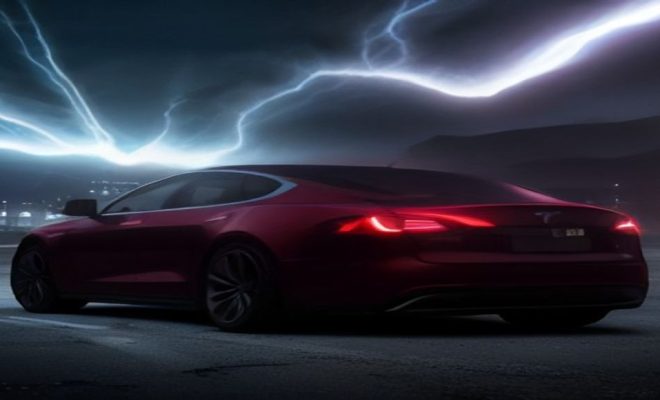
When Tesla officially launched its highly anticipated Cybercab robotaxi service in Austin on September 4, 2026, you’d think the world would have stopped. This was, after all, a moment many had been waiting for, a potential turning point in autonomous transportation. But instead of a grand, globally accessible spectacle, what we got was… well, a whisper. A private, closed-door affair that allowed only a select few paying customers to experience the two-seat autonomous vehicles. And that quiet debut? It’s not just a minor detail; it’s ignited a genuine firestorm among Tesla’s most ardent fans and sharpest critics alike, creating significant ‘consternation on X’ and raising serious questions about the company’s strategy and the future of the Tesla Cybercab.
For years, Elon Musk has painted a vivid picture of a future teeming with robotaxis, a vision of passive income for vehicle owners and seamless, on-demand transportation for everyone else. This wasn’t just a side project; it was positioned as a cornerstone of Tesla’s long-term value, a pivotal piece of the puzzle that would justify its astronomical valuation. So, when the actual launch of the Tesla Cybercab arrived with such an unexpected lack of fanfare – no public livestream, no detailed press conference, no widespread media access – it felt like a betrayal to many. How could such a monumental achievement be unveiled with such secrecy, leaving the public to piece together details from scattered social media posts and secondhand accounts?
The Ghost Launch: Why the Secrecy Surprised Everyone
The anticipation leading up to the Tesla Cybercab launch was palpable. Social media, particularly X (formerly Twitter), buzzed with speculation. Tesla enthusiasts, investors, and tech observers expected a full-blown event, complete with Musk on stage, detailed technical breakdowns, and perhaps even live demonstrations for a global audience. After all, this is the company known for its theatrical product reveals, its bombastic announcements, and its direct communication with millions through Elon’s personal platform. So, when September 4th rolled around, and the world was met with radio silence, it was, to put it mildly, jarring. For more on this, see Elon Musk's robotaxi ambitions.
Instead of a public address, information trickled out from a closed event in Austin. Reports indicated that only a limited number of ‘authorized’ individuals, likely paying customers or VIPs, were granted access to the initial rides. This exclusivity, while understandable for a nascent service, contradicted the very spirit of transparency and widespread access that Tesla often champions. It left a significant portion of its global following feeling excluded and frustrated, wondering why such a pivotal moment in the company’s journey was kept under wraps. This isn’t just about optics; it speaks to a potential shift in how Tesla is choosing to manage expectations and roll out its most ambitious projects.
Fan Frustration on X: A Digital Outcry
The immediate aftermath on X was swift and unforgiving. The platform, often a barometer for public sentiment regarding Tesla, quickly became a hub for disappointment and anger. Phrases like ‘where’s the livestream?’ and ‘why the secrecy?’ trended, as fans expressed their bewilderment. Many felt let down by the lack of a grand reveal, especially given the years of promises and the significant investment of faith they’d placed in Tesla’s autonomous future. It wasn’t just casual observers; long-time supporters and influential Tesla commentators voiced their dismay, turning what should have been a celebratory moment into a source of widespread ‘consternation.’
This digital outcry is more than just a momentary tantrum. It highlights the unique relationship Tesla has cultivated with its community. Unlike traditional automotive companies, Tesla has built a powerful brand largely on direct engagement, a sense of shared vision, and a promise of a revolutionary future. When that direct engagement is replaced by a closed-door event, it feels like a breach of trust. The viral discussions underscore a critical point: in an era of instant information and pervasive social media, controlling the narrative through exclusivity can backfire, especially when your audience expects the opposite.
The Reality Check: 45 Cybercabs in Austin vs. Grand Visions
Perhaps the most significant source of friction between expectation and reality lies in the scale of the Tesla Cybercab launch. While the concept of a fully autonomous robotaxi service is revolutionary, the practical implementation on September 4, 2026, was anything but expansive. The service debuted with a mere 45 authorized vehicles operating exclusively within a defined area of Austin. This is a far cry from the sweeping, ubiquitous robotaxi fleets that Elon Musk had frequently promised over the years.
Musk’s earlier pronouncements were nothing short of visionary. He spoke of millions of robotaxis on the road, generating passive income for owners and transforming urban mobility on a global scale. He even suggested that a Tesla without Full Self-Driving (FSD) capability would eventually be akin to a horse without a saddle, essentially worthless. To go from such grand, almost utopian predictions to a highly localized, 45-vehicle deployment is a stark contrast. It forces a critical re-evaluation of those ambitious timelines and raises questions about the true readiness and scalability of Tesla’s autonomous technology. The gap between the aspiration and the initial reality of the Tesla Cybercab is substantial, and it’s a gap that investors and analysts are now scrutinizing very closely. (See: Tesla's vision for robotaxis.)
Early Rider Impressions: A Glimmer of Hope for the Tesla Cybercab?
Despite the controversy surrounding the launch’s exclusivity, the feedback from early riders of the Tesla Cybercab offered a crucial glimmer of positivity. One early rider, whose experience was shared online, specifically praised the Full Self-Driving (FSD) system’s smooth operation. This individual noted the seamless navigation, confident decision-making, and overall comfort of the autonomous ride. Such testimonials are vital, as they offer a tangible glimpse into the user experience, moving beyond the hype and focusing on the core technology.
For Tesla, these positive early impressions are a double-edged sword. On one hand, they validate years of intense development and billions of dollars invested in FSD. They suggest that the underlying technology, when deployed in a controlled environment, is indeed capable of delivering a compelling autonomous experience. This is crucial for building consumer trust and demonstrating the viability of robotaxi services. On the other hand, the very limited nature of these experiences — from a select few in a restricted zone — only intensifies the frustration for those who are eager to try it themselves and wonder when this ‘smooth operation’ will be available on a broader scale. The core technology might be impressive, but its accessibility remains the elephant in the room.
Analyst Warnings: Morgan Stanley’s Cautionary Note
It’s not just the fans who are reacting to the Tesla Cybercab’s quiet launch; Wall Street is taking notice too. Morgan Stanley, a prominent investment bank with significant influence, issued a cautionary note following the event. Analysts from the firm highlighted the potential negative impacts on Tesla’s stock, particularly if the discrepancy between Musk’s ambitious promises and the current, limited reality of the Cybercab persists. This isn’t surprising. Investors often value predictability and clear execution, and a significant gap between guidance and delivery can erode confidence.
The core concern for analysts like those at Morgan Stanley is the perceived slowdown in the pace of innovation and deployment, especially in areas that have been heavily touted as future revenue drivers. Tesla’s valuation has long been predicated not just on its current vehicle sales, but on the future potential of technologies like FSD and robotaxis. If these transformative initiatives face unexpected delays or significantly scaled-back initial deployments, it challenges the fundamental assumptions underpinning the company’s market capitalization. For a company valued so highly on future growth, any perceived stumbling block in that growth trajectory can trigger significant investor unease and potentially lead to downward pressure on its stock.
The Broader Implications for Tesla’s Narrative
This episode with the Tesla Cybercab launch is more than just a blip; it has broader implications for Tesla’s overarching narrative. For years, the company has thrived on an image of being a disruptive force, a visionary leader consistently pushing the boundaries of what’s possible. Part of that narrative involves ambitious timelines and bold predictions, often delivered directly by Elon Musk himself. While this approach has undeniably fueled excitement and attracted a loyal following, it also sets an incredibly high bar for execution.
When reality diverges sharply from those grand pronouncements, it creates a chink in the armor of that narrative. It invites skepticism, not just from critics but from those who have been most supportive. The challenge for Tesla now is to bridge this credibility gap. Can they accelerate the deployment of the Tesla Cybercab beyond 45 vehicles in Austin? Can they communicate more transparently about the practical hurdles and revised timelines? How they navigate this period will be crucial in maintaining trust, both with their passionate community and with the broader investment community that underpins their financial success. The company’s ability to deliver on its promises, or at least to manage expectations more effectively, will define its narrative for the coming years.
The Road Ahead: Scaling the Tesla Cybercab Challenge
The true test for the Tesla Cybercab, and for Tesla as a whole, now lies in its ability to scale. Launching a service with 45 vehicles in a controlled environment, while a significant engineering feat, is a world away from deploying millions of robotaxis across diverse urban landscapes. Scaling involves overcoming a myriad of challenges: regulatory hurdles in different jurisdictions, the sheer manufacturing capacity to produce enough autonomous vehicles, the robust infrastructure for charging and maintenance, and perhaps most critically, the continuous refinement of the FSD software to handle every conceivable edge case on public roads.
This isn’t just about technical prowess; it’s about operational excellence on an unprecedented scale. Building a global robotaxi network demands a level of logistical sophistication and regulatory navigation that few companies have ever achieved. Tesla has demonstrated its ability to disrupt, but scaling a service as complex and safety-critical as autonomous transportation requires a different kind of mastery. The journey from 45 vehicles in Austin to a widespread, commercially viable service will be long and arduous, and every step will be scrutinized. The current limited deployment serves as a stark reminder of the immense challenge that still lies ahead for the Tesla Cybercab.
Looking Beyond the Hype: What Does This Mean for Autonomous Driving?
The Tesla Cybercab launch, despite its controversies, offers valuable insights not just into Tesla, but into the broader landscape of autonomous driving. It underscores the immense difficulty of bringing Level 4 and Level 5 autonomy to commercial reality. While various companies, from Waymo to Cruise, have made significant strides, truly widespread, unsupervised robotaxi services remain elusive. The Austin launch, even with its modest scale, highlights that the path from advanced driver-assistance systems (ADAS) to fully autonomous commercial operation is fraught with technical, regulatory, and public acceptance challenges.
It also reminds us that while technological breakthroughs are essential, they are only one part of the equation. Public perception, investor confidence, and a clear, executable deployment strategy are equally critical. The ‘consternation on X’ isn’t just about Tesla; it reflects a broader impatience and desire for the autonomous future that has been promised for so long. The industry as a whole needs to navigate the fine line between inspiring vision and realistic timelines, lest it inadvertently erode public trust and investment. The Tesla Cybercab’s journey will undoubtedly serve as a critical case study for the entire autonomous vehicle sector, illustrating both the triumphs and the tribulations of this transformative technology. (See: Impact of autonomous vehicles on society.)
The Path Forward for Tesla: Rebuilding Trust and Managing Expectations
For Tesla, the path forward from this somewhat rocky start involves a delicate balancing act. First and foremost, they need to prioritize clear and consistent communication. The days of relying solely on grand, future-gazing pronouncements without immediate, tangible progress may be waning. Providing transparent updates on the expansion plans for the Tesla Cybercab, addressing the challenges openly, and perhaps even engaging with the community in a more structured way could go a long way in rebuilding trust.
Secondly, they must demonstrate a clear, accelerated roadmap for scaling the Cybercab service beyond its initial Austin footprint. While starting small is prudent for testing and refinement, showing a credible plan for expanding to new cities and increasing vehicle numbers will be critical for reassuring investors and satisfying eager consumers. This means not just technical development but also navigating the complex regulatory environment that varies from city to city, state to state, and country to country. Ultimately, the success of the Tesla Cybercab won’t be measured by its initial closed-door launch, but by its ability to transition from a limited pilot to a truly impactful, widespread service that delivers on the long-held promise of autonomous mobility.
Beyond Austin: Regulatory Hurdles and Public Acceptance
Scaling the Tesla Cybercab operation isn’t just about increasing vehicle production; it’s a deep dive into a labyrinth of regulatory frameworks and public sentiment. Each city, state, and country has its own unique set of laws governing autonomous vehicles. Some jurisdictions might be welcoming, offering pilot programs and streamlined permits, while others could be highly skeptical, demanding extensive testing and data before even considering deployment. Navigating these disparate regulations requires a dedicated legal and policy team, engaging with local governments, and tailoring operations to meet specific safety standards and licensing requirements. This isn’t a one-size-fits-all problem; it’s a patchwork quilt of rules that can significantly slow down expansion, regardless of how advanced the technology itself is.
Then there’s the critical element of public acceptance. The ‘consternation on X’ wasn’t just about the launch’s secrecy; it also reflects a wider public debate about the safety and reliability of autonomous vehicles. Incidents, even minor ones, involving robotaxis in other cities have sometimes led to significant backlash and temporary suspensions of service. Tesla will need to proactively educate the public, demonstrate the safety record of the Cybercab, and build trust within each community it enters. This might involve public demonstrations, partnerships with local organizations, and clear communication channels to address concerns. Without public buy-in, even the most technologically advanced robotaxi service will struggle to gain widespread adoption.
The Competition Heats Up: A Look at Other Robotaxi Players
While Tesla’s Cybercab debut garnered significant attention, it’s important to remember they’re not operating in a vacuum. The race for autonomous mobility is crowded, with several well-funded and technologically capable players making their own strides. Waymo, Google’s self-driving unit, has been operating fully autonomous robotaxi services in Phoenix and San Francisco for years, accumulating millions of driverless miles. Their approach has been more gradual, focusing on specific operational domains and meticulously refining their technology before expanding. Cruise, GM’s autonomous vehicle subsidiary, also had significant operations in San Francisco before facing regulatory setbacks, highlighting the fragility of these early deployments.
Beyond these established players, there are numerous startups and traditional automakers investing heavily in Level 4 and Level 5 autonomous capabilities. Companies like Zoox (Amazon-owned) are designing purpose-built robotaxis, while others like Mobileye are developing comprehensive autonomous driving platforms. This competitive landscape means that Tesla isn’t just battling technical challenges; it’s also vying for market share, regulatory approval, and public trust against formidable rivals. The perceived slowness of the Cybercab’s initial rollout could give competitors an advantage in establishing their services and gaining a foothold in key markets, making Tesla’s acceleration plans even more critical.
The Cybercab’s Design Philosophy: Purpose-Built vs. Adapted
One interesting aspect of the Tesla Cybercab that often gets overlooked in the broader discussion is its design philosophy. Unlike many early robotaxi efforts that adapted existing production vehicles with autonomous technology, the Cybercab is a purpose-built, two-seat vehicle optimized specifically for autonomous ride-hailing. This approach has both advantages and disadvantages. On the plus side, a purpose-built design can maximize interior space for passengers, eliminate unnecessary driver controls, and integrate sensors and computing hardware seamlessly from the ground up, potentially leading to a more streamlined and cost-effective manufacturing process in the long run. It also allows for unique features, like the rear-entry design often rumored for the Cybercab, which could enhance passenger experience. (See: Tesla's Cybercab launch analysis.)
However, the disadvantage is the significant upfront investment in designing and tooling a completely new vehicle platform. This can be a slower, more capital-intensive process than simply modifying an existing Model 3 or Model Y. Competitors like Waymo, which initially used modified Chrysler Pacificas and now Jaguar I-Paces, have benefited from leveraging established automotive platforms for quicker deployment and iterative testing. Tesla’s decision to go with a clean-sheet design for the Cybercab signals a long-term commitment to a highly optimized robotaxi experience, but it also means a potentially longer gestation period before truly mass production can begin, contributing to the initial limited rollout.
FAQ: Unpacking the Tesla Cybercab Launch
Q1: Why was the Tesla Cybercab launch so secretive?
A1: Tesla didn’t provide an official reason for the quiet launch. Speculation suggests it might have been a strategic move to conduct a controlled, limited pilot program without the intense global scrutiny that a typical Tesla product launch attracts. This allows them to refine the service and technology in a real-world, but contained, environment before a broader public rollout. However, this approach clearly backfired in terms of public relations and fan engagement.
Q2: What is “Level 4” autonomy, and does the Tesla Cybercab have it?
A2: Level 4 autonomy means the vehicle can perform all driving tasks under specific conditions (e.g., within a geofenced area, specific weather). The human driver isn’t expected to take over. Based on early rider reports and the controlled environment of the Austin launch, the Tesla Cybercab aims for Level 4 autonomy within its operational design domain. Level 5 would be full autonomy in all conditions, everywhere, which no company has achieved commercially yet.
Q3: How many Tesla Cybercabs are currently operating?
A3: As of its initial launch on September 4, 2026, there were only 45 authorized Tesla Cybercab vehicles operating in a limited area of Austin, Texas. This small fleet size was a major point of contention given previous ambitious predictions from Elon Musk.
Q4: What are the main challenges for scaling the Tesla Cybercab service?
A4: Scaling faces several significant hurdles: regulatory approval across different jurisdictions, manufacturing capacity for purpose-built robotaxis, building out robust charging and maintenance infrastructure, continuously improving the FSD software to handle diverse real-world scenarios, and gaining widespread public trust and acceptance in new markets.
Q5: How does the Tesla Cybercab compare to competitors like Waymo or Cruise?
A5: While all aim for autonomous ride-hailing, their approaches differ. Waymo and Cruise (prior to recent setbacks) have operated larger, more established services in multiple cities, using a more gradual, safety-first deployment strategy and often adapting existing vehicles. Tesla’s Cybercab is purpose-built and relies on its vision-only FSD system, aiming for rapid scalability once the technology is fully validated. The key difference at launch was the scale and public availability of their services, with Waymo having a significant lead in terms of operational miles and public access.
Trending Now Starship's mission to dominate offers useful background here.
Frequently Asked Questions
What happened during the Tesla Cybercab launch?
The Tesla Cybercab was launched on September 4, 2026, in a private event in Austin, which surprised many fans who expected a grand public unveiling. Instead of a theatrical reveal, it was a closed-door affair, leading to significant disappointment and speculation among Tesla enthusiasts and critics.
Why was the Tesla Cybercab launch so secretive?
The secrecy surrounding the Tesla Cybercab launch surprised many, as fans anticipated a major event with public access. Tesla's choice for a private launch raised concerns about their strategy and transparency, leaving many to rely on scattered social media posts for information.
How did the public react to the Cybercab's launch?
The public reaction to the Tesla Cybercab's launch was one of disappointment and confusion. Many fans felt betrayed by the lack of a grand unveiling, leading to a firestorm of criticism on social media, particularly on platforms like X (formerly Twitter).
What are the implications of the Cybercab's launch for Tesla's future?
The quiet launch of the Tesla Cybercab raises significant questions about the company's future strategy and its ambitious vision of robotaxis. This event could impact Tesla's long-term value and investor confidence, as many see it as a crucial element in justifying its high valuation.
What was Elon Musk's vision for the Tesla Cybercab?
Elon Musk envisioned the Tesla Cybercab as a cornerstone of the future of transportation, offering passive income for vehicle owners and seamless on-demand services for users. This vision formed a key part of Tesla's long-term strategy and value proposition, making the quiet launch particularly surprising.
What did we miss? Let us know in the comments and join the conversation.