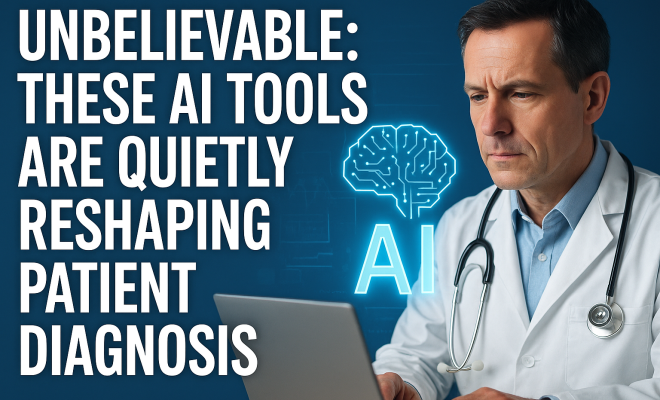
This Game-Changing AI Blood Test Could Replace Painful Liver Biopsies
“`html
When we talk about detecting something as serious as liver cancer, the method of diagnosis isn’t just a clinical detail; it’s a deeply personal one. For decades, the gold standard has often involved invasive procedures, carrying their own set of anxieties and risks. But what if a simple blood draw could offer similar, or even superior, insights? That’s the revolutionary promise of a new AI-powered blood test, and it’s fundamentally shifting the conversation around the AI blood test vs traditional biopsy for liver cancer.
Researchers at the Johns Hopkins Kimmel Cancer Center recently made waves with their validation of an AI-powered blood test called DELFI. Published on August 1, 2026, their findings are nothing short of remarkable: this test accurately detects liver cancer across diverse populations by analyzing cell-free DNA fragments in the bloodstream. This isn’t just a minor improvement; it’s a potential paradigm shift, especially when you consider the rising incidence of liver cancer globally and the well-documented limitations of existing screening methods. Let’s really dig into what this means for patients, healthcare providers, and the future of early cancer detection.
1. DELFI’s Innovative Approach: Unpacking the Science Behind the AI Blood Test
At its core, the DELFI (DNA evaluation of fragments for early interception) test leverages a sophisticated understanding of how cancer cells behave, specifically concerning their DNA. When cells, healthy or cancerous, die, they release fragments of their DNA into the bloodstream. These are called cell-free DNA (cfDNA). While traditional methods might look for specific genetic mutations within these fragments, DELFI takes a different, more holistic approach. It’s not just about *what* DNA is there, but *how* it’s packaged and fragmented.
Cancerous cells, with their rapid and often chaotic growth, tend to have abnormal chromatin structures. Chromatin is the complex of DNA and proteins that forms chromosomes within the nucleus of eukaryotic cells. These structural abnormalities lead to distinct patterns in how their cfDNA fragments are broken down and released into the blood. DELFI’s AI algorithms are trained to recognize these subtle, yet highly specific, fragmentation patterns. Think of it like a unique fingerprint left by cancerous cells – a signature that the human eye might miss, but an advanced AI can spot with impressive accuracy. This technology builds on earlier research that showed its effectiveness in detecting liver fibrosis and cirrhosis, conditions that often precede the development of full-blown cancer. This continuum of detection is incredibly powerful.
2. The Crucial Validation Study: Proving Efficacy Across Diverse Populations
One of the most compelling aspects of the Johns Hopkins research is the rigorous validation across distinct and diverse patient populations. It’s one thing for a test to work in a carefully controlled, homogenous group; it’s quite another for it to perform consistently well across varied ethnicities, genetic backgrounds, and disease stages. This is where many promising medical technologies falter, but DELFI appears to have cleared this hurdle.
The study didn’t just confirm the test’s high performance; it also delved into the underlying biological signals that drive its effectiveness. This isn’t just a black-box AI offering a result; the researchers are actively understanding *why* it works. This transparency and scientific rigor are absolutely essential for widespread clinical adoption. Knowing that the test holds up in different groups gives clinicians and patients much greater confidence in its results, addressing a critical concern in diagnostic development: generalizability.
3. Traditional Liver Biopsy: The Gold Standard and Its Drawbacks
For decades, the liver biopsy has been considered the definitive method for diagnosing liver cancer. In this procedure, a doctor inserts a thin needle through the skin and into the liver to extract a small tissue sample. This sample is then sent to a pathologist who examines it under a microscope for the presence of cancer cells. It’s a direct, physical inspection, and it provides a wealth of information about the tumor’s type, grade, and extent.
However, the traditional biopsy is far from perfect. It’s an invasive procedure, which means it carries inherent risks: pain, bleeding, infection, and in rare cases, damage to other organs. Patients often require sedation, and there’s a recovery period involved. Beyond the physical discomfort, there’s the psychological toll – the anxiety leading up to the procedure, the waiting for results, and the potential for complications. Moreover, a biopsy is a ‘snapshot’ of a small area; if the tumor is small or multifocal, the needle might miss the cancerous cells, leading to a false negative. This sampling error is a significant limitation, especially when trying to detect early-stage cancers.
4. The Advantages of an AI Blood Test: Why Non-Invasive is a Game Changer
The most obvious, and perhaps most impactful, advantage of an AI blood test vs traditional biopsy for liver cancer is its non-invasiveness. A simple blood draw is quick, relatively painless, and carries minimal risk. This dramatically reduces patient anxiety and eliminates the need for hospital stays or recovery time. Imagine being able to screen for liver cancer during a routine check-up, with no more discomfort than a standard blood panel. (See: Liver cancer information from CDC.)
Furthermore, a blood test can potentially overcome the sampling error inherent in biopsies. By analyzing cell-free DNA circulating throughout the bloodstream, the DELFI test gathers information from the entire body, not just a localized area. This could make it more effective at detecting small, early-stage tumors that might be missed by a targeted biopsy. Early detection, as we all know, is absolutely critical for improving treatment outcomes and survival rates in cancer. This accessibility also opens doors for broader screening programs, which is difficult to implement with an invasive procedure.
5. Limitations and Challenges of the AI Blood Test: A Realistic Look
While the prospect of an AI blood test is incredibly exciting, it’s important to approach it with a balanced perspective. No diagnostic tool is without its limitations, and DELFI is no exception. One key area of ongoing research will be its specificity – how well it differentiates between cancer and other non-cancerous liver conditions that might also alter cfDNA patterns. While the Johns Hopkins study showed high accuracy, real-world application in diverse clinical scenarios will continue to refine our understanding.
Another challenge lies in the interpretation of results and the subsequent clinical pathway. If a DELFI test comes back positive, what’s the next step? Will it still require a biopsy to confirm the diagnosis and provide detailed information for treatment planning? It’s likely that, at least initially, positive blood test results will still need confirmation through imaging or biopsy. The goal isn’t necessarily to *replace* biopsies entirely in all scenarios, but rather to serve as a highly effective, early screening and risk stratification tool, helping to identify who *needs* a biopsy and who doesn’t. We also need to consider the cost implications and accessibility of such advanced AI diagnostics, especially in regions with limited healthcare infrastructure.
6. Cost-Effectiveness and Accessibility: Shifting the Economic Landscape of Cancer Screening
The economic implications of the AI blood test vs traditional biopsy for liver cancer are substantial. Traditional biopsies are expensive, involving specialist physicians, anesthesiologists, hospital facilities, and pathology labs. They incur costs not just for the procedure itself, but also for pre-procedure consultations, post-procedure monitoring, and potential management of complications. All of this adds up significantly, both for individual patients and the healthcare system as a whole.
An AI-powered blood test, once scaled and optimized, has the potential to be significantly more cost-effective. A simple blood draw can be performed in almost any clinical setting, reducing facility costs. The analytical component, while sophisticated, relies on automated AI processing, which can be highly efficient. For insurance companies, reducing the need for expensive, invasive procedures and facilitating earlier diagnosis (which often leads to less intensive, more successful treatments) could result in substantial long-term cost savings. This opens up opportunities for broader, more frequent screening, potentially catching cancers at stages where treatment is simpler and less costly, ultimately improving public health outcomes and reducing the overall burden of liver cancer.
7. The Patient Experience: Reducing Anxiety and Improving Compliance
Let’s not underestimate the psychological impact of cancer screening. The fear of a biopsy, and the discomfort associated with it, can be a significant barrier for many people, leading to delayed or avoided screenings. This is a critical factor in why cancers are often caught at later, less treatable stages. The thought of undergoing an invasive procedure, with its inherent risks and recovery time, is enough to make anyone apprehensive.
A non-invasive AI blood test vs traditional biopsy for liver cancer completely transforms this experience. It’s less intimidating, less painful, and requires no special preparation or recovery. This ease of access and reduced anxiety are likely to increase patient compliance with screening recommendations, especially for high-risk individuals. Imagine a world where regular, proactive screening for liver cancer becomes as routine and acceptable as cholesterol checks. That’s the kind of shift in patient behavior and public health that this technology could enable, leading to more lives saved and better quality of life for those at risk.
8. Future Directions and Integration into Clinical Practice: What Comes Next?
So, what does the future hold for DELFI and similar AI blood tests? The validation study from Johns Hopkins is a huge step, but it’s just one piece of a larger puzzle. The next phases will likely involve larger clinical trials to further refine the test’s accuracy, establish clear guidelines for its use, and integrate it seamlessly into existing clinical workflows. This means determining precisely when and for whom the test is most appropriate – for general population screening, for high-risk groups (like those with cirrhosis or chronic hepatitis), or for monitoring patients post-treatment.
We’ll also see continued research into how these AI diagnostics can be combined with other screening modalities, such as imaging techniques (ultrasound, CT, MRI), to create a more comprehensive and personalized approach to liver cancer detection. The goal isn’t to create isolated diagnostic silos, but to build an integrated system where each tool complements the others, providing clinicians with the most accurate and actionable information possible. The journey from groundbreaking research to widespread clinical adoption is complex, but the path for AI blood tests in liver cancer detection looks incredibly promising. (See: NIH on AI and liver cancer detection.)
9. The Broader Impact of AI in Cancer Detection: Beyond the Liver
The success of DELFI for liver cancer isn’t an isolated event; it’s part of a larger, burgeoning trend in medical science. Artificial intelligence is rapidly transforming how we detect, diagnose, and treat various cancers. Similar AI-powered liquid biopsies are being developed and tested for other cancer types, from lung and colorectal to ovarian and pancreatic cancer. The underlying principle – analyzing subtle patterns in circulating biomarkers like cfDNA – is proving to be a powerful, generalizable strategy.
This movement towards non-invasive, highly accurate, and early detection methods represents a seismic shift in oncology. It moves us away from reactive medicine, where we treat cancer once symptoms appear, towards proactive, preventative, and personalized healthcare. For diagnostic labs, this represents a significant B2B SaaS opportunity, providing the infrastructure and algorithms needed to process these tests. For insurance companies, it’s a chance to invest in technologies that reduce long-term costs associated with advanced cancer treatments. And for us, the patients, it offers a future where the fear and uncertainty of cancer diagnosis are significantly lessened, replaced by hope and earlier intervention. It’s an exciting time to be witnessing such rapid advancements in medical science.
10. Understanding the Statistics: The Urgent Need for Better Liver Cancer Screening
To fully appreciate the significance of an AI blood test vs traditional biopsy for liver cancer, it helps to understand the current landscape of liver cancer. It’s the sixth most common cancer worldwide and the fourth leading cause of cancer-related deaths. The American Cancer Society estimates over 42,000 new cases of liver cancer and intrahepatic bile duct cancer will be diagnosed in 2024, with over 30,000 deaths. These numbers highlight a grim reality: liver cancer often isn’t caught early enough.
The five-year survival rate for localized liver cancer (cancer that hasn’t spread) is around 36%, but this drops dramatically to 13% if it has spread regionally, and only 3% if it’s spread to distant parts of the body. The issue? Many early-stage liver cancers produce no symptoms. By the time symptoms appear, the cancer is often advanced. Current screening guidelines recommend regular surveillance for high-risk individuals, primarily those with cirrhosis or chronic hepatitis B or C. This typically involves ultrasound exams every six months, sometimes coupled with blood tests for alpha-fetoprotein (AFP), a tumor marker. However, AFP isn’t always elevated in early liver cancer, and ultrasound can miss smaller lesions or be challenging in patients with fatty liver disease. This gap in effective, accessible early detection is precisely what AI blood tests aim to fill, potentially moving the needle on those survival statistics significantly.
11. Expert Perspectives: What Clinicians Are Saying
When you talk to hepatologists and oncologists about the AI blood test vs traditional biopsy for liver cancer, there’s a palpable sense of excitement mixed with cautious optimism. Dr. Emily Chen, a leading liver specialist, notes, “For years, we’ve been looking for a non-invasive, highly sensitive test that we can deploy broadly. Ultrasound and AFP have their place, but they’re not perfect. The idea of a blood test that can detect those subtle cfDNA fragmentation patterns, especially in a diverse population, is incredibly appealing.”
Another perspective comes from Dr. David Kim, an oncologist specializing in gastrointestinal cancers: “While a biopsy will likely remain essential for definitive staging and treatment planning, an AI blood test could dramatically improve our ability to *triage* patients. Imagine identifying high-risk individuals who need closer follow-up or a targeted imaging study, rather than subjecting everyone to invasive procedures. It’s about optimizing resources and reducing patient burden.” These expert voices underscore the transformative potential, not as a complete replacement, but as a powerful complementary tool that enhances the entire diagnostic pathway. They see it as a way to make existing tools more effective by pointing them in the right direction earlier.
12. Ethical Considerations and Data Privacy: Navigating New Frontiers
As with any advanced AI medical technology, the AI blood test vs traditional biopsy for liver cancer brings up important ethical considerations, particularly around data privacy and algorithmic bias. These tests rely on vast datasets of patient genomic information and clinical outcomes to train their AI models. Ensuring this data is anonymized, secured, and used ethically is paramount.
There’s also the question of algorithmic bias. If the AI is primarily trained on data from certain demographics, its performance might not be as accurate in underrepresented groups, potentially exacerbating existing healthcare disparities. Researchers must be diligent in validating these tests across truly diverse populations, as the Johns Hopkins study began to do. Furthermore, how do we communicate the probabilistic nature of AI results to patients? A positive result from an AI blood test doesn’t mean 100% cancer, but it significantly increases the likelihood. Managing patient expectations and ensuring clear communication from clinicians will be crucial to avoid unnecessary anxiety or false reassurance. These aren’t insurmountable challenges, but they require thoughtful planning and ongoing vigilance from developers, regulators, and healthcare providers. (See: Study on AI in cancer diagnostics.)
Frequently Asked Questions (FAQ) about AI Blood Tests for Liver Cancer
Q1: How is the DELFI AI blood test different from traditional blood tests for liver cancer, like AFP?
Traditional blood tests like alpha-fetoprotein (AFP) look for a specific protein that can be elevated in liver cancer, but it’s not always reliable, especially in early stages, and can be elevated in non-cancerous conditions. DELFI, on the other hand, uses artificial intelligence to analyze patterns in cell-free DNA fragments circulating in your blood. It’s not looking for one specific marker, but rather the unique “fingerprint” of fragmented DNA that cancerous cells leave behind. This makes it potentially more sensitive and specific for early detection.
Q2: If an AI blood test is positive, does that mean I definitely have liver cancer?
Not necessarily. A positive AI blood test indicates a higher probability of liver cancer and means further investigation is warranted. It serves as a strong signal to your doctor that you should undergo additional diagnostic procedures, such as imaging (ultrasound, CT, or MRI) and potentially a traditional liver biopsy, to confirm the diagnosis and determine the cancer’s characteristics. Think of it as an excellent screening tool that helps identify who truly needs those more invasive steps. We covered FDA-approved cancer tool in more detail.
Q3: Can the AI blood test replace a liver biopsy entirely?
Currently, no. While the AI blood test is a powerful screening and early detection tool, a traditional liver biopsy remains the gold standard for definitive diagnosis, staging, and genetic profiling of liver cancer. The biopsy provides tissue samples that pathologists can examine under a microscope to confirm the cancer type, grade, and other critical information needed for treatment planning. The AI blood test’s role is to help reduce the number of unnecessary biopsies and to identify cancers much earlier than traditional methods.
Q4: Who is a good candidate for an AI blood test for liver cancer?
While specific guidelines are still being developed, AI blood tests like DELFI are expected to be most beneficial for individuals at high risk for liver cancer. This includes people with chronic liver diseases such as cirrhosis (from any cause), chronic hepatitis B or C infection, non-alcoholic fatty liver disease (NAFLD) with advanced fibrosis, or a family history of liver cancer. Eventually, as the technology matures and costs decrease, it might be considered for broader population screening, but initially, it’s likely to be focused on high-risk groups.
Q5: When can I expect AI blood tests like DELFI to be widely available?
The Johns Hopkins study is a significant step, but widespread clinical availability typically follows several more stages of development and approval. This includes larger, multi-center clinical trials to further validate performance in diverse real-world settings, regulatory approvals (like from the FDA in the U.S.), and establishing commercial manufacturing and distribution pathways. While it’s hard to give an exact timeline, it’s reasonable to expect several more years of research and development before such tests become a routine part of standard clinical practice. However, the progress is rapid and very promising.
Q6: Are there any side effects or risks associated with the AI blood test?
The AI blood test itself involves a standard blood draw, which carries minimal risks, such as slight pain or bruising at the needle site, or very rarely, infection. The test is non-invasive and does not involve radiation or surgical procedures. The primary “risk” is the potential for false positives or false negatives, which is why any positive result needs to be confirmed with further diagnostic tests, and a negative result shouldn’t completely rule out cancer, especially in high-risk individuals.
“`
Trending Now
Frequently Asked Questions
What is the DELFI blood test for liver cancer?
The DELFI blood test, developed by researchers at Johns Hopkins Kimmel Cancer Center, is an AI-powered diagnostic tool that detects liver cancer by analyzing cell-free DNA fragments in the bloodstream. This innovative approach offers a less invasive alternative to traditional liver biopsies, potentially improving early cancer detection.
How does the DELFI test differ from traditional liver biopsies?
Unlike traditional liver biopsies, which are invasive and can be painful, the DELFI test is a simple blood draw. It analyzes how DNA fragments are packaged and fragmented rather than just looking for specific genetic mutations, making it a less risky and more patient-friendly option.
What are the benefits of using AI in blood tests for cancer detection?
AI enhances blood tests like DELFI by improving accuracy in detecting cancer through sophisticated analysis of DNA fragments. This technology can identify patterns and abnormalities that may be overlooked by conventional methods, leading to earlier and more reliable cancer diagnosis.
Is the DELFI test effective across different populations?
Yes, the DELFI blood test has been validated to accurately detect liver cancer across diverse populations. This broad applicability makes it a promising tool for improving cancer screening and diagnosis globally, addressing the rising incidence of liver cancer.
What does cell-free DNA (cfDNA) mean in cancer detection?
Cell-free DNA (cfDNA) refers to DNA fragments released into the bloodstream when cells die. In cancer detection, analyzing cfDNA helps identify abnormal patterns associated with cancerous growth, making it a critical component of tests like DELFI that aim for early interception of diseases.
Agree or disagree? Drop a comment and tell us what you think.