Master the Art of Dicing Vegetables for Better Cooking
“`html
For anyone who loves to cook, dicing vegetables is a fundamental skill that can elevate your culinary game. Whether you’re preparing a hearty stew or a fresh salad, knowing how to dice vegetables efficiently not only saves time but also enhances the presentation of your dishes. In this guide, we’ll explore the ins and outs of dicing vegetables, from choosing the right tools to mastering various cutting techniques.
1. The Importance of Dicing Vegetables
Dicing isn’t just about aesthetics; it’s a crucial technique that affects cooking times and flavor distribution. When you cut vegetables into uniform pieces, they cook evenly and absorb flavors better, resulting in a more balanced dish. For instance, in a vegetable stir-fry, evenly diced bell peppers and onions will ensure that every bite is flavorful.
Additionally, dicing promotes consistency in texture, which is vital for dishes like soups or salads where a mishmash of sizes can lead to an unappealing eating experience. So, understanding how to dice vegetables is fundamental whether you’re a novice cook or an experienced chef looking to refine your technique.
2. Tools You Need for Dicing
The right tools are essential when learning how to dice vegetables. While you can technically use any knife, having a sharp chef’s knife is preferred. It allows for greater control and precision when cutting through various types of vegetables. A cutting board is also a must-have; consider using a wooden or plastic one depending on your preference, as each has its pros and cons.
In addition to the basics, you might find a few specialized tools helpful. For instance, a mandoline slicer can help achieve uniform slices quickly, while a vegetable peeler is essential for prepping certain veggies like carrots and potatoes. As you gain experience, you’ll discover which tools suit your style of cooking best.
3. Preparing Your Vegetables
Before diving into the dicing process, it’s crucial to properly prepare your vegetables. Start by washing them thoroughly to remove any dirt or pesticides. Depending on the vegetable, you may also need to peel or trim. For instance, tomatoes are often best diced without their skins, while carrots should be peeled.
Once cleaned, it’s helpful to cut your vegetables into manageable sizes. For larger vegetables like squash or pumpkin, chopping them into halves or quarters can make the dicing process easier and safer. This preparation lays the groundwork for efficient and effective dicing.
4. Basic Dicing Technique
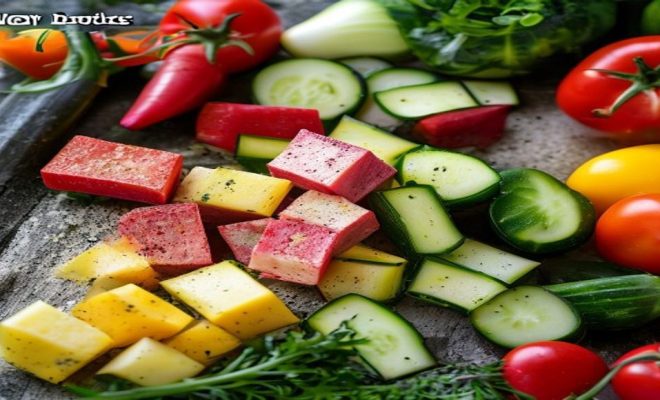
Now that your vegetables are prepped, it’s time to learn how to dice them. The basic technique involves a few simple steps. First, stabilize the vegetable on your cutting board. For cylindrical vegetables like cucumbers, slice them lengthwise into planks. Then, cut those planks into strips and finally, dice them into cubes.
For more intricate shapes, like onions, start by cutting the onion in half. Make horizontal cuts towards the root, then slice vertically before finally dicing it into small pieces. This technique ensures maximum yield and minimizes waste. Remember, practice makes perfect, and with time, your dicing speed and precision will improve.
5. Common Mistakes to Avoid
As you learn how to dice vegetables, it’s easy to fall into some common pitfalls. One of the biggest mistakes is using a dull knife. A sharp knife not only makes dicing easier but also reduces the risk of accidents. A dull knife requires more force, which can lead to slips and unintended cuts. (See: Nutrition and healthy eating.)
Another common error is dicing unevenly. This often stems from hastiness or improper technique. It’s crucial to take your time and focus on cutting uniform pieces for better cooking results. Lastly, don’t forget to keep your fingers out of the way! The claw technique, where your fingers curl under and your knuckles guide the knife, is essential for safety.
6. How to Dice Different Types of Vegetables
While the basic technique applies to many vegetables, specific types require slightly different approaches. For example, when dicing leafy greens like spinach, it’s often best to stack the leaves, roll them tightly, and slice across to create ribbons before dicing. This method helps maintain the texture and visual appeal of the greens.
Harder vegetables, like carrots and potatoes, can be treated similarly to softer ones, but they may require a bit more force. Cut them into thinner slices first, as this will make the final dicing easier. For vegetables with skin, such as eggplant, it’s often best to peel them first to avoid bitterness in the final dish.
7. Maintaining Your Knife
To ensure your dicing skills remain sharp—literally—it’s vital to maintain your kitchen knives properly. Regularly honing your knife can keep the edge sharp and effective. A honing steel is a great tool for this purpose, helping to align the blade edge before each use.
Additionally, consider investing in a good knife sharpener. Whether a manual or electric one, a sharpener can prolong the life of your knives, making your dicing tasks much more manageable. Finally, always wash and dry your knives by hand to avoid damage from dishwashers, which can dull the blades over time.
8. Current Trends in Vegetable Preparation
In recent years, the culinary world has seen a resurgence in interest surrounding vegetable preparation techniques. With the rise of plant-forward diets and a growing emphasis on healthy eating, home cooks are keen to improve their skills in the kitchen. This has led to an increased popularity of cooking classes and online tutorials focused on techniques like how to dice vegetables.
Moreover, with the advent of social media platforms like Instagram and TikTok, visual guides for various cooking techniques have become widely accessible. This trend not only simplifies the learning process but also encourages more people to engage with cooking at home. Embracing these resources can significantly enhance your skills, making the art of dicing vegetables not just a chore but an enjoyable part of your culinary journey.
9. Advanced Dicing Techniques
Once you’ve mastered the basic dicing technique, you can explore advanced methods that can impress your friends and family. Techniques like brunoise (small dice), julienne (thin matchstick cuts), and chiffonade (finely sliced leafy greens) can elevate your dishes and make your culinary skills shine.
Practicing brunoise dicing starts with cutting the vegetable into even slices, then stacking those slices and cutting them into strips. Finally, dice the strips into tiny cubes. This technique is often used for dishes that require finely cut vegetables, providing an elegant consistency. For example, finely diced carrots can add a delicate sweetness to a risotto.
Julienne slicing begins similarly to dicing but results in long, thin strips. This technique is great for stir-frying, as the smaller surface area allows for faster cooking. For instance, julienned zucchini can be added to a stir-fry for a burst of flavor without being overly soft.
Chiffonade is particularly useful for leafy herbs like basil. By stacking the leaves, rolling them tightly, and slicing across the roll, you create thin ribbons that can accentuate any dish. This method not only looks beautiful but also enhances the flavor of your meals. (See: Techniques for dicing vegetables.)
10. Tips for Speeding Up Your Dicing
If you find yourself dicing vegetables frequently, you may want to speed up the process without sacrificing safety or quality. Here are some tips that can help:
- Practice Regularly: The more you dice, the faster you’ll become. Make a habit of practicing with various vegetables.
- Use a Sharp Knife: A sharp knife cuts through vegetables more easily, allowing for quicker dicing.
- Pre-cut Larger Vegetables: Chop larger vegetables into smaller sections so that they’re easier to manage when you start dicing.
- Invest in a Good Cutting Board: A stable cutting board will help you maintain control, which can speed up your dicing.
11. Frequently Asked Questions about Dicing Vegetables
What is the difference between chopping and dicing?
Chopping typically refers to cutting vegetables into larger, uneven pieces, while dicing means cutting them into uniform, small cubes. Dicing requires more precision and results in a more professional appearance.
Can I use a food processor to dice vegetables?
Yes, a food processor can be used to dice vegetables quickly. However, it’s essential to monitor the consistency, as it can easily turn the vegetables into puree if over-processed. For best results, use the pulse function to maintain control.
Which vegetables are the easiest to dice?
Soft vegetables like bell peppers, cucumbers, and zucchini are typically easier to dice than harder vegetables like carrots or potatoes. Their texture allows for smoother cuts and faster dicing.
How can I ensure my diced vegetables are uniform in size?
To achieve uniformity, focus on cutting your vegetables into even slices before dicing. It helps to use a ruler as a guide until you get comfortable with your technique. Consistent sizing will allow for even cooking and presentation.
Is it better to dice vegetables ahead of time?
Dicing vegetables ahead of time can save you preparation time when cooking. However, some vegetables, like avocados or apples, can brown quickly once cut. It’s best to dice vegetables that maintain their color and texture well, like carrots or bell peppers, in advance.
How do I store diced vegetables?
To store diced vegetables, place them in an airtight container in the fridge. Most diced vegetables can stay fresh for 3-5 days, while herbs should be used within a couple of days for the best flavor. For longer storage, consider freezing them, though some textures may change once thawed.
12. Incorporating Diced Vegetables into Your Cooking
Now that you’re equipped with the knowledge of how to dice vegetables, the fun part is incorporating them into your cooking. Diced vegetables can enhance a wide variety of dishes, from soups and stews to salads and casseroles. Their ability to blend seamlessly into meals makes them a versatile addition to your culinary repertoire.
For instance, diced onions, celery, and carrots are the traditional base for many dishes known as mirepoix, which adds depth and flavor to soups and sauces. Dicing vegetables like bell peppers can add vibrant colors to stir-fries, making your meals more visually appealing. You can also use diced vegetables as toppings for pizzas or in fillings for tacos and quesadillas.
Experimenting with different combinations of diced vegetables can lead to exciting new flavors and textures. Consider preparing a colorful vegetable medley to roast or steam as a side dish, or add diced zucchini and tomatoes to pasta for a quick, healthy meal. (See: Nutrition resources and tips.)
13. Nutrition Benefits of Diced Vegetables
Dicing not only makes vegetables more appealing and easier to use in recipes but also encourages healthier eating habits. Studies show that people who prepare their meals at home and incorporate more vegetables into their diets tend to consume fewer calories while increasing their intake of essential nutrients.
For instance, diced vegetables can easily be added to a variety of dishes, making it easier to meet daily vegetable intake recommendations. The Centers for Disease Control and Prevention suggests that adults aim for at least 2-3 cups of vegetables per day, depending on individual dietary needs. Dicing makes it more likely to achieve this goal, as it allows you to include vegetables in meals like omelets, grain bowls, and smoothies without overwhelming the dish.
Additionally, using a variety of colorful vegetables can provide a wider range of vitamins and minerals. For example, red bell peppers are rich in Vitamin C, while carrots provide a good source of beta-carotene. Including a mix of diced vegetables in your meals can ensure you’re getting a balanced array of nutrients necessary for overall health.
14. Creative Recipes Featuring Diced Vegetables
To inspire your cooking, here are a couple of creative recipes that utilize diced vegetables:
Vegetable Stir-Fry
This quick and easy stir-fry is a great way to use up any diced vegetables you have on hand.
- Ingredients: 2 cups mixed diced vegetables (bell peppers, broccoli, carrots, zucchini), 2 tablespoons soy sauce, 1 tablespoon olive oil, and optional protein (chicken, tofu, shrimp).
- Instructions: Heat olive oil in a pan over medium heat. Add the diced vegetables and stir-fry for 5-7 minutes until tender. If using protein, add it at this stage. Pour soy sauce over the mixture and stir for another minute. Serve hot over rice or noodles.
Diced Vegetable Salad
This refreshing salad is perfect for summer and can be customized with your favorite vegetables.
- Ingredients: 1 cup diced cucumbers, 1 cup diced tomatoes, 1 cup diced bell peppers, 1/2 cup diced red onions, 1/4 cup olive oil, 2 tablespoons lemon juice, salt, and pepper to taste.
- Instructions: In a large bowl, combine all the diced vegetables. In a separate bowl, whisk together olive oil, lemon juice, salt, and pepper. Pour the dressing over the salad and toss to combine. Chill for 30 minutes before serving for enhanced flavor.
15. Conclusion
Learning how to dice vegetables is not just a basic cooking skill; it’s an art that can enhance your overall culinary experience. With the right techniques, tools, and a bit of practice, you’ll find that dicing can be a smooth and enjoyable part of cooking. So, roll up your sleeves, grab your knife, and start exploring the world of diced vegetables!
“`
Trending Now
Frequently Asked Questions
What is the best way to dice vegetables?
The best way to dice vegetables is to use a sharp chef's knife for precision and control. Start by trimming the vegetable to create a stable base, then cut it into uniform slices before dicing. This technique ensures even cooking and enhances flavor distribution in your dishes.
Why is dicing vegetables important?
Dicing vegetables is important for several reasons. It allows for even cooking and better flavor absorption, which enhances the overall taste of your dishes. Consistent sizes also create a more appealing texture, particularly in soups and salads where uniformity is key.
What tools do I need to dice vegetables?
To dice vegetables effectively, you need a sharp chef's knife and a sturdy cutting board. Optional tools like a mandoline slicer for even slices and a vegetable peeler for prep can also be helpful. Choosing the right tools can improve your dicing technique and efficiency.
How do I prepare vegetables for dicing?
Preparing vegetables for dicing involves washing them thoroughly, peeling if necessary, and cutting them into manageable pieces. Trim the ends and create a stable base to prevent slipping while cutting, making the dicing process safer and more efficient.
Can you dice vegetables without a knife?
While a knife is the most common tool for dicing vegetables, you can use alternatives like a mandoline slicer or food processor for certain vegetables. However, these methods may not provide the same level of control and precision as a sharp knife.
What did we miss? Let us know in the comments and join the conversation.