
How to use AED
“`html
Imagine this: you’re at the gym, a shopping mall, or even just walking down the street, and someone suddenly collapses. They’re unconscious, not breathing, and every second feels like an eternity. What do you do? While calling 911 is always the first step, knowing how to use an AED – an automated external defibrillator – can be the critical difference between life and death. It’s a skill that’s surprisingly easy to learn, yet incredibly impactful. Often, people freeze, intimidated by the technology, but these devices are designed for public use, even by those with minimal training. Understanding the simple steps involved can empower you to act decisively and confidently when it matters most.
Sudden Cardiac Arrest (SCA) is a leading cause of death globally, and its unpredictable nature means it can strike anyone, anywhere, at any time. Unlike a heart attack, which is a ‘plumbing’ problem where blood flow to the heart is blocked, SCA is an ‘electrical’ problem. The heart’s electrical activity becomes chaotic, preventing it from pumping blood effectively. This is where an AED comes in. It’s a portable electronic device that automatically diagnoses the life-threatening cardiac arrhythmias of ventricular fibrillation (VF) and pulseless ventricular tachycardia and is able to treat them by applying electrical therapy, which stops the arrhythmia, allowing the heart to re-establish an effective rhythm. The speed at which defibrillation is administered directly correlates with survival rates. For every minute that passes without defibrillation, the chance of survival decreases by 7-10%. That’s a staggering statistic, highlighting why knowing how to use an AED isn’t just a good idea, it’s a vital one.
1. Recognizing the Emergency: When to Grab the AED
Before you even think about an AED, you need to recognize the signs of a sudden cardiac arrest. This isn’t always as dramatic as you might think from movies. The person will collapse, be unresponsive, and crucially, will not be breathing normally, if at all. They might gasp or make strange gurgling sounds, which can be mistaken for breathing, but these are actually signs of agonal breathing, a common occurrence during SCA. This isn’t effective breathing and should be treated as an emergency.
The very first step, after ensuring the scene is safe, is to check for responsiveness. Tap the person gently and loudly ask, “Are you okay?” If there’s no response, immediately call for help – dial 911 or your local emergency number – and direct someone else, if present, to find an AED. Time is absolutely of the essence here. Don’t waste precious moments trying to move the person or waiting for medical professionals if an AED is readily available. Remember, the goal is to get the defibrillator on the patient’s chest and delivering a shock as quickly as possible.
2. Calling for Help and Locating the AED: Your Immediate Actions
When someone collapses and you suspect sudden cardiac arrest, your priority is to get professional help en route and to retrieve an AED. If you’re alone, use your cell phone to call emergency services while you attend to the patient. Put the phone on speaker mode so you can communicate with the dispatcher while simultaneously performing CPR or preparing the AED.
If you’re with others, delegate. Point directly to someone and say, “You, call 911! Tell them we have an unconscious person not breathing. And you, find the nearest AED!” Be specific. People are more likely to act when given clear, direct instructions. Public places like airports, shopping malls, schools, gyms, and large office buildings are legally required or strongly encouraged to have AEDs on site. Look for clearly marked wall cabinets, often with a lightning bolt symbol or a heart icon. They’re usually bright red or green, making them easy to spot. Don’t be shy about asking staff if you can’t find one immediately.
3. Powering On and Following Voice Prompts: The AED’s Guiding Hand
Once you’ve retrieved the AED, bring it to the patient’s side, preferably next to their head or chest area so you can easily access the controls and apply the pads. The beauty of modern AEDs is their user-friendliness. Most devices will power on automatically when you open the lid or press a prominent ‘on/off’ button. As soon as it’s on, the AED will begin to provide clear, step-by-step voice instructions. Seriously, it’s like having an emergency medical technician talking you through the process.
Listen carefully to these prompts. They’ll tell you everything you need to do, from attaching the pads to advising when to deliver a shock. Don’t try to guess or skip ahead; the machine is designed to ensure you follow the correct sequence for patient safety and effective treatment. These voice prompts are designed to be simple, direct, and unambiguous, guiding even an untrained bystander through the process with confidence.
4. Exposing the Chest and Attaching the Pads: Preparation is Key
Before you can attach the AED pads, the patient’s chest needs to be bare and dry. This often means quickly removing or cutting away clothing. Most AED kits come with a small pair of scissors and a razor. If the chest is hairy, shave the areas where the pads will be placed. If it’s wet, quickly wipe it dry with a towel or cloth. Water conducts electricity, and excessive hair or moisture can prevent the pads from adhering properly and delivering an effective shock. (See: CDC on Sudden Cardiac Arrest.)
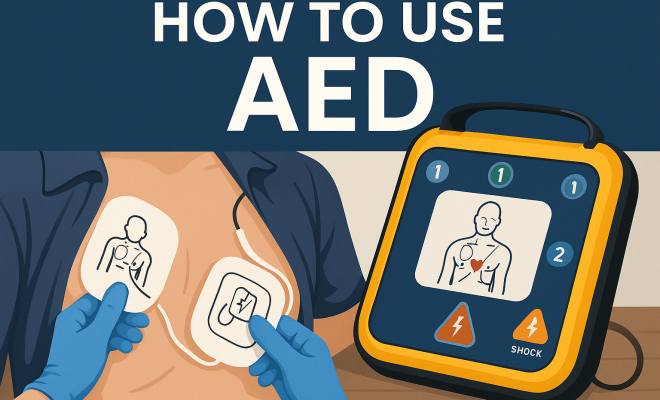
The AED pads themselves will have diagrams on them indicating where they should be placed on the patient’s chest. Generally, one pad goes on the upper right side of the chest, just below the collarbone, and the other goes on the lower left side of the rib cage, below the armpit. It’s crucial that these pads do not touch each other. For children, pediatric pads are available, which deliver a lower dose of energy. If pediatric pads aren’t available for a child under 8 years old or weighing less than 55 pounds, adult pads can be used, but ensure they don’t touch each other on the child’s smaller body. Firmly press the pads onto the skin to ensure good contact, eliminating any air pockets.
5. Analyzing the Rhythm: Let the AED Do the Work
Once the pads are securely attached to the patient’s bare chest and plugged into the AED unit, the device will prompt you to “stand clear” or “do not touch the patient.” This is a critical moment. The AED will now analyze the patient’s heart rhythm to determine if a shockable rhythm (ventricular fibrillation or pulseless ventricular tachycardia) is present. During this analysis phase, it’s absolutely vital that no one touches the patient. Any movement or contact can interfere with the AED’s ability to accurately read the heart’s electrical activity, potentially leading to an incorrect diagnosis or a delayed shock.
The analysis usually takes only a few seconds. The AED uses sophisticated algorithms to differentiate between rhythms that require defibrillation and those that do not. If the AED determines that a shock is needed, it will then advise you of the next step. If it determines that no shock is advised, it will tell you to continue CPR. Trust the machine; it’s designed to make this life-or-death decision accurately.
6. Delivering the Shock: The Moment of Intervention
If the AED determines a shock is necessary, it will typically announce, “Shock advised!” and begin to charge. During this charging phase, it will again warn everyone to “stand clear.” It’s imperative that you visually sweep the area to ensure no one is touching the patient, the bed, or anything connected to the patient. Announce loudly, “Everyone clear! I’m going to deliver a shock!” This verbal warning is as important as the visual check.
Once the AED is charged, it will prompt you to press the ‘shock’ button, which is usually a flashing or brightly colored button. Press it firmly. You might see the patient’s body twitch slightly as the electrical current passes through. Immediately after the shock is delivered, the AED will usually advise you to resume CPR. Do not remove the pads or turn off the AED. The device will continue to monitor the patient and provide further instructions, including advising additional shocks if needed, typically every two minutes.
7. Continuing CPR: The Post-Shock Protocol
Defibrillation, while vital, is often just one part of the resuscitation effort. After delivering a shock, or if the AED advises ‘no shock,’ the device will instruct you to immediately resume high-quality cardiopulmonary resuscitation (CPR). This means chest compressions and rescue breaths, if you are trained and willing to provide them. The AED pads should remain on the patient’s chest throughout this process, and the device should remain on, monitoring the heart rhythm.
Continue CPR for two minutes, or until the AED re-analyzes the rhythm, or until advanced medical personnel arrive and take over. The AED will typically count down the two-minute interval for you. High-quality CPR involves pushing hard and fast in the center of the chest, at a rate of 100-120 compressions per minute, to a depth of at least two inches for adults. Minimize interruptions to chest compressions as much as possible, as continuous blood flow to the brain and heart is crucial for survival.
8. Special Considerations: Children, Water, and Pacemakers
While the basic principles of how to use an AED remain consistent, there are a few special considerations to keep in mind. For children under 8 years old or weighing less than 55 pounds, it’s best to use pediatric pads if available. These pads deliver a lower, attenuated dose of electricity suitable for smaller bodies. If pediatric pads aren’t on hand, adult pads can be used, but ensure they don’t touch each other, potentially placing one on the front of the chest and one on the back.
What if the patient is in water or lying on a wet surface? Move them to a dry area if possible. If not, dry the chest thoroughly before applying pads. Water conducts electricity, which could be dangerous for rescuers and reduce the effectiveness of the shock. For patients with implanted pacemakers or defibrillators (you might see a small lump under the skin on their chest), avoid placing the AED pad directly over the device. Place the pad at least an inch away from the implant to prevent interference with its function or damage to the device itself. (See: NIH on Sudden Cardiac Arrest.)
9. Maintaining Readiness and Training: Your Role Beyond the Emergency
Knowing how to use an AED is one thing; being prepared is another. Regular training, even a refresher course every couple of years, can significantly boost your confidence and competence. Many organizations offer combined CPR and AED certification courses, which are invaluable. These courses not only teach you the practical steps but also provide hands-on experience with training AEDs, allowing you to practice in a low-stress environment.
Beyond personal training, advocating for AED placement in public spaces and ensuring they are regularly maintained is crucial. AEDs need their batteries checked and pads replaced periodically. If you’re in charge of an AED in a workplace or community setting, adhere to the manufacturer’s maintenance schedule. Remember, an AED is only effective if it’s accessible, functional, and if someone knows how to use it. Your proactive approach to training and awareness could literally be the difference between life and death for a loved one, a colleague, or a complete stranger.
10. Common Myths About AEDs and CPR
When it comes to using an AED, several misconceptions can lead to hesitation when action is required. One major myth is that you need extensive medical training to use an AED. In reality, these devices are designed for layperson use, often providing clear audio prompts to guide you through the process. Another common myth is that using an AED can hurt someone, but the reality is that if the person is in cardiac arrest, the risk of harm is far less than the potential benefit of delivering a life-saving shock.
Another prevalent myth revolves around the belief that an AED can only be used in cases of complete cardiac arrest. While it’s crucial during SCA, it can also be a lifesaving tool for other arrhythmias, making its utility broader than many think. Lastly, some people worry about the timing; fear of delivering a shock too late or too early can paralyze action. It’s vital to trust the AED’s analysis; if it advises a shock, it’s safe to proceed.
11. Real-Life Scenarios: AED Success Stories
There are countless success stories that highlight the lifesaving potential of AEDs. For instance, in 2019, a high school student in California collapsed during football practice due to SCA. Thankfully, a coach was able to quickly retrieve an AED from the school gym. Following the AED’s instructions, the coach delivered a shock, restoring the student’s heart rhythm before emergency responders arrived. His quick thinking and the availability of the AED led to a full recovery.
Statistics further underscore the importance of having AEDs accessible in public settings. According to the American Heart Association, prompt defibrillation can increase the chances of survival from SCA by up to 70% when combined with immediate CPR. In another case, a middle-aged man collapsed at a local gym. Within minutes, bystanders retrieved an AED and followed its prompts. The man survived and later shared his gratitude, attributing his life to the quick actions of those around him and the life-saving technology of the AED.
12. Frequently Asked Questions About AED Usage
What should I do if I can’t find an AED?
If you can’t locate an AED quickly, don’t hesitate to start CPR immediately and continue until help arrives. Many emergency dispatchers can guide you to the nearest AED while you perform CPR.
Is it safe to use an AED on someone who is wet?
Water can conduct electricity, so it’s important to dry the patient’s chest as much as possible before applying the AED pads. If the person is in standing water, try to move them to a dry area. (See: Wikipedia article on AEDs.)
Can the AED be used on pregnant women?
Yes, AEDs can be used on pregnant women. The electrical shock will not harm the fetus, and the mother’s chances of survival are the priority.
How often should AEDs be checked for maintenance?
AEDs should be checked regularly, ideally once a month, to ensure that they are functional, pads are not expired, and batteries are charged. Follow the manufacturer’s guidelines for specific maintenance schedules.
What are the signs that an AED is not functioning properly?
Common signs include error messages on the screen, blinking lights indicating low battery, or expired pads. If you notice any of these signs, report them to the responsible authorities immediately and ensure the AED is taken out of service until it can be repaired or replaced.
Can I use an AED on a child?
Yes, you can use an AED on a child. If pediatric pads are available, they should be used. If not, adult pads can be placed in a way that they don’t touch each other.
What happens if I touch the patient while the AED is delivering a shock?
It’s crucial that no one touches the patient during the shock delivery. If someone does, they might feel a jolt, but more importantly, it could interfere with the AED’s function and the effectiveness of the shock.
Do I need to know CPR to use an AED?
While knowing CPR is extremely beneficial and can improve the chances of survival, you can still use an AED even if you’re not trained in CPR. The AED will guide you through the necessary steps.