How Google’s AI Update Is Transforming Search and Shaking Up Online Business
“`html
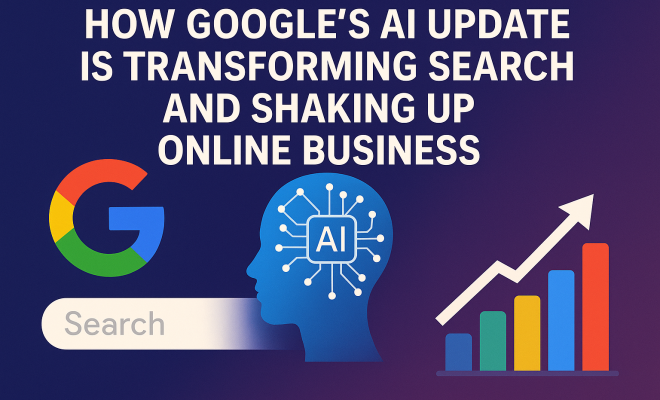
In a monumental shift that is set to redefine how we interact with information online, Google has launched an extensive AI update that transforms the traditional search experience. This new update leverages advanced artificial intelligence to create a conversational, multi-step search interface, marking the most significant overhaul to Search in over 25 years. The changes promise to impact not just users but also publishers, digital marketers, and SEO professionals who depend heavily on traditional search traffic.
1. The Evolution of Google Search
For decades, Google has been the cornerstone of online search, evolving from a simple search engine to a complex ecosystem. With the introduction of its AI-driven update, Google is taking another leap forward. This AI Mode allows users to have more interactive and personalized searches, turning the search box into a dialogue-driven platform. Instead of merely typing queries, users can engage in a back-and-forth conversation with the search tool, making it feel more like a virtual assistant than a search engine.
The evolution reflects a broader trend in technology where user expectations are shifting towards more intuitive and interactive interfaces. Traditional search has relied heavily on keyword matching and link clicks, but with the new AI features, Google aims to provide answers and solutions directly within the search results. This could change the very fabric of how information is retrieved and consumed online.
2. The Role of AI Mode in Search
The newly introduced AI Mode is designed to facilitate a more fluid exchange of information. Users can ask follow-up questions, explore related topics, and receive guidance in real-time, which is a far cry from the static results of conventional search queries. This multi-step interface allows for a more nuanced exploration of subjects, enabling users to dive deep into topics without needing to click multiple links.
This method not only enhances user experience but may also streamline the search process, making it faster and more efficient. The AI Mode leverages machine learning algorithms to understand context and user intent better, ensuring that responses are tailored to individual needs rather than generic answers. This personalization is where the AI update truly shines.
3. Search Agents: Google’s New Background Assistants
Another significant feature of the Google AI update is the introduction of Search Agents. These background assistants are programmed to track specific topics of interest for users, sending regular updates and notifications. This feature brings a new dimension to search, transforming it from a reactive tool to a proactive assistant.
Search Agents continuously monitor changes in user-defined topics, alerting users to new developments, trends, or information. This functionality not only keeps users informed but also represents a shift toward an “always-on” service model, where Google assists users without them needing to initiate the interaction. However, this could lead to users spending less time on external sites as they receive curated content directly from Google.
4. The Impact on Publishers and Website Owners
The Google AI update has already raised concerns among publishers and website owners. The new AI features, particularly AI Overviews, have the potential to diminish traffic to traditional websites. Data indicates that when an AI Overview is presented, clicks on traditional links have plummeted from 15% to just 8%. This significant drop is alarming for content creators who rely on search traffic to drive engagement and revenue.
As users increasingly find answers within Google’s ecosystem, the necessity for websites to rank high in search results may diminish. Publishers are faced with the daunting task of adapting their strategies to align with this new search paradigm, which emphasizes direct information delivery over traditional link clicks. This fundamental shift could prompt a re-evaluation of content distribution and marketing strategies across the board.
5. SEO Adjustments in the Age of AI
The SEO landscape is rapidly evolving alongside these changes. As the Google AI update shifts user behavior and search dynamics, SEO professionals must rethink their tactics to remain relevant. The decline in click-through rates for traditional results—averaging a staggering 58% dip for the top Google result when an AI Overview is present—demands new approaches in keyword optimization and content creation.
To thrive in this new environment, SEO strategies must focus on providing high-quality, engaging content that not only ranks well but also satisfies the AI’s algorithms. Understanding how Google’s AI evaluates and prioritizes content will be crucial for maintaining visibility and driving organic traffic. Additionally, focusing on user experience and engagement will become more critical as these factors increasingly influence search rankings. (See: Evolution of Google Search.)
6. The Broader Implications for Online Businesses
The implications of the Google AI update extend beyond just search optimization and traffic metrics. As Google integrates more AI features into its services, the overall structure of online businesses may experience a shift. Companies that rely heavily on search engine traffic may need to diversify their marketing channels to mitigate the risk associated with declining organic reach.
Moreover, businesses will need to invest in building direct connections with their audiences through email marketing, social media, and other platforms. As Google becomes a more dominant player in information dissemination, companies that adapt quickly to these changes will be better positioned to succeed in an evolving digital landscape.
7. Consumer Behavior in the Age of AI
The Google AI update is not just a technological advancement; it reflects changing consumer behavior. With the advent of AI, users are gravitating toward solutions that offer immediate answers over traditional browsing. This shift raises questions about how much consumers value the exploration of information versus receiving concise, direct responses.
As users become accustomed to AI-driven interactions, their expectations for speed and accuracy will increase. This may lead to a decline in patience for traditional search methods, resulting in less engagement with content that requires deeper exploration. Understanding these shifts in consumer behavior will be essential for businesses aiming to maintain relevance and engagement with their audiences.
8. The Future of Information Retrieval
The Google AI update sets a precedent for the future of information retrieval. As AI technologies advance, we can expect more transformative changes that will redefine how information is accessed and consumed. The integration of AI into search engines is just the beginning; future developments may include enhanced personalization, predictive search capabilities, and even more sophisticated conversational interfaces.
These advancements will challenge traditional notions of web browsing and could lead to a more fragmented information landscape, where users receive tailored content in silos. Such developments might spark debates about the implications for open access to information and the potential monopolization of online knowledge by major tech companies like Google.
9. The Debate on AI and the Open Web
As the Google AI update unfolds, it ignites a broader discussion about the role of AI in shaping the future of the web. Critics argue that as AI systems become more dominant, they may hinder the open web, creating a landscape where access to information is controlled by a few powerful entities. This centralization poses risks to diversity and the availability of varied perspectives.
Proponents, however, advocate for the potential benefits of AI-driven search, emphasizing improved efficiency and user satisfaction. The ongoing debate highlights the necessity for a balanced approach that ensures innovation while safeguarding the principles of an open and accessible internet. As the digital ecosystem evolves, stakeholders must grapple with these complex issues, striving for solutions that prioritize both technological advancement and equitable access to information.
10. In-depth Analysis of AI Features
The Google AI update introduces numerous AI features that significantly alter the user experience. Among these, one of the most notable is the AI-generated summary of information, which can present users with a quick overview of a topic based on multiple sources. This feature not only saves time but also enhances the user’s ability to grasp essential information rapidly.
This is particularly valuable in today’s fast-paced digital environment where attention spans are decreasing. According to research conducted by Microsoft, the average human attention span has fallen from 12 seconds in 2000 to 8 seconds today, making concise and accessible information increasingly important. Google’s AI-generated summaries cater to this need, potentially becoming a primary source of information for users seeking quick answers.
Furthermore, the AI-driven contextual understanding allows Google to deliver search results that consider not only the keywords used but also the user’s previous interactions, preferences, and even location. This holistic approach to search could lead to a more personalized user experience, where each search feels tailored to the individual’s needs.
11. Examples of Practical Applications
To better understand the functionality of the Google AI update, consider a few practical applications. Suppose a user is planning a trip and types “best places to visit in Paris.” Instead of providing a list of links to travel blogs and websites, Google’s AI might generate a list of top attractions, along with a brief description of each, user ratings, and even the best times to visit based on current data.
Moreover, if the user then asks a follow-up question like “What is the best time to visit during the summer?” the AI could provide a direct answer based on aggregated data, creating a conversational flow that mimics human interaction. This seamless transition between questions allows users to engage in a more natural and effective search experience. (See: Interactive search interfaces in technology.)
12. Statistics on User Engagement
Recent data reveals that user engagement is significantly influenced by the introduction of AI capabilities. A survey conducted by Pew Research Center shows that 63% of users prefer receiving direct answers from search engines over clicking through to websites. Additionally, 72% of respondents expressed a willingness to continue using AI-powered search features if they enhance the accuracy of information retrieved.
These statistics underline the shifting dynamics in how users interact with search engines. As AI continues to evolve, it is likely that these preferences will shape the future of search, leading to further integration of intelligent systems that prioritize user satisfaction.
13. Expert Perspectives on AI in Search
Industry experts weigh in on the implications of the Google AI update. According to Dr. Sarah Miller, an AI researcher at Stanford University, “The integration of AI in search engines will redefine the role of users. They will no longer just be seekers of information; they will become active participants in a dialogue with their digital assistants.” This perspective emphasizes the need for users to adapt their search habits in light of AI advancements.
Moreover, SEO strategist Mike Johnson notes, “The AI update necessitates a paradigm shift in content strategy. Businesses must prioritize delivering value through quality content that engages users rather than merely focusing on ranking on SERPs.” This highlights the importance of aligning content strategy with user-centric approaches to remain competitive in a rapidly changing landscape.
14. Frequently Asked Questions (FAQ)
What is the Google AI update?
The Google AI update refers to the recent overhaul of Google’s search functionality, integrating advanced artificial intelligence to provide users with a more conversational and personalized search experience.
How does the AI Mode work?
AI Mode allows users to engage in a dialogue with Google’s search tool, enabling follow-up questions, contextual understanding, and a more interactive search experience.
What are Search Agents?
Search Agents are background assistants that track specific topics of interest for users and send updates or notifications about new information, transforming search from a reactive to a proactive tool.
How does the Google AI update affect SEO?
The update significantly alters SEO strategies, as content creators must focus on high-quality, engaging content that aligns with the new AI-driven search behaviors and preferences of users.
Will traditional websites see decreased traffic due to the AI update?
Yes, there are concerns that traffic to traditional websites may decrease as users find answers directly within Google’s search results without needing to click through to external sites.
What are the benefits of the AI update for users?
The benefits for users include faster access to information, concise answers to queries, and a more personalized search experience based on their preferences and previous interactions.
How are businesses adapting to the changes brought by the AI update?
Businesses are adapting by diversifying their marketing strategies, enhancing their engagement with users through direct communication channels, and prioritizing content that aligns with the new AI search paradigms. (See: Impact of AI on Google Search.)
What are the potential long-term implications of the Google AI update?
Long-term implications may include a shift in the structure of online businesses, changes in consumer behavior regarding information retrieval, and ongoing debates about the impact of AI on the open web and access to diverse perspectives.
15. The Global Impact of AI in Search
The implications of the Google AI update are not limited to just the U.S. market; they extend globally. Different regions may experience unique challenges and opportunities as they adapt to AI-driven search technologies. For instance, in developing countries where internet access is still growing, AI features could help bridge knowledge gaps by providing immediate information to users who may not have extensive experience navigating the web.
Conversely, countries with diverse languages and cultures may face challenges in ensuring that AI systems understand and accurately represent local contexts. Google will need to invest in localizing its AI algorithms to ensure they cater to a wide range of languages and cultural nuances, providing equitable access to information worldwide.
16. Impact on Digital Marketing Strategies
The Google AI update is prompting a rethinking of digital marketing strategies. Marketers will need to pivot from traditional SEO practices to embrace a more integrated approach that aligns with AI advancements. This includes harnessing data analytics to understand user behavior and preferences better. Brands that can leverage insights from AI will be better positioned to craft targeted campaigns that resonate with their audiences.
Moreover, the rise of conversational marketing is expected as brands start adopting chatbots and AI-driven assistants that facilitate real-time interactions with users. According to a report by HubSpot, 47% of consumers are open to purchasing items through a chatbot. This shift towards conversational interfaces will require marketers to develop strategies that incorporate these tools into their customer journey, enhancing engagement and conversion rates.
17. Preparing for Future AI Developments
As the landscape of search technology continues to evolve, it is crucial for businesses and marketers to stay informed about future AI developments. This preparation involves continuous learning and adaptation to new tools and features introduced by Google and other tech giants. Organizations that prioritize AI literacy among their teams will be better equipped to leverage new opportunities that arise from advancements in search technology.
Additionally, fostering collaboration between technical and creative teams will be essential. For example, SEO specialists must work closely with content creators to ensure that content not only appeals to AI algorithms but also provides genuine value to users. This synergy will be the key to thriving in an AI-driven ecosystem.
18. Conclusion: Embracing the Future of Search
The Google AI update represents a landmark moment in the evolution of search technology. By facilitating more interactive and personalized search experiences, Google is not just enhancing how users find information but also reshaping the broader digital ecosystem. As businesses and consumers alike adapt to these changes, it will be crucial to navigate the challenges and opportunities presented by AI-driven search methodologies. Embracing this shift will require innovation, creativity, and a commitment to maintaining the principles of user-centric design in an increasingly complex information landscape.
“`
Trending Now
- the complete explanation
- our breakdown of how the delhi hc ruling against google could transform the startup landscape in india
- How a Recent Court Ruling Could Change the Future of Google Keyword Ads in India
- read the full story
- The Surprising Truth About Gen Z Inheritance Expectations That No One Saw Coming
Frequently Asked Questions
How is Google's AI update changing search?
Google's AI update is transforming search by introducing a conversational, multi-step interface that allows users to engage in a dialogue with the search tool. This shift moves away from traditional keyword matching, providing more interactive and personalized search experiences, where users can ask follow-up questions and explore topics in depth.
What is AI Mode in Google Search?
AI Mode in Google Search is a new feature designed to facilitate a more fluid exchange of information. It enables users to ask follow-up questions and receive real-time guidance, allowing for a deeper exploration of topics without the need to click through multiple links, enhancing the overall search experience.
What impact will Google's AI update have on online businesses?
Google's AI update is expected to significantly impact online businesses by changing how users interact with search results. Publishers, digital marketers, and SEO professionals may need to adapt their strategies as traditional search traffic diminishes and user engagement shifts towards more conversational and interactive search methods.
Why is Google's search update considered significant?
This search update is significant because it represents the most substantial change to Google's search functionality in over 25 years. The integration of advanced AI technology not only enhances user interaction but also redefines the way information is retrieved and consumed online, reshaping expectations for search experiences.
What does the future of search look like with AI?
The future of search with AI looks more intuitive and interactive, as users will increasingly expect search engines to provide direct answers and solutions within results. This evolution may lead to a decline in traditional link-clicking behavior, as users engage more with conversational interfaces that offer personalized and context-aware responses.
Have you experienced this yourself? We’d love to hear your story in the comments.