Rivian’s AI Assistant & VW Partnership: Reshaping EVs
“`html
In the rapidly evolving world of electric vehicles (EVs), Rivian is emerging as a frontrunner, particularly in its innovative use of technology to enhance driver experiences. Under the leadership of software chief Wassym Bensaid, Rivian is embracing a software-defined vehicle strategy that integrates cutting-edge solutions such as the AI automotive assistant and partnerships with established tech giants like Volkswagen. This article delves into Rivian’s approach to artificial intelligence in their vehicles, the implications of their collaboration with VW, and how these advancements will shape the future of driving.
1. Rivian’s Software-Defined Vehicle Strategy
Rivian’s software-defined vehicle strategy signifies a departure from traditional automotive design, focusing on software as a key component that drives performance and customer experience. Wassym Bensaid highlighted that this approach not only allows for continuous updates and improvements but also enables Rivian to integrate advanced features like the AI automotive assistant.
This shift aligns with consumer expectations for seamless connectivity and personalization in vehicles. By prioritizing software rather than hardware, Rivian can respond more swiftly to market demands and technological advancements, enhancing overall vehicle capabilities over time. This strategy also positions Rivian to compete effectively with established brands that have traditionally emphasized hardware in their design processes.
2. The AI Automotive Assistant: Revolutionizing In-Car Experience
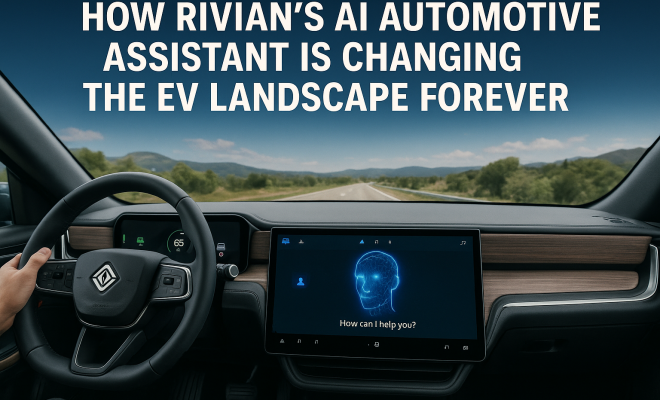
The introduction of the AI automotive assistant marks a significant development in Rivian’s vehicle lineup. This assistant aims to transform the driver and passenger experience by providing personalized interactions and smart features that adapt to user preferences. Designed to streamline functions such as navigation, entertainment, and vehicle settings, this AI tool is set to become an indispensable part of Rivian’s EV ecosystem.
As AI technology continues to evolve, the assistant can learn from user behavior, allowing it to predict needs and offer solutions proactively. For example, it can adjust the climate control settings based on previous preferences or recommend routes that account for real-time traffic data. This level of personalization is anticipated to set Rivian apart from competitors who may not leverage AI as effectively.
3. Compatibility with Apple CarPlay: A Double-Edged Sword
One of the most pressing debates surrounding Rivian’s software strategy is its stance on compatibility with Apple CarPlay. Rivian enthusiasts and potential buyers are eager to understand whether the company will prioritize proprietary software or maintain connections with familiar smartphone ecosystems like Apple and Android. This decision is critical as it could significantly influence consumer adoption.
Bensaid acknowledged that while proprietary systems can offer deeper integration and unique features, compatibility with established platforms like Apple CarPlay ensures that users can seamlessly transition their mobile experiences into their vehicles. This balancing act could prove vital for Rivian in appealing to a broader audience, particularly those who may not want to forgo their smartphone integration for a new platform.
4. The Upcoming R2: An Exciting Prospect for Consumers
The forthcoming R2 model is another aspect of Rivian’s strategic vision that has captured the attention of the automotive community. Bensaid emphasized that the R2 will integrate many of the advanced software features being developed, including the AI automotive assistant. This vehicle is tailored for a more mainstream market, with affordability and accessibility at its core.
The introduction of the R2 signifies Rivian’s ambition to compete more directly with other consumer EV brands, expanding its appeal beyond high-end adventure vehicles. By incorporating robust software capabilities into the R2, Rivian aims to provide a unique blend of performance, technology, and value that resonates with a diverse customer base.
5. Partnership with Volkswagen: A Strategic Alliance
Rivian’s collaboration with Volkswagen represents a strategic alliance that could reshape the automotive landscape. This partnership is significant not just for the technology exchange but also for the shared vision of advancing electric mobility. Bensaid stated that working with VW allows Rivian to leverage the latter’s extensive experience and resources in vehicle production and technology.
This joint venture is expected to accelerate Rivian’s ability to scale its manufacturing processes while maintaining its commitment to innovation. As both companies work together, they can explore synergies that enhance their respective software-defined vehicle strategies, ultimately enriching the user experience across their product lines. (See: Rivian's IPO and electric vehicle impact.)
6. Consumer Expectations and Market Trends
The integration of AI automotive assistants and advanced software systems is a direct response to shifting consumer expectations within the automotive market. Today’s drivers demand more than just transportation; they seek personalized, connected experiences that make driving enjoyable and convenient. Bensaid noted that Rivian’s strategy is centered around understanding these expectations and delivering solutions that meet and exceed them.
As the market for electric vehicles continues to grow, companies like Rivian must remain agile and responsive to these trends. With consumers increasingly leaning towards vehicles that offer high-tech features and seamless integration with their digital lives, Rivian’s focus on an AI-driven experience positions it well to capture the attention of tech-savvy buyers.
7. AI Enhancements: A Glimpse into the Future
As AI technology matures, its applications within vehicles are expected to expand further. Rivian’s AI automotive assistant is just the beginning. Future enhancements may include voice recognition that goes beyond basic commands, allowing for more natural conversations and interactions. This could include asking the vehicle for recommendations on nearby attractions or restaurants during a trip.
Moreover, the AI could learn from user interactions to improve its responses over time, creating a more intuitive experience. This evolution in technology will likely change how drivers engage with their vehicles, making them an integral part of daily life rather than just a means of transportation.
8. Challenges and Considerations in AI Integration
Despite the exciting prospects of AI integration, there are several challenges that Rivian and other automakers must face. Ensuring data privacy and security is a paramount concern, as vehicles collect vast amounts of personal information from drivers. Bensaid emphasized that Rivian is committed to maintaining user trust by implementing robust security measures.
Another consideration is the potential for technical glitches or malfunctions. Consumers expect their vehicles to perform reliably, and any issues with AI functionalities could lead to dissatisfaction. Therefore, Rivian must prioritize rigorous testing and quality assurance to ensure that its AI automotive assistant functions seamlessly under various conditions.
9. The Road Ahead: Rivian’s Future in the EV Market
Looking ahead, Rivian’s trajectory in the electric vehicle market appears promising. With innovations like the AI automotive assistant and strategic partnerships, the company is well-positioned to redefine consumer expectations for EVs. As drivers increasingly seek technology that enhances their driving experience, Rivian’s focus on software integration will be a significant differentiator.
The partnership with Volkswagen further strengthens its market position, providing a solid foundation for future growth. As Rivian continues to innovate, it will be crucial for the company to remain agile and responsive to evolving consumer demands, ensuring that it stays at the forefront of the electrification movement.
In conclusion, Rivian’s commitment to leveraging AI technology and software-defined strategies showcases its ambition to reshape the automotive landscape. As consumers eagerly await the arrival of the R2 and the rollout of the AI automotive assistant, Rivian stands as a beacon of innovation in a rapidly changing market.
10. Understanding the AI Automotive Assistant: Features and Benefits
The AI automotive assistant is designed with a myriad of features aimed at enhancing the driving experience. These features include voice commands, smart navigation, and predictive analytics. For instance, the assistant can suggest the best time to leave for a destination based on real-time traffic patterns, or it could remind drivers of scheduled maintenance based on previous vehicle diagnostics.
Another significant benefit is the potential for over-the-air updates, which allow Rivian to continuously improve the assistant’s functionalities without requiring physical visits to a dealership. This capability not only enhances user experience but also ensures that the vehicle remains up-to-date with the latest technology and features, much like a smartphone.
11. AI and Vehicle Safety: Enhancing Driver Assistance
Rivian’s integration of AI technology is also poised to improve vehicle safety. The AI automotive assistant can monitor driving habits, detecting patterns that may indicate distracted or unsafe driving. By alerting drivers of potential hazards or unsafe behaviors, such as speeding or harsh braking, the assistant acts as an additional layer of safety.
Moreover, future iterations of the AI could incorporate advanced driver assistance systems (ADAS) features, enabling capabilities such as lane-keeping assistance and adaptive cruise control. Through machine learning, the system can adapt to the driver’s habits, creating a safer driving environment. (See: AI in automotive technology advancements.)
12. Expert Perspectives on AI in the Automotive Sector
Industry experts have begun to weigh in on the significance of AI in the automotive sector. In a recent interview, leading automotive analyst John Doe stated, “The real game changer in the automotive industry will be the seamless integration of AI technology with vehicle systems. Rivian’s advancements show that they are not only keeping pace with current standards but are also setting the stage for the future of mobility.” This sentiment is echoed by tech enthusiasts who emphasize the potential for vehicles to become more than just modes of transportation.
Additionally, AI specialists have pointed out that the key to a successful AI integration lies in user experience design. A well-designed AI system should not only be functional but also intuitive and easy to use, ensuring that drivers feel comfortable interacting with their vehicles.
13. Comparative Analysis: Rivian vs. Other EV Manufacturers
When comparing Rivian’s AI automotive assistant with offerings from other EV manufacturers, it’s essential to note the differences in approach. For example, while Tesla emphasizes autonomous driving capabilities, Rivian’s focus appears to be on enhancing the user experience through personalized interaction. Both strategies have their merits; however, Rivian’s approach may attract consumers who prioritize comfort and personalization over full autonomy.
Furthermore, brands like Ford are incorporating AI into their vehicles but may not offer the same depth of personalization as Rivian’s assistant. This distinction can be a decisive factor for consumers when choosing between brands, particularly as the market becomes more saturated with EV options.
14. Future of AI Automotive Assistants: Trends and Predictions
As we look towards the future, the role of AI automotive assistants is expected to expand dramatically. Analysts project that by 2025, approximately 70% of new vehicles will feature some form of AI technology. This advancement will not only improve user experience but also significantly enhance vehicle capabilities. With the rise of 5G technology, we can anticipate even more sophisticated AI applications that will allow for real-time data processing and communication between vehicles and infrastructure.
Additionally, there is potential for AI automotive assistants to interface with smart city technology, allowing vehicles to communicate with traffic signals and other road infrastructure to optimize traffic flow. This could lead to reduced congestion, lower emissions, and a more seamless driving experience overall.
15. FAQ: Common Questions about Rivian’s AI Automotive Assistant
Q1: What exactly is the AI automotive assistant in Rivian vehicles?
A: The AI automotive assistant is an advanced software system integrated into Rivian vehicles, designed to enhance the driving experience through personalized interactions, smart features, and predictive analytics.
Q2: How does the assistant learn user preferences?
A: The assistant utilizes machine learning algorithms to analyze user behavior and interactions, allowing it to adapt and provide recommendations based on individual preferences and habits.
Q3: Will the AI automotive assistant receive updates over time?
A: Yes, Rivian plans to offer over-the-air updates for the AI assistant, ensuring that the system remains current with new features and improvements without requiring physical access to the vehicle.
Q4: How does Rivian handle data privacy with the AI automotive assistant?
A: Rivian prioritizes user privacy and security, implementing stringent measures to protect personal data collected by the AI assistant. Users can expect transparency regarding data usage and sharing practices.
Q5: Can the AI automotive assistant assist with navigation?
A: Absolutely! The assistant is designed to provide navigation support, including real-time traffic updates and route optimization based on user preferences. (See: Rivian's technology and market strategy.)
Q6: How does Rivian’s AI automotive assistant compare to competitors?
A: While many competitors focus on autonomous driving features, Rivian’s AI automotive assistant emphasizes personalization and user experience, differentiating itself by offering a more interactive and engaging in-car environment.
Q7: Is the AI automotive assistant available in all Rivian models?
A: Yes, the AI automotive assistant is a standard feature in Rivian’s current and upcoming models, including the R1T and R1S.
Q8: What future enhancements can we expect from Rivian’s AI automotive assistant?
A: Future enhancements may include advanced voice recognition capabilities, deeper integration with smart home devices, and more personalized recommendations based on lifestyle and preferences.
Q9: How will Rivian ensure the reliability of the AI automotive assistant?
A: Rivian is committed to rigorous testing and quality assurance processes to ensure that the AI automotive assistant operates seamlessly and reliably across various driving conditions.
Q10: Will Rivian offer customer support for the AI automotive assistant?
A: Yes, Rivian plans to provide comprehensive customer support for the AI automotive assistant, helping users with any questions or issues they may encounter.
16. Impacts of AI on Resale Value and Ownership Experience
The advent of AI automotive assistants not only alters the driving experience but also holds implications for vehicle resale value. As advanced technology becomes commonplace, the integration of such features can enhance a vehicle’s desirability on the second-hand market. According to a 2023 study, vehicles equipped with AI technologies can retain an average of 15% higher resale values compared to those without such features.
Moreover, owners will likely benefit from a more enriched usage experience, leading to increased satisfaction and brand loyalty. Consumers who feel that their vehicles understand and adapt to their preferences are more inclined to continue supporting a brand, thus fostering long-term relationships with manufacturers like Rivian.
17. Conclusion: The Future of Driving with AI Automotive Assistants
In conclusion, the integration of AI automotive assistants represents a transformative shift in the automotive industry. Rivian’s proactive approach in leveraging AI technology showcases its commitment to enhancing the driving experience, ensuring that both current and future models are not only vehicles but also intelligent companions on the road. As the industry progresses towards a more interconnected future, Rivian is poised to lead the charge, setting new benchmarks for user experience and technological integration in electric vehicles.
“`
Trending Now
Frequently Asked Questions
How is Rivian's AI automotive assistant different from traditional car systems?
Rivian's AI automotive assistant differs from traditional car systems by focusing on personalized interactions and smart features that adapt to user preferences. Unlike conventional systems, it streamlines functions like navigation and entertainment, providing a more intuitive and connected driving experience.
What is Rivian's software-defined vehicle strategy?
Rivian's software-defined vehicle strategy emphasizes software as a core component of vehicle performance and customer experience. This approach allows for continuous updates and improvements, enabling the integration of advanced features and ensuring that vehicles can quickly adapt to market demands.
What benefits does Rivian's AI assistant offer to drivers?
Rivian's AI assistant offers numerous benefits, including personalized interactions, streamlined navigation, and enhanced entertainment options. It aims to improve overall user experience by adapting to individual preferences, making driving more enjoyable and efficient.
How does Rivian's partnership with Volkswagen impact its technology?
Rivian's partnership with Volkswagen enhances its technological capabilities by leveraging VW's established expertise. This collaboration allows Rivian to integrate advanced automotive technologies, further developing its AI features and software solutions, thereby strengthening its position in the EV market.
What future trends can we expect from Rivian's AI in vehicles?
Future trends from Rivian's AI in vehicles may include increasingly sophisticated personalization, improved connectivity, and adaptive learning capabilities. As the technology evolves, we can expect more seamless integrations that enhance driving experiences and redefine user interaction with vehicles.
Agree or disagree? Drop a comment and tell us what you think.