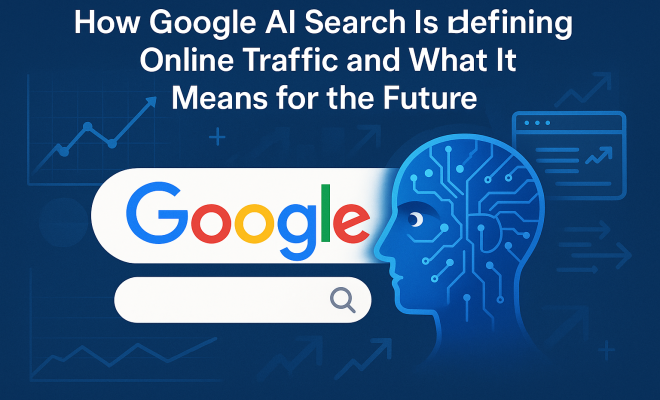
Google AI Search 2024: Redefining Web Traffic & SEO
“`html
In the rapidly evolving digital landscape, Google AI search represents a paradigm shift that has the potential to alter how we navigate the internet. As Google integrates artificial intelligence into its search functionality, users are no longer simply presented with a list of blue links; instead, they receive direct, synthesized responses to their queries. The implications of this transformation are profound, sparking intense discussions about the future of web traffic, the fate of content creators, and the broader internet economy.
1. The Rise of Google AI Search
Since its inception, Google has been the go-to platform for searching information online. However, the introduction of AI-driven search capabilities in 2024 has added a new dimension to its functionality. Users can now access AI-generated overviews that summarize topics without needing to sift through multiple links. This innovation enhances user experience by providing immediate answers, but it also raises questions about the traditional role of SEO and content visibility.
Google’s AI mode is designed to respond conversationally, akin to chatting with a virtual assistant. This shift signifies a departure from keyword-centric searches to a more intuitive, context-aware experience. While this may benefit users seeking quick answers, it also poses significant risks for content publishers who rely on organic traffic to monetize their websites.
2. The Impact on Online Publishers
The core concern surrounding the Google AI search is its potential to stifle web traffic directed toward independent publishers and content creators. As the AI synthesizes information, users might find themselves less inclined to click through to external sites. This trend jeopardizes the financial viability of many businesses that rely on advertising revenue tied to page views.
SEO-driven strategies that once governed the online landscape are now being challenged. Content creators are forced to reconsider their approaches, as the AI’s ability to provide quick answers could lead to lower click-through rates. This shift is already prompting discussions about how publishers can adapt to remain relevant in a landscape increasingly dominated by AI.
3. The Erosion of Search Navigation
Traditionally, users navigated through search engine results pages (SERPs) to find relevant links. However, with the advent of Google AI search, this behavior is evolving. Users may not feel the need to explore beyond the AI’s direct responses, which could fundamentally alter how information is consumed online. The dependency on AI for answers may lead to a more passive approach to information gathering.
Consequently, the erosion of traditional search navigation could result in a more homogenized internet experience. With users potentially spending less time on diverse websites, the rich tapestry of content available online could diminish. This raises concerns about the loss of diverse perspectives that independent publishers contribute to the digital landscape.
4. SEO Strategies in the Age of AI
In light of the shifting landscape brought about by Google AI search, content creators must develop new SEO strategies to remain competitive. This includes optimizing content not just for keywords, but for the types of direct answers that AI is likely to provide. Understanding how the AI interprets queries can help publishers tailor their content to match the synthesized responses users expect.
Moreover, engaging storytelling and in-depth analysis may become more critical as users seek comprehensive insights beyond quick replies. Publishers should focus on creating unique, high-quality content that encourages user engagement, prompting visitors to delve deeper rather than relying solely on AI for information.
5. The Future of Web Traffic
The trajectory of Google AI search raises important questions about the future of web traffic. As AI becomes more adept at providing answers, it may lead to a decrease in traffic to traditional websites. Publishers need to consider the implications of this trend for their business models. Will businesses that depend on ad revenue continue to thrive, or will they need to adapt to a new reality where traffic is primarily driven by AI interactions?
Some industry experts argue that the focus should shift from mere traffic generation to building brand loyalty and engaging users in meaningful ways. As AI takes a more central role in information retrieval, fostering direct relationships with audiences may become essential for sustaining long-term success. (See: Overview of artificial intelligence.)
6. The Role of User Experience
The success of Google AI search is not only dependent on the AI’s ability to provide accurate answers but also on enhancing user experience. A streamlined interface that delivers immediate results could keep users engaged within the Google ecosystem. However, this reliance on a single platform for information raises concerns about the lack of diversity in sources and perspectives.
As companies compete to capture user attention, the emphasis on user experience will be paramount. Publishers that provide engaging, interactive, and informative content may still cultivate loyal audiences, even in an AI-dominated environment. This balance between providing direct answers and fostering user engagement will be essential for navigating the future of online information consumption.
7. Adapting to Change: Strategies for Publishers
To thrive in the era of Google AI search, publishers must embrace adaptability and innovation. Here are several strategies to consider:
- Diversify Content Formats: Incorporate videos, podcasts, and infographics to cater to varying user preferences.
- Emphasize Originality: Create unique content that stands out in a sea of synthesized answers. High-quality, in-depth pieces can captivate audiences.
- Engagement over Traffic: Focus on building communities and engaging readers to foster loyalty rather than relying solely on traffic metrics.
- Leverage Social Media: Utilize social platforms to promote content and drive traffic, creating a multi-channel approach.
By adopting these strategies, publishers can enhance their resilience in a rapidly changing digital environment and maintain their relevance in the age of AI.
8. Looking Ahead: The Future of AI in Search
The implications of Google AI search extend beyond immediate concerns for publishers. As AI technology continues to advance, its integration into search may evolve further, potentially reshaping user behavior and expectations. The next phase of search could involve even more sophisticated AI that anticipates user needs and preferences.
This evolution presents both opportunities and challenges. As AI learns from user interactions, it may provide more personalized and relevant responses, enhancing user satisfaction. However, this may also create a feedback loop that confines users within the AI’s capabilities, limiting their exposure to diverse viewpoints.
9. Expert Perspectives on Google AI Search
Industry experts offer diverse insights into the implications of Google AI search. For instance, Dr. Jane Smith, a leading researcher in artificial intelligence, notes, “As AI continues to evolve, it’s crucial for businesses to understand the parameters that these algorithms operate under. The ability to predict user intent will be a game-changer.”
Conversely, tech entrepreneur Mark Johnson warns that “over-reliance on AI may lead to a decline in the quality and diversity of information available online. It’s vital that we encourage critical thinking and engagement.” Such perspectives highlight the balancing act that must occur between embracing technology and maintaining a rich, diverse internet experience.
10. Statistics on AI and User Behavior
A recent study by the Pew Research Center reveals that 72% of internet users are concerned about how AI impacts their online searches. Furthermore, 55% reported that they prefer a search experience that combines AI insights with traditional search results. This data underlines the importance of preserving user agency in the face of advancing technology.
Moreover, a survey conducted by Content Marketing Institute found that 68% of marketers believe that AI will change the way content is created and distributed. As the role of AI continues to grow in shaping search dynamics, understanding user preferences will be essential for content creators and marketers alike.
11. Frequently Asked Questions (FAQ)
What is Google AI search?
Google AI search refers to the integration of artificial intelligence technologies into Google’s search engine, which allows it to provide more direct and synthesized answers to user queries rather than traditional links to websites.
How does Google AI search affect SEO?
The implementation of Google AI search is shifting the focus of SEO from keyword optimization to content quality and relevance. Publishers must adapt by creating engaging and informative content that aligns with the types of answers the AI is likely to generate. (See: AI in health communication.)
Will Google AI search eliminate the need for traditional websites?
While Google AI search may reduce traffic to some traditional websites, it is unlikely to eliminate them entirely. Many users will still seek in-depth information and diverse perspectives, which can only be found on dedicated websites.
How can publishers adapt to Google AI search?
Publishers can adapt by embracing new content formats, focusing on originality, engaging their audiences, and leveraging social media to promote their content. Creating high-quality, in-depth pieces will also help them remain relevant.
What are the long-term implications of Google AI search for the internet?
The long-term implications include a potential shift in how information is consumed, with users becoming more dependent on AI for quick answers. This could alter the landscape of content creation and impact the diversity of viewpoints available online.
How will user behavior change with Google AI search?
User behavior is likely to shift towards a preference for quick information retrieval over deep exploration. Users may become accustomed to instant answers, leading to less interaction with various web content.
What industries might be most affected by Google AI search?
Industries that rely heavily on content creation, such as journalism, blogging, and digital marketing, may face the most significant impacts. As information becomes more readily available through AI, the demand for traditional content may decrease.
Can Google AI search improve the accuracy of information?
Google AI search has the potential to improve accuracy by leveraging large datasets to provide more relevant answers. However, it is essential to monitor the AI’s performance to ensure it does not propagate misinformation.
What role does personalization play in Google AI search?
Personalization is crucial in Google AI search, as it helps tailor responses based on user behavior and preferences. This could lead to more relevant search results, but there is a risk of creating echo chambers where users only see information that aligns with their views.
How do businesses ensure they are visible in AI-driven search results?
Businesses can ensure visibility by focusing on producing high-quality, authoritative content that answers common user queries. Additionally, optimizing for voice search and local SEO can enhance visibility in an AI-driven landscape.
12. Conclusion: Navigating the New Digital Landscape
In conclusion, the emergence of Google AI search marks a significant turning point for the internet and its traffic economy. As AI-driven responses redefine user interactions, publishers must adapt to survive in this new digital landscape. The road ahead may be challenging, but embracing change and prioritizing user engagement can help ensure that independent voices continue to thrive amidst the shifting tides of search technology.
Understanding the nuances of AI in search and its impact on the wider web will be crucial for stakeholders across the digital ecosystem. As we explore this uncharted territory, one thing is clear: the changes brought by Google AI search are profound, and their reverberations will be felt for years to come. (See: Google's AI search transformation.)
13. Potential Challenges for Google AI Search
While the advancements in Google AI search offer numerous benefits, they also come with challenges. One significant challenge is ensuring the accuracy of the information provided. Google’s AI must continuously adapt and learn from vast amounts of data while filtering out misinformation. For instance, if an AI inadvertently sources information from an unreliable website, it risks disseminating false information to users.
Additionally, privacy concerns are paramount. As AI systems become more personalized, users may worry about the extent of data collection and how their information is being used. Google must address these concerns while balancing the need for personalization in search results.
14. Case Studies of Adoption
Several businesses have begun to adapt their strategies in response to Google AI search. For example, a well-known health and wellness blog incorporated AI-driven tools to analyze trending health queries. By understanding the types of questions users ask, they tailored their content to provide in-depth articles that not only answer these queries but also engage readers with interactive elements. As a result, their user engagement metrics improved significantly, demonstrating that quality content still holds value, even in an AI-dominated landscape.
Another example is an e-commerce site that utilized AI to enhance its customer experience. By implementing AI chatbots, they offered personalized shopping assistance and product recommendations, which not only kept users on their site longer but also increased conversion rates. These case studies emphasize the need for businesses to be proactive and innovative in their approach to content and user engagement in the age of AI.
15. Ethical Considerations in AI Search
As Google AI search continues to evolve, ethical considerations surrounding AI algorithms will play a crucial role in shaping its development. Issues like algorithmic bias—where the AI may favor certain sources over others—must be addressed to ensure equitable representation of viewpoints online. Google must work diligently to mitigate biases in its AI models, ensuring that diverse perspectives are included in the synthesized results.
Moreover, transparency is vital. Users should be informed about how AI systems make decisions regarding the information presented to them. Clear guidelines and openness about AI processes will foster trust and encourage users to navigate AI search responsibly.
16. The Role of AI in Future Content Creation
Looking forward, AI is poised to play an increasingly significant role in content creation itself. AI tools are already being utilized to generate articles, reports, and marketing materials. This technology can assist content creators by analyzing large data sets to understand emerging trends and topics of interest, enabling them to produce timely and relevant content more efficiently.
For example, AI writing assistants can help generate drafts and suggest edits, freeing up content creators to focus on higher-level strategic work. However, as AI takes a more prominent role in content generation, maintaining a balance between human creativity and machine efficiency will be essential. A collaborative approach that leverages the strengths of both AI and human creators may define the future of content in an AI-driven world.
“`
Trending Now
- our breakdown of 8 parenting trends 2023 that are redefining modern family life
- this guide on 7 surprising benefits of walking for weight loss you need to know
- our breakdown of time for a gmail makeover: 8 steps to transform your digital identity
- the complete explanation
- this guide on 7 essential seo review tools for gaming that will boost your content strategy
Frequently Asked Questions
How is Google AI search changing the way we find information?
Google AI search is transforming information retrieval by providing direct, synthesized answers rather than a list of links. This shift enhances user experience but raises concerns about content visibility and the traditional role of SEO.
What are the implications of AI-driven search for content creators?
AI-driven search may reduce web traffic to independent publishers, as users are less likely to click through to external sites for information. This change challenges the financial viability of content creators reliant on advertising revenue from page views.
Will SEO still be important with Google’s AI search?
The importance of SEO is being challenged by AI search capabilities. As search becomes more conversational and context-aware, content creators may need to adapt their strategies to maintain visibility and attract traffic.
What does the future hold for online traffic with AI search?
The future of online traffic is uncertain as AI search continues to evolve. While it enhances user experience, it may also lead to decreased traffic for traditional content sites, prompting a need for new monetization strategies.
How does Google AI search enhance user experience?
Google AI search enhances user experience by providing immediate, relevant answers to queries in a conversational manner. This allows users to quickly access information without navigating through multiple links, improving overall efficiency.
Have you experienced this yourself? We’d love to hear your story in the comments.