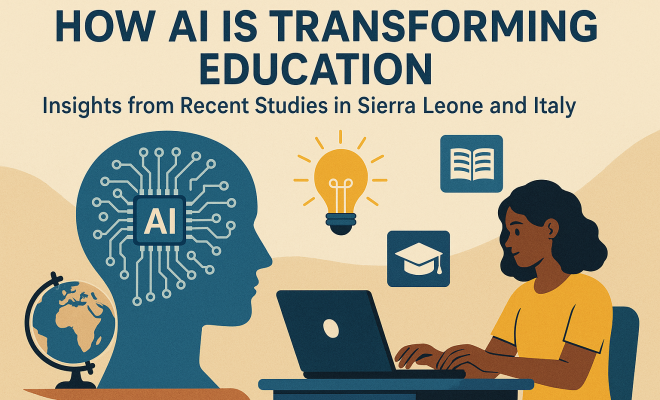
How AI Is Transforming Education: Insights from Recent Studies in Sierra Leone and Italy
“`html
The impact of AI on education is a topic garnering considerable attention as recent studies highlight its potential to enhance learning outcomes and streamline administrative tasks. With the integration of AI tools like Google’s Gemini in classrooms around the globe, educators, parents, and policymakers are left to ponder the long-term implications of this technological shift. In this article, we will explore the findings from recent research conducted in Sierra Leone and Italy, illustrating the remarkable effects AI can have on teaching and learning.
The Current Landscape of AI in Education
The advent of artificial intelligence has prompted significant transformations across various sectors, and education is no exception. Schools are increasingly turning to AI technologies to address persistent challenges such as student engagement, personalized learning, and administrative burdens. With its ability to process vast amounts of data quickly and accurately, AI can provide tailored educational experiences that cater to individual student needs.
However, the incorporation of AI in education is not without controversy. Concerns abound regarding data privacy, the potential for biased algorithms, and the overarching question of whether technology can replicate the human touch that is essential in teaching. As we delve into specific case studies, we will examine both the advantages and the drawbacks of AI’s growing presence in the classroom.
Gemini’s Impact on Learning Outcomes
Recent studies conducted in Sierra Leone and Italy have showcased the efficacy of Google’s Gemini in improving student learning outcomes. The findings reveal that students utilizing this AI tool demonstrated notable progress in mathematics, particularly in their understanding of complex topics such as fractions, exponents, and prime numbers.
According to the research, students who employed Gemini showed an impressive score gain of +0.26 standard deviations. This increase is equivalent to approximately 1.2 to 1.7 years of typical learning progress in low- and middle-income countries. Such results underscore the potential of AI to bridge educational gaps, particularly in regions where resources are limited.
Faster Teacher Lesson Planning
In addition to enhancing student performance, AI tools like Gemini are also streamlining the administrative tasks that often burden teachers. The same studies indicated that educators utilizing Gemini for Education experienced a remarkable reduction in their administrative workload by 70%. This shift allows teachers to reclaim precious time that can be redirected towards meaningful interactions with students.
With fewer hours spent on paperwork and lesson planning, teachers can focus on providing one-on-one mentorship and emotional support, which are critical components of effective teaching. The ability to dedicate more time to student engagement not only fosters stronger relationships but also enhances overall classroom dynamics.
Personalized Learning Experiences
The impact of AI on education extends beyond mere performance metrics. AI technologies are increasingly being harnessed to create personalized learning experiences tailored to individual student needs. By analyzing data on student interactions and learning patterns, AI can help educators identify areas where students may be struggling and adjust their teaching strategies accordingly.
For instance, a student who consistently struggles with math concepts can receive tailored exercises and resources aimed at bolstering their understanding. This individualized approach enhances student engagement and motivation, ultimately leading to better educational outcomes. As AI continues to evolve, its capacity for personalization is likely to grow, making it an invaluable asset in educational settings.
Equity in Education: Bridging Gaps with AI
One of the most profound implications of AI deployment in education is its potential to promote equity. In many low- and middle-income countries, access to quality education remains significantly uneven. AI tools like Gemini are designed to provide resources and support to underserved populations, thereby leveling the playing field. (See: AI's role in education.)
By utilizing AI to deliver personalized instruction and support, educators can help bridge the gap between students from various backgrounds. AI can identify and address barriers to learning, ensuring that every student has the opportunity to succeed, regardless of their socioeconomic status. This commitment to equity is essential for fostering a more inclusive educational landscape.
The Role of Teachers in an AI-Enhanced Classroom
Contrary to concerns that AI might replace teachers, the reality is that these technologies are designed to augment the teaching profession. A well-implemented AI tool serves as a partner for educators, allowing them to focus on their core responsibilities of teaching and mentoring students.
Teachers bring invaluable qualities to the classroom, such as empathy, creativity, and adaptability—attributes that AI cannot replicate. As AI assumes more administrative tasks, teachers are granted the freedom to innovate and engage with their students on a deeper level. This partnership between AI and educators could lead to an enriched educational experience that benefits both students and teachers alike.
Challenges and Considerations in AI Integration
While the advantages of AI in education are compelling, several challenges must be addressed to ensure its effective integration. One significant concern is data privacy. The use of AI requires the collection and analysis of student data, raising questions about how this data is managed and protected.
Moreover, educators must be adequately trained to utilize these AI tools effectively. Without proper training, teachers may struggle to incorporate AI into their lesson plans, negating the potential benefits. Schools need to invest in professional development and training programs to ensure that educators are equipped to leverage AI technologies to their fullest potential.
The Future of AI in Education
The trajectory of AI in education is promising, with rapid advancements on the horizon. As more schools adopt AI tools like Gemini, we can expect a continued focus on measuring their impact on learning outcomes and teaching efficiency. Ongoing research will be crucial in refining these technologies and ensuring they meet the diverse needs of students and educators alike.
Furthermore, as AI technology continues to evolve, future developments may include even more sophisticated algorithms capable of understanding and adjusting to individual student needs in real time. This adaptability will be vital in addressing the unique challenges faced by students across different contexts and learning environments.
Conclusion: Embracing the Change
The impact of AI on education is profound and multifaceted, presenting both exciting opportunities and crucial challenges. The evidence from studies conducted in Sierra Leone and Italy underscores the potential for AI to enhance student learning outcomes and support educators in their teaching efforts. As we move forward, it is essential for stakeholders— educators, policymakers, and parents—to embrace the technological changes while being mindful of the ethical implications and challenges that accompany them.
By fostering an environment that encourages innovation and collaboration between AI and educators, we can work towards a future where technology amplifies the educational experience for all students, providing them with the skills necessary to thrive in an increasingly digital world.
Case Studies: AI Integration in Different Educational Systems
To understand the impact of AI on education more comprehensively, it is valuable to examine specific case studies from various educational systems. For example, in the United States, the adoption of AI-powered tutoring systems like Carnegie Learning has demonstrated significant success in improving math scores among high school students. Students using this platform reported a 12% increase in test scores compared to their peers who did not use the system. This indicates not only the effectiveness of AI in providing targeted assistance but also highlights the potential for scalable solutions that can reach diverse student populations.
In Finland, known for its progressive educational policies, AI is being utilized to support teacher development. The Finnish education system integrates AI tools that provide feedback on educators’ teaching practices, helping them refine their methods and improve student interactions. A study by the University of Helsinki found that teachers who received AI-generated feedback scored 25% higher in student satisfaction surveys compared to those who did not. This case illustrates how AI can play a significant role in professional development, ultimately benefiting students through enhanced teaching practices.
Ethics and AI in Education
The ethical implications of AI in education are becoming increasingly prominent as technology advances. Issues surrounding data privacy, algorithmic bias, and the digital divide must be critically examined. For instance, a report by the Brookings Institution highlights concerns that AI algorithms, if not properly designed, could perpetuate existing biases in education, leading to uneven educational outcomes among students of different backgrounds. (See: Technology in education and health.)
To address these ethical concerns, educational institutions must adopt transparent practices regarding data usage and ensure that AI tools are developed and tested with diverse datasets to minimize bias. Furthermore, involving educators in the AI design process can help create tools that are more inclusive and equitable.
Statistics and Trends in AI Adoption
Recent statistics reveal significant trends in the adoption of AI technologies in education. According to a report by HolonIQ, the global EdTech market, which includes AI applications in education, is projected to reach $404 billion by 2025. This growth is driven by the increasing demand for personalized learning experiences and the need to improve educational outcomes through technology.
Moreover, a survey conducted by McKinsey found that 63% of teachers believe AI could be beneficial in reducing their workload and enhancing student learning experiences. This belief underscores the potential for widespread acceptance of AI solutions in educational settings, provided that concerns regarding implementation and ethics are adequately addressed.
Frequently Asked Questions (FAQ)
What are the primary benefits of AI in education?
The primary benefits of AI in education include personalized learning experiences, improved student engagement, reduced administrative workload for teachers, and enhanced data-driven decision-making. AI technologies can tailor educational content to meet individual learning needs, allowing students to progress at their own pace.
What are the challenges of implementing AI in educational settings?
Challenges include data privacy concerns, the need for educator training, the potential for algorithmic bias, and the digital divide among students. Addressing these challenges is crucial for successful AI integration in education.
How does AI improve personalized learning?
AI improves personalized learning by analyzing individual student data to identify strengths and weaknesses. This enables educators to tailor lessons and resources to each student’s needs, enhancing engagement and improving learning outcomes.
Can AI replace teachers?
No, AI is not intended to replace teachers. Instead, it is designed to augment their capabilities by handling administrative tasks and providing data-driven insights. Teachers play a vital role in fostering emotional connections and providing mentorship, which AI cannot replicate.
What are the future trends for AI in education?
Future trends may include more adaptive learning technologies, greater emphasis on ethical AI use, and increased collaboration between AI developers and educators. We may also see the expansion of AI tools that specifically address the needs of diverse learning populations.
The Global Perspective on AI in Education
Looking beyond the local contexts, it is essential to explore the global perspective on the impact of AI on education. Different countries are adopting AI at varying rates, influenced by technological infrastructure, cultural attitudes toward education, and government policies. For instance, in countries like China and India, AI in education is rapidly gaining traction, driven by large populations and a significant demand for quality educational resources.
In China, the government has invested heavily in AI technologies for education, with initiatives aimed at integrating AI into curriculum development and student assessment. A report from the Chinese Ministry of Education revealed that AI-assisted educational tools could reach more than 300 million students by 2025. This ambitious goal highlights the potential for AI to transform educational practices at scale. (See: Research on AI in education.)
Conversely, in many African nations, the implementation of AI in education is still in nascent stages due to infrastructural challenges and limited access to technology. However, innovative projects that leverage mobile technology and low-bandwidth solutions are emerging. For instance, initiatives like the African Virtual University are exploring AI-driven platforms that can deliver educational content to remote areas, helping to bridge the knowledge gap.
The Impact of AI on Special Education
Another critical area where the impact of AI on education is being felt is in the realm of special education. AI technologies are being developed to provide support for students with disabilities, offering personalized learning experiences that cater to their unique needs. For instance, AI-driven speech recognition tools are helping students with speech impairments to communicate more effectively in classroom settings.
Additionally, platforms like Learning Ally utilize AI to create audiobooks and text-to-speech resources that assist students with dyslexia and other reading challenges. By providing tailored learning tools, AI can empower these students to participate more fully in educational activities and improve their academic performance.
Research indicates that students with disabilities who use AI-enhanced tools show a marked improvement in engagement and learning outcomes. A study by the National Center for Learning Disabilities found that 75% of teachers reported better performance from students using AI tools compared to traditional learning methods.
Preparing Educators for an AI-Enhanced Future
As AI becomes increasingly integrated into educational systems, preparing educators for this shift is crucial. Professional development programs that focus on technology integration, data analysis, and the ethical use of AI can empower teachers to leverage these tools effectively. Furthermore, collaboration between educators and AI developers is essential to ensure that tools are user-friendly and aligned with pedagogical best practices.
Some universities are beginning to incorporate AI training into teacher preparation programs, equipping future educators with the skills needed to navigate an AI-enhanced classroom. By fostering a culture of continuous learning and adaptation, the education sector can ensure that teachers are not only consumers of technology but also active participants in shaping its implementation.
Final Thoughts: Navigating the Future with AI
As the educational landscape continues to evolve, the impact of AI on education will undoubtedly shape the future of learning. Embracing these changes while remaining vigilant about the ethical implications will be essential for stakeholders in the education sector. With thoughtful implementation and collaboration, AI has the potential to transform education into a more equitable, effective, and engaging experience for all students.
“`
Trending Now
- the complete explanation
- Why You Should Pay Attention to These 5 Shifts in Business News Right Now
- Astronomers Uncover How Giant Star Clusters Transform Their Surroundings in Record Time
- The Nintendo Switch 2 Preorder Frenzy: Why Gamers Are Scrambling for Their Consoles
- Why Kimchi Nutrient Intake Could Reshape…
Frequently Asked Questions
How is AI changing education?
AI is transforming education by enhancing learning outcomes, personalizing learning experiences, and streamlining administrative tasks. Schools are increasingly using AI technologies to address challenges like student engagement and tailored educational experiences, making learning more efficient and effective.
What are the benefits of using AI in classrooms?
The benefits of using AI in classrooms include improved student performance, personalized learning tailored to individual needs, and reduced administrative burdens for teachers. AI tools like Google's Gemini have shown to significantly enhance understanding of complex subjects, such as mathematics.
What challenges does AI face in education?
Challenges facing AI in education include concerns about data privacy, the potential for biased algorithms, and the question of whether technology can replace the essential human touch in teaching. These issues raise important discussions about the ethical implications of AI in learning environments.
What impact did Google's Gemini have on students?
Recent studies in Sierra Leone and Italy revealed that students using Google's Gemini experienced significant improvements in mathematics, with an average score gain of +0.26 standard deviations. This indicates a notable enhancement in their understanding of complex mathematical concepts.
Are there any drawbacks to using AI in education?
Yes, while AI offers numerous advantages, drawbacks include potential biases in algorithms, data privacy concerns, and the risk of diminishing the human element essential for effective teaching. These factors must be carefully considered as AI becomes more integrated into educational settings.
What did we miss? Let us know in the comments and join the conversation.