27 New Exoplanets with Two Suns Discovered, Bringing Star Wars to Reality
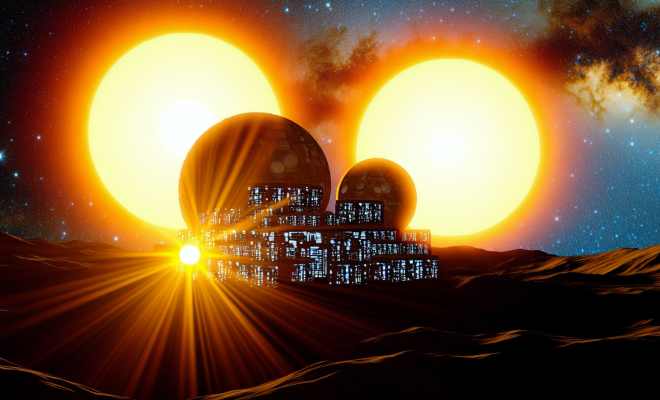
A thrilling leap in astrobiology has captured the attention of space enthusiasts and casual observers alike, as astronomers have recently identified 27 new planet candidates that orbit two stars. This discovery evokes images of the iconic desert planet Tatooine from the beloved Star Wars franchise, where dual suns dominate the sky. Utilizing data from NASA’s Transiting Exoplanet Survey Satellite (TESS) launched in 2018, researchers have unveiled a stunning array of exoplanets with two suns, raising questions about planetary formation and the potential for life beyond our solar system.
What Are Circumbinary Planets?
Circumbinary planets are celestial bodies that orbit two stars rather than one. Such configurations are relatively rare in the universe, adding to the excitement surrounding the recent discovery. Historically, our understanding of these planets has been limited, but thanks to advanced technologies and initiatives like TESS, researchers are beginning to unravel the mysteries surrounding these unique solar systems.
The Role of NASA’s TESS
NASA’s TESS mission has been instrumental in the search for exoplanets. Launched in 2018, TESS is designed to monitor thousands of stars to detect the telltale dimming that occurs when a planet passes in front of its host star, a method known as the transit method. This technique has proven effective in identifying new planets, including the newly discovered circumbinary candidates.
Why Is This Discovery Significant?
The identification of 27 new exoplanets with two suns marks a significant advancement in our understanding of the cosmos. The findings challenge traditional models of planet formation, as these planets orbit binary star systems that were previously thought to be less conducive to planet formation compared to single star systems. This research opens the door to a broader understanding of how planetary systems can develop in varying stellar environments.
The Buzz on Social Media
The discovery of these exoplanets with two suns has triggered a viral phenomenon across social media platforms, such as TikTok and Twitter. Users are sharing their reactions, with many expressing their astonishment at the notion of real-life planets reminiscent of Tatooine. The connections drawn between science fiction and reality have ignited conversations about humanity’s place in the universe, fostering a sense of wonder and excitement about potential interstellar travel.
Understanding the Implications
The implications of finding exoplanets with two suns extend beyond mere curiosity. They offer insights into the potential habitability of these worlds. The dynamic conditions created by multiple suns could yield diverse climates and environments, fostering unique ecosystems. Researchers are now considering whether these planets might host life forms adapted to their unusual surroundings.
Future Exploration and Research
With these discoveries, the scientific community is now poised for further exploration. Upcoming missions and telescopes, including the James Webb Space Telescope, will play a crucial role in characterizing these circumbinary planets. Scientists hope to gather more data on their atmospheres, compositions, and potential for supporting life.
What Makes Circumbinary Planets Unique?
The existence of exoplanets with two suns introduces a wealth of variables that make them distinct from their single-star counterparts. For instance, the gravitational interactions between the two stars can influence the orbit and stability of the planets. This complex dance of celestial bodies creates fascinating scenarios for researchers to explore, including:
- Orbital Stability: The gravitational influence of two stars can create stable orbits for planets, allowing them to exist in a zone where conditions may be favorable for life.
- Potential for Diverse Climates: The presence of two suns can lead to unique climate patterns, giving rise to diverse environments that could support different forms of life.
- Enhanced Astrobiological Potential: The varied conditions on these planets may lead to life forms that are unlike anything we know, pushing the boundaries of our understanding of biology.
Previous Discoveries of Circumbinary Planets
Before this latest discovery, only a handful of circumbinary planets had been confirmed. One of the most famous examples is Kepler-16b, which was discovered by NASA’s Kepler mission in 2011. This planet orbits a binary star system and serves as a benchmark for future studies of similar worlds. The new findings add to this growing catalog, signaling that our universe may contain far more complexity than previously believed.
The Science Behind Planet Formation
The identification of exoplanets with two suns forces scientists to revisit their theories on planet formation. Traditionally, models have suggested that planets form from the dust and gas surrounding a single star. However, these new discoveries suggest that binary systems can also serve as birthplaces for planets, challenging long-held assumptions about the processes involved.
How Do Planets Form Around Two Stars?
Planet formation in binary systems can occur through similar mechanisms as in single-star systems, including:
- Accretion: Dust and gas particles in the disk surrounding the stars can gradually clump together, forming larger bodies that eventually become planets.
- Gravitational Capture: Planets can also form around one star and be captured into orbit around another through gravitational interactions.
- Disk Instability: In some cases, regions of the disk may become gravitationally unstable, leading to the rapid formation of planets.
Challenges of Observing Circumbinary Planets
Despite the advances made by TESS and other missions, observing exoplanets with two suns presents unique challenges. The complex gravitational dynamics of binary systems can complicate the detection and characterization of planets. Scientists rely on precise measurements of star brightness and motion to infer the presence of planets, making accurate observations essential for confirmation.
Public Reactions and Interest
The intersection of science and popular culture has played a significant role in driving interest in these newly discovered exoplanets with two suns. Many individuals have turned to platforms like Google Trends to seek information, leading to noticeable spikes in searches related to planets with dual suns. The connection to Tatooine has inspired a wave of articles, videos, and discussions, showcasing the public’s fascination with the possibilities that lie beyond our solar system.
Cultural Impact and Inspiration
Science fiction has long inspired humanity’s imagination, and the concept of planets orbiting two suns has been a motif in popular media for decades. The recent discoveries lend a sense of credibility to the fantastical worlds depicted in movies and books, prompting discussions about the future of space exploration and colonization. As we learn more about these exoplanets with two suns, they may become a source of inspiration for a new generation of scientists, artists, and dreamers.
The Future of Exoplanet Research
The discoveries stemming from TESS underscore the importance of ongoing research into exoplanets with two suns. As technology advances, astronomers will gain access to more sophisticated instruments capable of probing these distant worlds in greater detail. The James Webb Space Telescope, scheduled for launch, promises to deepen our understanding of planetary atmospheres and surface conditions, further enriching the dialogue about the potential for life beyond Earth.
Integrating AI and Machine Learning
In addition to traditional observational techniques, artificial intelligence (AI) and machine learning are set to revolutionize exoplanet research. These technologies can analyze vast datasets generated by telescopes, identifying patterns and potential candidates more efficiently than human researchers. As a result, the pace of discovery may accelerate, allowing scientists to uncover even more exoplanets with two suns and other planetary configurations.
Conclusion
The discovery of 27 new exoplanets with two suns offers a fascinating glimpse into the diversity of planetary systems in our universe. By challenging existing models of planet formation and sparking widespread interest, these findings pave the way for future explorations that may reshape our understanding of the cosmos. As we continue to explore these worlds, the potential for discovering new forms of life and understanding the origins of our own solar system remains a tantalizing prospect.
The excitement surrounding these findings serves as a reminder of the unending mysteries that await us in the vast expanse of space. The convergence of science and imagination invites us to dream beyond the stars, fueling our quest to explore the unknown.