AI in Education: Challenging Critical Thinking Skills
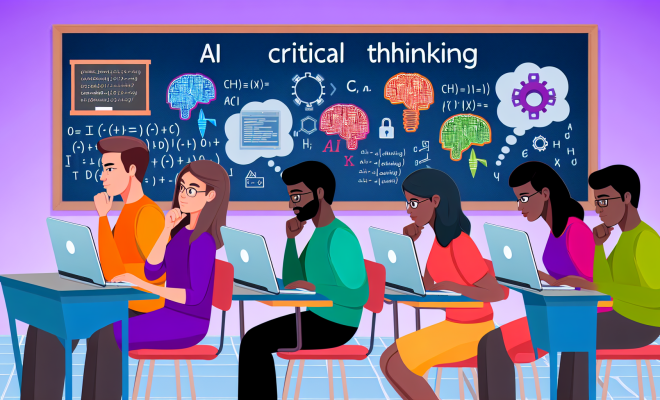
The rapid integration of AI in education has sparked a profound debate among educators, parents, and students alike. With the advent of generative AI tools, there are increasing concerns about the impact on critical thinking and cognitive development in higher education. The American Association of University Professors has conducted an important analysis that reveals how these advancements might be enabling students to navigate their academic responsibilities with ease, but at what cost?
The Role of AI in Education
Artificial Intelligence has become a ubiquitous presence in educational settings, offering students unprecedented access to information and resources. These tools serve a variety of functions, from providing instant feedback on assignments to suggesting research resources and even generating text. While the benefits are numerous, the implications of relying on AI for learning processes have raised critical questions about student engagement and intellectual development.
Generative AI and Cognitive Engagement
The aforementioned research posits that generative AI is allowing students to bypass essential cognitive struggles, which are crucial for deep learning. Traditionally, the learning process entails a significant amount of effort: synthesizing information, organizing thoughts, and articulating ideas. This friction is necessary for developing critical thinking skills, yet AI tools can often circumvent these intellectual challenges.
For instance, many students now turn to AI platforms to draft essays or solve complex problems, often without engaging in the foundational processes that build analytical capabilities. This raises a pivotal question: if students can access well-articulated responses without grappling with the material, what happens to their ability to think critically?
The Crisis in Higher Education
The implications of this trend are alarming. As generative AI becomes more sophisticated, the concern grows that a generation of graduates may emerge lacking fundamental thinking skills. Experts fear that these students, equipped with AI-generated outputs, will struggle in environments that require independent thought and problem-solving abilities.
Concerns Raised by Educators
- AI tools may promote surface-level engagement with material.
- Students may develop a dependency on AI resources for assignments.
- Long-term employability may be at risk due to inadequate critical thinking skills.
- The educational integrity may be compromised as AI-generated work becomes normalized.
These concerns have ignited intense debates across social media platforms. Educators express fears of a generation that may not possess the necessary competencies to navigate real-world challenges. The discussions often reflect a tension between advocates of AI integration and traditionalists who emphasize the value of rigorous academic practices.
The Emotional Resonance of the Debate
The emotional aspect of this discourse cannot be understated. Parents are increasingly worried about their children’s futures in a rapidly changing job market, where critical thinking and adaptability are paramount. Moreover, students themselves are grappling with the implications of relying on AI tools for their academic success.
FOMO and the Pressure to Perform
In an age defined by the fear of missing out (FOMO), there is immense pressure on students to keep up with their peers. This leads to the temptation to utilize AI tools for shortcuts. However, this reliance on technology can diminish the educational experience, robbing students of the opportunity to develop resilience and critical thinking skills.
How Educational Institutions Are Responding
In light of these challenges, educational institutions worldwide are grappling with how to integrate AI in education while preserving the integrity of the learning experience. Strategies are being developed to leverage AI as a complement to traditional teaching methods, rather than a replacement.
Innovative Approaches
- Curriculum redesign to emphasize critical thinking over rote memorization.
- Training educators to effectively incorporate AI tools into their teaching.
- Developing assessment methods that evaluate students’ analytical skills.
- Encouraging collaborative projects that require deep engagement with the material.
These approaches aim to strike a balance between harnessing the benefits of AI and ensuring that students engage deeply with their learning material. By doing so, institutions hope to cultivate a generation of graduates who are not only tech-savvy but also capable of critical thought and innovation.
The Future of AI and Critical Thinking in Education
The debate surrounding AI in education and critical thinking is far from settled. As technology continues to evolve, so too will the ways in which it is used in educational contexts. The key will be finding a way to engage students meaningfully, so they can reap the benefits of AI without sacrificing their cognitive development.
Potential Solutions for a Balanced Education
To foster an educational environment that values both technological innovation and critical thinking, several potential solutions can be implemented:
- Integrative Learning: Combining AI tools with traditional learning methods to enhance understanding without compromising cognitive engagement.
- Focus on Soft Skills: Emphasizing the importance of soft skills such as critical thinking, communication, and teamwork in curricula.
- Ethical AI Education: Incorporating discussions around the ethics of AI use in academic settings, ensuring students understand the implications of their reliance on technology.
By prioritizing these solutions, educators can help ensure that students develop the critical thinking skills necessary to thrive in the modern workforce.
Conclusion: Navigating the Future of Learning
The intersection of AI in education and critical thinking presents both challenges and opportunities. As generative AI continues to shape the landscape of higher education, stakeholders must remain vigilant and proactive. The discussions around these topics must continue, engaging educators, parents, and students in a dialogue that prioritizes not just technological advancement, but the intellectual growth and readiness of future generations.
Ultimately, the goal is to ensure that technology enhances learning rather than diminishes it, helping students become not only consumers of information but also critical thinkers who can navigate the complexities of the world around them.