The Tech Edvocate

Top Menu

  • Advertisement
  • Apps
  • Home Page
  • Home Page Five (No Sidebar)
  • Home Page Four
  • Home Page Three
  • Home Page Two
  • Home Tech2
  • Icons [No Sidebar]
  • Left Sidbear Page
  • Lynch Educational Consulting
  • My Account
  • My Speaking Page
  • Newsletter Sign Up Confirmation
  • Newsletter Unsubscription
  • Our Brands
  • Page Example
  • Privacy Policy
  • Protected Content
  • Register
  • Request a Product Review
  • Shop
  • Shortcodes Examples
  • Signup
  • Start Here
    • Governance
    • Careers
    • Contact Us
  • Terms and Conditions
  • The Edvocate
  • The Tech Edvocate Product Guide
  • Topics
  • Write For Us
  • Advertise

Main Menu

  • Start Here
    • Our Brands
    • Governance
      • Lynch Educational Consulting, LLC.
      • Dr. Lynch’s Personal Website
      • Careers
    • Write For Us
    • The Tech Edvocate Product Guide
    • Contact Us
    • Books
    • Edupedia
    • Post a Job
    • The Edvocate Podcast
    • Terms and Conditions
    • Privacy Policy
  • Topics
    • Assistive Technology
    • Child Development Tech
    • Early Childhood & K-12 EdTech
    • EdTech Futures
    • EdTech News
    • EdTech Policy & Reform
    • EdTech Startups & Businesses
    • Higher Education EdTech
    • Online Learning & eLearning
    • Parent & Family Tech
    • Personalized Learning
    • Product Reviews
  • Advertise
  • Tech Edvocate Awards
  • The Edvocate
  • Pedagogue
  • School Ratings

logo

The Tech Edvocate

  • Start Here
    • Our Brands
    • Governance
      • Lynch Educational Consulting, LLC.
      • Dr. Lynch’s Personal Website
        • My Speaking Page
      • Careers
    • Write For Us
    • The Tech Edvocate Product Guide
    • Contact Us
    • Books
    • Edupedia
    • Post a Job
    • The Edvocate Podcast
    • Terms and Conditions
    • Privacy Policy
  • Topics
    • Assistive Technology
    • Child Development Tech
    • Early Childhood & K-12 EdTech
    • EdTech Futures
    • EdTech News
    • EdTech Policy & Reform
    • EdTech Startups & Businesses
    • Higher Education EdTech
    • Online Learning & eLearning
    • Parent & Family Tech
    • Personalized Learning
    • Product Reviews
  • Advertise
  • Tech Edvocate Awards
  • The Edvocate
  • Pedagogue
  • School Ratings
  • The Shocking Truth: ESG Training Programs Are Quietly Reshaping Your Career Path

  • Why Millions of People Are Switching to These Green Energy Certifications Right Now

  • The green skills gap in 2026: How to address this growing problem

  • The Shocking Truth: Your Degree Won’t Land You the Best IT Jobs in 2026

  • The Brutal Truth About Degrees: Why Micro-Credentials Are Quietly Dominating Careers by 2026

  • Why 96% of Employers Now Prefer Skills Over Degrees: The Micro-Credential Revolution

  • This Crucial Mistake With AI Is Stunting Student Minds: Here’s How to Fix It

  • The AI ‘Cognitive Surrender’ Crisis: 7 Tools Every Educator Needs NOW

  • This Crucial Mistake Is Quietly Killing Students’ Brains, Says MIT

  • The Sneaky Truth About RTO: How to Negotiate Flexible Work Without Losing Your Job

Tech News
Home›Tech News›Morgan Stanley: Fed to Hold Interest Rates Steady in 2026

Morgan Stanley: Fed to Hold Interest Rates Steady in 2026
By Matthew Lynch
April 30, 2026
0
Spread the love

Introduction

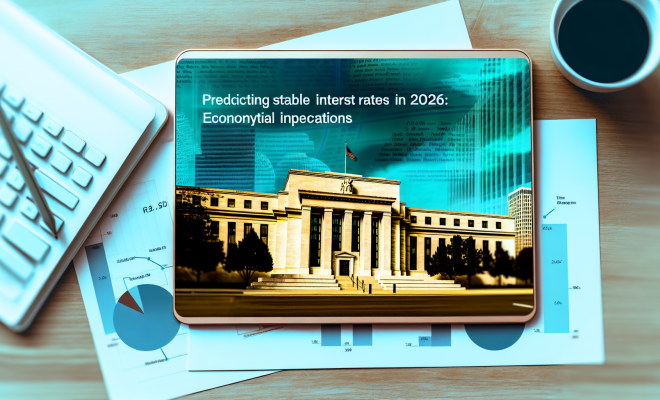
In a significant shift in monetary policy expectations, Morgan Stanley has revised its forecast regarding the U.S. Federal Reserve’s interest rate strategy. On April 30, 2026, the financial services giant announced that it anticipates the Fed will hold interest rates steady throughout the year, postponing any potential rate cuts until 2027. This update comes amidst a backdrop of evolving economic indicators, prompting a reevaluation of earlier projections that hinted at imminent reductions.

The Context of the Fed’s Monetary Policy

The Federal Reserve plays a crucial role in shaping the U.S. economy through its control of interest rates. By adjusting these rates, the Fed aims to manage inflation, influence employment levels, and stabilize the financial system. Historically, when the economy shows signs of weakness, the Fed has responded by lowering rates to stimulate growth. Conversely, in times of economic strength, the central bank may raise rates to prevent overheating.

Understanding Interest Rate Decisions

Interest rate decisions are influenced by a multitude of factors, including:

  • Inflation Rates: High inflation often leads the Fed to increase rates to cool down spending.
  • Unemployment Levels: Lower unemployment may prompt the Fed to raise rates to prevent wage inflation.
  • GDP Growth: Strong economic growth can lead to rate hikes as the Fed aims to maintain stability.
  • Global Economic Conditions: International trends can also affect domestic monetary policy.

Morgan Stanley’s Revised Expectations

Morgan Stanley’s latest forecast marks a notable departure from its previous outlook, which had anticipated rate cuts within the year. Analysts at the firm cited several reasons for their revised expectations:

  • Economic Signals: Current economic indicators suggest a more robust than expected performance, leading to the conclusion that the Fed is likely to adopt a wait-and-see approach.
  • Inflation Trends: Inflation rates have remained persistent, making any immediate cuts less likely.
  • Employment Trends: The job market has shown resilience, further supporting the decision to keep rates steady.

Analysis of Current Economic Indicators

To understand the implications of Morgan Stanley’s forecast, it is crucial to examine the current economic landscape:

Inflation

As of early 2026, inflation rates have demonstrated volatility but remain above the Fed’s long-term target of 2%. Recent reports indicate that inflation has been driven by supply chain disruptions and increased consumer demand post-pandemic. The Fed’s cautious approach reflects its commitment to maintaining price stability.

Employment

The labor market has shown remarkable resilience, with unemployment rates hovering around 4%. This figure indicates a tight labor market, which typically leads to wage growth and potential inflationary pressures. The Fed’s decision to maintain rates is likely influenced by this strong employment picture.

GDP Growth

Gross Domestic Product (GDP) growth forecasts for 2026 have been revised upward, reflecting a robust recovery from the economic downturn experienced in previous years. Economic growth projections are now around 3.5%, leading analysts to believe that a strong economy can withstand higher interest rates.

Potential Consequences of Steady Rates

Maintaining interest rates at current levels throughout 2026 could have several implications for various sectors of the economy:

Impact on Consumers

For consumers, steady interest rates can mean:

  • Stable Borrowing Costs: Mortgages, auto loans, and credit card rates are likely to remain consistent, providing predictability for household budgets.
  • Consumer Spending: Predictable borrowing costs may encourage consumer spending, which is vital for economic growth.

Impact on Businesses

Businesses may experience the following effects:

  • Investment Decisions: Stable interest rates can facilitate long-term planning, encouraging businesses to invest in growth and expansion.
  • Cost of Capital: Companies may find it easier to finance projects without the concern of rising interest costs.

Impact on Financial Markets

The financial markets generally react to changes in interest rate forecasts. Potential impacts include:

  • Stock Market Stability: Predictable interest rates may contribute to a stable stock market, as investors feel reassured about the economic outlook.
  • Bond Market Reactions: With rates steady, the bond market may experience lower volatility, as investors adjust to the Fed’s signals.

Conclusion

Morgan Stanley’s forecast of steady interest rates from the Federal Reserve throughout 2026 reflects a broader reassessment of the economic landscape. With inflationary pressures, a resilient job market, and robust GDP growth, the Fed appears poised to maintain its current course. For consumers, businesses, and investors alike, the implications of this steady approach are significant, potentially fostering a more predictable economic environment in the coming years.

As the year progresses, all eyes will remain on the Federal Reserve, as its decisions will ultimately shape the trajectory of the U.S. economy into 2027 and beyond. The balance between stimulating growth and controlling inflation will continue to be a delicate dance, and the Fed’s ability to navigate these challenges will be crucial for economic stability.


Previous Article

2026 Business Trends: Tariffs Impact 73%, Yet ...

Next Article

Jelly Lean Review: Ingredients, Safety & Consumer ...

Matthew Lynch

Related articles More from author

  • Tech News

    How to fix Android WiFi not working

    June 21, 2026
    By Matthew Lynch
  • Tech News

    Best Mint Android widgets

    August 3, 2026
    By Matthew Lynch
  • Tech News

    Xi Jinping’s WAICO: Reshaping Global AI Power in 2026

    July 18, 2026
    By Matthew Lynch
  • Tech News

    Bye, Google: These 3 AI search engines help you find stuff faster

    August 17, 2024
    By Matthew Lynch
  • Tech News

    ShareX vs Gyazo for screenshots

    July 31, 2026
    By Matthew Lynch
  • Tech News

    New iPhone 15 or iPhone 15 Pro? Change These 4 iOS 17 Settings Right Now

    February 1, 2024
    By Matthew Lynch

Search

Login & Registration

  • Log in
  • Entries feed
  • Comments feed
  • WordPress.org

Newsletter

Signup for The Tech Edvocate Newsletter and have the latest in EdTech news and opinion delivered to your email address!

About Us

Since technology is not going anywhere and does more good than harm, adapting is the best course of action. That is where The Tech Edvocate comes in. We plan to cover the PreK-12 and Higher Education EdTech sectors and provide our readers with the latest news and opinion on the subject. From time to time, I will invite other voices to weigh in on important issues in EdTech. We hope to provide a well-rounded, multi-faceted look at the past, present, the future of EdTech in the US and internationally.

We started this journey back in June 2016, and we plan to continue it for many more years to come. I hope that you will join us in this discussion of the past, present and future of EdTech and lend your own insight to the issues that are discussed.

Newsletter

Signup for The Tech Edvocate Newsletter and have the latest in EdTech news and opinion delivered to your email address!

Contact Us

The Tech Edvocate
910 Goddin Street
Richmond, VA 23231
(601) 630-5238
[email protected]

Copyright © 2026 Matthew Lynch. All rights reserved.