AI Predicts Melanoma Risk Years Ahead: A Healthcare Revolution
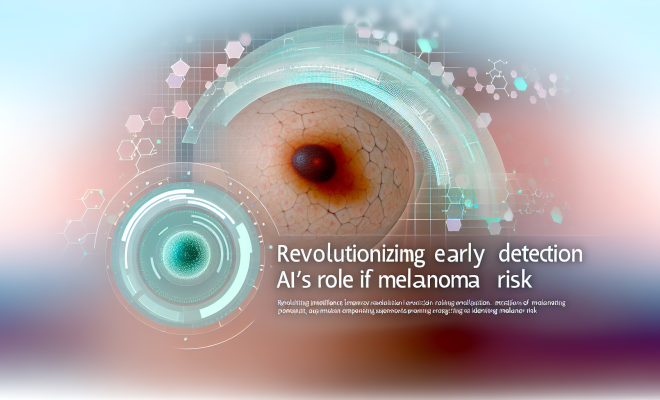
In a groundbreaking study, researchers from Sweden have unveiled an artificial intelligence (AI) system capable of predicting the risk of melanoma years before it manifests. This innovative technology harnesses the power of machine learning to analyze existing health data from medical records, marking a significant leap forward in preventive healthcare and early detection strategies.
Understanding Melanoma and Its Risks
Melanoma, a type of skin cancer, arises from melanocytes, the cells responsible for pigment production in the skin. While it accounts for a small percentage of skin cancer cases, it is responsible for the majority of skin cancer-related deaths due to its aggressive nature and potential for metastasis. Early detection is crucial for successful treatment, making advancements in risk assessment vital.
The Role of AI in Healthcare
The integration of AI into healthcare has gained momentum in recent years, with applications ranging from diagnostic imaging to personalized medicine. The Swedish researchers’ study represents a pioneering step in using AI specifically for the early identification of melanoma risk. By sifting through vast amounts of health data, the AI system can uncover patterns and indicators that may elude traditional screening methods.
How the AI System Works
The AI model developed by the researchers utilizes a comprehensive dataset comprising medical records of thousands of individuals. Through sophisticated algorithms, the system analyzes various factors such as:
- Patient demographics: Age, gender, and ethnicity.
- Medical history: Previous skin conditions and cancer history.
- Genetic information: Family history of melanoma and genetic markers.
- Environmental factors: Sun exposure and lifestyle choices.
By examining these variables, the AI can assess an individual’s likelihood of developing melanoma years before a diagnosis might typically occur. This predictive capability offers a new avenue for clinicians to implement proactive measures and personalized prevention strategies.
Implications for Preventive Healthcare
The findings from this study have profound implications for preventive healthcare. Historically, melanoma detection has relied heavily on visual examinations and biopsies, which can sometimes lead to late-stage diagnoses. The AI system’s ability to identify at-risk individuals allows for:
- Targeted screenings: High-risk patients can be monitored more closely, improving early detection rates.
- Personalized intervention: Strategies tailored to individual risk profiles can enhance patient outcomes.
- Resource allocation: Healthcare systems can optimize resources by focusing on individuals most likely to benefit from preventive measures.
In essence, this technology paves the way for a shift in the paradigm of melanoma care—from reactive treatment to proactive prevention.
Real-World Applications and Future Directions
The successful implementation of this AI system in clinical settings could revolutionize how healthcare providers approach skin cancer prevention. As the technology continues to evolve, potential future applications may include:
- Integration into electronic health records: The AI could be incorporated into existing health IT systems to provide real-time risk assessments during patient visits.
- Education and awareness: Patients identified as high risk could receive tailored education on sun safety and skin monitoring practices.
- Research advancements: Continued studies may enhance the AI’s accuracy and expand its use to other forms of cancer or chronic diseases.
Moreover, the ethical implications of using AI in healthcare must be carefully considered. Issues regarding data privacy, algorithmic bias, and informed consent need to be addressed to ensure that these technologies are implemented responsibly.
The Future of AI in Cancer Detection
This study stands as a testament to the potential of AI in transforming healthcare. As researchers and clinicians work together to refine these technologies, the dream of predictive medicine—where diseases are identified and managed before they develop—becomes increasingly attainable.
In conclusion, the Swedish researchers’ development of an AI system that can identify individuals at risk of melanoma offers a beacon of hope in the fight against skin cancer. With its ability to foresee potential health crises, this technology not only enhances early detection but also underscores the vital role of innovation in advancing patient care.