The Tech Edvocate

Top Menu

  • Advertisement
  • Apps
  • Home Page
  • Home Page Five (No Sidebar)
  • Home Page Four
  • Home Page Three
  • Home Page Two
  • Home Tech2
  • Icons [No Sidebar]
  • Left Sidbear Page
  • Lynch Educational Consulting
  • My Account
  • My Speaking Page
  • Newsletter Sign Up Confirmation
  • Newsletter Unsubscription
  • Our Brands
  • Page Example
  • Privacy Policy
  • Protected Content
  • Register
  • Request a Product Review
  • Shop
  • Shortcodes Examples
  • Signup
  • Start Here
    • Governance
    • Careers
    • Contact Us
  • Terms and Conditions
  • The Edvocate
  • The Tech Edvocate Product Guide
  • Topics
  • Write For Us
  • Advertise

Main Menu

  • Start Here
    • Our Brands
    • Governance
      • Lynch Educational Consulting, LLC.
      • Dr. Lynch’s Personal Website
      • Careers
    • Write For Us
    • The Tech Edvocate Product Guide
    • Contact Us
    • Books
    • Edupedia
    • Post a Job
    • The Edvocate Podcast
    • Terms and Conditions
    • Privacy Policy
  • Topics
    • Assistive Technology
    • Child Development Tech
    • Early Childhood & K-12 EdTech
    • EdTech Futures
    • EdTech News
    • EdTech Policy & Reform
    • EdTech Startups & Businesses
    • Higher Education EdTech
    • Online Learning & eLearning
    • Parent & Family Tech
    • Personalized Learning
    • Product Reviews
  • Advertise
  • Tech Edvocate Awards
  • The Edvocate
  • Pedagogue
  • School Ratings

logo

The Tech Edvocate

  • Start Here
    • Our Brands
    • Governance
      • Lynch Educational Consulting, LLC.
      • Dr. Lynch’s Personal Website
        • My Speaking Page
      • Careers
    • Write For Us
    • The Tech Edvocate Product Guide
    • Contact Us
    • Books
    • Edupedia
    • Post a Job
    • The Edvocate Podcast
    • Terms and Conditions
    • Privacy Policy
  • Topics
    • Assistive Technology
    • Child Development Tech
    • Early Childhood & K-12 EdTech
    • EdTech Futures
    • EdTech News
    • EdTech Policy & Reform
    • EdTech Startups & Businesses
    • Higher Education EdTech
    • Online Learning & eLearning
    • Parent & Family Tech
    • Personalized Learning
    • Product Reviews
  • Advertise
  • Tech Edvocate Awards
  • The Edvocate
  • Pedagogue
  • School Ratings
  • Seniors Lose More Money to Investment Scams Than Any Other Fraud

  • Gemini Can Now Connect to Google Wallet to Offer Spending Insights, Budgeting Tips

  • Dramatic: Financial Giants Are Quietly Preparing for Mass AI Job Replacement

  • Malicious Cyberattack on Curaçao Gaming Regulator: Your Data Exposed?

  • Staggering: Lawyers Are Being Struck Off For This AI Blunder – What You Must Know Now

  • Dramatic Cuts: How The GOP Tuition Deflation Act Is Reshaping College Costs

  • This Professor’s Alarming AI Cheating Warning Reveals a Deeper Crisis in Education

  • This One Reckless Mistake Caused Zeabur’s Devastating Collapse

  • Terrifying: AI Cybercrime Just Got a Whole Lot Worse, Here’s How

  • The cost of your new car loan has hit a record high – Newswav

Tech News
Home›Tech News›OpenAI Revokes macOS Certificate After Supply Chain Attack 2026

OpenAI Revokes macOS Certificate After Supply Chain Attack 2026
By Matthew Lynch
April 13, 2026
0
Spread the love

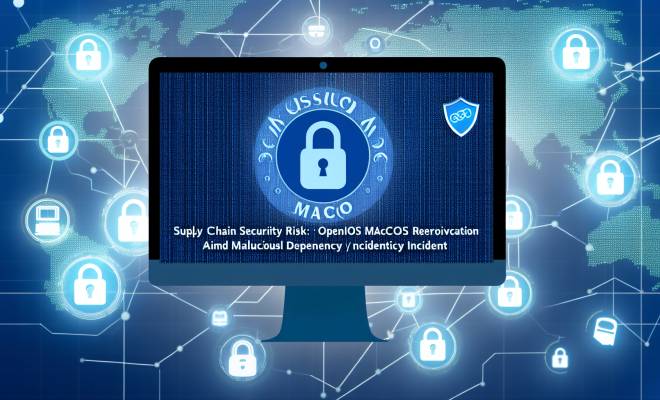
In a significant incident underscoring the vulnerabilities of software supply chains, OpenAI took decisive action by revoking its macOS signing certificate on March 31, 2026. This move came in response to the discovery of a malicious dependency in the popular JavaScript library Axios, which was utilized in a GitHub Actions workflow for signing macOS applications. Although no user data or internal systems were compromised during the incident, the event has raised alarms across the tech community about the increasing risks posed by nation-state actors.

Understanding the Incident

The breach originated from a supply chain compromise linked to the npm package Axios, a widely-used HTTP client library for JavaScript. The Google Threat Intelligence Group attributed the attack to the North Korean hacking group known as UNC1069. This group has a history of targeting software development processes and supply chains to deliver malware.

How the Compromise Occurred

According to reports, the attackers hijacked the account of a maintainer for the Axios library. By gaining unauthorized access, they were able to push poisoned versions of the package—specifically, versions 1.14.1 and 0.30.4. These compromised versions included a malicious dependency called plain-crypto-js, which installed a backdoor known as WAVESHAPER.V2.

The Implications of WAVESHAPER.V2

The WAVESHAPER.V2 backdoor is designed to operate across multiple platforms, including Windows, macOS, and Linux. Its capabilities allow malicious actors to take control of infected systems, facilitating further attacks or data exfiltration. The incident highlights the critical nature of maintaining robust security protocols in software development, especially in environments where external dependencies are common.

The Threat Landscape

As software development increasingly relies on third-party libraries, the potential for similar supply chain attacks grows. The 2023 Cybersecurity Strategy emphasized the need for organizations to enhance their security postures against such threats, particularly those orchestrated by state-sponsored actors. The OpenAI incident serves as a reminder that even reputable organizations are not immune to these vulnerabilities.

OpenAI’s Response

After the discovery of the malicious Axios dependency, OpenAI acted swiftly to mitigate potential risks. Revoking the macOS signing certificate was a critical step to prevent any further distribution of potentially compromised applications. The organization reassured users that no personal data had been compromised and that internal systems remained secure.

Best Practices for Mitigating Supply Chain Risks

In light of this incident, organizations are encouraged to adopt several best practices to enhance their defenses against supply chain attacks:

  • Regular Dependency Audits: Conduct routine checks on third-party libraries and dependencies to identify any vulnerabilities or unauthorized changes.
  • Implement Software Signing: Use code signing certificates to verify the integrity and authenticity of software before deployment.
  • Monitor for Anomalies: Establish monitoring systems to detect unusual activities or changes in the software development lifecycle.
  • Education and Training: Provide ongoing education for developers about the risks associated with supply chain attacks and the importance of secure coding practices.

The Future of Software Supply Chains

The incident involving OpenAI and the Axios library is a stark reminder that cybersecurity is an ongoing battle, particularly in the realm of software supply chains. As nation-state actors like UNC1069 continue to evolve their tactics, organizations must remain vigilant and proactive in their cybersecurity measures.

In conclusion, the OpenAI incident serves as a call to action for developers and organizations alike to reassess their security protocols and implement stronger safeguards against supply chain attacks. By doing so, they can better protect their applications and the sensitive data of their users from falling into the hands of malicious actors.


Previous Article

Interactive Dashboards: Essential for Mortgage Servicing in ...

Next Article

Marimo RCE Vulnerability Under Active Exploitation

Matthew Lynch

Related articles More from author

  • Tech News

    7 Best ETFs to Buy Right Now for Explosive Returns in 2026

    June 29, 2026
    By Matthew Lynch
  • Tech News

    How to Support Fine Motor Development Through Play

    July 4, 2026
    By Matthew Lynch
  • Tech News

    Mastering Free Trials: Attract Customers & Boost Conversions

    June 29, 2026
    By Matthew Lynch
  • Tech News

    News Algorithms Fuel Political Polarization: UC Berkeley Study

    May 1, 2026
    By Matthew Lynch
  • Tech News

    How to fix Word formatting issues

    June 23, 2026
    By Matthew Lynch
  • Tech News

    WhatsApp video call participant limit

    August 10, 2026
    By Matthew Lynch

Search

Login & Registration

  • Log in
  • Entries feed
  • Comments feed
  • WordPress.org

Newsletter

Signup for The Tech Edvocate Newsletter and have the latest in EdTech news and opinion delivered to your email address!

About Us

Since technology is not going anywhere and does more good than harm, adapting is the best course of action. That is where The Tech Edvocate comes in. We plan to cover the PreK-12 and Higher Education EdTech sectors and provide our readers with the latest news and opinion on the subject. From time to time, I will invite other voices to weigh in on important issues in EdTech. We hope to provide a well-rounded, multi-faceted look at the past, present, the future of EdTech in the US and internationally.

We started this journey back in June 2016, and we plan to continue it for many more years to come. I hope that you will join us in this discussion of the past, present and future of EdTech and lend your own insight to the issues that are discussed.

Newsletter

Signup for The Tech Edvocate Newsletter and have the latest in EdTech news and opinion delivered to your email address!

Contact Us

The Tech Edvocate
910 Goddin Street
Richmond, VA 23231
(601) 630-5238
[email protected]

Copyright © 2026 Matthew Lynch. All rights reserved.