Artemis II Crew Captures Stunning Views of Earth as Orion Approaches Lunar Flyby
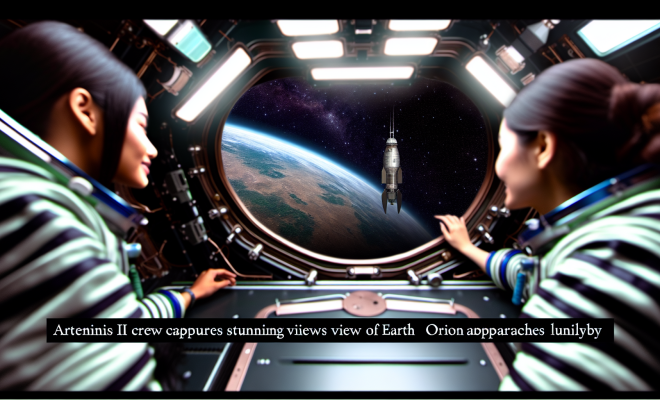
Nasa’s Artemis II mission is a historic endeavor that marks humanity’s return to deep space exploration after more than half a century. As the Orion spacecraft approaches the halfway point on its journey to the Moon, astronauts aboard are sharing breathtaking views of Earth, showcasing the beauty of our planet from an extraordinary perspective.
A Significant Milestone in Space Exploration
The Artemis II mission is not just another chapter in space exploration; it represents a pivotal moment in our quest to explore beyond low Earth orbit. Scheduled to reach the Moon on Monday, this mission is the first crewed lunar voyage since the Apollo program, and it aims to set the stage for future missions to Mars and beyond.
Capturing Earth’s Beauty from Space
As Orion travels through the cosmos, the crew is documenting their journey with stunning imagery. Recently, astronauts shared photographs that highlight the Earth’s atmosphere, featuring visible auroras and the zodiacal light phenomenon as the planet partially eclipses the Sun. These images not only serve as a testament to the beauty of our home planet but also provide valuable scientific insights into atmospheric conditions from a vantage point that few have experienced.
Understanding the Challenges of Deep Space Travel
The Artemis II mission is more than just a visual spectacle; it is an opportunity to test the capabilities of the Orion spacecraft and the systems that will support future lunar missions. As astronauts venture further from Earth, they will encounter challenges that require innovative solutions, from radiation exposure to life support sustainability.
The Crew’s Role in Pioneering Space Exploration
- Commander: The crew is led by a seasoned commander responsible for the mission’s overall safety and success.
- Pilot: Working closely with the commander, the pilot navigates the spacecraft through complex maneuvers.
- Mission Specialists: Each crew member plays a crucial role in conducting experiments and ensuring the spacecraft operates as intended.
These astronauts are not only explorers; they are pioneers, participating in a mission that will lay the groundwork for human presence on the Moon and possibly Mars. Their experiences and findings will inform NASA’s ongoing efforts to establish a sustainable human presence beyond our planet.
Technological Innovations in the Orion Spacecraft
The Orion spacecraft boasts cutting-edge technology designed to support long-duration missions. Equipped with advanced life support systems, navigation capabilities, and communication tools, Orion is engineered to withstand the rigors of deep space travel.
Life Support Systems and Safety Features
One of the primary concerns for any space mission is the safety and well-being of the crew. Orion is fitted with life support systems that recycle air and water, providing astronauts with essential resources over extended periods. Additionally, the spacecraft’s shielding is designed to protect the crew from cosmic radiation, a significant hazard in deep space.
Looking Ahead: The Future of Lunar Exploration
The Artemis II mission is only the beginning. As NASA prepares for upcoming missions, including Artemis III, which aims to land astronauts on the lunar surface, the data and experiences collected during Artemis II will play a crucial role in shaping future explorations.
Expanding Human Presence on the Moon
The ultimate goal of the Artemis program is to establish a sustainable human presence on the Moon by the end of the decade. This will involve building infrastructure that supports scientific research, exploration, and possibly even commercial activities. The insights gained from Artemis II will inform the development of habitats, rovers, and other technologies required for long-term lunar settlement.
Public Engagement and Inspiration
The Artemis II mission is not just a technical endeavor; it also serves to inspire a new generation of explorers and scientists. By sharing images and experiences from space, NASA aims to engage the public and foster interest in STEM (science, technology, engineering, and mathematics) fields.
Connecting with Future Generations
Social media platforms and live broadcasts allow people around the world to witness the mission in real time. This transparency cultivates a sense of shared adventure and purpose, reminding us all of our collective aspirations to explore the unknown.
Conclusion
As the Orion spacecraft approaches the Moon, the Artemis II crew’s journey is a remarkable blend of science, exploration, and artistry. The stunning views of Earth captured by the astronauts serve as a poignant reminder of our planet’s fragility and beauty and the limitless possibilities that lie beyond. With each passing milestone, NASA inches closer to realizing its vision of a sustainable human presence on the Moon, paving the way for future missions to Mars and beyond.