Astronomical Wonders: The Dual Comet Showdown of April 2026
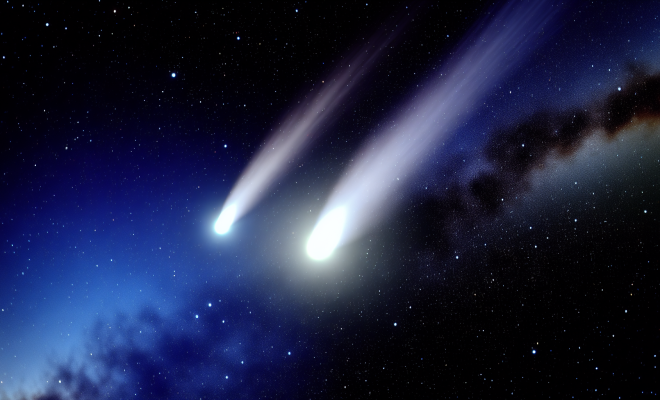
April 2026 is set to become a significant month for astronomy enthusiasts as two comets—R3 Pan-STARRS and A1 MAPS—prepare to make their appearances in the inner solar system. This celestial event not only offers a rare glimpse of these icy bodies but also presents a unique opportunity for both amateur and professional astronomers to observe their behavior as they approach the Sun.
The Comet R3 Pan-STARRS: A Recurring Visitor
First identified in 2025, R3 Pan-STARRS is a comet that has already piqued the interest of scientists and sky-watchers alike. This comet, part of the larger Pan-STARRS survey, has been closely monitored since its discovery. The Pan-STARRS (Panoramic Survey Telescope and Rapid Response System) initiative aims to detect and track near-Earth objects, and R3 is a testament to its success.
R3 Pan-STARRS is expected to reach perihelion—its closest approach to the Sun—later in April 2026. During this time, the comet will experience significant changes in its appearance as solar radiation heats its nucleus, causing gases and dust to escape and form a glowing coma and tail. This transformation often results in a spectacular visual display, making it a prime target for observation.
A1 MAPS: The Sungrazer’s Critical Passage
In stark contrast to R3 Pan-STARRS, A1 MAPS is a sungrazer comet, a type of comet that passes extremely close to the Sun. Discovered as the first comet of 2026, A1 MAPS is on a critical trajectory that leads it perilously close to the solar surface. Scheduled to reach perihelion on April 4, 2026, the fate of A1 MAPS hangs in the balance as it will face intense heat and gravitational forces that could lead to its disintegration.
Sungrazers are notorious for their unpredictable nature. While some, like comet Icarus, have survived their close encounters with the Sun, many others have succumbed to the extreme conditions, disintegrating into thousands of pieces. The scientific community is particularly eager to witness A1 MAPS’ passage, as its outcome could provide valuable insights into the behavior of comets under extreme solar influences.
A Celestial Spectacle: What to Expect
Both comets will be observable from Earth, with their visibility depending on local weather conditions and light pollution. Here’s what observers should keep in mind:
- Optimal Viewing Times: R3 Pan-STARRS is expected to be more visible in the latter half of April, while A1 MAPS will be most prominent around its perihelion on April 4.
- Location in the Sky: Check local astronomical charts or apps to pinpoint the exact location of each comet in the night sky.
- Equipment: While both comets may be visible to the naked eye, using binoculars or telescopes will enhance the viewing experience, especially for R3 Pan-STARRS.
Scientific Significance of the Cometary Events
The dual appearance of R3 Pan-STARRS and A1 MAPS presents a unique opportunity for astronomers to study various aspects of cometary science. Observations of these comets can shed light on:
- Composition: Analyzing the dust and gas ejected from these comets can help scientists understand their chemical makeup and how they differ.
- Behavior Near the Sun: Observing A1 MAPS as it approaches the Sun will allow researchers to study the physical processes that occur during a sungrazer’s passage.
- Impact on the Solar System: Comets are believed to be remnants from the early solar system; understanding their dynamics can provide clues about the conditions during its formation.
How to Get Involved
For those eager to participate in this astronomical event, numerous resources are available:
- Astronomy Clubs: Joining a local astronomy club can provide access to telescopes, expert guidance, and organized viewing events.
- Online Platforms: Websites and forums dedicated to astronomy often share tips, updates, and live streams of comet observations.
- Social Media: Follow astronomers and science communicators on platforms like Twitter, Instagram, and Facebook for real-time updates and images of the comets.
Conclusion
The arrival of comets R3 Pan-STARRS and A1 MAPS in April 2026 marks an exciting time for the scientific community and sky watchers alike. As both comets make their way through the inner solar system, they not only promise stunning visuals but also the potential for groundbreaking scientific discoveries. Whether you are a seasoned astronomer or a curious observer, mark your calendars for this celestial spectacle and prepare to witness the wonders of our universe.