The Tech Edvocate

Top Menu

  • Advertisement
  • Apps
  • Home Page
  • Home Page Five (No Sidebar)
  • Home Page Four
  • Home Page Three
  • Home Page Two
  • Home Tech2
  • Icons [No Sidebar]
  • Left Sidbear Page
  • Lynch Educational Consulting
  • My Account
  • My Speaking Page
  • Newsletter Sign Up Confirmation
  • Newsletter Unsubscription
  • Our Brands
  • Page Example
  • Privacy Policy
  • Protected Content
  • Register
  • Request a Product Review
  • Shop
  • Shortcodes Examples
  • Signup
  • Start Here
    • Governance
    • Careers
    • Contact Us
  • Terms and Conditions
  • The Edvocate
  • The Tech Edvocate Product Guide
  • Topics
  • Write For Us
  • Advertise

Main Menu

  • Start Here
    • Our Brands
    • Governance
      • Lynch Educational Consulting, LLC.
      • Dr. Lynch’s Personal Website
      • Careers
    • Write For Us
    • The Tech Edvocate Product Guide
    • Contact Us
    • Books
    • Edupedia
    • Post a Job
    • The Edvocate Podcast
    • Terms and Conditions
    • Privacy Policy
  • Topics
    • Assistive Technology
    • Child Development Tech
    • Early Childhood & K-12 EdTech
    • EdTech Futures
    • EdTech News
    • EdTech Policy & Reform
    • EdTech Startups & Businesses
    • Higher Education EdTech
    • Online Learning & eLearning
    • Parent & Family Tech
    • Personalized Learning
    • Product Reviews
  • Advertise
  • Tech Edvocate Awards
  • The Edvocate
  • Pedagogue
  • School Ratings

logo

The Tech Edvocate

  • Start Here
    • Our Brands
    • Governance
      • Lynch Educational Consulting, LLC.
      • Dr. Lynch’s Personal Website
        • My Speaking Page
      • Careers
    • Write For Us
    • The Tech Edvocate Product Guide
    • Contact Us
    • Books
    • Edupedia
    • Post a Job
    • The Edvocate Podcast
    • Terms and Conditions
    • Privacy Policy
  • Topics
    • Assistive Technology
    • Child Development Tech
    • Early Childhood & K-12 EdTech
    • EdTech Futures
    • EdTech News
    • EdTech Policy & Reform
    • EdTech Startups & Businesses
    • Higher Education EdTech
    • Online Learning & eLearning
    • Parent & Family Tech
    • Personalized Learning
    • Product Reviews
  • Advertise
  • Tech Edvocate Awards
  • The Edvocate
  • Pedagogue
  • School Ratings
  • Revealed: The Unseen Dangers of Your EcoSense Smart Home Energy Monitor

  • Unbelievable: Disney Buys AI Startup After Teen Suicide Link, Bankruptcy

  • Uncovering the Shocking Truth Behind the OpenEvidence-Doximity AI Legal Battle

  • Xbox Cloud Gaming Price Hike: The Unspoken Truth Behind Microsoft’s Latest Move

  • Unprecedented: Tech Firm Offers Cash for Law Firm Emails – Is Privilege Dead?

  • 40% of Young Investors Trust This Unseen Danger — Are You One of Them?

  • This Elite University’s AI Ban Reveals a Bizarre Truth About Learning

  • This One Regulation Could Cost Your Business Millions – Are You Ready?

  • 84% of Ransomware Attacks Now Use AI — Here’s Why You’re a Target

  • Why a Court Just Stymied Buyers Suing Over Tesla Self-Driving Claims

Tech News
Home›Tech News›AI Paradox: Urgency & Fatigue at RSA Conference 2026

AI Paradox: Urgency & Fatigue at RSA Conference 2026
By Matthew Lynch
April 1, 2026
0
Spread the love

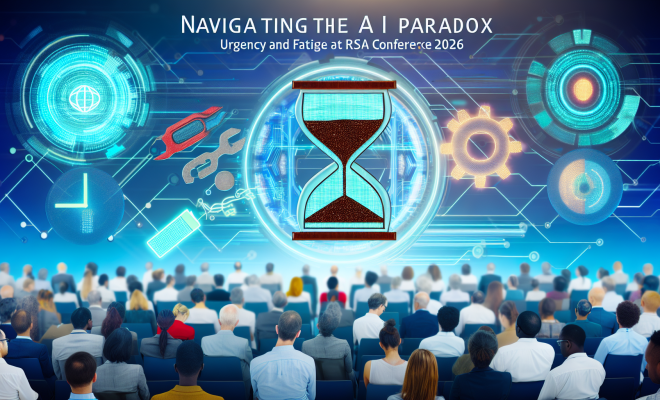
The RSA Conference 2026 brought together cybersecurity experts, industry leaders, and technology enthusiasts to delve into the complexities of artificial intelligence (AI) in the realm of cybersecurity. As discussions unfolded, two significant themes emerged: the urgency surrounding AI adoption and the fatigue that professionals are beginning to feel in response to the rapid pace of change.

The Growing Urgency for AI in Cybersecurity

In an age where cyber threats are becoming increasingly sophisticated, the urgency for integrating AI into cybersecurity protocols has never been greater. Attendees of the RSA Conference highlighted how AI technologies are essential for combating evolving threats, enabling organizations to enhance their security posture effectively. AI’s ability to analyze vast amounts of data, detect anomalies, and respond to threats in real time positions it as a critical asset in defending against cyberattacks.

Real-Time Threat Detection and Response

Traditionally, cybersecurity relied heavily on manual processes that were often slow and inefficient. However, with AI, organizations can leverage advanced algorithms to automate threat detection and response mechanisms. According to industry experts, AI can significantly reduce the time it takes to identify and neutralize threats, thereby minimizing potential damage. This capability is particularly vital given that cybercriminals are always on the lookout for vulnerabilities to exploit.

  • AI enhances threat detection by analyzing patterns in user behavior.
  • Machine learning models can predict potential attacks before they occur.
  • Automation allows for quicker responses to security incidents, reducing recovery time.

AI Fatigue: A Growing Concern

While the benefits of AI are widely acknowledged, the RSA Conference also shed light on a growing phenomenon known as AI fatigue. As organizations scramble to adopt AI solutions, professionals are beginning to feel overwhelmed by the rapid pace of change and the constant pressure to stay ahead of emerging threats.

Impact on Workforce and Mental Health

The demand for AI expertise has surged, leading to a significant skills gap within the cybersecurity workforce. Many professionals expressed concerns about their ability to keep up with the fast-evolving landscape. The constant need for training and adaptation can lead to stress and burnout, which are detrimental to both individual well-being and organizational effectiveness.

As AI tools become more prevalent, the expectation that employees will seamlessly integrate these systems into their workflows can exacerbate feelings of inadequacy. This sentiment was echoed by various speakers at the conference, who emphasized the importance of providing adequate support and resources for professionals navigating this complex landscape.

Balancing Urgency with Practical Challenges

The discussions at RSA Conference 2026 underscored the necessity of balancing the urgency for AI implementation with the practical challenges that come with it. While AI can significantly enhance cybersecurity measures, its integration is not without complications.

Implementation Hurdles

According to panelists, organizations often encounter several hurdles when trying to implement AI solutions:

  • Data Quality: Effective AI models require high-quality data for training. Many organizations struggle with data silos and inconsistent data quality.
  • Integration with Existing Systems: Incorporating AI tools into legacy systems can be challenging, often requiring substantial resources and time.
  • Ethical Considerations: As AI systems become more autonomous, ethical concerns regarding bias and decision-making processes must be addressed.

Moreover, the conference highlighted that organizations need to prioritize their cybersecurity strategies effectively. Rushing to adopt AI without a clear understanding of its implications can lead to vulnerabilities rather than protection.

The Path Forward

As the RSA Conference 2026 concluded, it became evident that the future of AI in cybersecurity hinges on finding a balance between urgency and practical implementation. Organizations must not only invest in AI technologies but also focus on the human element of cybersecurity.

Building a Supportive Ecosystem

To address AI fatigue, industry leaders emphasized the importance of fostering a supportive ecosystem for cybersecurity professionals. This includes:

  • Providing ongoing training and resources to help employees adapt to new technologies.
  • Encouraging collaboration and knowledge sharing to bridge the skills gap.
  • Promoting mental health awareness and support within the workplace.

As we move forward, the key to leveraging AI in cybersecurity lies in recognizing both its potential and its limitations. By addressing the challenges head-on and supporting the workforce, organizations can not only harness AI’s capabilities but also ensure a sustainable and healthy environment for cybersecurity professionals.


Previous Article

OpenAI Secures $122 Billion in 2026: AI’s ...

Next Article

CEOs’ 2026 Guide: Harnessing AI in Software ...

Matthew Lynch

Related articles More from author

  • Tech News

    Google Gemini AI: Reshaping Tech Rivalries & AI Infrastructure

    June 29, 2026
    By Matthew Lynch
  • Tech News

    Hormuz Crisis Fuels Global Food Inflation & Recession Fears

    April 15, 2026
    By Matthew Lynch
  • Tech News

    2026 Sees Surge in Fireball Activity & Rare Meteorite Finds

    April 2, 2026
    By Matthew Lynch
  • Tech News

    How to manage servers with Ansible?

    August 15, 2026
    By Matthew Lynch
  • Tech News

    Patrol the pool with this Arduino Nano-powered DIY RC submarine

    August 17, 2024
    By Matthew Lynch
  • Tech News

    iOS 17 Cheat Sheet: What to Know About the Latest iPhone Update

    January 31, 2024
    By Matthew Lynch

Search

Login & Registration

  • Log in
  • Entries feed
  • Comments feed
  • WordPress.org

Newsletter

Signup for The Tech Edvocate Newsletter and have the latest in EdTech news and opinion delivered to your email address!

About Us

Since technology is not going anywhere and does more good than harm, adapting is the best course of action. That is where The Tech Edvocate comes in. We plan to cover the PreK-12 and Higher Education EdTech sectors and provide our readers with the latest news and opinion on the subject. From time to time, I will invite other voices to weigh in on important issues in EdTech. We hope to provide a well-rounded, multi-faceted look at the past, present, the future of EdTech in the US and internationally.

We started this journey back in June 2016, and we plan to continue it for many more years to come. I hope that you will join us in this discussion of the past, present and future of EdTech and lend your own insight to the issues that are discussed.

Newsletter

Signup for The Tech Edvocate Newsletter and have the latest in EdTech news and opinion delivered to your email address!

Contact Us

The Tech Edvocate
910 Goddin Street
Richmond, VA 23231
(601) 630-5238
[email protected]

Copyright © 2026 Matthew Lynch. All rights reserved.