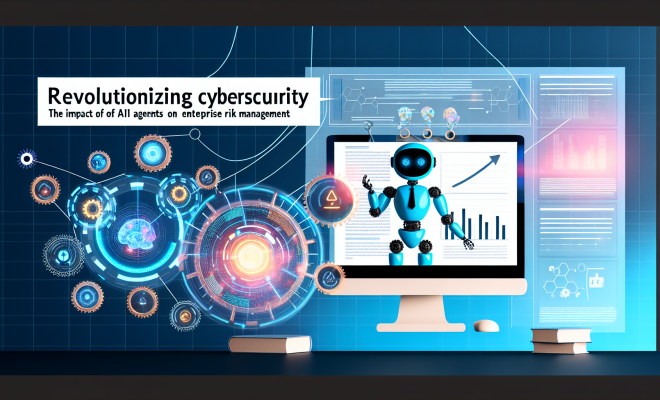
Revolutionizing Cybersecurity: The Impact of AI Agents on Enterprise Risk Management
As organizations increasingly navigate the complexities of the digital landscape, the integration of artificial intelligence (AI) agents into enterprise cybersecurity frameworks is reshaping how businesses approach risk management. According to a report published on March 29, 2026, AI agents are transitioning cybersecurity from traditional, tool-based systems to more dynamic, autonomous operating layers. This shift not only enhances operational efficiency but also introduces new dimensions of risk that organizations must address.
The Evolution of Cybersecurity
Historically, cybersecurity has relied heavily on a suite of tools that include firewalls, intrusion detection systems, and antivirus software. These systems require constant human oversight and intervention to identify and respond to threats. However, the emergence of AI agents marks a significant departure from this model. By leveraging machine learning and advanced algorithms, these agents can independently handle complex threat detection and response, operating at speeds and efficiencies that far surpass human capabilities.
Autonomous Threat Detection and Response
AI agents continuously analyze vast amounts of data to identify potential threats, learning from past incidents to improve their decision-making processes. This autonomous capability allows them to:
- Detect anomalies: AI agents can identify unusual patterns in network traffic or user behavior that may indicate a security breach.
- Respond in real time: Unlike traditional systems that may require manual intervention, AI agents can take immediate action, such as isolating affected systems or initiating countermeasures.
- Adapt and evolve: These agents are designed to learn from new threats, continually refining their algorithms to enhance their effectiveness against emerging attack vectors.
New Risk Profiles for Organizations
While the advantages of AI agents in cybersecurity are significant, their deployment also introduces new risk profiles that organizations must consider. The autonomous nature of these systems raises concerns regarding:
- Control: With AI agents operating independently, there is a risk that organizations may lose oversight of cybersecurity processes. This lack of control can lead to unintended consequences, such as the AI misinterpreting data and taking inappropriate actions.
- Ethics: The ethical implications of using AI in decision-making processes are profound. Organizations must grapple with the potential biases embedded in AI algorithms and the transparency of AI decision-making.
- Vulnerabilities: AI agents themselves can become targets for cyberattacks. If adversaries can manipulate these systems, they could gain unprecedented access to an organization’s defenses.
The Balancing Act: Efficiency vs. Oversight
As organizations adopt AI agents for cybersecurity, they face a delicate balancing act. On one hand, the enhanced efficiency and capabilities of these agents can lead to improved security postures. On the other hand, the risks associated with their autonomy necessitate a re-evaluation of governance frameworks.
Experts suggest that organizations should implement robust monitoring systems to maintain oversight of AI-driven processes. This includes establishing clear protocols for human intervention when necessary and regularly auditing AI decisions for accountability. Furthermore, organizations must invest in training their cybersecurity teams to better understand and manage these advanced systems.
The Future of AI in Cybersecurity
The integration of AI agents into enterprise cybersecurity represents just the beginning of a broader trend. As technology continues to evolve, organizations will likely see an even greater reliance on AI-driven solutions. This evolution will necessitate ongoing discussions around the ethical implications and regulatory frameworks governing AI use in cybersecurity.
In the coming years, organizations will need to stay ahead of the curve by:
- Investing in AI literacy: Ensuring that cybersecurity teams are well-versed in AI technologies will be crucial for effective implementation.
- Fostering collaboration: Engaging with external experts and stakeholders can provide valuable insights into best practices for AI deployment.
- Developing ethical guidelines: Organizations should strive to create frameworks that address the ethical concerns associated with AI in cybersecurity.
Conclusion
The advent of AI agents in cybersecurity marks a transformative shift in how organizations mitigate risks. While the benefits of enhanced efficiency and autonomous threat responses are clear, the accompanying risks cannot be overlooked. As enterprises embrace these advanced technologies, they must prioritize governance and ethical considerations to ensure that their cybersecurity strategies remain robust and effective in an ever-evolving threat landscape.