Warfare and Combat Strategies in Civilization V
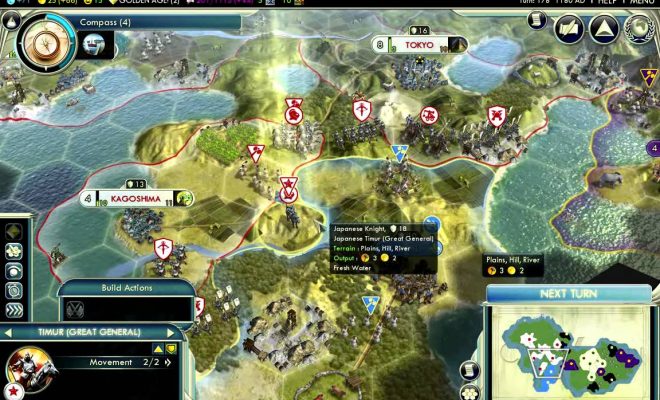
Warfare in Civilization V represents a significant departure from earlier games in the series, primarily due to the introduction of the one-unit-per-tile rule. This change fundamentally altered combat strategies, making positioning, terrain, and unit composition more crucial than ever before.
The basics of combat in Civilization V are straightforward. Units have attack and defense strengths, and battles are resolved through a comparison of these values, modified by factors such as terrain, fortification, and promotions. However, the strategic depth comes from how these elements interact on the hexagonal grid.
Terrain plays a vital role in combat. Hills provide defensive bonuses and increased range for ranged units. Forests and jungles offer defensive bonuses and can be used for ambushes. Rivers impose a penalty on attacking units trying to cross them. Understanding and utilizing terrain is key to successful warfare.
Unit positioning is crucial due to the one-unit-per-tile rule. Players must carefully consider how to arrange their forces to maximize effectiveness while minimizing vulnerability. Ranged units, for instance, should be protected by melee units, while cavalry can be used for flanking maneuvers.
The rock-paper-scissors relationship between unit types adds another layer of strategy. Spearmen are effective against mounted units, mounted units are strong against ranged units, and ranged units can safely attack melee units. This system encourages players to field diverse armies rather than relying on a single powerful unit type.
Siege warfare is a crucial aspect of combat in Civilization V. Cities have their own defense strength and can attack nearby enemy units. Capturing a city requires wearing down its defenses with ranged attacks before moving in with a melee unit to capture it. Siege units, such as catapults and artillery, are specialized for attacking cities but are vulnerable to direct attacks.
Naval combat is another important aspect of warfare, especially on maps with significant water coverage. Naval units can be used to control sea lanes, bombard coastal cities, and transport land units across oceans. The interplay between naval and land forces can lead to complex and exciting strategies.
The promotion system allows units to gain experience and become more powerful over time. This encourages players to keep units alive and use them strategically, as veteran units can become significantly more powerful than fresh recruits.
Great Generals, earned through combat experience, provide combat bonuses to nearby units and can construct Citadels, powerful defensive improvements that can be used to claim strategic territory.
In the late game, warfare becomes increasingly complex with the introduction of aircraft, nuclear weapons, and giant death robots. These powerful units can dramatically shift the balance of power and require careful strategic consideration.
Domination victory, achieved by capturing all other civilizations’ original capitals, is often seen as the most straightforward victory condition. However, it’s also often the most challenging, requiring careful balancing of military production with economic and technological development.
In conclusion, warfare in Civilization V is a complex and engaging system that rewards careful planning, adaptability, and strategic thinking. While it’s possible to win the game without engaging in combat, understanding the intricacies of warfare is crucial for players looking to master all aspects of the game. Whether defending against aggressive neighbors or launching your own conquests, the combat system in Civilization V provides a deep and satisfying strategic experience.