The Tech Edvocate

Top Menu

  • Advertisement
  • Apps
  • Home Page
  • Home Page Five (No Sidebar)
  • Home Page Four
  • Home Page Three
  • Home Page Two
  • Home Tech2
  • Icons [No Sidebar]
  • Left Sidbear Page
  • Lynch Educational Consulting
  • My Account
  • My Speaking Page
  • Newsletter Sign Up Confirmation
  • Newsletter Unsubscription
  • Our Brands
  • Page Example
  • Privacy Policy
  • Protected Content
  • Register
  • Request a Product Review
  • Shop
  • Shortcodes Examples
  • Signup
  • Start Here
    • Governance
    • Careers
    • Contact Us
  • Terms and Conditions
  • The Edvocate
  • The Tech Edvocate Product Guide
  • Topics
  • Write For Us
  • Advertise

Main Menu

  • Start Here
    • Our Brands
    • Governance
      • Lynch Educational Consulting, LLC.
      • Dr. Lynch’s Personal Website
      • Careers
    • Write For Us
    • The Tech Edvocate Product Guide
    • Contact Us
    • Books
    • Edupedia
    • Post a Job
    • The Edvocate Podcast
    • Terms and Conditions
    • Privacy Policy
  • Topics
    • Assistive Technology
    • Child Development Tech
    • Early Childhood & K-12 EdTech
    • EdTech Futures
    • EdTech News
    • EdTech Policy & Reform
    • EdTech Startups & Businesses
    • Higher Education EdTech
    • Online Learning & eLearning
    • Parent & Family Tech
    • Personalized Learning
    • Product Reviews
  • Advertise
  • Tech Edvocate Awards
  • The Edvocate
  • Pedagogue
  • School Ratings

logo

The Tech Edvocate

  • Start Here
    • Our Brands
    • Governance
      • Lynch Educational Consulting, LLC.
      • Dr. Lynch’s Personal Website
        • My Speaking Page
      • Careers
    • Write For Us
    • The Tech Edvocate Product Guide
    • Contact Us
    • Books
    • Edupedia
    • Post a Job
    • The Edvocate Podcast
    • Terms and Conditions
    • Privacy Policy
  • Topics
    • Assistive Technology
    • Child Development Tech
    • Early Childhood & K-12 EdTech
    • EdTech Futures
    • EdTech News
    • EdTech Policy & Reform
    • EdTech Startups & Businesses
    • Higher Education EdTech
    • Online Learning & eLearning
    • Parent & Family Tech
    • Personalized Learning
    • Product Reviews
  • Advertise
  • Tech Edvocate Awards
  • The Edvocate
  • Pedagogue
  • School Ratings
  • Can Kayak book directly

  • How to list hotel on Booking.com

  • How to optimize Airbnb listing

  • How to get more bookings on Booking.com

  • How accurate is Kayak price forecast

  • How does Hopper app work

  • Travelocity vs Hotels.com comparison

  • Is Kayak a booking site or search engine

  • Can Google Flights find error fares

  • How to bundle flights and hotels Travelocity

Cybersecurity
Home›Cybersecurity›Mobile App Security Best Practices for Developers

Mobile App Security Best Practices for Developers
By Matthew Lynch
March 12, 2024
0
Spread the love

In an era where mobile applications are deeply integrated into our daily lives, ensuring their security has become paramount. Developers bear the crucial responsibility of safeguarding these apps from various security threats. Let’s delve into some best practices that can help fortify the security of mobile applications.

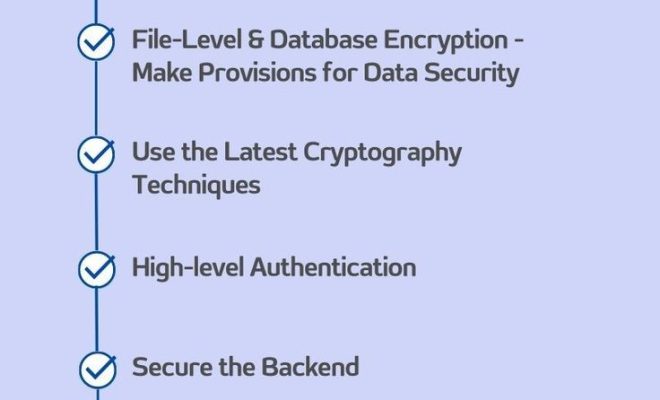
Firstly, incorporating a strong code encryption is vital. A hardened code is resistant to reverse engineering and tampering. Minification and obfuscation techniques can prevent attackers from reading and modifying your source code easily.

Secondly, adopting secure authentication and authorization mechanisms cannot be overstated. Utilizing tokens instead of identifiers for session management, implementing two-factor authentication, and ensuring passwords are stored using a strong hashing algorithm are all sound strategies.

Thirdly, data encryption shouldn’t be limited only to sensitive information. Encrypting all data that gets transmitted over the network ensures privacy and protects against eavesdropping. HTTPS with SSL/TLS protocol should be standard practice for securing these communications.

Fourthly, developers must secure the data on the device. Storing sensitive data in plaintext within the application’s sandbox can lead to severe security breaches if the device is compromised. Using encrypted storage and keychain services provided by mobile platforms enhances local data protection.

Fifthly, keeping third-party libraries up to date is crucial. Regularly updating libraries ensures that you benefit from fixes for known vulnerabilities. Prior to integration, it’s essential to evaluate these libraries for security flaws.

Next, implementing proper error handling can thwart many attack vectors that exploit bugs resulting from unexpected application behavior. Suppress detailed error reports from end-users, as these can reveal insights into the app’s inner workings or system architecture.

Moreover, applying server-side controls adds an additional layer of security. User input validation on both client-side and server-side helps prevent malicious data from affecting your backend systems.

Incorporating threat modeling and conducting regular security assessments throughout the development lifecycle can reveal potential vulnerabilities early on. Automated tools complement manual audits by quickly identifying common security issues.

Lastly, stablishing a responsible disclosure policy encourages ethical hackers to report vulnerabilities directly to you before they’re publicly revealed, giving you a chance to resolve them proactively.

By embracing these practices and fostering an ongoing commitment to security, developers have a far better chance at protecting both their users and their reputation in an increasingly fraught digital landscape.


Previous Article

Google Maps Just Got a Big AI ...

Next Article

20 Best Neural Network Software for 2024

Matthew Lynch

Related articles More from author

  • Cybersecurity

    Ways Your Email Address Can Be Exploited by Scammers

    June 21, 2023
    By Matthew Lynch
  • Cybersecurity

    How To Implement Zero Trust: 4 Steps and Best Practices

    March 26, 2024
    By Matthew Lynch
  • Cybersecurity

    Security and Fraud Prevention Best Practices for WooCommerce

    March 16, 2024
    By Matthew Lynch
  • Campus SecurityCybersecurity

    In Cybersecurity, There’s No Such Thing as Too Much User Education

    February 17, 2022
    By Matthew Lynch
  • Cybersecurity

    Don’t Be the Victim of an Email Bomb! Here’s What You Need to Know

    June 15, 2023
    By Matthew Lynch
  • Cybersecurity

    Permission Slip Can Delete Your Personal History From Websites and It’s Super Simple to Use

    January 31, 2024
    By Matthew Lynch

Search

Login & Registration

  • Log in
  • Entries feed
  • Comments feed
  • WordPress.org

Newsletter

Signup for The Tech Edvocate Newsletter and have the latest in EdTech news and opinion delivered to your email address!

About Us

Since technology is not going anywhere and does more good than harm, adapting is the best course of action. That is where The Tech Edvocate comes in. We plan to cover the PreK-12 and Higher Education EdTech sectors and provide our readers with the latest news and opinion on the subject. From time to time, I will invite other voices to weigh in on important issues in EdTech. We hope to provide a well-rounded, multi-faceted look at the past, present, the future of EdTech in the US and internationally.

We started this journey back in June 2016, and we plan to continue it for many more years to come. I hope that you will join us in this discussion of the past, present and future of EdTech and lend your own insight to the issues that are discussed.

Newsletter

Signup for The Tech Edvocate Newsletter and have the latest in EdTech news and opinion delivered to your email address!

Contact Us

The Tech Edvocate
910 Goddin Street
Richmond, VA 23231
(601) 630-5238
[email protected]

Copyright © 2026 Matthew Lynch. All rights reserved.