The Tech Edvocate

Top Menu

  • Advertisement
  • Apps
  • Home Page
  • Home Page Five (No Sidebar)
  • Home Page Four
  • Home Page Three
  • Home Page Two
  • Home Tech2
  • Icons [No Sidebar]
  • Left Sidbear Page
  • Lynch Educational Consulting
  • My Account
  • My Speaking Page
  • Newsletter Sign Up Confirmation
  • Newsletter Unsubscription
  • Our Brands
  • Page Example
  • Privacy Policy
  • Protected Content
  • Register
  • Request a Product Review
  • Shop
  • Shortcodes Examples
  • Signup
  • Start Here
    • Governance
    • Careers
    • Contact Us
  • Terms and Conditions
  • The Edvocate
  • The Tech Edvocate Product Guide
  • Topics
  • Write For Us
  • Advertise

Main Menu

  • Start Here
    • Our Brands
    • Governance
      • Lynch Educational Consulting, LLC.
      • Dr. Lynch’s Personal Website
      • Careers
    • Write For Us
    • The Tech Edvocate Product Guide
    • Contact Us
    • Books
    • Edupedia
    • Post a Job
    • The Edvocate Podcast
    • Terms and Conditions
    • Privacy Policy
  • Topics
    • Assistive Technology
    • Child Development Tech
    • Early Childhood & K-12 EdTech
    • EdTech Futures
    • EdTech News
    • EdTech Policy & Reform
    • EdTech Startups & Businesses
    • Higher Education EdTech
    • Online Learning & eLearning
    • Parent & Family Tech
    • Personalized Learning
    • Product Reviews
  • Advertise
  • Tech Edvocate Awards
  • The Edvocate
  • Pedagogue
  • School Ratings

logo

The Tech Edvocate

  • Start Here
    • Our Brands
    • Governance
      • Lynch Educational Consulting, LLC.
      • Dr. Lynch’s Personal Website
        • My Speaking Page
      • Careers
    • Write For Us
    • The Tech Edvocate Product Guide
    • Contact Us
    • Books
    • Edupedia
    • Post a Job
    • The Edvocate Podcast
    • Terms and Conditions
    • Privacy Policy
  • Topics
    • Assistive Technology
    • Child Development Tech
    • Early Childhood & K-12 EdTech
    • EdTech Futures
    • EdTech News
    • EdTech Policy & Reform
    • EdTech Startups & Businesses
    • Higher Education EdTech
    • Online Learning & eLearning
    • Parent & Family Tech
    • Personalized Learning
    • Product Reviews
  • Advertise
  • Tech Edvocate Awards
  • The Edvocate
  • Pedagogue
  • School Ratings
  • Zola Suite pricing 2026

  • How to become Airbnb Superhost

  • Yelp Elite status how to get

  • Rocket Matter vs CosmoLex comparison

  • Lawyaw vs Documate which is better

  • How to use Yelp for marketing

  • How many templates in Lawyaw

  • Can TripAdvisor reviews be edited

  • How to manage documents in Zola Suite

  • Filevine vs Litify features

Early Childhood & K-12 EdTechSpecial Education
Home›Early Childhood & K-12 EdTech›Edtech Innovations for Special Populations

Edtech Innovations for Special Populations
By Matthew Lynch
June 4, 2019
0
Spread the love

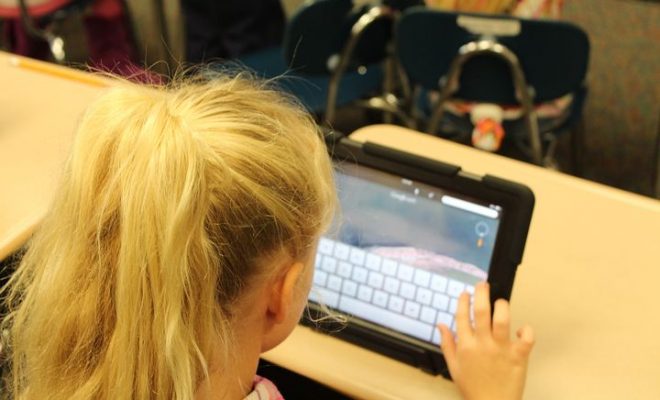
Special education has always been an early adopter of innovative and adaptive technology. Doing so has equalized access to curriculum and learning tasks for special education students. Learners with special needs can access email and the internet with specially designed keyboards, touch screens, and word prediction apps that help with spelling.

Adaptive technology can be expensive, so not every classroom has access to it. With the advent of edtech, however, many more students can access learning experiences. Technology is bridging the gap, so no learners are left out.

Bilingual and ELL students

Teachers may discover that there are limited edtech options marketed for second-language learners. Don’t despair; there’s still plenty of software that will support bilingual and ELL learning needs. Most of it is aimed at improving language arts skills, and you may already be using it in your classroom.

Some of the edtech available includes:

  • BrainPOP ELL – This software is a kid-friendly way to explain difficult concepts in playful ways. Although the program includes lessons on many subjects, it also focuses on vocabulary, English language convention, listening skills, reading, and writing for ELLs to help learners become proficient in English.
  • Voice Thread – Teachers pair VoiceThread with other learning applications, such as online courses. Students (and teachers) can record video and audio as a way to express themselves, amplifying the discussion around the lesson. The software allows users to curate their comments.
  • Khan Academy – This tool offers free instructional courses that personalize learning by letting students set the pace. Students can work on an entire course, such as high school biology, or they can review a single concept, like pronoun-antecedent agreement.

At risk students

Due to circumstances beyond their control, at-risk students may have gaps in their learning. High school students, for example, may be lacking in credit hours. Opportunities for credit recovery lets students catch up, but schools aren’t always able to provide enough teachers to intervene on behalf of every student.

Edtech allows teachers to create highly personalized learning experiences for at-risk students. Adaptive curriculum software programs, like CompassLearning Inc.’s Odyssey, let students access courses and lessons at their own rate.

Dyslexic students

As much as 20% of the children and adults have symptoms of dyslexia. Many times dyslexic learners are hyper-acute listeners who have difficulty reading. Many teachers have turned to VoiceThread as a way to engage students in the learning process; learners can listen to the comments of other students and take part in the discussion themselves.

Another edtech support is BrowseAloud. The text-to-speech software facilitates text access by translating and reading websites aloud. BrowseAloud is multilingual; it supports several different languages. The software remove the burden of reading from the learner, allowing the student to concentrate on content with far less frustration.

Mind-mapping software offers another alternative to idea organization for dyslexic students. Draw.io, for example, is a free web-based tools that allows users to draw charts and mind maps, then save them to the Google Drive. Another popular mind-mapping tool is Coggle, which supports visual interpretation of complex ideas.

Many of the edtech solutions available today are cost-effective and efficient ways to give our students in any special population equal access to the curriculum. Adaptive education technology meets these learners where they are in the continuum and carries them forward.


Previous Article

How to Improve Digital Instruction with Learning ...

Next Article

How to Tell if You’re Using too ...

Matthew Lynch

Related articles More from author

  • Early Childhood & K-12 EdTechEdTech Policy & ReformHigher Education EdTech

    Why Teachers Should Embrace Technology in Their Classrooms

    December 9, 2016
    By Matthew Lynch
  • Early Childhood & K-12 EdTech

    What Does a Future Ready School Look Like?

    January 23, 2018
    By Matthew Lynch
  • Early Childhood & K-12 EdTech

    10 Activities that Will Make Students Better Digital Leaders

    April 12, 2018
    By Matthew Lynch
  • Assistive TechnologyEarly Childhood & K-12 EdTechHigher Education EdTech

    How to Improve Digital Instruction with Learning Science

    June 4, 2019
    By Matthew Lynch
  • Early Childhood & K-12 EdTech

    5 Must-Have Google Docs Add-Ons for Teachers

    April 12, 2018
    By Matthew Lynch
  • Best of the Best ListsEarly Childhood & K-12 EdTechHigher Education EdTech

    The Tech Edvocate’s List of 31 Apps, Tools and Games That Teach Kids to Code

    July 13, 2017
    By Matthew Lynch

Search

Login & Registration

  • Log in
  • Entries feed
  • Comments feed
  • WordPress.org

Newsletter

Signup for The Tech Edvocate Newsletter and have the latest in EdTech news and opinion delivered to your email address!

About Us

Since technology is not going anywhere and does more good than harm, adapting is the best course of action. That is where The Tech Edvocate comes in. We plan to cover the PreK-12 and Higher Education EdTech sectors and provide our readers with the latest news and opinion on the subject. From time to time, I will invite other voices to weigh in on important issues in EdTech. We hope to provide a well-rounded, multi-faceted look at the past, present, the future of EdTech in the US and internationally.

We started this journey back in June 2016, and we plan to continue it for many more years to come. I hope that you will join us in this discussion of the past, present and future of EdTech and lend your own insight to the issues that are discussed.

Newsletter

Signup for The Tech Edvocate Newsletter and have the latest in EdTech news and opinion delivered to your email address!

Contact Us

The Tech Edvocate
910 Goddin Street
Richmond, VA 23231
(601) 630-5238
[email protected]

Copyright © 2026 Matthew Lynch. All rights reserved.