The Tech Edvocate

Top Menu

  • Advertisement
  • Apps
  • Home Page
  • Home Page Five (No Sidebar)
  • Home Page Four
  • Home Page Three
  • Home Page Two
  • Home Tech2
  • Icons [No Sidebar]
  • Left Sidbear Page
  • Lynch Educational Consulting
  • My Account
  • My Speaking Page
  • Newsletter Sign Up Confirmation
  • Newsletter Unsubscription
  • Our Brands
  • Page Example
  • Privacy Policy
  • Protected Content
  • Register
  • Request a Product Review
  • Shop
  • Shortcodes Examples
  • Signup
  • Start Here
    • Governance
    • Careers
    • Contact Us
  • Terms and Conditions
  • The Edvocate
  • The Tech Edvocate Product Guide
  • Topics
  • Write For Us
  • Advertise

Main Menu

  • Start Here
    • Our Brands
    • Governance
      • Lynch Educational Consulting, LLC.
      • Dr. Lynch’s Personal Website
      • Careers
    • Write For Us
    • The Tech Edvocate Product Guide
    • Contact Us
    • Books
    • Edupedia
    • Post a Job
    • The Edvocate Podcast
    • Terms and Conditions
    • Privacy Policy
  • Topics
    • Assistive Technology
    • Child Development Tech
    • Early Childhood & K-12 EdTech
    • EdTech Futures
    • EdTech News
    • EdTech Policy & Reform
    • EdTech Startups & Businesses
    • Higher Education EdTech
    • Online Learning & eLearning
    • Parent & Family Tech
    • Personalized Learning
    • Product Reviews
  • Advertise
  • Tech Edvocate Awards
  • The Edvocate
  • Pedagogue
  • School Ratings

logo

The Tech Edvocate

  • Start Here
    • Our Brands
    • Governance
      • Lynch Educational Consulting, LLC.
      • Dr. Lynch’s Personal Website
        • My Speaking Page
      • Careers
    • Write For Us
    • The Tech Edvocate Product Guide
    • Contact Us
    • Books
    • Edupedia
    • Post a Job
    • The Edvocate Podcast
    • Terms and Conditions
    • Privacy Policy
  • Topics
    • Assistive Technology
    • Child Development Tech
    • Early Childhood & K-12 EdTech
    • EdTech Futures
    • EdTech News
    • EdTech Policy & Reform
    • EdTech Startups & Businesses
    • Higher Education EdTech
    • Online Learning & eLearning
    • Parent & Family Tech
    • Personalized Learning
    • Product Reviews
  • Advertise
  • Tech Edvocate Awards
  • The Edvocate
  • Pedagogue
  • School Ratings
  • How to use ClickUp goals feature

  • Trello for Business

  • Can Smartsheet do automation

  • How to use Microsoft Planner boards

  • How many transactions in Kashoo

  • Sage

  • Is Sage worth it for accountants

  • How to use Smartsheet templates

  • How many users in Zoho Books free plan

  • Can Wrike integrate with Adobe Creative Cloud

Uncategorized
Home›Uncategorized›How to Choose the Right Digital Learning Device

How to Choose the Right Digital Learning Device

By Matthew Lynch
July 30, 2017
0
Spread the love

Choosing the right digital learning device can be tricky. As more schools go one-to-one, offering every student a computer or tablet, they are faced with the difficult choice of picking one device that will work for all purposes. It can be tough to find a device that is tough enough to withstand everything students will throw at it, is easy to carry around, and can do everything teachers and students need it to do.

Ultimately, there is no one right digital learning device for every school. But there are some basic guidelines that schools can follow to help them choose the right digital learning device for their needs.

Elementary Schools (K-5)

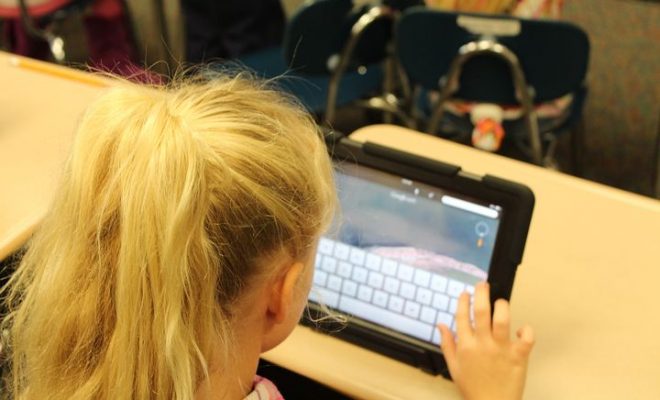
For elementary schools, the biggest challenge is finding a device that will stand up to everything a Kindergartener might do. Even the best-behaved young children are prone to dropping and breaking things.

There are tablets made specifically for younger children, but they’re not perfect. Many of these kid-friendly tablets are limited in functionality. They may come with only a select few apps and have less than optimal processing power and speed.

Many elementary educators prefer to simply to get a tablet with a case that can withstand being dropped and thrown around. Otterbox cases are popular among educators and are not only drop-proof but also water-resistant.

Another concern with younger students is usability. Laptops or Windows tablets may have too many options. Students can easily change settings they shouldn’t or have trouble operating their device. iPads are popular among elementary teachers for this reason. They’re easier to use, and Apple products are well-known for being difficult to infect with viruses.

On the other hand, Apple products are also known for being more expensive. Public schools are on a tight budget, and an iPad for every student might not be feasible.

Secondary Schools (6-12)

Students in middle and high school have distinctly different needs when it comes to selecting the right digital learning device. They need more powerful devices that can run a wider variety of programs. They’re also less likely to break devices, though durability is still a concern.

Secondary students are also learning more digital skills, such as programming, animation, and photo and video editing. It’s important to have a device that can handle all of this and more. However, big and bulky laptops can be difficult to manage and carry around. For this reason, all-in-one devices like the Google Chromebook or Microsoft Surface are popular in secondary schools. These devices have the power of a computer but are slim and portable like a tablet.

Like iPads, however, all-in-one devices can be pricey. Laptops are a less expensive option. For the price of a tablet, schools can get a laptop with significantly more processing power. If portability isn’t a concern, such as in a school where the devices will stay in one classroom rather than moving with students to each class, then laptops are a good choice.

Whichever device you choose, the important thing is how its used. Digital learning devices work best when they allow students to do things they couldn’t do otherwise. This might mean working on digital literacy, learning high-tech skills, or creating digital art. Any device that a school purchases for students should enable them to do these things, not just act as a high-tech way of doing the same old things teachers have always done.

Schools must choose the digital learning device that works best for their needs and population. The right digital learning device can completely transform the way students learn and teachers teach.

Which digital learning devices do you prefer? Tell us about your experience with choosing the right digital learning devices.

TagsEdtechedtechchatelearningSTEAMSTEM
Previous Article

5 Assistive Technology Apps for Students With ...

Next Article

Textbooks in the digital world

Matthew Lynch

Related articles More from author

  • Early Childhood & K-12 EdTechEdTech Futures

    How Technology Can Benefit Physical Education Classes

    March 19, 2017
    By Matthew Lynch
  • EdTech Futures

    Educational Tech: What’s Next?

    April 3, 2016
    By Matthew Lynch
  • Early Childhood & K-12 EdTechHigher Education EdTech

    Making Blended Learning Work in Your Classroom

    November 21, 2017
    By Matthew Lynch
  • EdTech Policy & Reform

    Why EdTech Alone Can’t Change America’s Schools

    July 24, 2017
    By Matthew Lynch
  • EdTech NewsHigher Education EdTech

    Five reasons to teach robotics in schools

    July 1, 2016
    By Matthew Lynch
  • Uncategorized

    Peering Past the ‘Pixie Dust’ of Technology

    November 1, 2015
    By Matthew Lynch

Search

Login & Registration

  • Log in
  • Entries feed
  • Comments feed
  • WordPress.org

Newsletter

Signup for The Tech Edvocate Newsletter and have the latest in EdTech news and opinion delivered to your email address!

About Us

Since technology is not going anywhere and does more good than harm, adapting is the best course of action. That is where The Tech Edvocate comes in. We plan to cover the PreK-12 and Higher Education EdTech sectors and provide our readers with the latest news and opinion on the subject. From time to time, I will invite other voices to weigh in on important issues in EdTech. We hope to provide a well-rounded, multi-faceted look at the past, present, the future of EdTech in the US and internationally.

We started this journey back in June 2016, and we plan to continue it for many more years to come. I hope that you will join us in this discussion of the past, present and future of EdTech and lend your own insight to the issues that are discussed.

Newsletter

Signup for The Tech Edvocate Newsletter and have the latest in EdTech news and opinion delivered to your email address!

Contact Us

The Tech Edvocate
910 Goddin Street
Richmond, VA 23231
(601) 630-5238
[email protected]

Copyright © 2026 Matthew Lynch. All rights reserved.