The Tech Edvocate

Top Menu

  • Advertisement
  • Apps
  • Home Page
  • Home Page Five (No Sidebar)
  • Home Page Four
  • Home Page Three
  • Home Page Two
  • Home Tech2
  • Icons [No Sidebar]
  • Left Sidbear Page
  • Lynch Educational Consulting
  • My Account
  • My Speaking Page
  • Newsletter Sign Up Confirmation
  • Newsletter Unsubscription
  • Our Brands
  • Page Example
  • Privacy Policy
  • Protected Content
  • Register
  • Request a Product Review
  • Shop
  • Shortcodes Examples
  • Signup
  • Start Here
    • Governance
    • Careers
    • Contact Us
  • Terms and Conditions
  • The Edvocate
  • The Tech Edvocate Product Guide
  • Topics
  • Write For Us
  • Advertise

Main Menu

  • Start Here
    • Our Brands
    • Governance
      • Lynch Educational Consulting, LLC.
      • Dr. Lynch’s Personal Website
      • Careers
    • Write For Us
    • The Tech Edvocate Product Guide
    • Contact Us
    • Books
    • Edupedia
    • Post a Job
    • The Edvocate Podcast
    • Terms and Conditions
    • Privacy Policy
  • Topics
    • Assistive Technology
    • Child Development Tech
    • Early Childhood & K-12 EdTech
    • EdTech Futures
    • EdTech News
    • EdTech Policy & Reform
    • EdTech Startups & Businesses
    • Higher Education EdTech
    • Online Learning & eLearning
    • Parent & Family Tech
    • Personalized Learning
    • Product Reviews
  • Advertise
  • Tech Edvocate Awards
  • The Edvocate
  • Pedagogue
  • School Ratings

logo

The Tech Edvocate

  • Start Here
    • Our Brands
    • Governance
      • Lynch Educational Consulting, LLC.
      • Dr. Lynch’s Personal Website
        • My Speaking Page
      • Careers
    • Write For Us
    • The Tech Edvocate Product Guide
    • Contact Us
    • Books
    • Edupedia
    • Post a Job
    • The Edvocate Podcast
    • Terms and Conditions
    • Privacy Policy
  • Topics
    • Assistive Technology
    • Child Development Tech
    • Early Childhood & K-12 EdTech
    • EdTech Futures
    • EdTech News
    • EdTech Policy & Reform
    • EdTech Startups & Businesses
    • Higher Education EdTech
    • Online Learning & eLearning
    • Parent & Family Tech
    • Personalized Learning
    • Product Reviews
  • Advertise
  • Tech Edvocate Awards
  • The Edvocate
  • Pedagogue
  • School Ratings
  • The AI Education Revolution: 10 Urgent Questions Universities Must Answer Now

  • Explosive Zero-Day Vulnerability: 15 Million Websites Under Siege – Is Yours Next?

  • The Ultimate Kuru Footwear Trio: A Comfort Revolution for Every Adventure

  • Why Your Mortgage Could Be Denied by Biased AI – And What the Fed Is Doing About It

  • Unprecedented: Lawsuit Demands Total AI Shutdown Amid Rising Global Panic

  • The Astonishing Truth: Microcredentials Now Trump MBAs for Data Science Jobs

  • The Astonishing Twist: AI Cuts Your Job, Then Helps You Sue Your Boss

  • The Staggering Truth About Palo Alto’s $4.5 Billion AI Bet

  • Mind-Blowing: Satellite Metals Now Outweigh Meteoroids, Sparking Urgent Insurance Crisis

  • The Silent Threat From Above: Your Sky Is Changing, And Here’s Why

Tech Advice
Home›Tech Advice›What Happens to My Money if My Bank Closes?

What Happens to My Money if My Bank Closes?
By Matthew Lynch
July 10, 2023
0
Spread the love

Introduction:

The prospect of your bank shutting down may be frightening, especially when it comes to ensuring the safety of your hard-earned money. In this article, we will address what happens to your funds if your bank closes and the mechanisms in place to protect your assets.

Federal Deposit Insurance Corporation (FDIC) Protection:

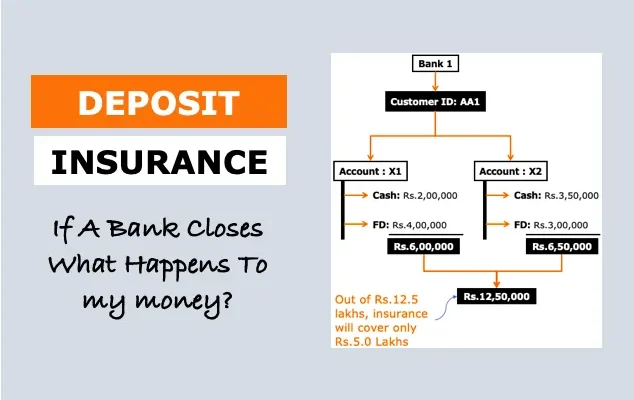
In the United States, the Federal Deposit Insurance Corporation (FDIC) is a federal agency that insures deposits in banks. In the event a bank closes, FDIC insurance protects your funds up to $250,000 per depositor, per insured bank, for each account ownership category. This means that even if your bank fails, you will not lose the money you have in insured accounts up to this limit.

National Credit Union Administration (NCUA) Protection:

For credit unions, the National Credit Union Administration (NCUA) provides an equivalent protection for members. The NCUA’s Share Insurance Fund (SIF) insures deposits at federally insured credit unions up to $250,000 per member. Like FDIC insurance, this coverage applies per account ownership category.

Bank Resolution Process:

When a bank closes, regulators work quickly to initiate a resolution process. This typically involves one of three outcomes:

1. Acquisition by another bank: A healthy bank may purchase the failing institution. In this case, customers’ accounts are transferred to the new bank seamlessly without any disruptions or inconvenience.

2. Bridge Bank: Regulators may establish a temporary “bridge bank” that assumes all assets and liabilities of the closed institution. Customers will have access to their funds during this transition period until a new buyer is found or assets are liquidated.

3. Payoff Method: If no buyer is found and a bridge bank is not established, the FDIC or NCUA will pay depositors directly up to the insured limit.

Possible Delays in Accessing Assets:

While the federal insurance coverage from the FDIC or NCUA ensures that customers are protected up to the insured limit, there might still be some temporary inconveniences as the resolution process unfolds. For example, access to online banking services and transaction processing may be disrupted for a short period.

Conclusion:

It’s crucial to understand that though bank closures can be worrisome, your money is protected by federal safeguards like the FDIC and NCUA. In most cases, your funds will remain accessible throughout the resolution process, and your new financial institution will work to ensure a seamless transition. Nonetheless, it’s always a good idea to stay informed about the health of your bank or credit union and ensure your deposits remain within the insured limits.


Previous Article

What Are NSF Fees and Why Do ...

Next Article

What Happens When You Bounce A Check?

Matthew Lynch

Related articles More from author

  • Tech Advice

    10 Best Antivirus Software for July 2023

    August 8, 2023
    By Matthew Lynch
  • Tech Advice

    Best used cars to trade in for the most cash

    July 12, 2023
    By Matthew Lynch
  • Tech Advice

    Best Riding Mowers for 2023: Conquer the Lawn with Ease

    July 10, 2023
    By Matthew Lynch
  • Tech Advice

    2024 Toyota Grand Highlander Hybrid Limited 4dr All-Wheel Drive SUV: Trim Details, Reviews, Prices, Specs, and Incentives

    August 20, 2023
    By Matthew Lynch
  • Tech Advice

    Sonos Sub Mini Review: Solid for Music, Not as Good for Home Theater

    July 16, 2023
    By Matthew Lynch
  • Tech Advice

    7 Ways to Fix Ethernet Speed Capped at 100Mbps on Windows 11

    February 21, 2024
    By Matthew Lynch

Search

Login & Registration

  • Log in
  • Entries feed
  • Comments feed
  • WordPress.org

Newsletter

Signup for The Tech Edvocate Newsletter and have the latest in EdTech news and opinion delivered to your email address!

About Us

Since technology is not going anywhere and does more good than harm, adapting is the best course of action. That is where The Tech Edvocate comes in. We plan to cover the PreK-12 and Higher Education EdTech sectors and provide our readers with the latest news and opinion on the subject. From time to time, I will invite other voices to weigh in on important issues in EdTech. We hope to provide a well-rounded, multi-faceted look at the past, present, the future of EdTech in the US and internationally.

We started this journey back in June 2016, and we plan to continue it for many more years to come. I hope that you will join us in this discussion of the past, present and future of EdTech and lend your own insight to the issues that are discussed.

Newsletter

Signup for The Tech Edvocate Newsletter and have the latest in EdTech news and opinion delivered to your email address!

Contact Us

The Tech Edvocate
910 Goddin Street
Richmond, VA 23231
(601) 630-5238
[email protected]

Copyright © 2026 Matthew Lynch. All rights reserved.