7 Reasons Patients Distrust Medical AI vs Human Experts for Critical Care
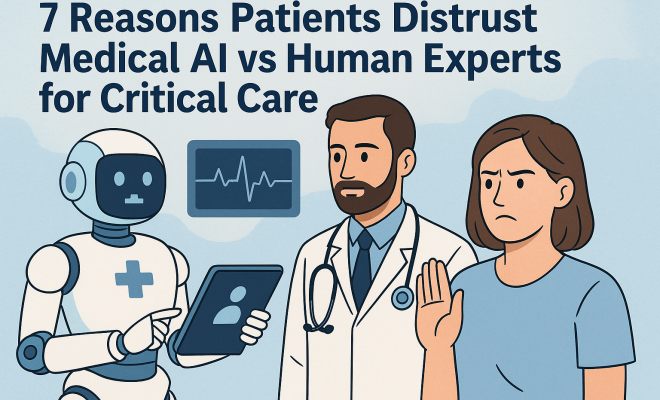
The healthcare landscape is undergoing a profound transformation, with artificial intelligence increasingly moving from the fringes to the forefront of medical practice. But as AI systems become more sophisticated, capable of everything from diagnosing rare diseases to suggesting treatment protocols, a fundamental question emerges: who should ultimately be in charge when it comes to critical decisions? Is it the cold, calculating logic of an algorithm, or the empathetic, nuanced judgment of a human doctor? This isn’t just an academic debate; it’s a real-world dilemma with significant implications for patient care, trust, and accountability. The tension between medical AI vs human experts is particularly acute when patients’ lives or well-being hang in the balance.
A recent Wolters Kluwer Health survey, ‘AI and the Patient Experience,’ conducted in September 2026, shed some much-needed light on patient perceptions regarding this technological shift. What it revealed was a significant trust gap, particularly around privacy and accountability, suggesting that while the technology may be advancing rapidly, patient acceptance is lagging. Understanding these concerns is crucial for anyone involved in developing, implementing, or receiving healthcare in the age of AI. Let’s dig into the core reasons behind this patient skepticism and explore what it means for the future of medicine.
1. Profound Privacy Concerns: The Data Dilemma
One of the most immediate and visceral anxieties patients express about medical AI revolves around the privacy of their health information. The Wolters Kluwer survey found a staggering 74% of patients are worried about this, and it’s not hard to see why. Our health data – our diagnoses, prescriptions, family medical history, even lifestyle choices – is arguably the most sensitive personal information we possess. It paints an incredibly detailed picture of who we are, our vulnerabilities, and our potential future.
When this data is fed into AI systems, often cloud-based and managed by third-party companies, the sense of losing control is palpable. Patients aren’t just worried about a data breach; they’re also concerned about the potential for their information to be sold or leaked, a fear expressed by 71% of respondents. This isn’t just a general unease; it’s a specific, actionable concern that has real consequences. The implications of this data falling into the wrong hands, whether for targeted advertising, insurance discrimination, or even identity theft, are truly unsettling. It’s a fundamental challenge that medical AI vs human experts must address together.
2. Accountability in the Age of Algorithms: Who Takes the Blame?
Perhaps the most significant ethical quandary facing medical AI is the question of accountability. If an AI system makes a recommendation that turns out to be wrong, leading to patient harm or even death, who is responsible? Is it the AI developer? The hospital that implemented the system? The doctor who followed its advice? This isn’t a hypothetical scenario; as AI integrates more deeply into diagnosis and treatment, these situations are becoming increasingly plausible.
The Wolters Kluwer survey highlighted this perfectly: 75% of patients are concerned about precisely this issue – who is responsible when an AI-generated recommendation causes harm. This isn’t a trivial concern; it cuts to the very core of trust. Patients expect a clear line of responsibility in healthcare, a human being they can hold accountable. The nebulous nature of AI decision-making, often described as a ‘black box,’ makes assigning blame incredibly difficult, which erodes patient confidence in medical AI vs human experts, especially when the latter might simply be following an algorithm’s suggestion.
3. The Indispensable Human Touch: The Need for Validation
Despite the hype surrounding AI’s capabilities, patients overwhelmingly believe that human oversight remains critical. The survey found that a staggering 89% of patients believe medical AI responses should be validated by a human expert. This isn’t a rejection of AI; it’s a demand for collaboration, a recognition that while AI can process vast amounts of data and identify patterns far beyond human capacity, it lacks the intuitive judgment, empathy, and holistic understanding that a seasoned medical professional brings to the table.
A doctor doesn’t just look at lab results; they consider a patient’s entire history, their emotional state, their social circumstances, and their personal values. They can interpret nuances, detect subtleties, and offer comfort in a way no algorithm ever could. The human expert acts as a crucial filter, a sanity check, ensuring that AI’s recommendations are not just clinically sound but also appropriate for the individual patient. The debate over medical AI vs human experts isn’t about replacing doctors, but about augmenting their abilities, provided that human judgment remains the ultimate arbiter. (See: Privacy concerns in healthcare technology.)
4. Demographic Disparities in Trust: Women and Rural Patients
It’s fascinating to observe that trust in medical AI isn’t uniformly distributed across the population. The Wolters Kluwer survey noted that concerns about privacy and data leakage were significantly higher for women and rural patients. This highlights an important dimension often overlooked in the rush to adopt new technologies: the social and demographic factors that influence perception and acceptance. Why might this be the case? For more context, see AI's impact on job prospects.
For women, there might be historical precedents of medical data being used in ways that are not always in their best interest, particularly concerning reproductive health or mental health issues. There could also be a heightened awareness of online privacy risks given the prevalence of targeted advertising and data exploitation. For rural patients, access to healthcare is often more challenging, and they might have a deeper reliance on their local, trusted medical professionals, making them more wary of impersonal, technologically driven solutions. Understanding these specific anxieties is essential for building inclusive AI healthcare solutions that bridge the gap between medical AI vs human experts and truly serve everyone.
5. The Emotional Aspect of Health Data: More Than Just Information
Our health data isn’t just a collection of facts and figures; it’s deeply personal, often emotionally charged. A diagnosis can bring fear, relief, or uncertainty. A treatment plan can represent hope or a daunting challenge. When this profoundly human experience is mediated by an algorithm, even a highly sophisticated one, there’s a disconnect. Patients don’t just want accuracy; they want understanding, compassion, and the feeling that their unique situation is being considered with care.
The emotional weight of personal health data means that any system handling it needs to inspire an exceptional level of trust. While AI can process vast quantities of medical literature and patient records, it cannot empathize, comfort, or offer the reassurance that a human doctor can. This emotional void is a significant factor in why patients prefer a human expert for critical decisions, especially when confronting serious illness or life-altering diagnoses. The perceived coldness of medical AI vs human experts often tips the scales towards the latter in emotionally charged situations.
6. Ethical Implications and Bias in Algorithms: A Hidden Threat
Beyond privacy and accountability, the ethical implications of AI in healthcare are a complex and evolving field. AI systems are trained on vast datasets, and if those datasets contain historical biases – for instance, underrepresenting certain demographic groups or reflecting past inequalities in care – the AI can perpetuate and even amplify those biases. This could lead to unequal access to care, misdiagnoses for specific populations, or suboptimal treatment recommendations. For example, if an AI is primarily trained on data from a predominantly male population, its diagnostic accuracy for conditions more common in women might be compromised.
Patients are increasingly aware of these potential pitfalls. The idea that an algorithm, devoid of human empathy, could make a critical decision based on inherently biased data is a deeply troubling prospect. This concern often isn’t about a malicious intent but rather an inherent flaw in the data or the design of the AI itself. Ensuring fairness, transparency, and equity in medical AI is paramount, and without these assurances, patient trust will remain fragile. The ethical landscape of medical AI vs human experts is an area where regulation and careful development are desperately needed.
7. The Ongoing Debate: AI’s Role in Critical Decision-Making
The discussion around medical AI vs human experts isn’t static; it’s an ongoing, dynamic debate that will continue to evolve as AI technology matures. While AI excels at pattern recognition, data analysis, and even predicting certain outcomes, the leap to entrusting it with ultimate critical decision-making remains a significant hurdle. Human experts bring intuition, experience, ethical reasoning, and the ability to adapt to unforeseen circumstances – qualities that AI, for all its processing power, still lacks.
Many experts believe the ideal future lies not in replacement, but in augmentation. AI could act as an invaluable assistant, sifting through millions of research papers, flagging potential issues, and suggesting diagnostic pathways. But the final decision, particularly in complex or ethically sensitive cases, would always rest with a human physician. This collaborative model – where AI enhances human capabilities without usurping human judgment – seems to be the direction that both patients and many healthcare professionals are most comfortable with. It offers the best of both worlds: the efficiency and analytical power of AI combined with the compassion and ethical grounding of human expertise. (See: Data privacy and health information.)
Navigating the Future of Healthcare: Building Trust in a Hybrid Model
The insights from the Wolters Kluwer survey are a vital reminder that technological advancement in healthcare must be coupled with a deep understanding of human needs and concerns. Simply deploying powerful AI systems without addressing patient trust, privacy, and accountability is a recipe for skepticism and limited adoption. The debate over medical AI vs human experts isn’t about choosing one over the other; it’s about finding the optimal synergy.
To truly integrate AI successfully into healthcare, we need to build robust frameworks for data security and privacy, establish clear lines of accountability for AI-generated recommendations, and ensure that human validation remains a cornerstone of critical decision-making. Education also plays a huge role here – both for patients to understand AI’s capabilities and limitations, and for medical professionals to learn how to effectively leverage these tools while maintaining their ethical obligations and the trust of their patients. It’s a complex journey, but one that promises to redefine how we deliver and experience healthcare in the coming decades. For more context, see AI's impact on your coding job.
Secure Health Tech Solutions: Addressing the Privacy Paradox
Given the overwhelming concern about privacy, particularly among women and rural patients, the market for secure health tech solutions is poised for significant growth. Developers who can genuinely demonstrate ironclad data protection, robust encryption, and transparent data governance policies will gain a considerable competitive advantage. This isn’t just about compliance with regulations like HIPAA; it’s about proactively designing systems with privacy by design principles, offering patients greater control over their data, and clearly communicating how their information is used and protected.
We’re talking about platforms that go beyond basic security, implementing advanced techniques like federated learning where AI models are trained on decentralized datasets without the need to centralize raw patient data. Imagine a system where the AI learns from thousands of hospitals without any single hospital needing to share its entire patient database. This approach could significantly alleviate privacy concerns, making the argument for medical AI vs human experts less contentious on the data front. Ultimately, trust in AI will be directly proportional to the perceived trustworthiness of the underlying data infrastructure.
AI Ethics Consulting: Guiding Responsible Innovation
As the ethical dilemmas of AI in healthcare become more pronounced – from algorithmic bias to accountability – the demand for specialized AI ethics consulting will inevitably surge. Healthcare organizations, tech companies, and even governmental bodies will need expert guidance to navigate this complex terrain. These consultants won’t just advise on regulatory compliance; they’ll help design ethical AI frameworks, conduct bias audits on algorithms, and develop transparent communication strategies to build patient trust.
This niche is crucial for shaping the responsible development of medical AI. It involves not only understanding the technical aspects of AI but also deeply appreciating the nuances of medical ethics, patient psychology, and societal impact. Companies that invest in ethical AI development from the ground up are more likely to build solutions that are not only effective but also trusted and widely adopted. This proactive approach helps to ensure that the benefits of medical AI vs human experts are realized without compromising fundamental ethical principles.
Online Education for Medical Professionals: Bridging the Knowledge Gap
For medical AI to truly flourish, healthcare professionals need to be equipped with the knowledge and skills to effectively integrate these tools into their practice. This means a significant expansion of online education and training programs specifically tailored for doctors, nurses, and other allied health professionals. These courses shouldn’t just cover the technical aspects of how AI works, but critically, how to interpret AI-generated insights, understand its limitations, identify potential biases, and maintain a human-centered approach to care.
Imagine modules on ‘AI-assisted diagnosis: best practices for human validation’ or ‘Ethical considerations in AI-driven treatment planning.’ This education is vital for fostering a collaborative environment where medical AI vs human experts work hand-in-hand, rather than in opposition. Empowering healthcare providers to confidently use AI as a tool, while retaining ultimate decision-making authority, is key to enhancing patient care and ensuring that AI truly serves humanity’s best interests. For more context, see AI mortgage tools and accountability. (See: Health data privacy guidelines.)
Legal Services for Medical AI Liability: Defining the New Frontier
The concern expressed by 75% of patients regarding who is responsible if an AI-generated recommendation goes wrong points to an emerging and complex area of law: medical AI liability. As AI becomes more integral to diagnosis and treatment, legal questions surrounding negligence, product liability, and professional malpractice will become increasingly common. This creates a significant monetization opportunity for specialized legal services.
Law firms that develop expertise in this nascent field will be essential for both healthcare providers and AI developers. They’ll help draft contracts, advise on risk mitigation, represent clients in disputes, and potentially even shape future legislation. Defining clear legal precedents for medical AI vs human experts in cases of error will be critical for fostering innovation while simultaneously protecting patients and ensuring accountability. This isn’t just about litigation; it’s about establishing a robust legal framework that supports the responsible evolution of AI in medicine.
Comparison Searches: Finding the Right Tools and Guidance
As the market for medical AI solutions grows, so too will the need for informed decision-making among healthcare providers and institutions. Comparison searches like ‘best secure medical AI platforms’ or ‘AI in healthcare ethics guidelines’ are already gaining traction. This indicates a demand for clear, objective information to help navigate the plethora of available tools and best practices.
Content creators, industry analysts, and even specialized review sites have a significant opportunity to provide valuable insights in this area. Offering detailed comparisons, independent reviews, and practical guidance on selecting and implementing AI solutions that align with ethical standards and patient trust will be highly valued. This helps bridge the information gap, ensuring that the adoption of medical AI vs human experts proceeds thoughtfully and effectively, benefiting all stakeholders.
The journey of integrating AI into healthcare is certainly not without its challenges. The concerns highlighted in the Wolters Kluwer survey are legitimate and must be addressed with thoughtful solutions, not just technological prowess. The future of medicine will undoubtedly be a hybrid one, where the incredible analytical power of AI is harmoniously blended with the irreplaceable empathy, judgment, and accountability of human experts. This collaboration, built on a foundation of trust and ethical design, is where the true promise of medical AI lies.
Trending Now
Frequently Asked Questions
Why do patients distrust medical AI?
Patients often distrust medical AI due to concerns about privacy and accountability. A recent survey revealed that 74% of patients worry about the security of their health data, which is sensitive and personal. This distrust stems from the fear that AI may not handle their information with the same care as a human doctor.
What are the main concerns patients have about AI in healthcare?
The main concerns patients have about AI in healthcare include privacy, data security, and the lack of human empathy. Many patients feel uncertain about how their sensitive health information is used and fear that AI might make critical decisions without understanding their individual circumstances.
How does AI compare to human doctors in critical care?
AI offers advanced diagnostic capabilities and treatment suggestions, but many patients still prefer human doctors for their empathetic and nuanced judgment. The debate centers on whether the logic of AI can adequately replace the personalized care and emotional support provided by human experts, especially in critical situations.
What impact does AI have on patient trust in healthcare?
AI's increasing role in healthcare has created a significant trust gap among patients. While technology improves efficiency and accuracy, concerns about privacy and accountability hinder patient acceptance. Understanding these issues is essential for healthcare providers to foster trust and ensure that AI complements rather than replaces human care.
What did the Wolters Kluwer survey reveal about AI and patients?
The Wolters Kluwer survey highlighted a significant trust gap regarding AI in healthcare, with 74% of patients expressing concerns about privacy. This indicates that while AI technology is advancing, patient acceptance is lagging, emphasizing the need for transparency and reassurance in AI applications within medical practice.
Have you experienced this yourself? We'd love to hear your story in the comments.