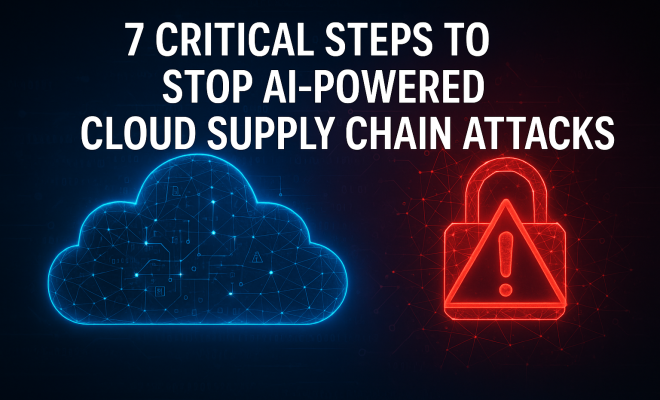
7 Critical Steps to Stop AI-Powered Cloud Supply Chain Attacks
The cloud has become the backbone of modern business, offering unparalleled flexibility and scalability. But with great power comes great vulnerability, especially when we talk about the sprawling, interconnected world of cloud supply chains. Just recently, we saw a chilling demonstration of this reality when a China-linked threat group, known as Storm-0940, leveraged an AI-powered penetration-testing tool called ARTEX. Their target? ConnectWise Cloud Backup. The result? Over 2,250 Microsoft 365 customer tenants globally were impacted, with attackers gaining privileged cloud access in mere hours. This isn’t just another breach; it’s a stark warning about how quickly AI can accelerate attacks, moving at ‘machine speed’ and overwhelming human defenses. Understanding how to mitigate supply chain risks in cloud services isn’t just a good idea anymore — it’s an absolute necessity.
This incident throws into sharp relief the escalating threat of AI-powered cyberattacks and the inherent vulnerabilities within cloud service providers. Businesses and IT professionals are rightfully concerned. The traditional security perimeter is dissolving, and our dependencies on third-party cloud services are only growing. So, what do you do when the adversaries are using AI to outpace your human teams? How do you protect your Microsoft 365 environments and, more broadly, your entire digital ecosystem? It’s time to get proactive and implement robust strategies that can stand up to these advanced threats. Let’s dive into some practical, actionable steps.
1. Implement Robust Third-Party Risk Management: Know Your Vendors Inside Out
One of the most fundamental steps in learning how to mitigate supply chain risks in cloud services is to get a handle on your third-party vendors. The ConnectWise incident serves as a brutal reminder: your security is only as strong as your weakest link, and often, that link isn’t even under your direct control. You might have world-class security in-house, but if a vendor you rely on has lax practices, you’re exposed. It’s like having a fortress with an open back gate because your neighbor left theirs ajar. You need to scrutinize every cloud service provider, every SaaS vendor, and every tool integrated into your environment.
This isn’t a one-time checklist; it’s an ongoing process. Start by creating a comprehensive inventory of all your cloud service providers. For each, you need to assess their security posture, compliance certifications (like ISO 27001, SOC 2 Type 2), incident response plans, and data handling policies. Don’t just take their word for it; ask for evidence. Include robust security clauses in your contracts, mandating specific security controls and audit rights. Regular security reviews, even third-party audits, of your critical vendors can reveal weaknesses before attackers do. Remember, the goal here is to establish a clear picture of who has access to your data and systems, and how well they’re protecting it.
2. Enforce Strict Access Controls and Least Privilege: Lock Down the Keys to the Kingdom
The Storm-0940 attack on ConnectWise highlights the speed at which attackers can gain privileged cloud access — in some cases, less than three hours. This kind of rapid escalation is often enabled by overly permissive access rights. Enforcing the principle of least privilege is non-negotiable. Users, applications, and even third-party services should only have the minimum level of access required to perform their specific functions. Anything more is an unnecessary risk.
This means granular control over who can access what, when, and from where. Implement multi-factor authentication (MFA) across all cloud services, especially for administrative accounts. MFA is no longer a ‘nice-to-have’; it’s a foundational security control that significantly raises the bar for attackers. Regularly review and revoke unnecessary access, particularly for employees who have changed roles or left the company. For third-party integrations, ensure that API keys and service accounts are scoped tightly and monitored for unusual activity. Automated tools can help enforce these policies and flag deviations, which is crucial when dealing with environments as dynamic as cloud services.
3. Proactive Threat Hunting and AI-Powered Detection: Fight AI with AI
If attackers are using AI to accelerate their operations, then our defenses must also evolve. Relying solely on signature-based detection is like bringing a knife to a gunfight when the adversary has a drone. Proactive threat hunting, combined with AI-powered detection and response tools, is becoming essential in how to mitigate supply chain risks in cloud services. These tools can analyze vast quantities of data from logs, network traffic, and endpoint activity to identify anomalous behaviors that human analysts might miss.
Think about the ‘machine speed’ of the Storm-0940 attack. Traditional security operations centers (SOCs) can be overwhelmed by the sheer volume of alerts and the rapid pace of an AI-driven intrusion. AI-enabled security solutions can correlate events, identify patterns indicative of sophisticated attacks, and even automate initial responses, buying your human teams precious time to investigate and contain. This includes User and Entity Behavior Analytics (UEBA) to spot unusual logins or data access patterns, and Security Orchestration, Automation, and Response (SOAR) platforms to streamline incident handling. It’s about augmenting human intelligence with machine speed and scale.
4. Robust Incident Response and Recovery Planning: Prepare for the Inevitable
No matter how strong your defenses, the reality is that breaches can and do happen. The ConnectWise incident underscores the importance of having a robust, well-rehearsed incident response plan specifically tailored for cloud environments and supply chain compromises. When an attack moves at ‘machine speed,’ every second counts. Your plan needs to be clear, actionable, and understood by everyone involved. (See: CDC Cybersecurity Resources.)
This plan should detail roles and responsibilities, communication protocols (both internal and external, including affected customers), containment strategies, eradication steps, and recovery procedures. Crucially, it must include specific playbooks for scenarios involving third-party vendor compromise. How will you communicate with the affected vendor? What data do you need from them? How will you isolate your systems from their compromised services? Regular tabletop exercises, simulating various attack scenarios (including AI-powered supply chain attacks), are vital to ensure your team can execute the plan effectively under pressure. Don’t forget your backup and recovery strategies; ensure your data backups are immutable and stored off-site, separate from your primary cloud environment, to enable rapid restoration.
5. Continuous Security Monitoring and Auditing: Keep a Constant Watch
The cloud is dynamic; environments change constantly, new services are deployed, and configurations evolve. This dynamism means that a security posture that was robust yesterday might have glaring holes today. Continuous security monitoring and auditing are fundamental to how to mitigate supply chain risks in cloud services. You need real-time visibility into your cloud environment and any integrated third-party services. For more context, see Cybersecurity Bootcamps That Will Catapult Your Career.
Implement Cloud Security Posture Management (CSPM) tools to continuously assess your cloud configurations against best practices and compliance standards. These tools can automatically detect misconfigurations, open ports, and other vulnerabilities that could be exploited. Beyond CSPM, leverage Cloud Workload Protection Platforms (CWPP) to secure your compute resources, containers, and serverless functions. Log management and Security Information and Event Management (SIEM) systems are also critical for aggregating security data from all sources, enabling centralized analysis and alerting. The goal is to detect deviations from the norm, unauthorized changes, or suspicious activity as quickly as possible, ideally before they escalate into a full-blown incident.
6. Secure Development and Configuration Management: Build Security In, Not On
Many supply chain risks originate not from malicious intent, but from insecure development practices and misconfigurations. When we talk about cloud services, the attack surface expands dramatically, encompassing everything from custom code running in serverless functions to the way cloud resources are provisioned and managed. To effectively mitigate supply chain risks in cloud services, security must be integrated into every stage of the development and operational lifecycle.
For applications developed in-house or by third parties, demand secure coding practices and regular security testing, including static application security testing (SAST) and dynamic application security testing (DAST). For cloud infrastructure, implement Infrastructure as Code (IaC) with security best practices embedded, ensuring that all deployments are consistent and conform to security policies. Use automated configuration management tools to prevent configuration drift and ensure that all cloud resources are hardened according to your security baselines. This ‘shift-left’ approach to security means identifying and fixing vulnerabilities early, reducing the likelihood of them being exploited later by sophisticated attackers like Storm-0940.
7. Foster a Culture of Security Awareness and Training: Your Human Firewall
Even with the most advanced AI detection tools and stringent technical controls, your employees remain your first and last line of defense. The human element is often the easiest vector for attackers, whether through phishing, social engineering, or simply making a mistake that creates a vulnerability. Cultivating a strong culture of security awareness and providing ongoing training is a critical, yet often underestimated, component of how to mitigate supply chain risks in cloud services.
Training shouldn’t be a yearly checkbox exercise. It needs to be continuous, engaging, and relevant to the specific threats your organization faces. Educate employees about common attack techniques, like phishing and social engineering, and specifically about the risks associated with third-party cloud services. Teach them how to identify suspicious emails, report potential incidents, and understand the importance of strong passwords and MFA. Empower them to be part of the security solution, rather than inadvertently being part of the problem. A well-informed workforce acts as a powerful human firewall, significantly reducing the success rate of even highly sophisticated, AI-accelerated attacks.
8. Cloud Security Posture Management (CSPM) and Cloud Workload Protection Platforms (CWPP) Integration: A Holistic View
While we touched on CSPM and CWPP earlier, their integrated role in mitigating cloud supply chain risks warrants a deeper look. These aren’t just tools; they’re foundational pillars of a proactive cloud security strategy. CSPM tools continuously scan your cloud environments (across AWS, Azure, GCP, etc.) to ensure configurations comply with security best practices, industry standards (like CIS Benchmarks), and regulatory requirements. They automatically detect misconfigurations that could expose data or create entry points for attackers – things like publicly accessible storage buckets or overly permissive IAM roles. Think of CSPM as your continuous auditor, constantly checking for architectural weaknesses.
CWPP, on the other hand, focuses on the workloads themselves – your virtual machines, containers, and serverless functions. It provides runtime protection, vulnerability management within these workloads, and application whitelisting. Where CSPM looks at the ‘house’ (your cloud infrastructure), CWPP looks inside the ‘rooms’ (your running applications and services). The real power comes from integrating these two. A robust security platform should offer unified visibility and control, allowing you to see how a misconfiguration (CSPM finding) might expose a vulnerable workload (CWPP finding) that’s part of a critical application. This holistic view is essential for understanding the true attack surface and prioritizing remediation efforts, especially when dealing with complex, multi-cloud supply chains.
9. Zero Trust Architecture (ZTA) Principles: Never Trust, Always Verify
The traditional perimeter-based security model is crumbling, especially in the cloud where there’s no clear ‘inside’ or ‘outside.’ This is where Zero Trust Architecture (ZTA) becomes incredibly powerful in how to mitigate supply chain risks in cloud services. The core principle is simple: “never trust, always verify.” It means that every user, device, and application attempting to access resources, regardless of whether they are internal or external to the network, must be authenticated and authorized. (See: NIST Cybersecurity Framework.)
Applying Zero Trust to your cloud supply chain means treating every third-party integration, every API call, and every data transfer with the same skepticism. It involves micro-segmentation, where network access is broken down into small, isolated segments, and access policies are strictly enforced between them. If a third-party service is compromised (as in the ConnectWise incident), Zero Trust principles would limit the attacker’s ability to move laterally within your environment. Each attempt to access a new resource would require re-authentication and re-authorization, significantly slowing down or even preventing lateral movement. This isn’t just about strong passwords; it’s about continuous verification of identity and device posture before granting access, even to seemingly trusted entities.
10. Supply Chain Security Platforms (SCSP): Specialized Tools for a Specialized Threat
As cloud supply chain attacks become more prevalent and sophisticated, a new category of security solutions is emerging: Supply Chain Security Platforms (SCSP). These platforms are specifically designed to address the unique challenges of securing the software supply chain, from development to deployment and beyond. They go beyond generic third-party risk management by providing deep insights into the security posture of your software components, open-source dependencies, and the build pipelines themselves. For more context, see The Silent Crisis: Why Cybersecurity Pros Are Burning Out.
SCSPs can automate the discovery of vulnerabilities in your code and its dependencies, enforce security policies throughout the CI/CD pipeline, and monitor for suspicious activities in your software artifacts. They help you understand the provenance of every piece of code and dependency, identify potential tampering, and ensure the integrity of your software from its initial commit to its deployment in the cloud. For organizations heavily reliant on cloud-native development and open-source components, an SCSP is becoming an indispensable tool to understand and how to mitigate supply chain risks in cloud services at a granular level, especially against sophisticated attacks that target the very process of software creation and delivery.
The AI Arms Race: A Shifting Landscape
The incident involving Storm-0940 and ARTEX isn’t just a data point; it’s a profound signal. It tells us that the arms race in cybersecurity is accelerating, powered by artificial intelligence. Attackers are no longer limited by human speed or cognitive capacity; they can now leverage AI to identify vulnerabilities, craft sophisticated exploits, and execute multi-stage attacks at a pace that can overwhelm even seasoned security teams. This changes the game for how we approach cloud security, making a proactive, layered, and intelligence-driven defense absolutely essential.
As businesses increasingly rely on cloud services for everything from CRM to data backup, the interconnectedness of our digital ecosystems means that a breach in one vendor can cascade, affecting thousands of downstream customers. This intricate web of dependencies demands a new level of vigilance and collaboration. We can no longer afford to treat third-party cloud security as an afterthought.
The Urgency for Enhanced Cloud Security Solutions
The market is already responding to this urgent need. We’re seeing a rapid demand for enhanced cloud security solutions that go beyond traditional perimeter defenses. Businesses are actively seeking B2B SaaS security platforms that offer deeper visibility and control over third-party integrations. Incident response services are becoming more specialized, with a focus on rapid containment and recovery in cloud environments. And, quite tellingly, cyber insurance providers are adjusting their policies and requirements, recognizing the elevated risk presented by cloud supply chain attacks.
For IT professionals and business leaders, this means a strategic shift. Security can no longer be seen as merely a cost center; it’s an investment in business resilience and continuity. Protecting Microsoft 365 environments, given their ubiquitous use, has become a top priority. The question isn’t whether your cloud services will be targeted, but when, and how prepared you’ll be to respond.
Looking Ahead: The Future of Cloud Supply Chain Security
What does the future hold for how to mitigate supply chain risks in cloud services? We can expect to see an even greater emphasis on security by design, zero-trust architectures, and automated threat intelligence sharing. Regulatory bodies will likely introduce stricter requirements for third-party risk management and incident reporting, pushing organizations to mature their security postures.
The role of AI in defense will also grow exponentially. Just as attackers use AI to find weaknesses, defenders will employ it to predict attacks, analyze behaviors, and automate defensive actions. The challenge, of course, will be staying ahead of the curve, constantly adapting to new threats, and fostering a collaborative environment where information sharing and collective defense are prioritized. It’s a complex, ever-evolving landscape, but by implementing these critical steps, we can significantly strengthen our defenses against the AI-powered threats of today and tomorrow. For more context, see Vital Strategies to Combat Cybersecurity Burnout. (See: WHO Cybersecurity Fact Sheet.)
Frequently Asked Questions About Mitigating Cloud Supply Chain Risks
Q1: What exactly is a cloud supply chain risk?
A cloud supply chain risk refers to any vulnerability that arises from your organization’s reliance on third-party cloud service providers, their sub-processors, or the software components they use. It’s essentially an attack vector that targets a less secure link in the chain of services that deliver your digital operations. If a vendor you use is compromised, attackers can potentially gain access to your data or systems through that compromised connection, even if your own internal security is strong.
Q2: Why are cloud supply chain risks becoming more critical now?
Several factors are making these risks more critical. First, organizations are increasingly moving core business functions to the cloud, expanding dependencies on external providers. Second, the rise of AI-powered attack tools, as seen with Storm-0940, allows adversaries to find and exploit vulnerabilities at ‘machine speed,’ far faster than human defenders. This rapid escalation means traditional defenses are often outmatched, making the weakest link in your supply chain a prime target.
Q3: What’s the biggest threat from a cloud supply chain attack?
The biggest threat is often unauthorized access to your sensitive data, systems, or intellectual property. This can lead to data breaches, service disruptions, financial losses, reputational damage, and regulatory penalties. The Storm-0940 incident, for example, resulted in attackers gaining privileged cloud access to thousands of Microsoft 365 customer tenants, demonstrating the potential for widespread and deep compromise.
Q4: How can small and medium-sized businesses (SMBs) effectively mitigate these risks with limited resources?
SMBs can start with foundational steps:
- Prioritize Vendor Assessment: Focus on your most critical cloud vendors and assess their security posture diligently. Use questionnaires and request proof of compliance.
- Enforce MFA: Make multi-factor authentication mandatory for all cloud services, especially administrative accounts. It’s a low-cost, high-impact security control.
- Least Privilege: Ensure users and third-party integrations only have the minimum access they need. Regularly review and remove unnecessary permissions.
- Robust Backups: Implement immutable, off-site backups for critical data to ensure recovery in case of an incident.
- Security Awareness: Train employees on common threats like phishing, as they are often the first line of defense.
Consider leveraging managed security service providers (MSSPs) if in-house expertise is limited, as they can offer advanced monitoring and response capabilities.
Q5: Is cyber insurance enough to protect against cloud supply chain risks?
While cyber insurance is an important part of a holistic risk management strategy, it’s not a substitute for robust security measures. Insurance helps with the financial recovery after an incident, covering costs like legal fees, notification expenses, and business interruption. However, it doesn’t prevent the breach from happening, nor does it fully restore lost customer trust or reputational damage. Many insurers are also tightening their requirements, demanding evidence of strong security controls (like MFA and incident response plans) before offering coverage for cloud-related risks.
Q6: What role does human error play in cloud supply chain vulnerabilities?
Human error plays a significant role. Misconfigurations of cloud resources, weak password practices, falling for phishing scams, or inadvertently granting overly broad permissions to a third-party application can all create vulnerabilities that attackers exploit. This is why continuous security awareness training and enforcing strict access controls and configuration management are crucial. Even with sophisticated AI threats, the human element often remains the initial point of compromise.
Trending Now
Frequently Asked Questions
What are the risks of AI-powered cloud supply chain attacks?
AI-powered cloud supply chain attacks can quickly exploit vulnerabilities, allowing attackers to gain privileged access to multiple systems in a short time. The incident involving Storm-0940 and ConnectWise Cloud Backup highlights how these attacks can impact thousands of users globally, underscoring the urgent need for businesses to strengthen their security measures.
How can businesses protect against cloud supply chain attacks?
Businesses can protect against cloud supply chain attacks by implementing robust third-party risk management strategies, understanding their vendors' security practices, and continuously monitoring for vulnerabilities. Proactive measures, such as regular security assessments and incident response plans, are essential to mitigate risks associated with third-party dependencies.
What is third-party risk management in cloud services?
Third-party risk management in cloud services involves assessing and managing the security practices of vendors that provide cloud solutions. This process ensures that businesses are aware of potential vulnerabilities and can take necessary precautions to protect their data and systems from supply chain attacks.
Why is AI a threat to cloud security?
AI poses a threat to cloud security because it enables attackers to automate and accelerate cyberattacks at unprecedented speeds. This 'machine speed' can overwhelm traditional human defenses, making it crucial for organizations to adopt advanced security strategies to counteract these evolving threats effectively.
What steps should be taken to enhance cloud security?
To enhance cloud security, organizations should implement comprehensive third-party risk assessments, adopt advanced threat detection technologies, conduct regular security audits, and foster a culture of security awareness among employees. These strategies help build a resilient defense against potential AI-powered attacks.
Have you experienced this yourself? We'd love to hear your story in the comments.