The Narrative Complexity of Cyberpunk 2077
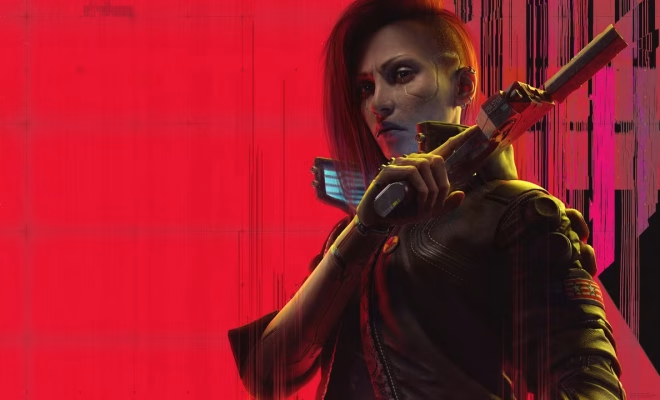
Cyberpunk 2077’s narrative stands as one of its most ambitious and compelling aspects, weaving a complex tale of identity, corporatism, and the human condition in a hyper-technological future. At its core, the game tells the story of V, a mercenary whose life becomes inextricably linked with that of Johnny Silverhand, a digital ghost of a long-dead rockerboy terrorist.
The game’s main storyline is a masterclass in cyberpunk storytelling, touching on classic themes of the genre while adding its own unique twists. The central conflict revolves around the Relic, a piece of technology that blurs the lines between life and death, identity and data. This narrative device serves as a vehicle to explore deeper themes of consciousness, mortality, and the nature of the self in a world where the human mind can be digitized.
What sets Cyberpunk 2077’s narrative apart is its branching structure. The game offers multiple paths through its main story, with player choices significantly impacting the course of events and the ultimate fate of V. This non-linear approach extends to the game’s numerous side quests, many of which are as richly developed as the main storyline.
The character of Johnny Silverhand, brought to life by Keanu Reeves, adds another layer of complexity to the narrative. As a digital construct slowly overwriting V’s consciousness, Johnny serves as both antagonist and ally. His presence allows the game to explore themes of legacy, rebellion against corporate power, and the cost of idealism in a world dominated by megacorporations.
One of the game’s strongest narrative elements is its exploration of transhumanism. Through V’s journey and interactions with various characters, the game delves into questions of what it means to be human in a world where the body can be extensively modified and the mind can be digitized. This theme is not just explored through dialogue and plot points, but is integrated into the game’s mechanics through the cybernetic enhancement system.
The world-building in Cyberpunk 2077 is exceptionally deep, with layers of lore that players can uncover through exploration, side quests, and data shards scattered throughout Night City. This environmental storytelling enriches the main narrative, providing context and depth to the game’s setting and characters.
Character development is another strong suit of the game’s narrative. V’s journey is one of self-discovery and survival, but the supporting cast is equally well-developed. Characters like Judy Alvarez, Panam Palmer, and River Ward have their own complex storylines that intersect with V’s in meaningful ways. These relationships feel organic and can significantly impact the game’s outcome, adding emotional weight to the player’s decisions.
The game’s side quests deserve special mention for their narrative quality. Unlike many open-world games where side content feels disconnected from the main story, Cyberpunk 2077’s side quests often feel essential to fully understanding the world and its characters. Many of these quests deal with mature themes and moral ambiguities, forcing players to make difficult decisions that don’t have clear right or wrong answers.
Cyberpunk 2077 also excels in its portrayal of corporate power and its impact on society. The game doesn’t shy away from depicting the often brutal realities of a world where corporations have more power than governments. Through various storylines, players witness the human cost of corporate warfare and the struggle of individuals trying to carve out a life in the shadows of monolithic entities.
The game’s multiple endings, each offering a different perspective on V’s journey and the nature of Night City, further underscore the narrative complexity. These endings don’t just wrap up the plot; they invite players to reflect on the themes and questions posed throughout the game.
Critics and players alike have praised the depth and maturity of Cyberpunk 2077’s storytelling. The game tackles complex themes with nuance, avoiding simplistic moral judgments in favor of presenting a world painted in shades of gray. This approach, combined with the game’s branching narrative structure, creates a story that feels both personal and epic in scope.
In conclusion, the narrative of Cyberpunk 2077 stands as one of its strongest elements. By combining a compelling central story with rich world-building, complex characters, and meaningful player choice, the game creates a narrative experience that is both immersive and thought-provoking. It pushes the boundaries of storytelling in video games, offering a mature, nuanced take on classic cyberpunk themes while crafting a unique identity of its own.