The Tech Edvocate

Top Menu

  • Advertisement
  • Apps
  • Home Page
  • Home Page Five (No Sidebar)
  • Home Page Four
  • Home Page Three
  • Home Page Two
  • Home Tech2
  • Icons [No Sidebar]
  • Left Sidbear Page
  • Lynch Educational Consulting
  • My Account
  • My Speaking Page
  • Newsletter Sign Up Confirmation
  • Newsletter Unsubscription
  • Our Brands
  • Page Example
  • Privacy Policy
  • Protected Content
  • Register
  • Request a Product Review
  • Shop
  • Shortcodes Examples
  • Signup
  • Start Here
    • Governance
    • Careers
    • Contact Us
  • Terms and Conditions
  • The Edvocate
  • The Tech Edvocate Product Guide
  • Topics
  • Write For Us
  • Advertise

Main Menu

  • Start Here
    • Our Brands
    • Governance
      • Lynch Educational Consulting, LLC.
      • Dr. Lynch’s Personal Website
      • Careers
    • Write For Us
    • The Tech Edvocate Product Guide
    • Contact Us
    • Books
    • Edupedia
    • Post a Job
    • The Edvocate Podcast
    • Terms and Conditions
    • Privacy Policy
  • Topics
    • Assistive Technology
    • Child Development Tech
    • Early Childhood & K-12 EdTech
    • EdTech Futures
    • EdTech News
    • EdTech Policy & Reform
    • EdTech Startups & Businesses
    • Higher Education EdTech
    • Online Learning & eLearning
    • Parent & Family Tech
    • Personalized Learning
    • Product Reviews
  • Advertise
  • Tech Edvocate Awards
  • The Edvocate
  • Pedagogue
  • School Ratings

logo

The Tech Edvocate

  • Start Here
    • Our Brands
    • Governance
      • Lynch Educational Consulting, LLC.
      • Dr. Lynch’s Personal Website
        • My Speaking Page
      • Careers
    • Write For Us
    • The Tech Edvocate Product Guide
    • Contact Us
    • Books
    • Edupedia
    • Post a Job
    • The Edvocate Podcast
    • Terms and Conditions
    • Privacy Policy
  • Topics
    • Assistive Technology
    • Child Development Tech
    • Early Childhood & K-12 EdTech
    • EdTech Futures
    • EdTech News
    • EdTech Policy & Reform
    • EdTech Startups & Businesses
    • Higher Education EdTech
    • Online Learning & eLearning
    • Parent & Family Tech
    • Personalized Learning
    • Product Reviews
  • Advertise
  • Tech Edvocate Awards
  • The Edvocate
  • Pedagogue
  • School Ratings
  • This One Flaw Just Blew Up the Guardian Smart Baby Monitor

  • The AI Race: Why Doomsday Warnings Can’t Stop the Train

  • XBOX: Activision takes over Halo, Obsidian joins Bethesda, and Ninja Theory is going

  • White House Arcade: 2nd Japan Protest, Nintendo Feud [2026]

  • One-Fifth of White-Collar Jobs Could Vanish by 2030, New Report Claims

  • Is a ‘Pacing’ AI Slowdown Really Possible? This Week’s AI News Roundup Reveals the Truth

  • California’s Bold Move: AB 1709 Social Media Restrictions Could Banish Teen Addiction

  • This One AI in Education Concern Is Completely Missing the Point

  • ShinyHunters Claims FBI Data Breach: Hacker Group Says It Stole Records of All Employees and Applicants

  • One Hacker, 100 Companies: The AI Cybersecurity Attack That Changed Everything

How To
Home›How To›4 Ways to Wire GFCI

4 Ways to Wire GFCI

By Matthew Lynch
March 23, 2024
0
Spread the love

Introduction

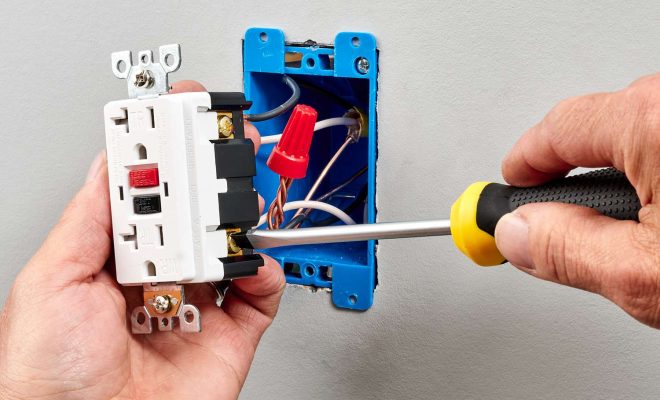
Ground fault circuit interrupters (GFCI) are essential safety devices in modern electrical systems. They help to protect users from electrical shocks by detecting ground faults and promptly breaking the circuit. In this article, we will discuss four ways to wire GFCI in your home or office.

1. Wiring a GFCI Receptacle

A GFCI receptacle is a common type of GFCI device that replaces a standard electrical outlet. Here’s how to wire it:

a. Turn off the power supply and verify using a voltage tester.

b. Remove the existing outlet from the wall.

c. Identify the line wires (hot and neutral) coming from the main electrical panel.

d. Connect the black (hot) line wire to the brass terminal marked “line” on the GFCI receptacle.

e. Connect the white (neutral) line wire, from the main panel, to the silver terminal marked “line” on the GFCI receptacle.

f. Attach both ground wires to the green terminal on the receptacle.

g. Carefully push back and secure the outlet into place.

h. Restore power and test using a GFCI tester.

2. Wiring a GFCI Breaker

A GFCI circuit breaker protects an entire circuit from ground fault hazards at your main electrical panel:

a. Turn off power supply to your entire house and open your breaker box.

b. Remove an existing non-GCFI breaker that you want to replace, by pulling it out from its slot carefully.

c. Insert your new GFCI breaker into an empty slot in your electrical panel.

d. Connect the black (hot) wire from the protected circuit to the brass terminal on the breaker.

e. Connect the white (neutral) pigtail wire provided with your breaker to the neutral bus bar inside the panel.

f. Connect the remaining white (neutral) wire from the protected circuit to the silver terminal on the breaker.

g. Reinstate power and test the operation of the GFCI breaker.

3. Wiring GFCI Outlets in Series

GFCI outlets wired in series allow one GFCI receptacle to provide protection for multiple downstream receptacles:

a. Follow steps a-f as outlined in wiring a GFCI receptacle.

b. Identify load wires (hot and neutral) going to downstream outlets that require GFCI protection.

c. Connect the black (hot) load wire to the brass terminal marked “load” on the GFCI receptacle.

d. Connect the white (neutral) load wire to the silver terminal marked “load” on the GFCI receptacle.

e. Re-secure and test each outlet individually with a GFCI tester.

4. Wiring a GFCI Switch Combo

A GFCI switch combo replaces one switched outlet with a combined GFCI receptacle/switch unit while protecting other downstream outlets:

a. Turn off power supply to the switch, remove it, and identify line, load, and switch wires.

b. Connect all ground wires to the green terminal on the combo unit.

c. Connect both line-side hot and neutral wires to brass and silver terminals marked “line.”

d. Connect load-side hot and neutral wires to brass and silver terminals marked “load.”

e. Attach remaining switch leg wire to brass terminal marked “switch”.

Conclusion

Wiring a GFCI ensures that your electrical system is safe from potential hazards caused by ground faults. Understanding how to properly wire them is crucial for any homeowner or professional electrician alike.


Previous Article

How to Install Windows 8.1

Next Article

How to Install Adobe Fonts: 6 Steps

Matthew Lynch

Related articles More from author

  • How To

    6 Ways to Prepare a Speech

    November 13, 2023
    By Matthew Lynch
  • How To

    How to Make a Mac Read to You: 7 Steps

    April 4, 2024
    By Matthew Lynch
  • How To

    How to Be a Great Auntie: 14 Steps

    March 5, 2024
    By Matthew Lynch
  • How To

    4 Ways to Cook New York Strip Steak

    October 31, 2023
    By Matthew Lynch
  • How To

    How to Get Visitation Rights: 15 Steps

    April 3, 2024
    By Matthew Lynch
  • How To

    How to Choose Headphones: 8 Steps

    March 7, 2024
    By Matthew Lynch

Search

Login & Registration

  • Log in
  • Entries feed
  • Comments feed
  • WordPress.org

Newsletter

Signup for The Tech Edvocate Newsletter and have the latest in EdTech news and opinion delivered to your email address!

About Us

Since technology is not going anywhere and does more good than harm, adapting is the best course of action. That is where The Tech Edvocate comes in. We plan to cover the PreK-12 and Higher Education EdTech sectors and provide our readers with the latest news and opinion on the subject. From time to time, I will invite other voices to weigh in on important issues in EdTech. We hope to provide a well-rounded, multi-faceted look at the past, present, the future of EdTech in the US and internationally.

We started this journey back in June 2016, and we plan to continue it for many more years to come. I hope that you will join us in this discussion of the past, present and future of EdTech and lend your own insight to the issues that are discussed.

Newsletter

Signup for The Tech Edvocate Newsletter and have the latest in EdTech news and opinion delivered to your email address!

Contact Us

The Tech Edvocate
910 Goddin Street
Richmond, VA 23231
(601) 630-5238
[email protected]

Copyright © 2026 Matthew Lynch. All rights reserved.