The Tech Edvocate

Top Menu

  • Advertisement
  • Apps
  • Home Page
  • Home Page Five (No Sidebar)
  • Home Page Four
  • Home Page Three
  • Home Page Two
  • Home Tech2
  • Icons [No Sidebar]
  • Left Sidbear Page
  • Lynch Educational Consulting
  • My Account
  • My Speaking Page
  • Newsletter Sign Up Confirmation
  • Newsletter Unsubscription
  • Our Brands
  • Page Example
  • Privacy Policy
  • Protected Content
  • Register
  • Request a Product Review
  • Shop
  • Shortcodes Examples
  • Signup
  • Start Here
    • Governance
    • Careers
    • Contact Us
  • Terms and Conditions
  • The Edvocate
  • The Tech Edvocate Product Guide
  • Topics
  • Write For Us
  • Advertise

Main Menu

  • Start Here
    • Our Brands
    • Governance
      • Lynch Educational Consulting, LLC.
      • Dr. Lynch’s Personal Website
      • Careers
    • Write For Us
    • The Tech Edvocate Product Guide
    • Contact Us
    • Books
    • Edupedia
    • Post a Job
    • The Edvocate Podcast
    • Terms and Conditions
    • Privacy Policy
  • Topics
    • Assistive Technology
    • Child Development Tech
    • Early Childhood & K-12 EdTech
    • EdTech Futures
    • EdTech News
    • EdTech Policy & Reform
    • EdTech Startups & Businesses
    • Higher Education EdTech
    • Online Learning & eLearning
    • Parent & Family Tech
    • Personalized Learning
    • Product Reviews
  • Advertise
  • Tech Edvocate Awards
  • The Edvocate
  • Pedagogue
  • School Ratings

logo

The Tech Edvocate

  • Start Here
    • Our Brands
    • Governance
      • Lynch Educational Consulting, LLC.
      • Dr. Lynch’s Personal Website
        • My Speaking Page
      • Careers
    • Write For Us
    • The Tech Edvocate Product Guide
    • Contact Us
    • Books
    • Edupedia
    • Post a Job
    • The Edvocate Podcast
    • Terms and Conditions
    • Privacy Policy
  • Topics
    • Assistive Technology
    • Child Development Tech
    • Early Childhood & K-12 EdTech
    • EdTech Futures
    • EdTech News
    • EdTech Policy & Reform
    • EdTech Startups & Businesses
    • Higher Education EdTech
    • Online Learning & eLearning
    • Parent & Family Tech
    • Personalized Learning
    • Product Reviews
  • Advertise
  • Tech Edvocate Awards
  • The Edvocate
  • Pedagogue
  • School Ratings
  • Urgent Warning: How AI is Fueling Rampant Skincare Scams Right Now

  • Urgent: This Skincare Trend Is Exploiting Children — And It’s Spreading Fast

  • Seattle Times sues Microsoft and OpenAI, alleging they trained their AI on its journalism

  • Astonishing: Anthropic Axed $6 Billion Deal for Decart — Why?

  • Sega cancelled its “risky” Super Game project as it “would have to grow enormously to match the scale of the service” | GamesIndustry.biz

  • Devastating: Don’t Nod’s €8M Cash Crisis Threatens Studio Future

  • OpenAI Accused of Shocking Attempt to Hijack Euler Proof — The Truth Revealed

  • Meta Child Sexual Abuse Ads: A Disturbing Investigation Unveils Shocking Truths

  • Unveiling the Quiet Crisis: Why Two Mega-Districts Just Banned AI in Education

  • Unveiling the Controversial New Texas Curriculum: A Battle Over History and Identity

How To
Home›How To›4 Ways to Calculate Fractions

4 Ways to Calculate Fractions

By Matthew Lynch
January 25, 2024
0
Spread the love

Fractions are a fundamental concept in mathematics, allowing us to express and manipulate values that are not whole numbers. Mastering the art of calculating fractions is essential for solving a myriad of problems, from everyday tasks like cooking and measuring to complex scientific equations. In this article, we will explore four techniques to calculate fractions – addition and subtraction, multiplication, division, and simplification.

1. Adding and Subtracting Fractions

To add or subtract fractions, you need a common denominator. The common denominator is the smallest multiple that both denominators can divide into evenly.

Here’s how to do it:

a) Find the least common multiple (LCM) of the two denominators.

b) Transform each fraction into an equivalent fraction with the LCM as their new denominator.

c) Add or subtract the numerators while keeping the common denominator the same.

d) Simplify the fraction if possible.

For example, 2/3 + 1/6:

a) LCM of 3 and 6 is 6.

b) Equivalent fractions: 4/6 + 1/6

c) Addition: numerator (4+1), and keeping the common denominator: 5/6

d) There’s no simplification possible.

2. Multiplying Fractions

Multiplying fractions is much simpler compared to addition or subtraction:

a) Multiply the numerators together.

b) Multiply the denominators together.

c) Simplify the fraction if possible.

For example, 1/2 * 2/3:

a) Multiply numerators: 1*2 = 2

b) Multiply denominators: 2*3 = 6

c) Resulting fraction: 2/6 (simplifies to 1/3)

3. Dividing Fractions

When dividing fractions, follow these steps:

a) Invert the second fraction (the divisor).

b) Multiply the first fraction (dividend) by the inverted divisor.

c) Simplify the fraction if possible.

For example, 3/4 divided by 2/5:

a) Invert the second fraction: 5/2

b) Multiply fractions: 3/4 * 5/2

c) Resulting fraction: 15/8 (already simplified)

4. Simplifying Fractions

Simplifying fractions reduces them to their lowest terms:

a) Find the greatest common divisor (GCD) of both the numerator and denominator.

b) Divide the numerator and the denominator by their GCD.

For example, simplifying 6/8:

a) GCD of 6 and 8 is 2.

b) Divide both numerator and denominator by 2: 6÷2 / 8÷2 = 3/4

In conclusion, understanding and mastering these four methods for calculating fractions are essential steps in developing one’s mathematical skills. With constant practice, solving problems involving fractions becomes second nature, benefitting you in various academic, professional, and everyday life scenarios.

Previous Article

4 Ways to Write Acknowledgements

Next Article

3 Ways to Be Proud to Be ...

Matthew Lynch

Related articles More from author

  • How To

    4 Ways to Upgrade Your PSP Firmware

    April 8, 2024
    By Matthew Lynch
  • How To

    How to Get Along with New Step Siblings

    March 6, 2024
    By Matthew Lynch
  • How To

    Simple Ways to Go to Siargao Island

    February 28, 2024
    By Matthew Lynch
  • How To

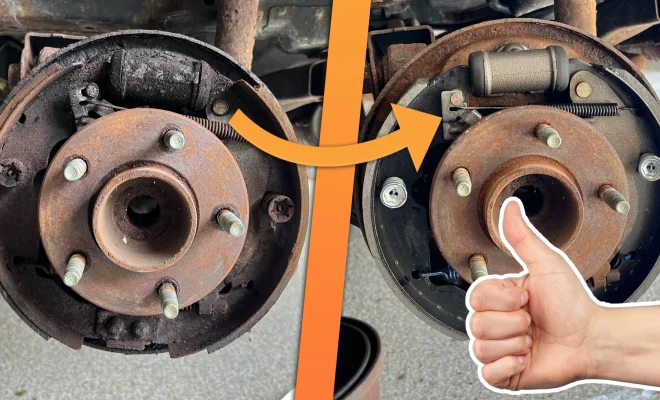
    How to Replace Drum Brakes: 12 Steps

    March 24, 2024
    By Matthew Lynch
  • How To

    3 Ways to Use Essential Oils to Prevent an Itchy Scalp

    November 15, 2023
    By Matthew Lynch
  • How To

    How to Detect Flaky People: 15 Steps

    November 11, 2023
    By Matthew Lynch

Search

Login & Registration

  • Log in
  • Entries feed
  • Comments feed
  • WordPress.org

Newsletter

Signup for The Tech Edvocate Newsletter and have the latest in EdTech news and opinion delivered to your email address!

About Us

Since technology is not going anywhere and does more good than harm, adapting is the best course of action. That is where The Tech Edvocate comes in. We plan to cover the PreK-12 and Higher Education EdTech sectors and provide our readers with the latest news and opinion on the subject. From time to time, I will invite other voices to weigh in on important issues in EdTech. We hope to provide a well-rounded, multi-faceted look at the past, present, the future of EdTech in the US and internationally.

We started this journey back in June 2016, and we plan to continue it for many more years to come. I hope that you will join us in this discussion of the past, present and future of EdTech and lend your own insight to the issues that are discussed.

Newsletter

Signup for The Tech Edvocate Newsletter and have the latest in EdTech news and opinion delivered to your email address!

Contact Us

The Tech Edvocate
910 Goddin Street
Richmond, VA 23231
(601) 630-5238
[email protected]

Copyright © 2026 Matthew Lynch. All rights reserved.