
The Tech Edvocate

Top Menu

  • Advertisement
  • Apps
  • Home Page
  • Home Page Five (No Sidebar)
  • Home Page Four
  • Home Page Three
  • Home Page Two
  • Home Tech2
  • Icons [No Sidebar]
  • Left Sidbear Page
  • Lynch Educational Consulting
  • My Account
  • My Speaking Page
  • Newsletter Sign Up Confirmation
  • Newsletter Unsubscription
  • Our Brands
  • Page Example
  • Privacy Policy
  • Protected Content
  • Register
  • Request a Product Review
  • Shop
  • Shortcodes Examples
  • Signup
  • Start Here
    • Governance
    • Careers
    • Contact Us
  • Terms and Conditions
  • The Edvocate
  • The Tech Edvocate Product Guide
  • Topics
  • Write For Us
  • Advertise

Main Menu

  • Start Here
    • Our Brands
    • Governance
      • Lynch Educational Consulting, LLC.
      • Dr. Lynch’s Personal Website
      • Careers
    • Write For Us
    • The Tech Edvocate Product Guide
    • Contact Us
    • Books
    • Edupedia
    • Post a Job
    • The Edvocate Podcast
    • Terms and Conditions
    • Privacy Policy
  • Topics
    • Assistive Technology
    • Child Development Tech
    • Early Childhood & K-12 EdTech
    • EdTech Futures
    • EdTech News
    • EdTech Policy & Reform
    • EdTech Startups & Businesses
    • Higher Education EdTech
    • Online Learning & eLearning
    • Parent & Family Tech
    • Personalized Learning
    • Product Reviews
  • Advertise
  • Tech Edvocate Awards
  • The Edvocate
  • Pedagogue
  • School Ratings

logo

The Tech Edvocate

  • Start Here
    • Our Brands
    • Governance
      • Lynch Educational Consulting, LLC.
      • Dr. Lynch’s Personal Website
        • My Speaking Page
      • Careers
    • Write For Us
    • The Tech Edvocate Product Guide
    • Contact Us
    • Books
    • Edupedia
    • Post a Job
    • The Edvocate Podcast
    • Terms and Conditions
    • Privacy Policy
  • Topics
    • Assistive Technology
    • Child Development Tech
    • Early Childhood & K-12 EdTech
    • EdTech Futures
    • EdTech News
    • EdTech Policy & Reform
    • EdTech Startups & Businesses
    • Higher Education EdTech
    • Online Learning & eLearning
    • Parent & Family Tech
    • Personalized Learning
    • Product Reviews
  • Advertise
  • Tech Edvocate Awards
  • The Edvocate
  • Pedagogue
  • School Ratings
  • US Battery as a Service Market Shifts Toward Fleet-Based Energy

  • The Startling Truth: Why Americans Distrust AI with Their Health

  • This Crucial Deadline for Banks Is Closer Than You Think

  • Baffling: CrowdStrike’s $500 Million AI Bet Reshapes Cybersecurity

  • This Crucial Autonomous Driving Rule Could Cost You Everything

  • Baffling: Microsoft AI CEO Demands Halt to Conscious AI Development

  • O seară în ritmul tău: atmosfera divertismentului de cazinou pe internet

  • Outrageous: AppLovin Hit With Lawsuit Over AI Claims — What Investors Need to Know

  • 9 Critical Ways AI Investment Fraud Is Quietly Draining Your Bank Account

  • Is the AI Bubble Bursting? OpenAI’s Funding Woes Revealed

Artificial Intelligence
Home›Artificial Intelligence›3 Ways AI Augments the Likelihood of Social Mobility

3 Ways AI Augments the Likelihood of Social Mobility
By Matthew Lynch
March 20, 2019
0
Spread the love

The success of any group of people depends on its level of education.

Education and economic success have long been entwined. Those who improve their ability to think and reason also increase the likelihood of improving their economic situation. Economic success and upward social mobility begin in school.

While getting a high school diploma is critical for initial success, real social mobility and sustainable economic strength are the result of obtaining a postsecondary degree. Incorporating artificial intelligence in instructional programs increases the likelihood of a successful education.

AI is poised to change not only how learners advance their studies, but also how they can position themselves in social networks.

How AI in education changes opportunities for social mobility

Artificial intelligence has opened new doors to the world beyond the classroom by changing how educators deliver instruction as well as when and where that learning takes place.

Just-in-time instruction supports students.

AI in education has the ability to alter the curriculum landscape by providing students with customizable and differentiated lessons.

Personalized learning produces several benefits. Students access learning modules at their own pace, which can be critical for students needing more time to build a learning foundation.

The one-on-one instruction yields twice the growth in learning, with traditional education performing at the 50th percentile in traditional teacher-led classrooms but performing at the 98th percentile with AI-augmented learning. Students get the instructional support they need, when they need it.

Learning is convenient and relevant.

Not all students have the luxury of focusing exclusively on their studies; they work to support themselves and their families. Many postsecondary students seek flexible learning opportunities that fit their schedules. As a result, universities have responded to this need, and enrollment in online university classes has grown by as much as 7.1% in a single year. More than half of the matriculated students in any university have taken at least one online course.

Online courses by themselves are merely extensions of the classroom. However, when learning management systems incorporate AI features such as data mining and chatbots, learning becomes more personal and relevant. AI-assisted programs in online courses offer a richer learning experience because of their ability to interpret, analyze and respond to learner responses.

AI increases socialization opportunities for all students.

If you’ve asked Siri or Alexa for help, you’ve used artificial intelligence. Although the results are sometimes humorous, AI creates a more seamless user experience.

Imagine doing the same thing in education. Artificial intelligence can curate, synchronize, and evaluate learner progress. AI also encourages more socialization on the part of the students, as they interact with their teacher, peers, and even subject matter experts from around the world. AI broadens the educational experience.

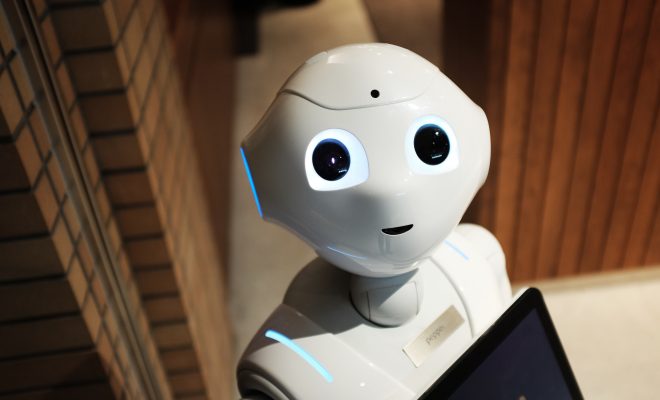
More specifically, AI in education can be particularly useful for students diagnosed with autism. Communication and socialization can be difficult for autistic learners. Robots like Milo, which are designed with AI can teach autistic students when and how to use emotions, display empathy, and act with social appropriateness.

The AI impact on social mobility

By personalizing learning, making it relevant, and increasing human socialization experiences, AI in education can augment the likelihood of social mobility for all students, regarding of background, socio-economic status, or condition.


Previous Article

What We Can Learn from China About ...

Next Article

5 K-12 Guidelines for Artificial Intelligence: What ...

Matthew Lynch

Related articles More from author

  • Artificial Intelligence

    The Machine Learning-Driven Future Of Learning

    February 2, 2023
    By Matthew Lynch
  • Artificial Intelligence

    Take Your AI Know-How to the Next Level: Here’s What You Need to Know About Prompt Engineering

    January 31, 2024
    By Matthew Lynch
  • Artificial Intelligence

    LS+ Concept adds AI autonomy, sharpened style to Lexus’ flagship

    February 2, 2024
    By Matthew Lynch
  • Artificial Intelligence

    AI and You: AI Startups Keep Winning Investors, Ray-Ban Glasses See What You’re Up To

    February 2, 2024
    By Matthew Lynch
  • Artificial Intelligence

    AMD Ryzen Ups Its AI Game With Ryzen 8040 Series Mobile CPUs

    January 31, 2024
    By Matthew Lynch
  • Artificial Intelligence

    See Google’s AI-Powered Robot at Work in a Kitchen

    February 3, 2024
    By Matthew Lynch

Search

Login & Registration

  • Log in
  • Entries feed
  • Comments feed
  • WordPress.org

Newsletter

Signup for The Tech Edvocate Newsletter and have the latest in EdTech news and opinion delivered to your email address!

About Us

Since technology is not going anywhere and does more good than harm, adapting is the best course of action. That is where The Tech Edvocate comes in. We plan to cover the PreK-12 and Higher Education EdTech sectors and provide our readers with the latest news and opinion on the subject. From time to time, I will invite other voices to weigh in on important issues in EdTech. We hope to provide a well-rounded, multi-faceted look at the past, present, the future of EdTech in the US and internationally.

We started this journey back in June 2016, and we plan to continue it for many more years to come. I hope that you will join us in this discussion of the past, present and future of EdTech and lend your own insight to the issues that are discussed.

Newsletter

Signup for The Tech Edvocate Newsletter and have the latest in EdTech news and opinion delivered to your email address!

Contact Us

The Tech Edvocate
910 Goddin Street
Richmond, VA 23231
(601) 630-5238
[email protected]

Copyright © 2026 Matthew Lynch. All rights reserved.
