The Tech Edvocate

Top Menu

  • Advertisement
  • Apps
  • Home Page
  • Home Page Five (No Sidebar)
  • Home Page Four
  • Home Page Three
  • Home Page Two
  • Home Tech2
  • Icons [No Sidebar]
  • Left Sidbear Page
  • Lynch Educational Consulting
  • My Account
  • My Speaking Page
  • Newsletter Sign Up Confirmation
  • Newsletter Unsubscription
  • Our Brands
  • Page Example
  • Privacy Policy
  • Protected Content
  • Register
  • Request a Product Review
  • Shop
  • Shortcodes Examples
  • Signup
  • Start Here
    • Governance
    • Careers
    • Contact Us
  • Terms and Conditions
  • The Edvocate
  • The Tech Edvocate Product Guide
  • Topics
  • Write For Us
  • Advertise

Main Menu

  • Start Here
    • Our Brands
    • Governance
      • Lynch Educational Consulting, LLC.
      • Dr. Lynch’s Personal Website
      • Careers
    • Write For Us
    • The Tech Edvocate Product Guide
    • Contact Us
    • Books
    • Edupedia
    • Post a Job
    • The Edvocate Podcast
    • Terms and Conditions
    • Privacy Policy
  • Topics
    • Assistive Technology
    • Child Development Tech
    • Early Childhood & K-12 EdTech
    • EdTech Futures
    • EdTech News
    • EdTech Policy & Reform
    • EdTech Startups & Businesses
    • Higher Education EdTech
    • Online Learning & eLearning
    • Parent & Family Tech
    • Personalized Learning
    • Product Reviews
  • Advertise
  • Tech Edvocate Awards
  • The Edvocate
  • Pedagogue
  • School Ratings

logo

The Tech Edvocate

  • Start Here
    • Our Brands
    • Governance
      • Lynch Educational Consulting, LLC.
      • Dr. Lynch’s Personal Website
        • My Speaking Page
      • Careers
    • Write For Us
    • The Tech Edvocate Product Guide
    • Contact Us
    • Books
    • Edupedia
    • Post a Job
    • The Edvocate Podcast
    • Terms and Conditions
    • Privacy Policy
  • Topics
    • Assistive Technology
    • Child Development Tech
    • Early Childhood & K-12 EdTech
    • EdTech Futures
    • EdTech News
    • EdTech Policy & Reform
    • EdTech Startups & Businesses
    • Higher Education EdTech
    • Online Learning & eLearning
    • Parent & Family Tech
    • Personalized Learning
    • Product Reviews
  • Advertise
  • Tech Edvocate Awards
  • The Edvocate
  • Pedagogue
  • School Ratings
  • The Silent Revolution: How AI Property Valuation Is Quietly Reshaping Real Estate

  • The Astonishing Truth: Why Your Dream Car Is Now a $52,000 Illusion

  • Toxic Algorithms: Why Your Bank’s AI Could Cost You Everything

  • OpenAI’s GPT-6 Cyber: A Dangerous New AI Threat or Our Ultimate Digital Guardian?

  • This Game-Changing Natural Ozempic Alternative Just Blew Up on Social Media

  • Bónuszösszeg, ingyen pörgetés és befizetési feltétel: üdvözlő és befizetés nélküli kaszinóajánlatok magyar játékosoknak

  • 9 Critical Reasons Why Athexio Might Be The Investment You Need (Or Should Avoid)

  • A Single Breakthrough Could Finally Kill Range Anxiety for Millions of EV Owners

  • Your Money, Their AI: The Secret Agents Invading Bank Accounts

  • US Battery as a Service Market Shifts Toward Fleet-Based Energy

Digital & Mobile Technology
Home›Digital & Mobile Technology›What is Microarchitecture (µarch)?

What is Microarchitecture (µarch)?
By Matthew Lynch
May 24, 2023
0
Spread the love

Microarchitecture, or µarch for short, is a crucial element in modern computer engineering that determines the way a processor is designed and operates. It is also known as computer organization, which is the science of designing and building computer components at the lowest possible level.

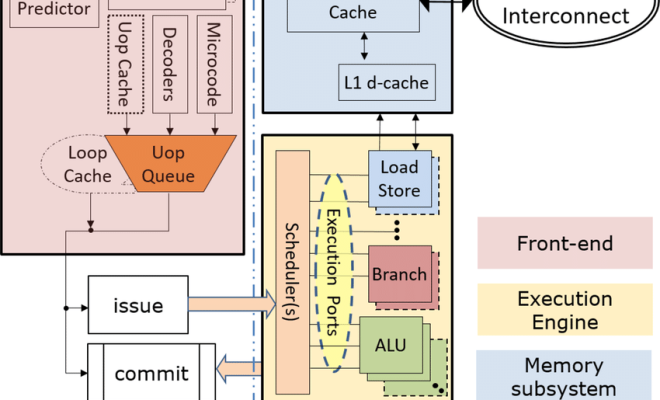
At its simplest level, µarch is the way that a CPU is arranged, including its functional units, their interconnects, and mechanisms for memory access. It is an integration of hardware and software that specifies the overall structure of a processor and the way it performs instructions.

Microarchitecture is a system-level design and is responsible for how a processor interfaces with other devices in the system. It is the basis upon which computer engineers improve performance by designing newer and more powerful CPUs.

One of the fundamental decisions in microarchitecture is the instruction set architecture (ISA). ISA defines the machine language of a processor, including the format and functionality of instructions. The popular instruction sets used in desktop/laptop CPUs are x86 and ARM.

The performance of a CPU is primarily determined by the interconnectivity of its components. A microarchitecture is generally judged by its performance in terms of latency, throughput, and clock speed, cost, and power consumption.

Microarchitecture affects the CPU’s responsiveness, which determines the speed at which a processor can execute instructions. It does so by controlling the CPU’s pipeline. A pipeline is a series of segments in which an instruction is broken down into its various stages, each of which is carried out by a separate hardware unit.

A standard pipeline consists of fetch, decode, execute, memory, and write-back. In this pipeline, the instruction is first fetched from memory and then decoded to determine the type of instruction. After that, it’s executed, its data is retrieved from memory, and finally, the result is written back to memory.

The final design of a µarch is heavily dependent on the application that the processor is intended for, such as desktops, servers, or embedded systems. Microarchitecture can, therefore, be optimized for specific applications, which results in improved performance, efficiency, and cost-effectiveness.

In conclusion, microarchitecture is a crucial element in computer engineering that determines the architectural design of a processor. It is responsible for the overall performance and functionality of a CPU. The optimal microarchitectural design needs to be based on the application’s requirement to ensure efficient and cost-effective processing. Modern-day CPUs usually consist of many millions of transistors integrated into these designs to achieve the fast performance improvements we all enjoy today.


Previous Article

What is Microelectronics?

Next Article

What is Microsoft Excel?

Matthew Lynch

Related articles More from author

  • Digital & Mobile Technology

    How to Start Your Own Game Server

    May 9, 2023
    By Matthew Lynch
  • Digital & Mobile Technology

    How to Show or Hide the Bookmarks Bar in Chrome, Edge, Firefox, Vivaldi, and Opera on Windows

    June 8, 2023
    By Matthew Lynch
  • Digital & Mobile Technology

    Is Buying a Kindle Worth It? 4 Reasons to Buy One

    July 1, 2024
    By Matthew Lynch
  • Digital & Mobile Technology

    Best Workout Log Apps of 2023

    May 31, 2023
    By Matthew Lynch
  • Digital & Mobile Technology

    What Is Apple HomeKit Secure Video and Why Would You Want to Use It?

    June 5, 2023
    By Matthew Lynch
  • Digital & Mobile Technology

    How to Prevent Rainmeter From Affecting Your Gaming Performance

    July 31, 2023
    By Matthew Lynch

Search

Login & Registration

  • Log in
  • Entries feed
  • Comments feed
  • WordPress.org

Newsletter

Signup for The Tech Edvocate Newsletter and have the latest in EdTech news and opinion delivered to your email address!

About Us

Since technology is not going anywhere and does more good than harm, adapting is the best course of action. That is where The Tech Edvocate comes in. We plan to cover the PreK-12 and Higher Education EdTech sectors and provide our readers with the latest news and opinion on the subject. From time to time, I will invite other voices to weigh in on important issues in EdTech. We hope to provide a well-rounded, multi-faceted look at the past, present, the future of EdTech in the US and internationally.

We started this journey back in June 2016, and we plan to continue it for many more years to come. I hope that you will join us in this discussion of the past, present and future of EdTech and lend your own insight to the issues that are discussed.

Newsletter

Signup for The Tech Edvocate Newsletter and have the latest in EdTech news and opinion delivered to your email address!

Contact Us

The Tech Edvocate
910 Goddin Street
Richmond, VA 23231
(601) 630-5238
[email protected]

Copyright © 2026 Matthew Lynch. All rights reserved.