The Tech Edvocate

Top Menu

  • Advertisement
  • Apps
  • Home Page
  • Home Page Five (No Sidebar)
  • Home Page Four
  • Home Page Three
  • Home Page Two
  • Home Tech2
  • Icons [No Sidebar]
  • Left Sidbear Page
  • Lynch Educational Consulting
  • My Account
  • My Speaking Page
  • Newsletter Sign Up Confirmation
  • Newsletter Unsubscription
  • Our Brands
  • Page Example
  • Privacy Policy
  • Protected Content
  • Register
  • Request a Product Review
  • Shop
  • Shortcodes Examples
  • Signup
  • Start Here
    • Governance
    • Careers
    • Contact Us
  • Terms and Conditions
  • The Edvocate
  • The Tech Edvocate Product Guide
  • Topics
  • Write For Us
  • Advertise

Main Menu

  • Start Here
    • Our Brands
    • Governance
      • Lynch Educational Consulting, LLC.
      • Dr. Lynch’s Personal Website
      • Careers
    • Write For Us
    • The Tech Edvocate Product Guide
    • Contact Us
    • Books
    • Edupedia
    • Post a Job
    • The Edvocate Podcast
    • Terms and Conditions
    • Privacy Policy
  • Topics
    • Assistive Technology
    • Child Development Tech
    • Early Childhood & K-12 EdTech
    • EdTech Futures
    • EdTech News
    • EdTech Policy & Reform
    • EdTech Startups & Businesses
    • Higher Education EdTech
    • Online Learning & eLearning
    • Parent & Family Tech
    • Personalized Learning
    • Product Reviews
  • Advertise
  • Tech Edvocate Awards
  • The Edvocate
  • Pedagogue
  • School Ratings

logo

The Tech Edvocate

  • Start Here
    • Our Brands
    • Governance
      • Lynch Educational Consulting, LLC.
      • Dr. Lynch’s Personal Website
        • My Speaking Page
      • Careers
    • Write For Us
    • The Tech Edvocate Product Guide
    • Contact Us
    • Books
    • Edupedia
    • Post a Job
    • The Edvocate Podcast
    • Terms and Conditions
    • Privacy Policy
  • Topics
    • Assistive Technology
    • Child Development Tech
    • Early Childhood & K-12 EdTech
    • EdTech Futures
    • EdTech News
    • EdTech Policy & Reform
    • EdTech Startups & Businesses
    • Higher Education EdTech
    • Online Learning & eLearning
    • Parent & Family Tech
    • Personalized Learning
    • Product Reviews
  • Advertise
  • Tech Edvocate Awards
  • The Edvocate
  • Pedagogue
  • School Ratings
  • Viaim Opennote Review: The AI Note-Taker That Disappears Into Your Daily Routine

  • A Visitors Guide to Long Beach (CA), United States

  • A Visitor’s Guide to Fresno (CA), United States

  • A Visitors Guide to New Orleans (LA), United States

  • A Visitors Guide to Sacramento (CA), United States

  • A Visitors Guide to Lyon, France

  • JisuLife Ultra2 Portable Fan: A Powerful Multi-Function Cooling Solution

  • A Visitors Guide to Viña del Mar, Chile

  • A Visitors Guide to Århus, Denmark

  • A Visitors Guide to Bakersfield (CA), United States

Digital & Mobile Technology
Home›Digital & Mobile Technology›What Is a CCD (Charge-Coupled Device) and How Is It Used?

What Is a CCD (Charge-Coupled Device) and How Is It Used?
By Matthew Lynch
June 12, 2023
0
Spread the love

CCD, or Charge-Coupled Device, is a device that is widely used in fields such as digital photography, video recording, and scientific research. It is a technology that has revolutionized the way photos and videos are captured and processed. This article will explain what a CCD is and how it is used.

What is a CCD?

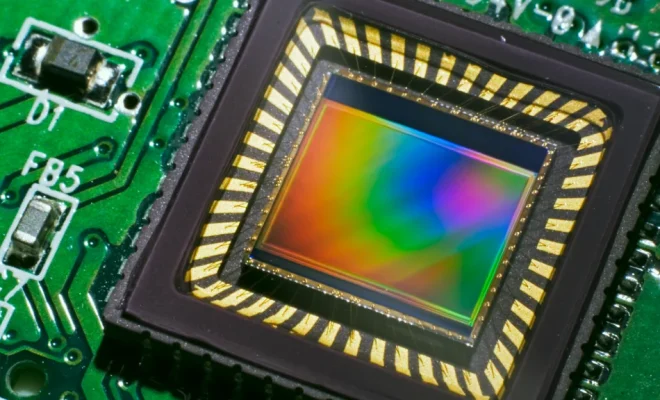
A CCD is a type of image sensor that converts light into an electrical charge. It was invented by George E. Smith and Willard Boyle in 1969 and has since been used in various applications, including astronomy, digital photography, and video recording. CCDs consist of an array of light-sensitive diodes that convert photons (light particles) into electrons (electrical charges).

How does a CCD work?

When light enters a CCD, it strikes the light-sensitive diodes (also known as pixels) and generates electrons. These electrons are then transferred from one pixel to the next using a process called charge-coupling, hence the name Charge-Coupled Device. The electrons are then read out by an output amplifier, which converts the electrical charge into a digital signal that can be processed by a computer.

What are the benefits of using CCDs?

CCDs offer several benefits over other types of image sensors, such as CMOS (Complementary Metal-Oxide-Semiconductor) sensors. One of the main advantages is their ability to produce high-quality images with minimal noise. CCDs are also very sensitive to light, which makes them ideal for low-light photography and scientific applications.

How are CCDs used in digital photography?

In digital photography, CCDs are used to capture light and create digital images. When you take a photo, the light enters the camera lens and hits the CCD sensor, creating an electrical charge that is stored as data. This data is then processed by the camera’s internal processor to create a digital image.

CCDs are also used in video recording, where they enable high-quality video with low noise. They are often used in security cameras, surveillance systems, and broadcast television.

How are CCDs used in scientific research?

CCDs play a vital role in scientific research, especially in astronomy. They are used to capture images of distant objects such as planets, stars, and galaxies. The images captured by CCDs are used to study the properties of these objects, such as their size, temperature, and composition.

In conclusion, CCDs are a powerful technology that has revolutionized the way images and videos are captured and processed. They offer high-quality images with minimal noise, making them ideal for applications such as digital photography, video recording, and scientific research.


Previous Article

How to Crop a Picture on Your ...

Next Article

Reasons You May Want a Ham Radio ...

Matthew Lynch

Related articles More from author

  • Digital & Mobile Technology

    How to Fix the “Preparing Security Options” Error on Windows

    August 3, 2023
    By Matthew Lynch
  • Digital & Mobile Technology

    How to Change Your Network From Public to Private

    July 6, 2023
    By Matthew Lynch
  • Digital & Mobile Technology

    How to Message Someone on YouTube

    June 22, 2023
    By Matthew Lynch
  • Digital & Mobile Technology

    The 5 Best GIF Keyboards for Texting and Emojis on Android

    June 6, 2023
    By Matthew Lynch
  • Digital & Mobile Technology

    Network Switch vs. Router: What’s the Difference?

    June 6, 2023
    By Matthew Lynch
  • Digital & Mobile Technology

    Yahoo Mail Message and Attachment Size Limits

    July 4, 2023
    By Matthew Lynch

Search

Login & Registration

  • Register
  • Log in
  • Entries feed
  • Comments feed
  • WordPress.org

Newsletter

Signup for The Tech Edvocate Newsletter and have the latest in EdTech news and opinion delivered to your email address!

About Us

Since technology is not going anywhere and does more good than harm, adapting is the best course of action. That is where The Tech Edvocate comes in. We plan to cover the PreK-12 and Higher Education EdTech sectors and provide our readers with the latest news and opinion on the subject. From time to time, I will invite other voices to weigh in on important issues in EdTech. We hope to provide a well-rounded, multi-faceted look at the past, present, the future of EdTech in the US and internationally.

We started this journey back in June 2016, and we plan to continue it for many more years to come. I hope that you will join us in this discussion of the past, present and future of EdTech and lend your own insight to the issues that are discussed.

Newsletter

Signup for The Tech Edvocate Newsletter and have the latest in EdTech news and opinion delivered to your email address!

Contact Us

The Tech Edvocate
910 Goddin Street
Richmond, VA 23231
(601) 630-5238
[email protected]

Copyright © 2025 Matthew Lynch. All rights reserved.