The Tech Edvocate

Top Menu

  • Advertisement
  • Apps
  • Home Page
  • Home Page Five (No Sidebar)
  • Home Page Four
  • Home Page Three
  • Home Page Two
  • Home Tech2
  • Icons [No Sidebar]
  • Left Sidbear Page
  • Lynch Educational Consulting
  • My Account
  • My Speaking Page
  • Newsletter Sign Up Confirmation
  • Newsletter Unsubscription
  • Our Brands
  • Page Example
  • Privacy Policy
  • Protected Content
  • Register
  • Request a Product Review
  • Shop
  • Shortcodes Examples
  • Signup
  • Start Here
    • Governance
    • Careers
    • Contact Us
  • Terms and Conditions
  • The Edvocate
  • The Tech Edvocate Product Guide
  • Topics
  • Write For Us
  • Advertise

Main Menu

  • Start Here
    • Our Brands
    • Governance
      • Lynch Educational Consulting, LLC.
      • Dr. Lynch’s Personal Website
      • Careers
    • Write For Us
    • The Tech Edvocate Product Guide
    • Contact Us
    • Books
    • Edupedia
    • Post a Job
    • The Edvocate Podcast
    • Terms and Conditions
    • Privacy Policy
  • Topics
    • Assistive Technology
    • Child Development Tech
    • Early Childhood & K-12 EdTech
    • EdTech Futures
    • EdTech News
    • EdTech Policy & Reform
    • EdTech Startups & Businesses
    • Higher Education EdTech
    • Online Learning & eLearning
    • Parent & Family Tech
    • Personalized Learning
    • Product Reviews
  • Advertise
  • Tech Edvocate Awards
  • The Edvocate
  • Pedagogue
  • School Ratings

logo

The Tech Edvocate

  • Start Here
    • Our Brands
    • Governance
      • Lynch Educational Consulting, LLC.
      • Dr. Lynch’s Personal Website
        • My Speaking Page
      • Careers
    • Write For Us
    • The Tech Edvocate Product Guide
    • Contact Us
    • Books
    • Edupedia
    • Post a Job
    • The Edvocate Podcast
    • Terms and Conditions
    • Privacy Policy
  • Topics
    • Assistive Technology
    • Child Development Tech
    • Early Childhood & K-12 EdTech
    • EdTech Futures
    • EdTech News
    • EdTech Policy & Reform
    • EdTech Startups & Businesses
    • Higher Education EdTech
    • Online Learning & eLearning
    • Parent & Family Tech
    • Personalized Learning
    • Product Reviews
  • Advertise
  • Tech Edvocate Awards
  • The Edvocate
  • Pedagogue
  • School Ratings
  • JisuLife Ultra2 Portable Fan: A Powerful Multi-Function Cooling Solution

  • A Visitors Guide to Viña del Mar, Chile

  • A Visitors Guide to Århus, Denmark

  • A Visitors Guide to Bakersfield (CA), United States

  • A Visitors Guide to Aurora (CO), United States

  • A Visitor’s Guide to Toledo (OH), United States

  • A Visitors Guide to Cincinnati (OH), United States

  • The MagicEagle Cam 5: Revolutionizing Wildlife Monitoring with Smart 4G Technology

  • A Visitors Guide to Pittsburgh (PA), United States

  • A Visitors Guide to Colorado Springs (CO), United States

Digital & Mobile Technology
Home›Digital & Mobile Technology›How to Get Started With Mobile Game Programming

How to Get Started With Mobile Game Programming
By Matthew Lynch
July 26, 2023
0
Spread the love

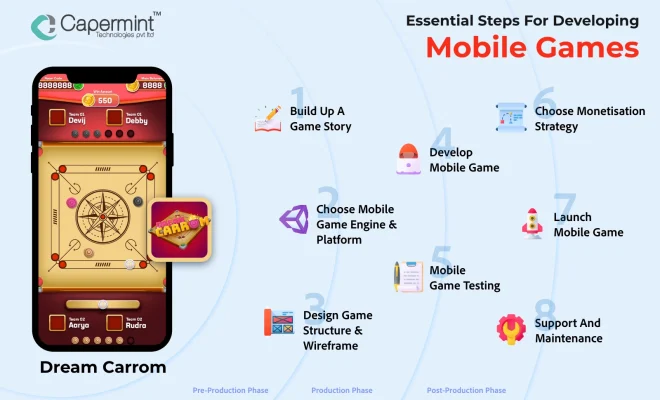
Mobile gaming has become a billion-dollar industry, and with the rise of smartphones and tablets, it’s easier than ever to create and publish your own mobile game. If you’re interested in getting started with mobile game programming, here are some steps to follow:

Step 1: Choose a Game Engine

The first step in mobile game programming is to choose a game engine. A game engine is a software framework that provides game developers with the necessary tools and features to create games. Some popular game engines for mobile game development include Unity, Unreal Engine, and Cocos2D.

Step 2: Learn Programming Languages

To develop games, you need to learn programming languages such as C++, C#, or Java. These languages are used to write the code that makes the game work. If you’re new to programming, start with a beginner-friendly language like Python, which will help you get up to speed quickly.

Step 3: Choose a Platform

When developing mobile games, you need to choose a platform to target. The two most popular platforms are iOS and Android. While iOS has a larger market share in North America, Android dominates the global market. You can also target both platforms by developing cross-platform games.

Step 4: Create Game Assets

Game assets include graphics, sound effects, music, and animations. You can create your own assets using tools like Adobe Photoshop and Illustrator, or you can purchase assets from online marketplaces like the Unity Asset Store or the Unreal Engine Marketplace.

Step 5: Start Developing

Once you have your game engine, programming language, platform, and assets, it’s time to start developing. Start with a simple game and work your way up to more complex games. There are also many tutorials and online courses that can help you learn game development.

Step 6: Test and Publish

After you’ve developed your game, it’s important to test it thoroughly to make sure it works properly. You can test your game on an emulator or a real device. Once you’re confident that your game is ready, you can publish it on the App Store or Google Play.

Mobile game programming can be a fun and rewarding hobby or career. By following these steps, you can get started with mobile game development and create your own games for the world to enjoy.


Previous Article

How to Allow Pop-Ups on a Mac

Next Article

How to Recover Deleted Text Messages on ...

Matthew Lynch

Related articles More from author

  • Digital & Mobile Technology

    How to Hard Reset or Restart an iPad (All Models)

    June 1, 2023
    By Matthew Lynch
  • Digital & Mobile Technology

    What Is PCI Express (PCIe)?

    June 6, 2023
    By Matthew Lynch
  • Digital & Mobile Technology

    How to Insert a Row or Column in an Excel Spreadsheet

    April 26, 2023
    By Matthew Lynch
  • Digital & Mobile Technology

    How to Download Disney Plus Movies To Watch Offline

    June 4, 2023
    By Matthew Lynch
  • Digital & Mobile Technology

    How to Use Instagram Video Chat

    June 30, 2023
    By Matthew Lynch
  • Digital & Mobile Technology

    How to Change a Word Document to Print Different Paper Size

    June 10, 2023
    By Matthew Lynch

Search

Login & Registration

  • Register
  • Log in
  • Entries feed
  • Comments feed
  • WordPress.org

Newsletter

Signup for The Tech Edvocate Newsletter and have the latest in EdTech news and opinion delivered to your email address!

About Us

Since technology is not going anywhere and does more good than harm, adapting is the best course of action. That is where The Tech Edvocate comes in. We plan to cover the PreK-12 and Higher Education EdTech sectors and provide our readers with the latest news and opinion on the subject. From time to time, I will invite other voices to weigh in on important issues in EdTech. We hope to provide a well-rounded, multi-faceted look at the past, present, the future of EdTech in the US and internationally.

We started this journey back in June 2016, and we plan to continue it for many more years to come. I hope that you will join us in this discussion of the past, present and future of EdTech and lend your own insight to the issues that are discussed.

Newsletter

Signup for The Tech Edvocate Newsletter and have the latest in EdTech news and opinion delivered to your email address!

Contact Us

The Tech Edvocate
910 Goddin Street
Richmond, VA 23231
(601) 630-5238
[email protected]

Copyright © 2025 Matthew Lynch. All rights reserved.