The Tech Edvocate

Top Menu

  • Advertisement
  • Apps
  • Home Page
  • Home Page Five (No Sidebar)
  • Home Page Four
  • Home Page Three
  • Home Page Two
  • Home Tech2
  • Icons [No Sidebar]
  • Left Sidbear Page
  • Lynch Educational Consulting
  • My Account
  • My Speaking Page
  • Newsletter Sign Up Confirmation
  • Newsletter Unsubscription
  • Our Brands
  • Page Example
  • Privacy Policy
  • Protected Content
  • Register
  • Request a Product Review
  • Shop
  • Shortcodes Examples
  • Signup
  • Start Here
    • Governance
    • Careers
    • Contact Us
  • Terms and Conditions
  • The Edvocate
  • The Tech Edvocate Product Guide
  • Topics
  • Write For Us
  • Advertise

Main Menu

  • Start Here
    • Our Brands
    • Governance
      • Lynch Educational Consulting, LLC.
      • Dr. Lynch’s Personal Website
      • Careers
    • Write For Us
    • The Tech Edvocate Product Guide
    • Contact Us
    • Books
    • Edupedia
    • Post a Job
    • The Edvocate Podcast
    • Terms and Conditions
    • Privacy Policy
  • Topics
    • Assistive Technology
    • Child Development Tech
    • Early Childhood & K-12 EdTech
    • EdTech Futures
    • EdTech News
    • EdTech Policy & Reform
    • EdTech Startups & Businesses
    • Higher Education EdTech
    • Online Learning & eLearning
    • Parent & Family Tech
    • Personalized Learning
    • Product Reviews
  • Advertise
  • Tech Edvocate Awards
  • The Edvocate
  • Pedagogue
  • School Ratings

logo

The Tech Edvocate

  • Start Here
    • Our Brands
    • Governance
      • Lynch Educational Consulting, LLC.
      • Dr. Lynch’s Personal Website
        • My Speaking Page
      • Careers
    • Write For Us
    • The Tech Edvocate Product Guide
    • Contact Us
    • Books
    • Edupedia
    • Post a Job
    • The Edvocate Podcast
    • Terms and Conditions
    • Privacy Policy
  • Topics
    • Assistive Technology
    • Child Development Tech
    • Early Childhood & K-12 EdTech
    • EdTech Futures
    • EdTech News
    • EdTech Policy & Reform
    • EdTech Startups & Businesses
    • Higher Education EdTech
    • Online Learning & eLearning
    • Parent & Family Tech
    • Personalized Learning
    • Product Reviews
  • Advertise
  • Tech Edvocate Awards
  • The Edvocate
  • Pedagogue
  • School Ratings
  • JisuLife Ultra2 Portable Fan: A Powerful Multi-Function Cooling Solution

  • A Visitors Guide to Viña del Mar, Chile

  • A Visitors Guide to Århus, Denmark

  • A Visitors Guide to Bakersfield (CA), United States

  • A Visitors Guide to Aurora (CO), United States

  • A Visitor’s Guide to Toledo (OH), United States

  • A Visitors Guide to Cincinnati (OH), United States

  • The MagicEagle Cam 5: Revolutionizing Wildlife Monitoring with Smart 4G Technology

  • A Visitors Guide to Pittsburgh (PA), United States

  • A Visitors Guide to Colorado Springs (CO), United States

Tech Advice
Home›Tech Advice›Dolby Atmos: Everything you need to know about the spatial audio format

Dolby Atmos: Everything you need to know about the spatial audio format
By Matthew Lynch
July 16, 2023
0
Spread the love

In recent years, the world of audio technology has experienced a significant leap with the advent of Dolby Atmos. This immersive audio format has quickly become the standard for creating lifelike sound experiences in movies, games, and music. In this article, we will take an in-depth look at Dolby Atmos, its key features, the technology behind it, and how you can bring the magic of Dolby Atmos into your home.

What is Dolby Atmos?

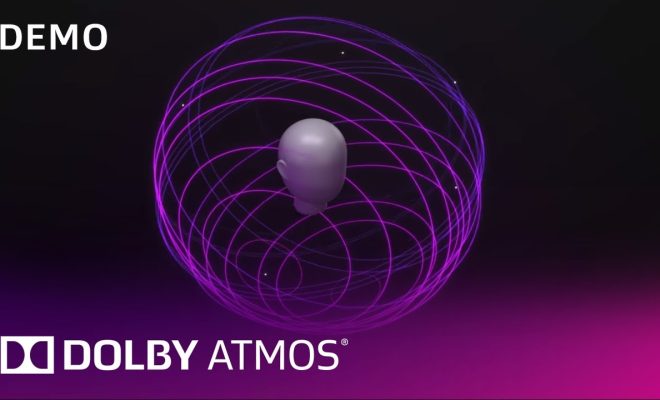
Dolby Atmos is an innovative audio format that uses object-based spatial audio technology to create realistic and immersive soundscapes. This means that sounds are not just assigned to traditional channels like left and right but can be placed anywhere in a 3D space. By adding height channels and overhead speakers or upfiring speakers that bounce sound off the ceiling, Dolby Atmos creates a completely enveloping auditory experience.

Key Features of Dolby Atmos

1. Object-based spatial audio: Unlike traditional channel-based audio formats, Dolby Atmos treats each sound as an individual object. This allows for precise placement of sounds, providing greater depth and realism to the overall sound experience.

2. Height channels: To give a sense of verticality in the spatial audio mix, Dolby Atmos uses height channels. These additional speaker positions allow for a multidimensional listening experience by delivering sound from above.

3. Scalability: One major advantage of Dolby Atmos is it can be adapted to various setups – from simple home entertainment systems to large-scale cinemas – without losing any audio quality.

4. Compatibility: Even if you don’t have a full-fledged Dolby Atmos system, most devices can still process an Atmos mix through their own Downmix technology. This ensures that you can enjoy an optimized version of the content on your device.

How Does Dolby Atmos Work?

At its core, Dolby Atmos relies on an advanced metadata-based system to transmit sound information. When mixing audio for Dolby Atmos, sound engineers map each individual sound to a location in a 3D space. This metadata carries information about each audio object’s position, size, and movement, which is then used by the Dolby Atmos processor to play back the audio accurately on the intended setup.

Bringing Dolby Atmos Home

To enjoy a Dolby Atmos experience at home, you’ll need the following:

1. A Dolby Atmos-enabled receiver or soundbar: You’ll need a compatible AV receiver that can decode Dolby Atmos encoded content and process the spatial audio.

2. Appropriate speakers: Traditional 5.1 and 7.1 systems can be upgraded by incorporating height speakers or upfiring speakers specifically designed for Dolby Atmos setups.

3. Content: To truly experience Dolby Atmos, you’ll need content mixed and encoded with this audio format. Several streaming services like Netflix, Disney+, and Amazon Prime Video now have titles available in Dolby Atmos format.

4. Playback device: Lastly, ensure that your playback device – whether it’s a game console, Blu-ray player or streaming device – can support the passthrough of Dolby Atmos audio.

In conclusion, Dolby Atmos has revolutionized the world of audio by offering an immersive and realistic listening experience previously unheard of in home entertainment systems. With its growing availability in content and hardware compatibility, now is the perfect time to explore this cutting-edge technology and bring the magic of spatial audio into your own living room.


Previous Article

‘Chris Rock: Selective Outrage’: When to Stream ...

Next Article

Daytona 500 2023: How to Watch NASCAR’s ...

Matthew Lynch

Related articles More from author

  • Tech Advice

    2024 Chevrolet Camaro 2SS 2dr Coupe : Trim Details, Reviews, Prices, Specs, and Incentives

    August 20, 2023
    By Matthew Lynch
  • Tech Advice

    2024 Dodge Durango GT 4dr 4×2 SUV: Trim Details, Reviews, Prices, Specs, and Incentives

    August 20, 2023
    By Matthew Lynch
  • Tech Advice

    Set Up a VPN on Your iPhone: Here’s How

    July 17, 2023
    By Matthew Lynch
  • Tech Advice

    5 Foolproof Hacks to Calm Your Anxiety at Night

    July 7, 2023
    By Matthew Lynch
  • Tech Advice

    Best USB-C Hub 2023

    July 13, 2023
    By Matthew Lynch
  • Tech Advice

    Garmin Debuts Fenix 7 Pro and Epix Pro With New Sizes, Nighttime Features

    July 17, 2023
    By Matthew Lynch

Search

Login & Registration

  • Register
  • Log in
  • Entries feed
  • Comments feed
  • WordPress.org

Newsletter

Signup for The Tech Edvocate Newsletter and have the latest in EdTech news and opinion delivered to your email address!

About Us

Since technology is not going anywhere and does more good than harm, adapting is the best course of action. That is where The Tech Edvocate comes in. We plan to cover the PreK-12 and Higher Education EdTech sectors and provide our readers with the latest news and opinion on the subject. From time to time, I will invite other voices to weigh in on important issues in EdTech. We hope to provide a well-rounded, multi-faceted look at the past, present, the future of EdTech in the US and internationally.

We started this journey back in June 2016, and we plan to continue it for many more years to come. I hope that you will join us in this discussion of the past, present and future of EdTech and lend your own insight to the issues that are discussed.

Newsletter

Signup for The Tech Edvocate Newsletter and have the latest in EdTech news and opinion delivered to your email address!

Contact Us

The Tech Edvocate
910 Goddin Street
Richmond, VA 23231
(601) 630-5238
[email protected]

Copyright © 2025 Matthew Lynch. All rights reserved.