The Tech Edvocate

Top Menu

  • Advertisement
  • Apps
  • Home Page
  • Home Page Five (No Sidebar)
  • Home Page Four
  • Home Page Three
  • Home Page Two
  • Home Tech2
  • Icons [No Sidebar]
  • Left Sidbear Page
  • Lynch Educational Consulting
  • My Account
  • My Speaking Page
  • Newsletter Sign Up Confirmation
  • Newsletter Unsubscription
  • Our Brands
  • Page Example
  • Privacy Policy
  • Protected Content
  • Register
  • Request a Product Review
  • Shop
  • Shortcodes Examples
  • Signup
  • Start Here
    • Governance
    • Careers
    • Contact Us
  • Terms and Conditions
  • The Edvocate
  • The Tech Edvocate Product Guide
  • Topics
  • Write For Us
  • Advertise

Main Menu

  • Start Here
    • Our Brands
    • Governance
      • Lynch Educational Consulting, LLC.
      • Dr. Lynch’s Personal Website
      • Careers
    • Write For Us
    • The Tech Edvocate Product Guide
    • Contact Us
    • Books
    • Edupedia
    • Post a Job
    • The Edvocate Podcast
    • Terms and Conditions
    • Privacy Policy
  • Topics
    • Assistive Technology
    • Child Development Tech
    • Early Childhood & K-12 EdTech
    • EdTech Futures
    • EdTech News
    • EdTech Policy & Reform
    • EdTech Startups & Businesses
    • Higher Education EdTech
    • Online Learning & eLearning
    • Parent & Family Tech
    • Personalized Learning
    • Product Reviews
  • Advertise
  • Tech Edvocate Awards
  • The Edvocate
  • Pedagogue
  • School Ratings

logo

The Tech Edvocate

  • Start Here
    • Our Brands
    • Governance
      • Lynch Educational Consulting, LLC.
      • Dr. Lynch’s Personal Website
        • My Speaking Page
      • Careers
    • Write For Us
    • The Tech Edvocate Product Guide
    • Contact Us
    • Books
    • Edupedia
    • Post a Job
    • The Edvocate Podcast
    • Terms and Conditions
    • Privacy Policy
  • Topics
    • Assistive Technology
    • Child Development Tech
    • Early Childhood & K-12 EdTech
    • EdTech Futures
    • EdTech News
    • EdTech Policy & Reform
    • EdTech Startups & Businesses
    • Higher Education EdTech
    • Online Learning & eLearning
    • Parent & Family Tech
    • Personalized Learning
    • Product Reviews
  • Advertise
  • Tech Edvocate Awards
  • The Edvocate
  • Pedagogue
  • School Ratings
  • JisuLife Ultra2 Portable Fan: A Powerful Multi-Function Cooling Solution

  • A Visitors Guide to Viña del Mar, Chile

  • A Visitors Guide to Århus, Denmark

  • A Visitors Guide to Bakersfield (CA), United States

  • A Visitors Guide to Aurora (CO), United States

  • A Visitor’s Guide to Toledo (OH), United States

  • A Visitors Guide to Cincinnati (OH), United States

  • The MagicEagle Cam 5: Revolutionizing Wildlife Monitoring with Smart 4G Technology

  • A Visitors Guide to Pittsburgh (PA), United States

  • A Visitors Guide to Colorado Springs (CO), United States

Tech Advice
Home›Tech Advice›Are Online Banks Safe?

Are Online Banks Safe?
By Matthew Lynch
July 10, 2023
0
Spread the love

Introduction:

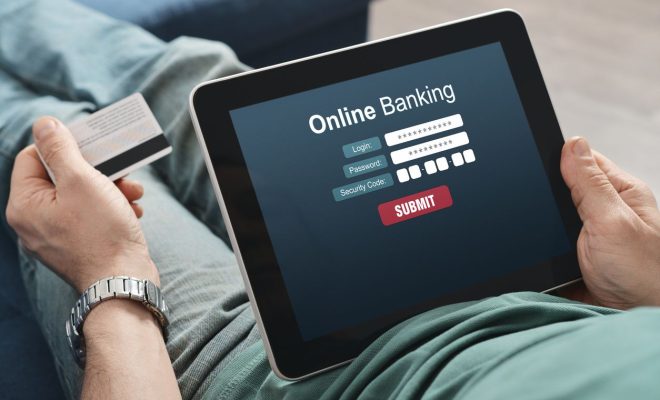
With the rapid growth of technology, banking has taken a digital turn, bringing convenience to customers across the globe. Online banks have emerged as a popular alternative to traditional brick-and-mortar financial institutions, offering competitive interest rates and easy account access. However, many people still have concerns about the safety of online banks. In this article, we will discuss the security measures in place for online banks and how they compare to traditional options.

1. Encryption and Data Protection

Online banks use state-of-the-art encryption methods to protect your financial information. They typically employ bank-level 128-bit to 256-bit encryption to ensure that your data is kept confidential as it’s transmitted between your computer or smartphone and the bank’s website or app. This is the same level of encryption that traditional banks use for their online services.

2. Secure Website Access

Security-conscious online banks often implement multi-factor authentication (MFA) to add an extra layer of protection against unauthorized access. MFA requires users to provide additional proof of their identity, such as a unique security code sent to their registered phone number or e-mail address. Traditional banks may also offer MFA for their online services.

3. Regulation and Compliance

All legitimate online banks are subject to the same regulations, compliance standards, and oversight as traditional banks. They must adhere to strict guidelines put in place by government agencies like the Federal Deposit Insurance Corporation (FDIC) or National Credit Union Administration (NCUA). These organizations make sure that customer deposits are insured, providing protection against potential loss due to bank failure.

4. Firewall and Anti-hacking Measures

Online banks have comprehensive security systems in place to protect against potential cyber threats like hacking or data breaches. They

build strong firewalls around their databases and continuously update software to address new vulnerabilities. This is done with help from cybersecurity experts who work tirelessly to ensure that customer accounts are protected.

5. Employee Security Training

To reduce the risk of inside threats, online banks also enforce strict employee protocols and provide cybersecurity training. With this ongoing education, employees become skilled in recognizing potential risks, phishing scams, and other digital threats.

Conclusion:

While no system can guarantee absolute security, online banks employ a range of measures to keep your financial information and transactions as safe as possible. By implementing encryption technologies, multi-factor authentication, compliance with federal regulations, robust firewalls, and employee training, online banks continue to demonstrate their commitment to offering a secure banking option for customers.

Ultimately, choosing the right bank depends on your individual needs for accessibility and convenience. If you’re comfortable managing your finances digitally, online banks may offer advantages such as higher interest rates and reduced fees compared to traditional options. As long as you practice good cyber hygiene by using strong passwords and not sharing sensitive information over public networks, you can enjoy the benefits of online banking with confidence in its security.


Previous Article

Are Banking Apps Safe? How to Keep ...

Next Article

ATM Withdrawal Limits: What You Need to ...

Matthew Lynch

Related articles More from author

  • Tech Advice

    The Best Disney World Resort Restaurants

    October 20, 2023
    By Matthew Lynch
  • Tech Advice

    Top 6 Ways to Fix Discord Invite Not Working

    February 20, 2024
    By Matthew Lynch
  • Tech Advice

    A Comprehensive Guide to The Best Men’s Skincare Products

    July 7, 2023
    By Matthew Lynch
  • Tech Advice

    Why The 2024 Hyundai Kona Electric Is A Crossover To Look Out For

    October 3, 2023
    By Matthew Lynch
  • Tech Advice

    VPN for Amazon Fire TV Stick in 2023

    July 16, 2023
    By Matthew Lynch
  • Tech Advice

    What Is Insurance for First Time Drivers Over 25?

    August 22, 2023
    By Matthew Lynch

Search

Login & Registration

  • Register
  • Log in
  • Entries feed
  • Comments feed
  • WordPress.org

Newsletter

Signup for The Tech Edvocate Newsletter and have the latest in EdTech news and opinion delivered to your email address!

About Us

Since technology is not going anywhere and does more good than harm, adapting is the best course of action. That is where The Tech Edvocate comes in. We plan to cover the PreK-12 and Higher Education EdTech sectors and provide our readers with the latest news and opinion on the subject. From time to time, I will invite other voices to weigh in on important issues in EdTech. We hope to provide a well-rounded, multi-faceted look at the past, present, the future of EdTech in the US and internationally.

We started this journey back in June 2016, and we plan to continue it for many more years to come. I hope that you will join us in this discussion of the past, present and future of EdTech and lend your own insight to the issues that are discussed.

Newsletter

Signup for The Tech Edvocate Newsletter and have the latest in EdTech news and opinion delivered to your email address!

Contact Us

The Tech Edvocate
910 Goddin Street
Richmond, VA 23231
(601) 630-5238
[email protected]

Copyright © 2025 Matthew Lynch. All rights reserved.