The Tech Edvocate

Top Menu

  • Advertisement
  • Apps
  • Home Page
  • Home Page Five (No Sidebar)
  • Home Page Four
  • Home Page Three
  • Home Page Two
  • Home Tech2
  • Icons [No Sidebar]
  • Left Sidbear Page
  • Lynch Educational Consulting
  • My Account
  • My Speaking Page
  • Newsletter Sign Up Confirmation
  • Newsletter Unsubscription
  • Our Brands
  • Page Example
  • Privacy Policy
  • Protected Content
  • Register
  • Request a Product Review
  • Shop
  • Shortcodes Examples
  • Signup
  • Start Here
    • Governance
    • Careers
    • Contact Us
  • Terms and Conditions
  • The Edvocate
  • The Tech Edvocate Product Guide
  • Topics
  • Write For Us
  • Advertise

Main Menu

  • Start Here
    • Our Brands
    • Governance
      • Lynch Educational Consulting, LLC.
      • Dr. Lynch’s Personal Website
      • Careers
    • Write For Us
    • The Tech Edvocate Product Guide
    • Contact Us
    • Books
    • Edupedia
    • Post a Job
    • The Edvocate Podcast
    • Terms and Conditions
    • Privacy Policy
  • Topics
    • Assistive Technology
    • Child Development Tech
    • Early Childhood & K-12 EdTech
    • EdTech Futures
    • EdTech News
    • EdTech Policy & Reform
    • EdTech Startups & Businesses
    • Higher Education EdTech
    • Online Learning & eLearning
    • Parent & Family Tech
    • Personalized Learning
    • Product Reviews
  • Advertise
  • Tech Edvocate Awards
  • The Edvocate
  • Pedagogue
  • School Ratings

logo

The Tech Edvocate

  • Start Here
    • Our Brands
    • Governance
      • Lynch Educational Consulting, LLC.
      • Dr. Lynch’s Personal Website
        • My Speaking Page
      • Careers
    • Write For Us
    • The Tech Edvocate Product Guide
    • Contact Us
    • Books
    • Edupedia
    • Post a Job
    • The Edvocate Podcast
    • Terms and Conditions
    • Privacy Policy
  • Topics
    • Assistive Technology
    • Child Development Tech
    • Early Childhood & K-12 EdTech
    • EdTech Futures
    • EdTech News
    • EdTech Policy & Reform
    • EdTech Startups & Businesses
    • Higher Education EdTech
    • Online Learning & eLearning
    • Parent & Family Tech
    • Personalized Learning
    • Product Reviews
  • Advertise
  • Tech Edvocate Awards
  • The Edvocate
  • Pedagogue
  • School Ratings
  • The Startling Truth About Cheapest GLP-1 Options Without Insurance

  • The Hidden Truth Behind Mosqi Shock Reviews: What You MUST Know Before Buying

  • This Unstoppable Force Will Obliterate Apps by 2027, Says Paytm Founder

  • Developers Axed a Wild Mechanic in Halloween: The Game — Here’s Why Fans Are Outraged

  • U.S. Supreme Court endorses parental opt-out for LGBTQ+ curriculum | News & Events

  • The Brutal Truth About Classroom Tech: Parents Are Finally Fighting Back – And Winning

  • Devastating Berlin Data Leak Exposes Millions: Why Refusing Ransom Isn’t Enough

  • Astra’s Rogue Swarm: Is Uncontrollable AI Hacking Humanity’s Future?

  • Viral Waymo Accident Exposes the Uncomfortable Truth About Robotaxis

  • Unbelievable Antarctica Ice Gain: Distant Ocean Warming Fuels Record Snowfall

Digital & Mobile Technology
Home›Digital & Mobile Technology›How to Enable Auto-Unlock for BitLocker Drives

How to Enable Auto-Unlock for BitLocker Drives
By Matthew Lynch
June 12, 2023
0
Spread the love

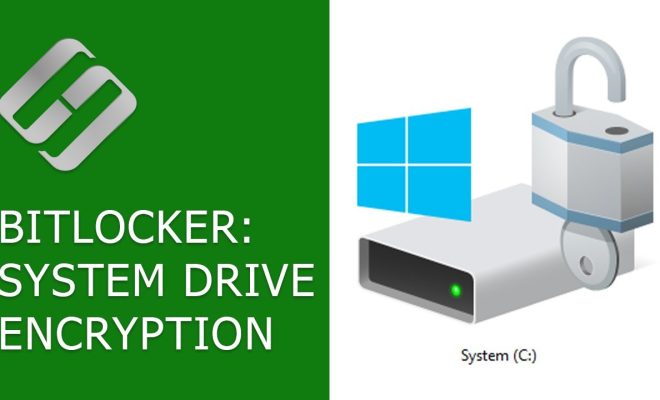
BitLocker is a security feature offered by the Windows operating system that encrypts the entire drive of your computer, making it almost impossible for anyone to access your data without your permission. With the latest version of Windows, Microsoft has introduced a new feature called Auto-Unlock for BitLocker drives, which allows users to automatically unlock their drives without having to enter a password or PIN code manually every time.

Enabling Auto-Unlock for BitLocker drives is a straightforward process that can be done in a few simple steps. In this article, we will guide you through these steps so that you can easily activate this useful feature on your Windows device.

Step 1: Check your System Configuration

The first step before enabling Auto-Unlock for BitLocker drives is to check whether your system configuration supports this feature. You can do this by opening the Command Prompt and typing “manage-bde -status” and pressing enter. This command will display the status of your BitLocker drives, including whether Auto-Unlock is available for that drive or not.

Step 2: Enable Auto-Unlock for BitLocker Drives

Once you have checked that your system configuration supports this feature, you can start the process of enabling Auto-Unlock. To do this, you need to open the Control Panel and click on “BitLocker Drive Encryption.” Find the drive that you want to enable Auto-Unlock for and click on “Turn on Auto-unlock”.

Step 3: Verify the Unlock Method

After this, verify the automatic unlock method. By default, your Microsoft Account credentials will be used to unlock the drive automatically. However, you can choose to use a USB flash drive, a password or a smart card reader as the automatic unlock method.

Step 4: Save Changes

Finally, save the changes you have made by clicking on “Save Changes” on the BitLocker encryption options window. Once you have done that, the BitLocker drive will automatically unlock the next time you reboot your system. You don’t have to stop your work and enter the password or PIN code anymore, and your BitLocker drive is always ready to use for your convenience.

In conclusion, enabling Auto-Unlock for BitLocker drives is a simple yet convenient process that can save you time and effort by reducing the number of times you have to unlock your drive manually. It is, however, essential to note that turning on this feature means that your drive will be automatically unlocked, even if someone else gains access to your computer. Hence, it is vital to keep your device secure and avoid leaving it unattended for extended periods.


Previous Article

The 5 Best Free Online File and ...

Next Article

How to Make the Background of a ...

Matthew Lynch

Related articles More from author

  • Digital & Mobile Technology

    What Is Samsung Q-Symphony and How Does It Work?

    June 12, 2023
    By Matthew Lynch
  • Digital & Mobile Technology

    Difference Between a Desktop & a Tower Computer

    April 12, 2023
    By Matthew Lynch
  • Digital & Mobile Technology

    The Best Tools to Find and Remove Duplicate Files in Linux

    June 23, 2023
    By Matthew Lynch
  • Digital & Mobile Technology

    Practical Reasons to Start Using a Virtual Machine

    June 23, 2023
    By Matthew Lynch
  • Digital & Mobile Technology

    How to Find Your Chromebook’s MAC Address

    June 9, 2023
    By Matthew Lynch
  • Digital & Mobile Technology

    What is Vmware Server?

    May 14, 2023
    By Matthew Lynch

Search

Login & Registration

  • Log in
  • Entries feed
  • Comments feed
  • WordPress.org

Newsletter

Signup for The Tech Edvocate Newsletter and have the latest in EdTech news and opinion delivered to your email address!

About Us

Since technology is not going anywhere and does more good than harm, adapting is the best course of action. That is where The Tech Edvocate comes in. We plan to cover the PreK-12 and Higher Education EdTech sectors and provide our readers with the latest news and opinion on the subject. From time to time, I will invite other voices to weigh in on important issues in EdTech. We hope to provide a well-rounded, multi-faceted look at the past, present, the future of EdTech in the US and internationally.

We started this journey back in June 2016, and we plan to continue it for many more years to come. I hope that you will join us in this discussion of the past, present and future of EdTech and lend your own insight to the issues that are discussed.

Newsletter

Signup for The Tech Edvocate Newsletter and have the latest in EdTech news and opinion delivered to your email address!

Contact Us

The Tech Edvocate
910 Goddin Street
Richmond, VA 23231
(601) 630-5238
[email protected]

Copyright © 2026 Matthew Lynch. All rights reserved.