The Tech Edvocate

Top Menu

  • Advertisement
  • Apps
  • Home Page
  • Home Page Five (No Sidebar)
  • Home Page Four
  • Home Page Three
  • Home Page Two
  • Home Tech2
  • Icons [No Sidebar]
  • Left Sidbear Page
  • Lynch Educational Consulting
  • My Account
  • My Speaking Page
  • Newsletter Sign Up Confirmation
  • Newsletter Unsubscription
  • Our Brands
  • Page Example
  • Privacy Policy
  • Protected Content
  • Register
  • Request a Product Review
  • Shop
  • Shortcodes Examples
  • Signup
  • Start Here
    • Governance
    • Careers
    • Contact Us
  • Terms and Conditions
  • The Edvocate
  • The Tech Edvocate Product Guide
  • Topics
  • Write For Us
  • Advertise

Main Menu

  • Start Here
    • Our Brands
    • Governance
      • Lynch Educational Consulting, LLC.
      • Dr. Lynch’s Personal Website
      • Careers
    • Write For Us
    • The Tech Edvocate Product Guide
    • Contact Us
    • Books
    • Edupedia
    • Post a Job
    • The Edvocate Podcast
    • Terms and Conditions
    • Privacy Policy
  • Topics
    • Assistive Technology
    • Child Development Tech
    • Early Childhood & K-12 EdTech
    • EdTech Futures
    • EdTech News
    • EdTech Policy & Reform
    • EdTech Startups & Businesses
    • Higher Education EdTech
    • Online Learning & eLearning
    • Parent & Family Tech
    • Personalized Learning
    • Product Reviews
  • Advertise
  • Tech Edvocate Awards
  • The Edvocate
  • Pedagogue
  • School Ratings

logo

The Tech Edvocate

  • Start Here
    • Our Brands
    • Governance
      • Lynch Educational Consulting, LLC.
      • Dr. Lynch’s Personal Website
        • My Speaking Page
      • Careers
    • Write For Us
    • The Tech Edvocate Product Guide
    • Contact Us
    • Books
    • Edupedia
    • Post a Job
    • The Edvocate Podcast
    • Terms and Conditions
    • Privacy Policy
  • Topics
    • Assistive Technology
    • Child Development Tech
    • Early Childhood & K-12 EdTech
    • EdTech Futures
    • EdTech News
    • EdTech Policy & Reform
    • EdTech Startups & Businesses
    • Higher Education EdTech
    • Online Learning & eLearning
    • Parent & Family Tech
    • Personalized Learning
    • Product Reviews
  • Advertise
  • Tech Edvocate Awards
  • The Edvocate
  • Pedagogue
  • School Ratings
  • Why Millions Are Ditching Degrees for These Microcredential Programs

  • The Astonishing Truth: Why Microcredentials Could Be Your Career’s Secret Weapon

  • Why Employers Are Paying 15% More for This One Credential – Not Your Degree

  • 7 Critical Steps to Safeguard Students When Implementing AI in Your Classroom

  • The Astonishing Truth: Your School’s Data Security Might Be a Time Bomb – 7 LMS Platforms That Are Actually Safe for K-12

  • The Troubling Truth: AI in Education Could Be Compromising Your Child’s Privacy

  • Revealed: The Brutal Truth About IronCircle vs Other Cybersecurity Boot Camps

  • This One Thing About University Boot Camps Is Infuriating — Don’t Fall For It

  • Revealed: The Brutal Truth About University Boot Camp Debt

  • Revealed: The 7 Tools EdTech Pros Are Using to Dominate Remote Work in 2026

Online Learning & eLearning
Home›Online Learning & eLearning›The Metaverse Will Be a Multi-Platform Mess

The Metaverse Will Be a Multi-Platform Mess
By Matthew Lynch
March 19, 2023
0
Spread the love

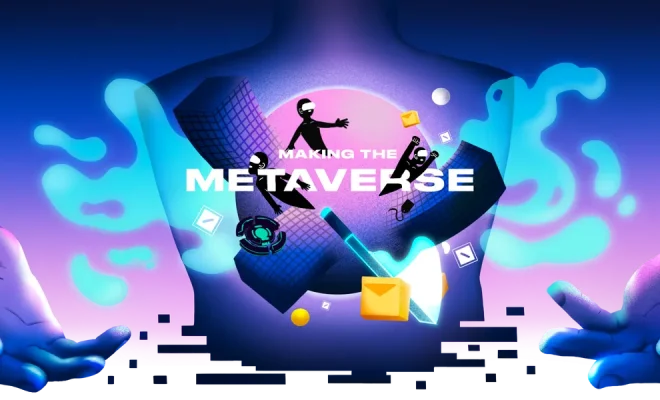
As technology continues to advance at a rapid pace, the concept of the metaverse has gained considerable traction. The metaverse is essentially a collective virtual shared space where users can interact with each other in a three-dimensional environment. Think Second Life, but on a much grander scale.

However, as the hype around the metaverse grows, there is an underlying issue that needs to be addressed: the metaverse is going to be a multi-platform mess. In other words, different companies and organizations are developing their own versions of the metaverse using different standards and technologies, leading to interoperability issues.

To understand this, think of it this way. You own an iPhone, and your friend owns an Android device. You can communicate with your friend via text message or a phone call, but they can’t use iMessage or FaceTime without having an Apple device. The same scenario could play out in the metaverse, except it could be much worse.

Currently, there is a lack of consensus on what the metaverse should be and what technology should be used to build it. Some companies are building their own metaverse platforms, such as Facebook’s Horizon Workrooms or Roblox’s virtual world. These platforms will have their own set of rules, guidelines, and protocols. Suppose you’re on Facebook’s version of the metaverse, but your friend is on Roblox’s version. In that case, you won’t be able to interact with each other because the platforms are not compatible.

Furthermore, even within a single platform, there could be interoperability issues. For example, suppose you’re playing a game within a metaverse platform. In that case, you might need to purchase a specific virtual item to access certain areas of the game. But if you switch to a different platform, you might need to buy another virtual item to access the same areas of the game.

The stakes are high because the metaverse could be the next big thing in the tech industry. It could open up vast opportunities for businesses and consumers alike. However, if interoperability issues persist, the metaverse could become a fragmented and inaccessible space rather than a global shared experience.

So what’s the solution? It’s a complicated issue that requires collaboration and compromise between all the players involved. Standardization and interoperability should be the top priorities for platform developers. To achieve these goals, companies could use open-source technologies, which allow developers to share code and work together to develop universal standards.

Another solution could be the creation of a governing body, similar to the World Wide Web Consortium (W3C). The W3C is a consortium that creates standards for the web to ensure the web’s interoperability, usability, and accessibility. The metaverse could benefit from a similar organization that creates universal standards across different platforms and technologies.

In conclusion, the metaverse has the potential to revolutionize how we interact with each other, but it won’t happen without some hiccups. The metaverse’s future is still uncertain, and many details need to be ironed out before it becomes a reality. However, if companies can work together to solve the interoperability issues, the metaverse could become a seamless, open, and accessible space for all.


Previous Article

Top 6 Ways to Restore the Missing ...

Next Article

The Ultimate Guide to Dolphin Emulator

Matthew Lynch

Related articles More from author

  • Higher Education EdTechOnline Learning & eLearning

    Is Your eLearning Course Rigorous Enough?

    January 29, 2020
    By Matthew Lynch
  • Online Learning & eLearning

    E-Learning and the Challenge of the Senses

    May 18, 2021
    By Matthew Lynch
  • Online Learning & eLearning

    Ways to Make Working From the Beach Easier

    August 5, 2023
    By Matthew Lynch
  • Online Learning & eLearning

    What Is Wardriving? How to Protect Yourself

    June 10, 2023
    By Matthew Lynch
  • Online Learning & eLearning

    Learn to Code With These 5 Online Coding Courses for Beginners

    March 28, 2023
    By Matthew Lynch
  • Online Learning & eLearning

    What Is the Most Fuel-Efficient Speed to Drive Your Car?

    September 7, 2023
    By Matthew Lynch

Search

Login & Registration

  • Log in
  • Entries feed
  • Comments feed
  • WordPress.org

Newsletter

Signup for The Tech Edvocate Newsletter and have the latest in EdTech news and opinion delivered to your email address!

About Us

Since technology is not going anywhere and does more good than harm, adapting is the best course of action. That is where The Tech Edvocate comes in. We plan to cover the PreK-12 and Higher Education EdTech sectors and provide our readers with the latest news and opinion on the subject. From time to time, I will invite other voices to weigh in on important issues in EdTech. We hope to provide a well-rounded, multi-faceted look at the past, present, the future of EdTech in the US and internationally.

We started this journey back in June 2016, and we plan to continue it for many more years to come. I hope that you will join us in this discussion of the past, present and future of EdTech and lend your own insight to the issues that are discussed.

Newsletter

Signup for The Tech Edvocate Newsletter and have the latest in EdTech news and opinion delivered to your email address!

Contact Us

The Tech Edvocate
910 Goddin Street
Richmond, VA 23231
(601) 630-5238
[email protected]

Copyright © 2026 Matthew Lynch. All rights reserved.