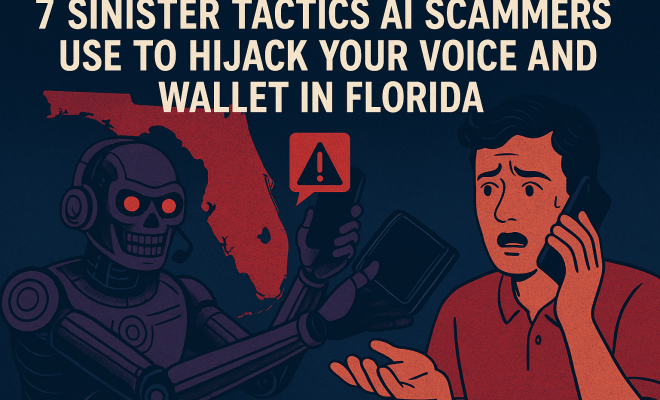
7 Sinister Tactics AI Scammers Use to Hijack Your Voice and Wallet in Florida
It’s no secret that technology marches forward, often bringing incredible advancements. But with every leap, there’s usually a shadow side – a darker application waiting to be exploited. Right now, that shadow is AI voice cloning, and it’s being wielded by scammers in Florida with terrifying precision. We’re not talking about simple phishing emails anymore; this is a whole new level of sophisticated deception, leveraging artificial intelligence to mimic trusted voices and extort money.
Imagine getting a call, the voice on the other end sounding exactly like a local law enforcement officer, perhaps even Captain Steve Moser himself, telling you there’s a warrant out for your arrest. Or maybe you’ve missed jury duty. The pressure is immense, the threat feels real, and the demand? Cryptocurrency. This isn’t a hypothetical scenario; it’s happening right now across the Sunshine State. Scammers are using publicly available audio and images to create deepfake impersonations so convincing that even cautious individuals can fall victim. So, how do you recognize AI scam calls in Florida before you become another statistic? Let’s break down the chilling tactics these criminals are employing and arm you with the knowledge to protect yourself.
1. The Impersonation Playbook: Law Enforcement and Government Officials
One of the most effective strategies for AI scammers is to impersonate authority figures. Think about it: who are we conditioned to trust and obey? Police, sheriffs, and other government officials. When a voice sounding identical to a respected local figure, like Captain Steve Moser, calls you, your guard is naturally lowered. These criminals prey on that inherent respect for authority, coupled with the fear of legal repercussions.
They’ll often fabricate urgent scenarios – a missed court date, a bogus arrest warrant, or even a claim that your identity has been compromised and you’re somehow implicated in a crime. The key here is the perceived legitimacy of the caller and the dire consequences they threaten. Their goal is to put you in a state of panic, making rational thought difficult, and pushing you toward immediate compliance.
2. Demanding Immediate Action and Cryptocurrency: The Red Flag Duo
This is perhaps the most glaring red flag to watch out for. Legitimate law enforcement agencies simply do not operate this way. If you receive a call, even from a voice you believe to be real, demanding immediate payment – especially in cryptocurrency, gift cards, or wire transfers – you should immediately be suspicious. Cryptocurrency is a favorite tool for scammers because it’s notoriously difficult to trace once transferred, making it nearly impossible for victims to recover their funds.
Real police departments and government bodies follow established protocols for fines, warrants, and legal matters. They will never demand payment over the phone, let alone in non-traditional, untraceable forms. Any call that insists on an urgent, irreversible payment method should set off alarm bells louder than a hurricane warning.
3. Voice Cloning and Deepfake Audio: The Unsettling Mimicry
This is where AI truly shines for scammers, and it’s what makes these calls so insidious. AI voice cloning technology has advanced to a point where it can convincingly replicate a person’s voice using only a short audio sample. Scammers scour the internet for publicly available audio of their targets – interviews, public speeches, social media posts – and feed it into their AI models. The result is a synthetic voice that sounds remarkably like the real person.
This deepfake audio is then used to deliver the fraudulent script, making the scam call incredibly difficult to distinguish from a genuine one based on voice alone. It’s a chilling reminder that in the digital age, even your voice can be weaponized against you. Understanding this capability is crucial for Floridians to recognize AI scam calls in Florida, as it helps explain why a familiar voice might be a trick.
4. Emotional Manipulation and Urgency: Pressuring Your Panic Buttons
Scammers are master manipulators. They understand human psychology, and they specifically target emotions like fear, anxiety, and even a sense of civic duty. When they threaten arrest or legal trouble, they’re aiming straight for your primal fear of consequences. The urgency they create – ‘you must pay now or face jail time’ – is designed to bypass your critical thinking and force a rash decision.
They might also try to isolate you, telling you not to hang up or discuss the call with anyone else, claiming it could impede an investigation or make your situation worse. This isolation prevents you from seeking advice from a trusted friend or family member who might spot the scam. Always remember that legitimate authorities will give you time to understand the situation and consult with others.
5. Lack of Specific Details or Refusal to Provide Them: The Vague Threat
While the cloned voice might sound authentic, the details of the scam often fall apart under scrutiny. If you ask for specific information – badge numbers, exact court dates, specific case numbers, or the name of the presiding judge – a scammer will usually become evasive, defensive, or even aggressive. They might provide vague answers or refuse to give details, claiming confidentiality or the urgency of the situation. (See: AI and cybersecurity threats.)
Real law enforcement officers are trained to provide verifiable identification and clear information when contacted by citizens. If the caller pressures you, refuses to answer your questions, or tries to rush you off the phone without providing solid, verifiable details, it’s a huge red flag that you’re dealing with a scam. This is a critical point in how to recognize AI scam calls in Florida.
6. Threats of Arrest or Legal Action for Non-Compliance: The Scare Tactic
This is the core of their intimidation strategy. Scammers rely on the threat of immediate arrest or severe legal repercussions to compel you to act. They want you to believe that if you don’t comply with their demands right then and there, uniformed officers will be at your door within minutes. This isn’t how the legal system works. Arrest warrants are served through proper channels, often involving a physical encounter, and there’s usually a process for addressing missed jury duty, which certainly doesn’t involve paying a fine in crypto over the phone. For more context, see cybersecurity bootcamps.
No legitimate law enforcement agency will ever threaten you with immediate arrest over the phone for non-payment of a fine, nor will they demand payment for a warrant over the phone. If someone threatens to send police to your home unless you pay up, you can be almost 100% certain it’s a scam.
7. Pressuring You to Stay on the Line or Drive to a Specific Location: Controlled Environment
Scammers want to maintain control over the situation and over you. They might tell you to stay on the line, preventing you from calling anyone else or doing your own research. They might even instruct you to drive to a specific store to purchase gift cards or to a cryptocurrency ATM to make a transfer, all while keeping you on the phone. This is about preventing you from breaking free from their narrative and realizing you’re being scammed.
If a caller insists you remain on the line and follow their instructions without deviation, or directs you to a specific physical location for payment, it’s a clear indication of a fraudulent scheme. Legitimate processes allow for you to hang up, call back, and verify information independently. This tactic is a cornerstone of how to recognize AI scam calls in Florida.
The Evolving Landscape: AI’s Role Beyond Voice Cloning
It’s important to understand that AI isn’t just enabling voice cloning; it’s a rapidly advancing tool in the scammer’s arsenal. Beyond simply mimicking voices, artificial intelligence is being used to make these scams more personalized and harder to detect. Imagine AI sifting through public records and social media profiles to gather specific details about you – your job, family members, even recent purchases. This data can then be woven into the scam narrative, making it feel even more legitimate and targeted.
For example, a scammer might use AI to craft a script that references a recent news event in your Florida county, or even a local landmark, further grounding their fake authority in your reality. This level of personalization makes the calls incredibly convincing, as they no longer rely on generic threats but on information that feels uniquely relevant to you. Staying ahead means understanding that AI is continually learning and adapting, making our vigilance even more critical.
The Psychology of Scams: Why We Fall for Them
Understanding the technical aspects of AI voice cloning is one thing, but it’s equally important to grasp the psychological triggers scammers exploit. It’s not about being unintelligent; it’s about being human. Scammers are adept at creating high-stress, emotionally charged situations that short-circuit our rational decision-making processes.
- Authority Bias: We are naturally inclined to obey figures of authority. When a caller sounds like a police officer or government official, our ingrained respect for these roles can override our skepticism.
- Fear of Consequences: Threats of arrest, fines, or legal trouble tap into our fundamental fear of negative repercussions, pushing us to comply quickly to avoid perceived punishment.
- Urgency and Time Pressure: Scammers thrive on urgency. They create a “now or never” scenario, leaving you no time to think, consult, or verify. This pressure bypasses critical thinking.
- Isolation: By instructing you not to hang up or talk to anyone, they isolate you from external advice, preventing a trusted person from pointing out the inconsistencies.
- Embarrassment/Shame: If you realize you’ve been scammed, there can be a feeling of embarrassment that prevents you from reporting it, which helps the scammers continue their operations undetected.
Recognizing these psychological tactics is just as important as identifying the technical red flags. Knowing how your own mind might react under pressure can empower you to resist the manipulation.
The Florida Context: Why the Sunshine State is a Target
Florida, unfortunately, presents a fertile ground for scammers, making it particularly important for residents to know how to recognize AI scam calls in Florida. Several factors contribute to this:
- Large Senior Population: Florida has a significant population of retirees, who are often targeted due to perceived wealth, potential unfamiliarity with rapidly evolving technology, and sometimes, a greater willingness to trust authority figures.
- High Tourism: The transient nature of tourism means many people might not be fully aware of local law enforcement protocols or specific government agencies, making them more susceptible to official-sounding but fake calls.
- Natural Disasters: Following hurricanes or other natural disasters, scammers often emerge, exploiting people’s vulnerability and willingness to help or seek aid. While not directly AI voice scams, it illustrates a broader pattern of exploiting local conditions.
- Complex Legal System: The sheer size and complexity of Florida’s legal and governmental structures can be overwhelming. This complexity can be exploited by scammers who create fake scenarios that sound plausible but are entirely fabricated.
These unique characteristics underscore the need for Floridians to be especially vigilant and informed about current scam trends, including AI voice cloning.
Beyond Voice: Visual Deepfakes and the Future of Scams
While this article focuses on how to recognize AI scam calls in Florida through voice, it’s crucial to acknowledge that the technology is rapidly advancing into visual deepfakes as well. Imagine a video call where the person on the other end not only sounds like a loved one but also looks exactly like them. This isn’t science fiction; it’s already becoming a reality. While less common in phone scams today, it highlights the trajectory of AI-powered deception.
As video calls become more prevalent, scammers will undoubtedly leverage visual deepfakes to enhance their credibility. This means our defenses will need to evolve further, focusing not just on auditory cues but also on the context of the interaction, the nature of the request, and the overall pressure being applied. The core principles remain the same: verify independently, be skeptical of urgent demands, and never provide personal information or payment under pressure. (See: AI scams and voice cloning.)
What to Do When You Suspect an AI Scam Call in Florida
So, you’ve got a call, and your gut is telling you something’s off. You’re wondering, ‘how do I recognize AI scam calls in Florida and what do I do next?’ The good news is, you have powerful tools at your disposal, and the most important one is skepticism. Here’s a clear action plan:
Hang Up Immediately
This is step number one, without exception. Don’t engage. Don’t try to argue or gather more information. Just hang up. The longer you stay on the line, the more opportunity they have to manipulate you and pull you deeper into their web of deception. Your immediate disconnection cuts off their access to you and prevents further psychological pressure. For more context, see combat cybersecurity burnout.
Remember, legitimate organizations, especially law enforcement, will not be offended if you hang up to verify their claims. In fact, they encourage it. Your safety and financial security are paramount, and disconnecting is the first line of defense against these sophisticated AI-powered threats.
Verify Independently (Never Call Back the Number Provided)
After hanging up, your next crucial step is to verify the information independently. This means looking up the official contact number for the purported agency – whether it’s the local Sheriff’s office, the Clerk of Courts, or any other government entity. Use official websites, like those ending in .gov, or trusted public directories to find the correct number.
Do NOT call back the number that appeared on your caller ID. Scammers often spoof numbers, meaning they can make it look like they’re calling from a legitimate source when they are not. Calling that number back will just put you in touch with the scammer again. Instead, dial the official, publicly listed number yourself and inquire about the situation they described.
Report the Incident
Reporting these incidents is vital, even if you didn’t fall for the scam. Your report helps law enforcement agencies track these criminals and potentially prevent others from becoming victims. You should report the call to the Federal Trade Commission (FTC) at reportfraud.ftc.gov. You can also contact your local law enforcement agency’s non-emergency line to inform them about the impersonation.
Providing details like the phone number the scammer called from, the name they used, and the specifics of their demands can be invaluable for investigators. The more data they collect, the better equipped they are to combat these increasingly sophisticated AI-driven scams. Don’t underestimate the power of your report.
Protecting Yourself and Loved Ones: Ongoing Vigilance
The rise of AI voice cloning means that our traditional methods of identifying scams, like recognizing a strange accent or a slightly off-sounding voice, are becoming less reliable. We have to adapt our defenses to match the evolving threats. This isn’t just about protecting your money; it’s about protecting your peace of mind and your identity.
Educate your friends and family, especially elderly relatives who are often targeted by these types of scams. Share this information about how to recognize AI scam calls in Florida. Remind them that law enforcement will never demand cryptocurrency or gift cards, and they will never threaten immediate arrest over the phone. A healthy dose of skepticism is your best armor in this new era of AI-powered deception. Stay informed, stay vigilant, and never let fear override your common sense.
Frequently Asked Questions About AI Scam Calls in Florida
Q1: What exactly is AI voice cloning?
AI voice cloning is a technology that uses artificial intelligence to analyze a person’s speech patterns, tone, and vocal characteristics from a small audio sample. It then generates new speech in that person’s cloned voice. Scammers use this to make calls sound incredibly authentic, mimicking trusted individuals like local law enforcement or family members.
Q2: Can I really tell if a voice is AI-generated?
It’s becoming increasingly difficult. Early AI voices sometimes sounded robotic or unnatural, but modern voice cloning is highly sophisticated. While some might still have subtle tells like a slightly flat intonation, unusual pauses, or a lack of emotional nuance, these are not always present. The best way to recognize AI scam calls in Florida isn’t just by the voice, but by the overall context, the nature of the request, and the pressure tactics used. For more context, see silent crisis in cybersecurity. (See: Cybersecurity and public health.)
Q3: What if the caller ID shows a legitimate number?
Scammers often use “spoofing” technology to fake caller ID information. They can make it appear as if they are calling from a local police department, a government office, or even your bank. Never trust caller ID alone. If you suspect a scam, hang up and independently verify the number by looking it up on an official website or trusted directory, then call that official number back.
Q4: Why do scammers always ask for cryptocurrency or gift cards?
Cryptocurrency and gift cards are popular payment methods for scammers because they are incredibly difficult, if not impossible, to trace once transferred. This makes it almost impossible for victims to recover their money and provides anonymity for the criminals. Legitimate government agencies and law enforcement will never demand payment in these forms.
Q5: What should I do if a caller threatens me with immediate arrest?
Hang up immediately. Legitimate law enforcement agencies do not threaten immediate arrest over the phone for unpaid fines or missed jury duty. There is a formal legal process for warrants and court matters. Anyone demanding immediate payment under threat of arrest is trying to scare you into compliance, and it’s a definitive sign of a scam.
Q6: Can scammers use my own voice against me?
Yes, theoretically. If scammers obtain a sample of your voice from a voicemail, social media video, or even a previous scam call, they could potentially clone your voice. This could then be used to trick your family or friends into believing you’re in distress and need money. Be cautious about publicly available audio of yourself and be aware of this potential risk.
Q7: My elderly parent received a call like this. What’s the best way to protect them?
Education is key. Talk to your elderly relatives about these types of scams. Emphasize that law enforcement will never ask for gift cards or crypto, and they won’t threaten immediate arrest over the phone. Encourage them to always hang up on suspicious calls and to call a trusted family member or friend to verify before doing anything. Even better, help them set up a “secret code word” that you and immediate family members would use if there was a real emergency call, ensuring it’s truly you on the line.
Q8: Is there a specific Florida agency I should report these calls to?
In addition to reporting to the Federal Trade Commission (FTC) at reportfraud.ftc.gov, you can also contact the Florida Attorney General’s Office consumer protection division. Your local Sheriff’s Office or Police Department’s non-emergency line should also be informed, as they are the ones being impersonated. Reporting locally helps them track incidents in your area.
Q9: What if I accidentally gave some personal information but didn’t pay?
Even if you didn’t lose money, giving personal information (like your name, address, or partial Social Security number) is serious. You should monitor your financial accounts and credit reports for any suspicious activity. Consider placing a fraud alert on your credit with the three major credit bureaus (Equifax, Experian, TransUnion) and report the incident to the FTC and local law enforcement.
Q10: Are there any apps or services that can block these calls?
Many phone carriers offer call blocking services, and there are third-party apps designed to identify and block spam or scam calls. While these can help reduce the volume of unwanted calls, they aren’t foolproof against highly sophisticated AI scams. The best defense remains your own skepticism and adherence to the verification steps outlined above. No app can replace critical thinking when a human (or AI) is trying to manipulate you.
Trending Now
- the complete explanation
- Why Finelo’s Approach to Gen Z Financial Literacy Is Completely Changing the Game
- this guide on why you’re losing money: the surprising truth about financial literacy education in america
- our breakdown of 7 cybersecurity bootcamps that will catapult your career in 2024
Frequently Asked Questions
What are some tactics used by AI scammers in Florida?
AI scammers in Florida employ tactics such as impersonating law enforcement and government officials to instill fear and urgency. They create fake scenarios like missed court dates or arrest warrants, using AI voice cloning to sound convincing and manipulate victims into providing money, often in cryptocurrency.
How can I recognize AI scam calls?
To recognize AI scam calls, be wary of unsolicited calls from supposed authority figures. Look for signs such as urgent demands for payment, threats of legal action, and requests for cryptocurrency. Trust your instincts and verify the caller's identity before taking any action.
What is AI voice cloning and how is it used by scammers?
AI voice cloning is a technology that allows scammers to create realistic audio impersonations of individuals, including trusted authority figures. Scammers use this technology to deceive victims into believing they are speaking with legitimate contacts, making their fraudulent schemes more convincing.
Why do AI scammers impersonate authority figures?
AI scammers impersonate authority figures because people are conditioned to trust them. By mimicking voices of police or government officials, they exploit the natural respect for authority, making their threats and demands seem more credible and increasing the likelihood of compliance.
What should I do if I receive a suspicious call?
If you receive a suspicious call, do not engage with the caller. Hang up and independently verify the information by contacting the official agency directly. Avoid sharing personal information or making payments over the phone, especially in response to threats or urgent demands.
What did we miss? Let us know in the comments and join the conversation.